Robbie Thain
Founder, CEO

Stop guessing about event ROI. Learn how to solve the live event measurement gap with strategies to turn trade show chaos into verifiable pipeline data.
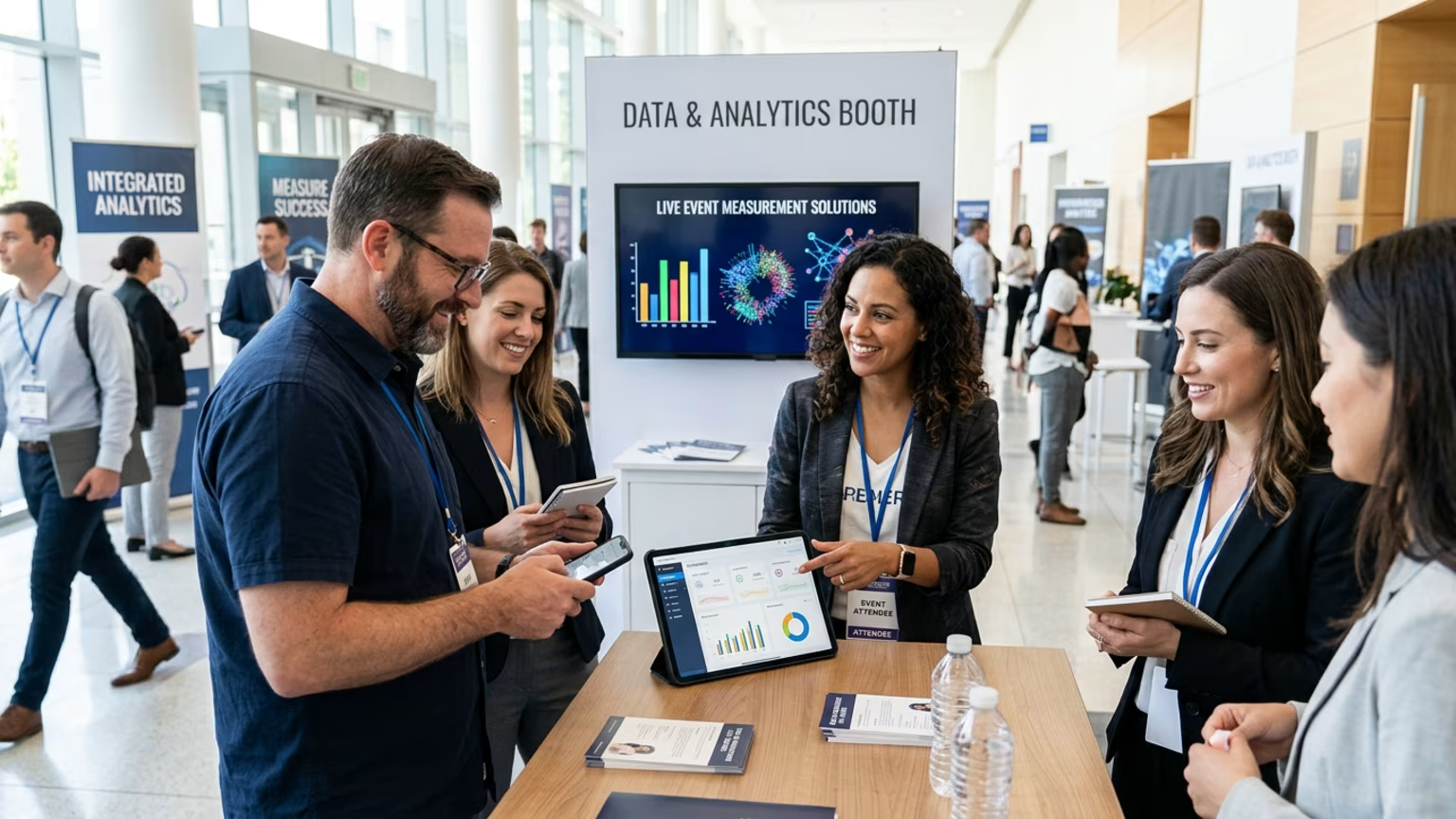
Recent industry data reveals that only 30 percent of event organizers can effectively demonstrate Return on Investment from their live activations. This stark reality means experiential teams must adopt real-time measurement frameworks to turn fleeting floor traffic into verifiable pipeline data.
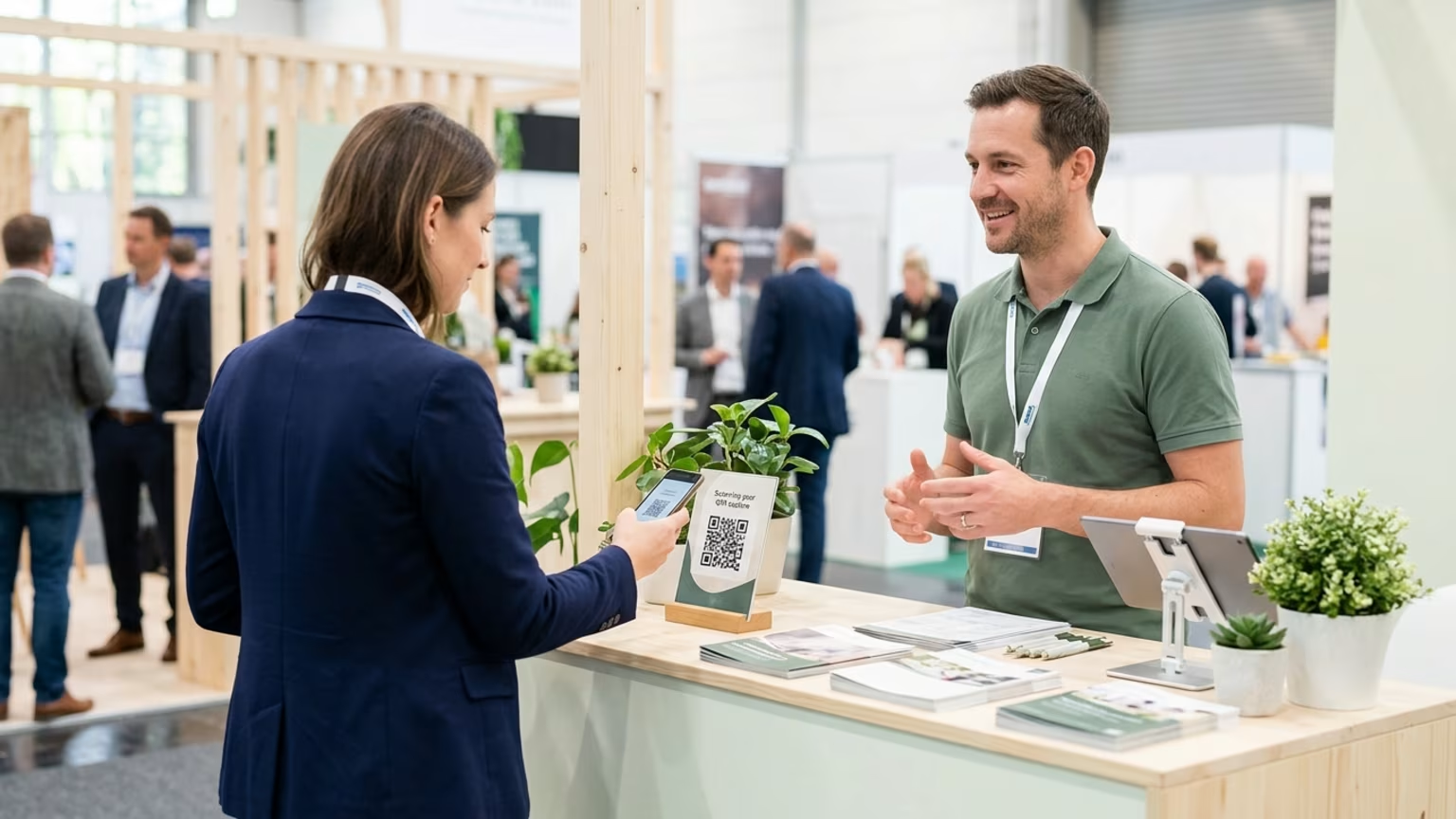
The doors open at a major industry trade show. Thousands of attendees flood the main aisles. Your booth staff rushes to hand out product samples to every passing prospect. People smile, nod, take the beverage, and quickly walk away.
By mid-afternoon, the sampling station looks like a disaster zone. Your team distributed over three thousand units. The physical activation feels like a massive hit. Your field marketing managers are exhausted and visibly proud.
Next week, executive leadership asks for the exact business impact. The room suddenly goes quiet. You only have fragmented scanner leads and anecdotal praise from the floor. You lack the proof required to connect those brief smiles to retail sell-through.
This scenario represents a massive credibility gap in our industry. Studies show that 40 percent of organizers still report difficulty proving event value in 2026. This puts experiential teams in a terrible position. Marketing directors are forced to defend large budgets with zero hard evidence.
Traditional measurement approaches capture remembered sentiment rather than real-time engagement. Pre-event baselines and post-event surveys miss the actual moment of connection. Your team needs a structural change. You must capture what audiences feel exactly when the content unfolds.
The measurement environment is shifting away from simple badge scans. Winning organizations distinguish themselves through integrated data architecture. Signal quality matters far more than data quantity. You must prioritize inputs that directly reflect meaningful business outcomes.
Fragmented data causes the biggest roadblocks. Forrester research indicates that 63 percent of event leaders identify data quality as a significant challenge. Teams often operate with disconnected personal accounts and isolated marketing tools. This fragmentation creates fog rather than clear evidence of success.
Expectations from attendees are rising rapidly across the board. Recent data shows that 73 percent of attendees expect conferences to use modern event technology. Yet satisfaction with core experiences remains surprisingly low. The largest experience gap exists in structured networking and facilitated introductions.
This mismatch suggests that simply buying new technology solves nothing. Your team needs intentional design to make the technology work. You must curate introductions and apply AI-assisted matchmaking intelligently. A disciplined governance structure guarantees your tools actually improve the attendee experience.
The industry currently faces a major technology adoption bottleneck. Leadership often lacks a coherent governance structure for new digital tools. Event teams operate isolated workflows across personal accounts and disconnected tracking software. This prevents the establishment of serious measurement capabilities from the start.
You cannot build advanced tracking on a broken foundation. Your team must prioritize a clean data architecture before buying new software. This eliminates the fog created by disconnected systems. It guarantees that every piece of attendee feedback flows directly into a central repository.
Fixing this requires a tiered tactical approach. You start by implementing foundational elements like dynamic surveys. Then you move toward intermediate live polling. Finally, you integrate advanced emotion-based tracking systems.
This methodical approach moves measurement from a lagging indicator to an active operational tool. It mirrors how top experiential leaders connect trade show attention to sales pipeline today. By layering these tactics, you establish a chain of custody for every lead.
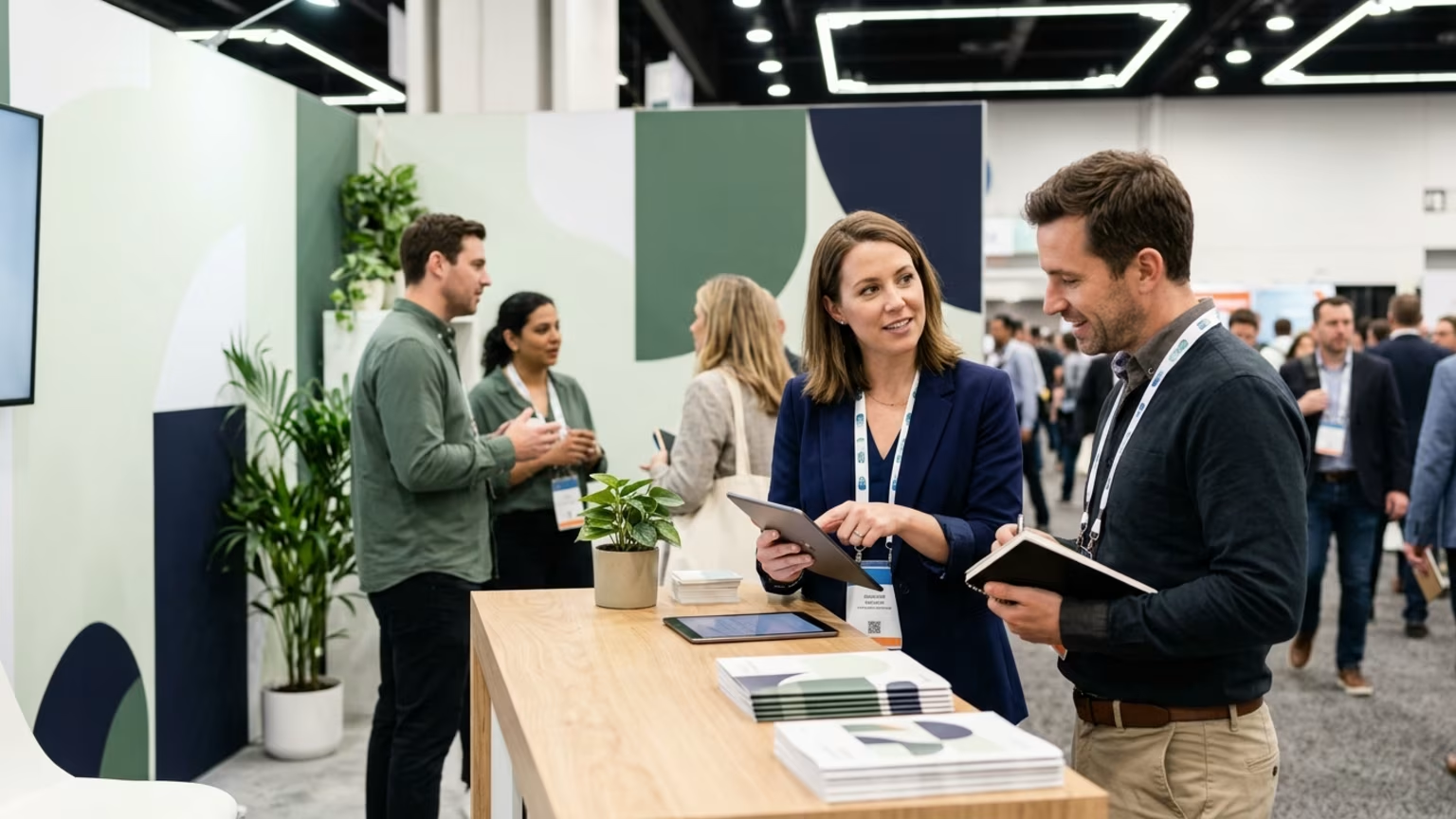
Converting foot traffic into usable data requires strict operational discipline. You cannot rely on passive scanners. Implement these exact steps to capture verifiable intent on the floor.
Proving value demands a clear division between leading engagement indicators and lagging business outcomes. Leading metrics show you exactly how the activation performs in real time. They allow your operations team to make in-flight adjustments. You must track the exact volume of qualified booth interactions per hour.
Monitor session attendance duration using eye-tracking or specialized engagement tools. Track the completion rate of your dynamic surveys. Evaluate the immediate emotional response scores generated by facial analysis software. These signals tell you if the crowd is actually paying attention.
Lagging metrics prove the financial return weeks or months later. The most sophisticated organizations measure events based on pipeline influence and deal velocity. You must measure the conversion rate of event leads into actual buyers. Track the retention rate of customers who experienced your live activation.
This financial proof is what secures future budgets. We frequently discuss the measurement crisis in experiential marketing with our clients. Without these lagging indicators, you are merely guessing at your success. You must build systems to track retail sell-through directly back to the initial physical touchpoint.
Your ROI narratives become compelling for executive decision-makers when grounded in facts. You stop defending your operational budgets and start projecting your future returns. This transforms your experiential department into a verified revenue center. Brand leaders finally gain the confidence required to scale their physical activations.
Connecting these systems is non-negotiable for modern teams. Currently, 79 percent of organizers have integrated event platforms with CRM or marketing automation tools. The remaining 21 percent operate in complete darkness. They cannot connect emotional engagement to downstream business outcomes.
For brands driving trial or boosting retail sell-through, this integration is a massive competitive advantage. You can prove causality between activation quality and conversion metrics. Differentiated measurement capabilities strengthen your entire market position. Annual events can be systematically leveled up through evidence-based refinement.
Event budgets become defensible only when you connect these two data streams. You can optimize multi-day events using real-time reaction data. Then you validate those optimizations using long-term pipeline reports. This dual approach completely changes the executive conversation.
The right measurement framework turns a basic retail sampling gig into a predictable business asset. We applied this exact discipline during a recent national push for a premium consumer brand. The goal was to launch a new product line and prove its impact on local retail sales. We knew that vanity metrics would not satisfy the executive board.
A Director of Brand Strategy in the CPG snack division shared: 'The Makai team turned our product launch into a sensory event that shoppers still talk about. From creative storytelling to flawless in-store execution, they made snack time unforgettable. We couldn't have asked for a stronger partner.' Our team created an in-store experience that left a lasting impression on consumers and became a memorable brand moment.
We did not stop at creative execution. We layered our experiential design with rigorous data collection protocols. Our brand ambassadors recorded real-time pulse polls during every single customer interaction. We synced this qualitative feedback directly to our central reporting dashboard.
We then tracked regional foot traffic against localized sell-through data. This strategy helped us connect event leads to retail sell-through effectively. The numbers proved a direct correlation between live brand interactions and increased register rings. The client used this hard evidence to secure additional funding for a nationwide tour.
Let us return to that crowded trade show floor from the morning. The main aisles are still packed with industry professionals. The product samples are still moving rapidly across the counter. The difference now is that your team operates with total clarity.
You know exactly who took the product and what they thought about it. You understand how that brief interaction will impact your sales pipeline. You have the hard data required to prove your value to executive leadership.
If you are tired of guessing about the impact of your campaigns, it is time to build a real data framework. Book a strategy call with our operations team today. We will help you turn your next activation into a measurable engine for growth.

30 Years Experiential & Retail Activation Partner for CPG & Beverage Brands | Multi-Market Demos, Roadshows & Costco/Club Programs That Actually Sell