Robbie Thain
Founder, CEO

Learn how US soccer clubs are transforming stadiums into trackable data hubs, allowing brands to measure exact ROI on live event and sponsorship activations.
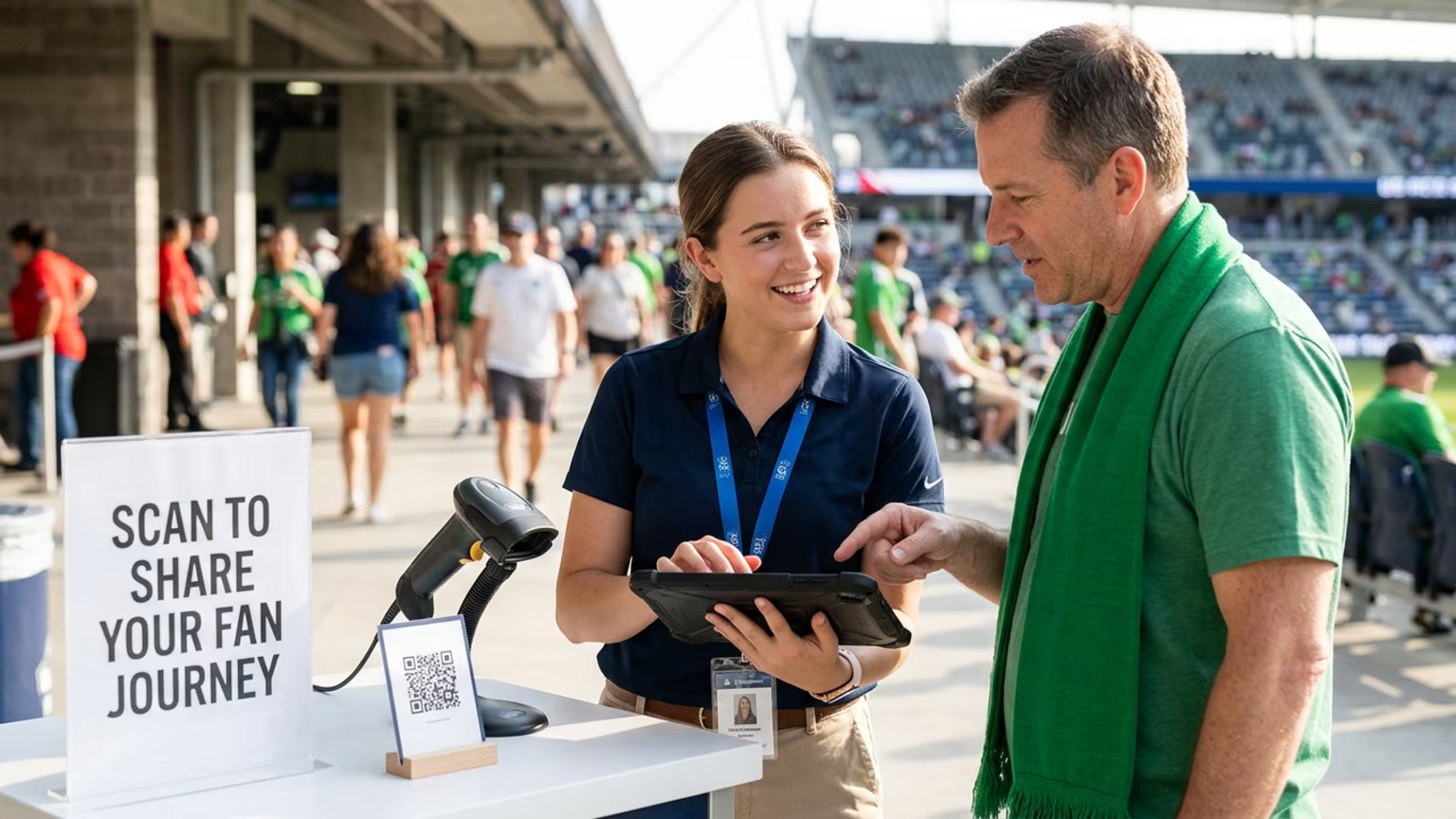
The upcoming global soccer tournament cycle is transforming U.S. stadiums into sophisticated data hubs for experiential marketers. By plugging into club ticketing and app platforms, consumer brands can finally measure the exact Return on Investment of their live matchday activations.
Over 1.5 million international visitors are projected to flood North American host cities for the 2026 men's World Cup. This massive influx forces venues to upgrade their digital infrastructure for better crowd management and commerce. For consumer brands, this shift turns a previously unmeasurable matchday into a highly trackable conversion engine.
Stand in the crowded concourse of a major professional soccer match at halftime. Thousands of fans rush toward the concession stands, restrooms, and sponsor booths in a highly compressed fifteen minute window. Your field team is passing out premium snack samples as fast as humanly possible to a massive crowd. Fans grab the product, smile, and vanish back into their seats before the second half begins.
You distributed ten thousand samples, but you have absolute zero idea who took them. You cannot tell if those fans are existing customers, new prospects, or tourists who will never visit your target retail channels. This is the historical frustration of sports sponsorships for consumer packaged goods companies. The physical footprint looks impressive, but the lack of precise tracking makes it impossible to prove retail uplift.
Event marketers are left trying to justify massive sponsorship fees using fuzzy impression counts and empty sample boxes. The communication flow between street teams, club operations, and stadium vendors is often severely fragmented. This disconnect creates massive gaps between what happens at the kiosk and what shows up in your post event report. Brands rely on manual tallies and anecdotal feedback from tired brand ambassadors.
The stakes are simply too high to accept this blind approach. The financial pressure from executive leadership demands concrete proof that live activations generate actual pipeline. If you cannot trace a stadium sample to a subsequent retail purchase, your budget is constantly at risk. Field marketing needs the discipline of digital marketing applied to the physical world.
The era of unmeasured field marketing is rapidly ending across the sports industry. Major soccer leagues are building sophisticated tracking systems that connect ticketing, mobile apps, Wi-Fi, and in-venue payments to individual fan profiles. Payment providers note that granular data on fan spending habits around big tournaments creates a highly detailed view of the consumer journey. Experiential marketers must stop treating stadium activations as isolated sampling islands.
Instead, you must architect your physical footprint to plug directly into the digital infrastructure of the host club. This requires negotiating data access upfront so your physical touchpoints sync perfectly with the venue network. When a fan interacts with your booth, that action should register alongside their ticket scan and concession purchases. According to analytics experts at Stats Perform, standardized metrics across leagues make it much easier to design repeatable campaigns.
You can use this normalized data to compare performance across different markets and evaluate the true value of your sponsorship rights. Teams that build a solid framework to justify live event spend will consistently secure executive budget approvals. Standardized metrics allow you to treat physical stadiums like highly targeted digital landing pages. You can track dwell time, engagement rates, and coupon redemptions with clinical precision.
As stadiums capture more detailed fan behavior, privacy expectations become a critical operational constraint. Overly aggressive data capture can easily erode consumer trust and hurt long term brand engagement. Smart marketers rely on consented, value driven data capture rather than stealth tracking. A transparent value exchange, like offering a free product for a quick email scan, builds a sustainable first party database.
Advanced artificial intelligence is accelerating this structural shift even further. Providers like AWS are integrating agentic artificial intelligence into league operations to deliver real-time insights and adapt content dynamically. For field marketers, this means you can adjust your messaging or sampling offers mid-game based on live crowd flow. You transition from hoping for the best to running a tightly controlled, measurable conversion machine.
Turning a massive soccer crowd into a structured data pipeline requires extreme operational discipline. You cannot wait until matchday to figure out your technology stack or your measurement strategy.
Leaving the old methods behind requires a firm commitment to rethinking your lead capture strategy at every live event.
Sponsorship success is no longer defined by how many people walked past your illuminated logo. You need hard numbers that prove your physical presence moved the needle in a meaningful way. Lead metrics tell you if your activation is working in the moment and catching attention. Track your cost per scan, unique app downloads, and the percentage of samples that resulted in a digital opt-in.
These leading indicators act as early warning signals if your field team needs to adjust their approach. If the scan rate drops during the second half, the team can immediately change their verbal pitch. Lag metrics demonstrate the actual business impact weeks after the final whistle blows. Look for incremental sales lift at nearby retail locations during the tournament window.
Measure the final redemption rate of digital coupons distributed at the stadium concourse. Calculate the exact Return on Investment by dividing your total program cost by the newly attributed revenue. A proper system for clean performance tracking will make these calculations incredibly straightforward. Data without context can sometimes mislead, so combine these hard numbers with qualitative field feedback.
You must monitor long term loyalty signals connected to your stadium activations. Track how many of those new digital opt-ins eventually join your primary brand membership program. Determine the average basket size of a customer acquired at a soccer match compared to a standard digital ad acquisition. This deep level of cohort analysis separates top tier event marketers from those who simply throw parties.
Do not completely abandon human observation in your quest for pure data. Equip your field staff with tools to log qualitative feedback about the consumer experience. Note which product flavors generated the best real time verbal reactions from the crowd. These subjective notes add valuable context to your hard numbers when presenting the final campaign results to your executive board.
A national snack brand recently tested this integrated approach during a high profile professional soccer match. Instead of blindly handing out protein bars, they integrated a custom sampling offer directly into the official team app. Fans received a targeted push notification as they passed through the main ticketing gates. The notification offered a free premium snack box if they scanned a code at the branded concourse activation.
This simple digital handshake provided the brand with thousands of verified contact profiles in under two hours. The brand cross referenced their activation data with local supermarket point of sale systems over the following week. The results showed a massive spike in localized purchasing for that specific product line. It became glaringly obvious that the live experience was directly influencing retail behavior.
The brand abandoned blind sampling entirely for the remainder of the season. They decided to book a strategy call with their experiential agency to scale the app integration nationally. This disciplined execution turned a generic stadium sponsorship into a predictable revenue generation channel. It provided the exact evidence the marketing director needed to secure funding for the next fiscal year.
That projected wave of 1.5 million international soccer fans is fast approaching our local venues. Each fan represents a highly trackable data point rather than just a blurry face in a massive crowd. The brands that win will be the ones that capture the data behind the cheers.

30 Years Experiential & Retail Activation Partner for CPG & Beverage Brands | Multi-Market Demos, Roadshows & Costco/Club Programs That Actually Sell