Robbie Thain
Founder, CEO

Stop reacting to event chaos. Learn how real-time logistics tracking replaces fragmented workflows to turn trade shows into measurable revenue engines.
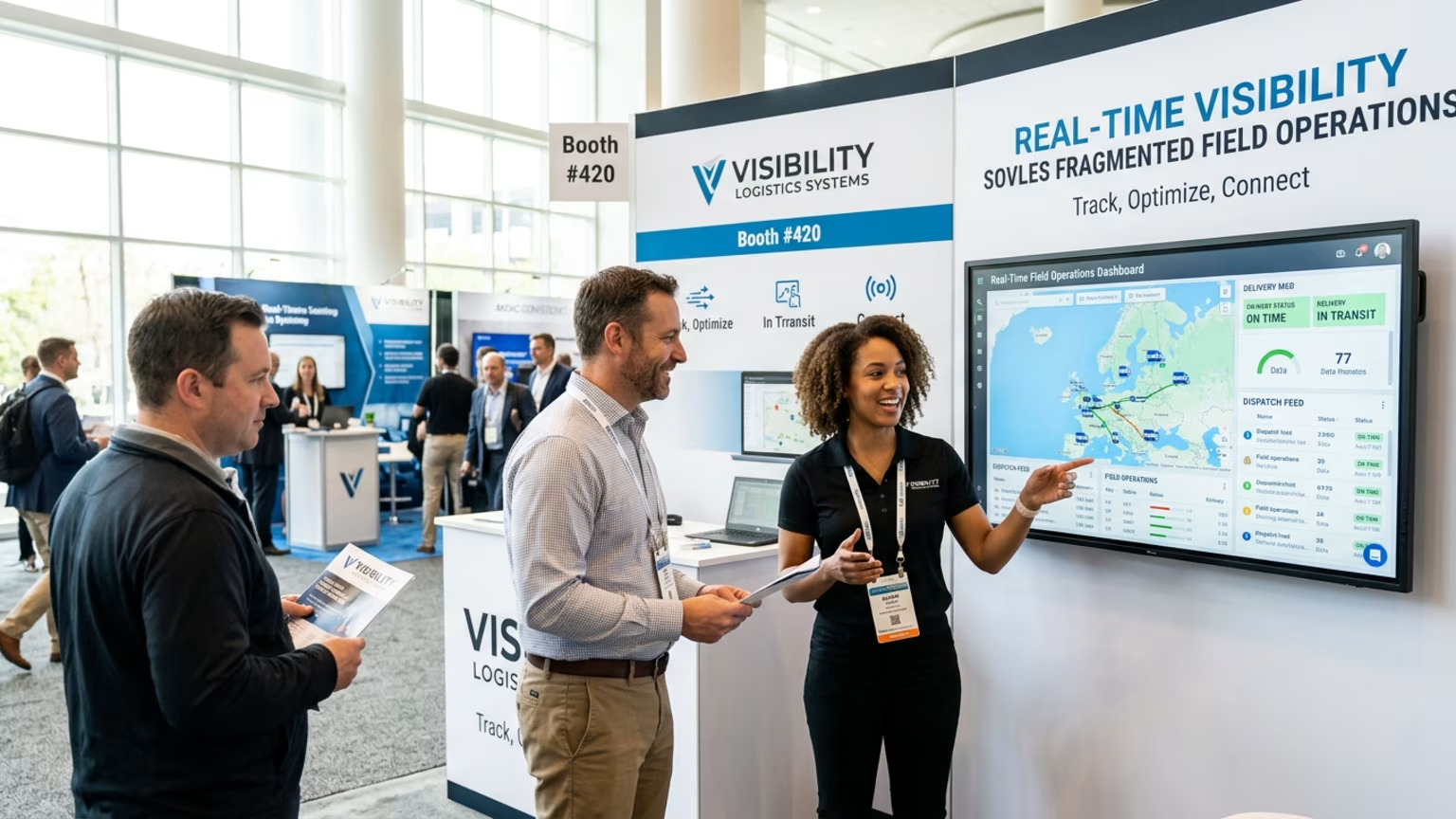
Companies utilizing real-time visibility achieve a 15 percent increase in operational efficiencies. This operational shift creates fewer wasted hours chasing delivery trucks and more time creating profitable brand moments. You stop paying expensive field teams to stand around waiting for lost demo gear. Predictable logistics turn ambitious creative ideas into reliable revenue engines.
Real-time logistics tracking transforms chaotic trade show setups into predictable revenue engines by replacing blind guesswork with unified location data. Field marketing teams that adopt this approach stop fighting fires and start proving Return on Investment through flawless event execution.
It is setup day at the biggest food expo of the year. Your highly paid brand ambassadors are standing around an empty booth space. The perishable sampling product is somewhere on a freight truck. Nobody knows if the refrigeration unit is functioning properly.
Field marketing directors face this exact nightmare constantly. Fragmented operations rely on outdated tracking methods and manual phone calls. The result is a stressful scramble that burns through your marketing budget. The event starts looking like a massive disaster instead of a measured retail push.
Relying on dozens of static scans per day leaves massive blind spots. According to logistics analysts at FourKites, advanced tracking tools give teams the ability to manage operations proactively instead of reacting to disasters. Traditional scanning pales in comparison to real-time sensors that track shipments hundreds of times throughout transit. Without this granular data, your team is simply guessing.
This guessing game ruins retailer confidence and exhausts your field staff. The delays trigger rolling schedule conflicts across multiple activation sites. When equipment arrives late, setup feels rushed and unprofessional. The entire consumer experience suffers before the doors even open.
Retail supply chains face immense pressure to match fast delivery expectations. Experiential campaigns must step up to meet these identical standards. Consumers expect seamless product availability when they interact with your brand in physical spaces. If your demo runs out of stock, that live interaction becomes a missed sales opportunity. Unifying your tracking prevents these embarrassing stockouts.
The fix requires shifting from reactive issue management to proactive supply chain control. You must consolidate location data, condition monitoring, and team communications into a single platform. This operational backbone removes the guesswork from field staffing and resource routing. It connects physical transit directly to your event facilities.
Data alone does not solve the problem automatically. Supply chain experts at Supply Chain Management Review warn that real-time tracking without integrated workflows fails to drive better decisions. The data must trigger immediate action within your activation plan. If a truck hits a delay, the system should automatically alert your field manager to reallocate resources.
According to FedEx experts, modern platforms use artificial intelligence to deliver predictive logistics. These tools forecast regional disruptions before they happen in real time. They allow brands to optimize replenishment schedules based on exact demand forecasting. This proactive planning reduces overproduction and prevents warehouse bottlenecks.
This unified approach makes managing event permits and city regulations much smoother for your entire team. When logistics run on a predictable schedule, local compliance becomes an afterthought. McKinsey research highlights that companies see meaningful increases in operational efficiencies when they break down these data silos. A connected platform cuts administrative overhead and strengthens carrier relationships.
Marketing operators can integrate live sales data for demand-tuned routing of promotional gear. This smart routing minimizes overstaffing at low-conversion events. It directs your best resources toward locations with high retail sell-through rates. Connecting field logistics to sales performance creates a highly profitable activation loop. Brands that implement these connected tools gain a serious structural advantage over competitors.
Moving from a fragmented system to full visibility requires strict discipline. Follow these steps to implement a unified logistics framework for your next national activation tour. Every phase focuses on eliminating blind spots and connecting your data streams.
These steps form a strong foundation for your overall experiential marketing and field strategy. Connected logistics turn ambitious creative plans into measurable realities for your brand. Book a strategy call with our team to align your next event execution. We build systems that perform under pressure.
Clear tracking is the difference between vanity metrics and proven pipeline generation. You need precise numbers to demonstrate success to brand leadership. Stop reporting on crowd sizes alone and start reporting on execution efficiency. The right metrics justify your operational investments immediately.
Lead metrics show how well your logistics engine runs before the event starts. Monitor on-time delivery rates and active tracking pings per hour. Track the percentage of shipments utilizing continuous condition monitoring technology. Watch for a steep reduction in daily manual status checks from your field team. High performance in these areas guarantees a smooth setup day.
Lag metrics reveal the true financial impact of your connected systems over time. Measure the decrease in carrier detention fees and temporary storage penalties. Track the overall reduction in overtime pay for idle brand ambassadors. Calculate the direct sales lift generated by having all promotional gear fully operational at launch.
Proving a high Return on Investment requires pristine data collection. Financial teams respect operational savings just as much as new revenue generation. By cutting unnecessary logistics expenses, your event budget stretches much further. This fiscal discipline earns trust from the executive board.
A Vector analysis states that enhanced shipment visibility eliminates detention fees and facility bottlenecks entirely. Tracking these specific numbers justifies the shift toward better event technology. Strong metrics are especially critical during beverage sampling campaigns where margins are incredibly tight. Proper tracking keeps your cost per acquisition low and your retailer confidence high.
A premium kombucha brand recently scheduled simultaneous sampling activations across twenty Costco locations. Their previous product launch suffered from spoiled inventory and massive detention fees. Fragmented communication left store managers frustrated and field reps waiting for trucks that never arrived. The financial waste was staggering.
The brand implemented a real-time visibility platform to connect transportation data with their staffing roster. Temperature sensors monitored the cold chain continuously throughout the transit phase. Predictive analytics flagged a regional weather delay three days before the activation weekend. The system immediately alerted the central marketing team.
The field marketing director proactively adjusted staff schedules and rerouted backup inventory to the affected region. All twenty locations received fresh product exactly on time. This unified system allowed the team to manage their high volume logistics and storage operations with total precision. They avoided the chaotic scrambling that usually accompanies national retail pushes.
By eliminating blind spots, the brand secured deep retailer trust and drove massive trial numbers. They achieved a flawless setup rate and completely eliminated carrier detention penalties. The marketing team finally proved that live activations could be managed with the exact same rigor as digital ad campaigns.
Think back to that massive food expo setup day. Instead of standing around an empty booth making frantic phone calls, your brand ambassadors are confidently organizing samples. The perishable product is chilling at the perfect temperature. The freight trucks arrived exactly when the data predicted.
The chaos is gone, replaced by a quiet, measured focus on winning the customer. This is the reality of modern field marketing when you connect your workflows. Your operational backbone becomes your biggest competitive advantage in the real world.

30 Years Experiential & Retail Activation Partner for CPG & Beverage Brands | Multi-Market Demos, Roadshows & Costco/Club Programs That Actually Sell