Robbie Thain
Founder, CEO

MINISO launched a global LISA pop-up tour across Asia and the U.S. Learn how multi-market experiential roadshows drive measurable retail pipeline at scale.
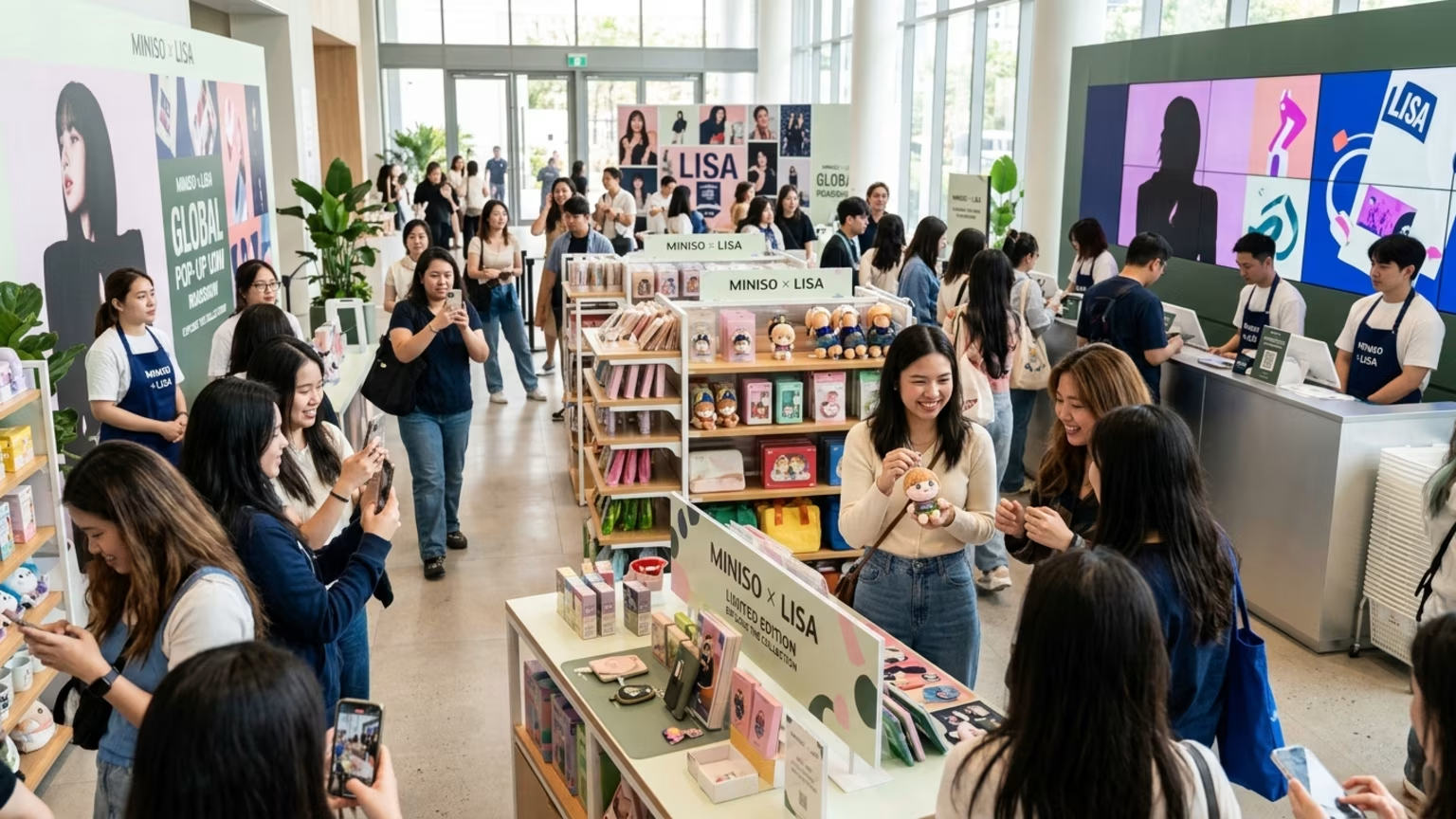
On September 1, 2026, MINISO launched the first LISA × MINISO Global Pop-Up Tour. The traveling retail and experiential campaign opened its doors at Bangkok's ICONSIAM. This launch kicks off a multi-market sequence featuring immersive installations, limited-edition merchandise, and fan-focused activities. The tour brings over 70 LISA-inspired products to life across a carefully orchestrated international schedule.
This activation abandons the traditional single-market retail event model in favor of a coordinated regional roadshow. MINISO built a sequenced schedule of temporary experiences that move from Thailand to Japan, China, Indonesia, and the United States. Each stop adapts a core global design to fit local commercial environments. The Bangkok pop-up ran from September 1 through September 24, 2026.
The merchandise strategy also shifted away from a single standardized global inventory. The collection includes bags, apparel, blind boxes, and lifestyle accessories. The range introduces the YOYO × LISA Collection Vinyl Plush Surprise Box series, which merges the artist identity with MINISO's proprietary YOYO IP. Planners designed the inventory to include regional exclusives and limited-edition products for each specific market.
The Japan stop takes over Omotesando Hills in Tokyo from September 11 through October 5, 2026. The China portion begins on September 12 with flagship pop-up experiences in Beijing, Shanghai, and Shenzhen. The collaboration is concurrently rolling out at selected MINISO SPACE stores across prominent commercial districts. The tour then moves to Indonesia with an activation at Senayan City Mall in Jakarta from October 21 through November 1, 2026.
The U.S. leg is scheduled to begin on November 6 at established shopping destinations. Announced locations include Fashion Show Las Vegas, Irvine Spectrum Center, and The Shops at Santa Anita. Mexico is also included in the expansion plan. These strategic location choices allow the campaign to benefit from existing shopping center foot traffic while maintaining a controlled environment for product presentation.
The activation architecture relies on four fundamental pillars to drive participation. First, the temporary retail stores create immediate urgency around a finite operating window and limited inventory. Second, the campaign utilizes immersive visual environments to make the footprint physically visible from a distance. Third, fan participation elements give visitors clear actions to take beyond simply browsing merchandise. Finally, the cross-market sequencing allows the brand to layer local media and market-specific products onto a verified global platform.
We specialize in creating retail demos, product sampling programs, and roadshows that bring brands face to face with their audiences. When we analyze a multi-city footprint of this scale, we look directly at the underlying operating architecture. The strategy here proves that emotional IP must translate into repeatable physical environments to generate measurable pipeline. A roadshow must separate its visual identity from the localized operational infrastructure.
For consumer packaged goods marketers, this layered approach provides a highly effective blueprint. A beverage or snack brand can adopt a similar modular strategy to control freight, staffing, and compliance across multiple locations. You build the central tasting ritual once and adapt the retail conversion path for every new city. Planning a pop-up roadshow for measurable retail pipeline requires absolute alignment between the physical structure and local consumer behavior.
This setup prevents the campaign from devolving into a series of disconnected, expensive one-off builds. The local field team can adapt the venue, talent, and media plan without abandoning the core brand experience. A physical footprint may be temporary, but the operational discipline behind it must remain rigid from market to market. This model works because it pairs an emotional draw with a very specific product reason to visit and buy.
When planners evaluate a high-profile tour like this, they must ask if the chosen venue is merely providing floor space or supplying a complete media ecosystem. A robust brief should evaluate digital screens, in-mall media, transit connectivity, and outdoor signage. Teams should also look at retailer CRM databases, loyalty channels, and proximity to complementary tenants. The physical booth footprint may be temporary, but the media opportunity surrounding it provides immense scale. Connecting these touchpoints ensures that awareness generated in the atrium translates directly into product trials and purchases.
Scaling a physical asset across multiple borders forces a complete rewrite of field staffing and footprint flow. Planners must secure unique local permits while maintaining strict visual compliance with the core global platform. The venue itself must function as a comprehensive media ecosystem rather than just providing empty floor space. In Bangkok, the execution utilized more than 250 screens throughout the mall and four multi-story banners in the central atrium.
That level of architectural branding requires advance negotiation with property managers to extend the campaign effectively. The Japan activation is supported by a citywide media model that includes branding across the Yamanote Line. Premium outdoor placements and visibility throughout the Omotesando Hills complex help turn surrounding transit routes into conversion funnels. Executing street to shelf pop-ups and roadshows for retail conversion demands precise coordination between outdoor media and the checkout counter.
Measuring Return on Investment across these varied footprints introduces significant reporting challenges. A visually impressive installation does not automatically guarantee commercial success without a standardized measurement architecture. Brands must track traffic metrics, including qualified visitors, dwell time, queue abandonment, and repeat visits. They also need to measure engagement through completed product demonstrations, distributed samples, QR scans, and app downloads.
Commercial outcomes are the ultimate indicator of roadshow success. Field teams must report units sold, revenue per visitor, average basket size, and limited-edition sell-through. Operational performance is equally critical for multi-market profitability. Managers should monitor staffing utilization, average interaction time, setup duration, and equipment downtime. Otherwise, Tokyo, Jakarta, and Los Angeles will each produce attractive but completely incompatible performance data.
The broader retail environment is currently shifting heavily toward physical product trial. Industry analysis identifies experiential stores as a primary force shaping retail growth in the United States. This structural shift explains why high-volume brands are moving away from passive trade show booths toward controlled brand environments. The integration of entertainment assets, retail partners, and fan communities requires an operating system built specifically for live interaction.
A major operational risk in multi-city planning is the conflict between global consistency and local market relevance. Too much standardization can make an activation feel rigid, while too much localization increases production complexity and dilutes the core message. Field marketing operators must lock down their market calendars, venue specifications, and staffing models well before the first installation date. Setting strict protocols for inventory replenishment, data capture, and escalation procedures keeps the entire program functional. A structured anatomy of a high-conversion pop-up at the checkout line relies entirely on seamless reporting protocols behind the scenes.
MINISO characterizes this expansive campaign as a strategic shift for its broader business operations. According to corporate statements, the company positions the campaign as evidence of its evolution from an IP licensing partner into a global IP operation platform. The retailer is using high-visibility commercial locations to combine destination retail, product trial, and community participation. This approach moves beyond simply placing a licensed logo on a product.
The massive multi-market activation that started in Bangkok's ICONSIAM illustrates what happens when disciplined logistics meet high-demand consumer goods. A strong central operating framework allows field marketing teams to adapt their footprint without losing control of the core brand narrative. As you review your own event schedule for the upcoming quarter, one fundamental question requires immediate attention. Are your physical activations built on a repeatable operational system that drives qualified traffic, or are you just funding disconnected vanity projects?
Scaling a global roadshow across multiple retail destinations requires marketers to maintain visual consistency while adapting to rigorous local logistics. Makai resolves the risk of low quality leads from crowded trade shows by deploying our Retail Demonstrations capability. Trained brand ambassadors drive in store sales through real conversations and product trials.

30 Years Experiential & Retail Activation Partner for CPG & Beverage Brands | Multi-Market Demos, Roadshows & Costco/Club Programs That Actually Sell


