Robbie Thain
Founder, CEO

Discover how disciplined staffing, precise qualification flows, and fast follow-up drive measurable trade show return on investment for high-performing brands.
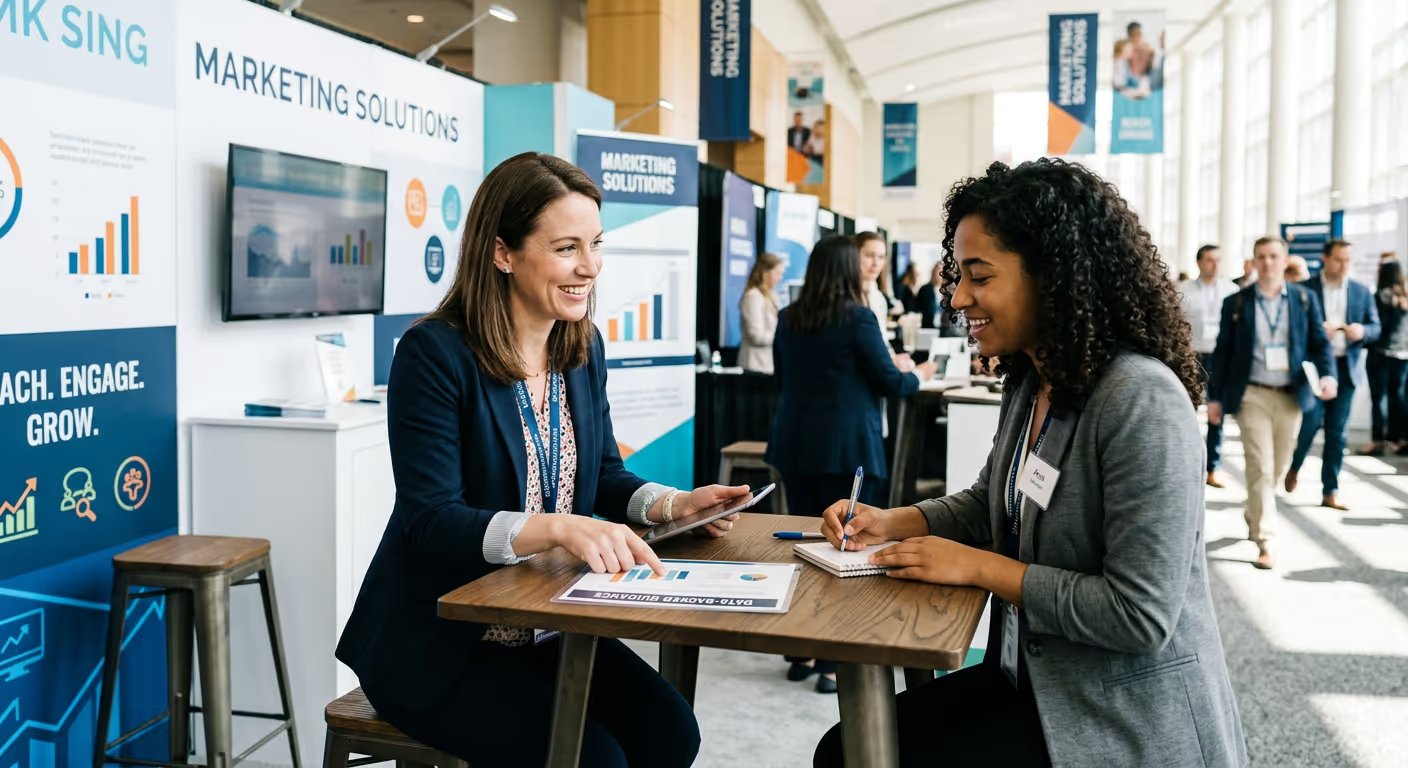
More bodies in the booth will not save a broken strategy. Brands spend hundreds of thousands of dollars on square footage, only to abandon the most critical variable to chance. The difference between a high-performing exhibition and an expensive networking session comes down to staffing and follow-up discipline. Too many companies treat the live event as the finish line, completely ignoring the rigorous operational work required to extract value from the crowd.
Recent industry analysis confirms that turning event traffic into measurable pipeline requires treating lead handling as an integrated revenue operation. Implementing precise staff ratios, scripted qualification flows, and scheduled outreach helps marketing leaders capture significant sales lift. The organizations seeing the highest returns are no longer improvising their interactions. They rely on rigid operational playbooks to turn fleeting moments of physical attention into permanent business assets.
The mid-morning rush at a major consumer goods expo is loud, unpredictable, and entirely unforgiving. Your sales reps are cornered by casual browsers, and high-value retail buyers walk past an unattended counter. Leads are jotted down on the back of business cards, scanned blindly without context, or lost entirely. When the team finally returns to the office, the marketing department inherits a massive spreadsheet of cold names.
This common disconnect turns expensive brand activations into beautiful disasters. Many companies spend large portions of their annual budget designing custom exhibits and shipping product samples. They focus entirely on visual impact and structural logistics. They forget that the actual return on the event depends heavily on the human interactions happening inside that footprint.
Without a structured plan for crowd control and data capture, the best booth design in the world will just produce empty traffic.
Fixing this disconnect requires a high-conversion trade show approach that treats the physical booth as a live revenue funnel rather than a static display. We have executed over 1000 campaigns across all 50 states, bringing brands to life in every major U.S. market. From retail demos in Seattle to roadshows in Miami and events in Honolulu, our teams activate brands wherever our clients' audiences are located. In our experience, success requires assigning specialized roles to every staff member.
Greeters intercept foot traffic, qualifiers separate casual fans from real buyers, and product specialists manage the deep demonstrations. Industry research consistently shows that specialized roles prevent high-intent buyers from slipping away unnoticed. Integrating this physical setup with digital systems creates a frictionless flow from the show floor to the CRM. When automated tools handle data entry, human staff can focus entirely on relationship building.
This structural shift moves the team away from collecting random emails. It forces everyone to prioritize meaningful conversations that actually advance the sales cycle. A dedicated event leader must oversee this entire operation on the floor. This manager acts as the traffic controller, stepping in when reps get stuck in overly long conversations.
They rotate staff out for breaks, keep energy levels high, and monitor the quality of the data being captured. Treating the space like a controlled retail environment yields significantly better results than treating it like an open house.
Converting booth visitors into qualified pipeline requires a clear operational sequence. This step-by-step approach aligns your on-site team with post-event objectives. It turns abstract goals into repeatable daily actions for the field staff.
Staff to the number of simultaneous conversations your footprint allows. A common operational benchmark recommends one staffer per 15 to 20 active visitors per hour. Having too many people crowds the space and intimidates buyers. Having too few people causes walkaways and missed revenue opportunities.
Separate your front-door greeters from your technical product experts. This keeps traffic moving and prevents your best closers from getting stuck in casual conversations. Greeters should enthusiastically handle the quick sample distributions or basic brand questions. Technical specialists should wait in a designated secondary zone for deeper buying discussions.
Train your team to use a short, natural script to assess buying authority and timing. You can model this on proven lead-scoring frameworks for B2B events to score contacts as hot, warm, or cold right on the show floor. Do not let staff improvise every single interaction. Providing a standardized three-question framework keeps the data clean for the operations team.
Set up automated systems to trigger a same-day thank you email. Hot leads should receive personal outreach within hours, not days, since prompt outreach drastically improves lead conversion rates. Speed makes a massive difference when attendees are talking to dozens of competitors. You want to be the first vendor in their inbox when the conversation is still fresh.
Do not wait until the flight home to draft follow-up messaging. Pre-build a 14-day cadence for warm leads that delivers relevant proof points and retail availability data. Casual visitors who just wanted a free sample should drop into a long-term brand awareness track. This organized approach prevents the post-show slump that plagues so many sales teams.
For complex activations, you might need an outside perspective to align your field team with your sales operations. Book a strategy call with our experiential planning experts to refine your lead capture flow. We can help you build the exact scripts and staffing models required for your specific product category.
Consumer brands and enterprise software companies cannot use the exact same playbook. For consumer packaged goods and retail activation, success usually means generating mass trial, capturing user reactions, and building retailer readiness. The staffing model for a snack brand might require energetic brand ambassadors who can distribute 500 samples an hour and capture social media engagement. Their follow-up sequence will heavily feature digital coupons and local store locator links.
Enterprise technology and automotive brands face an entirely different set of operational challenges. For these complex product categories, success means booking deep technical demonstrations and advancing massive accounts. The staffing model requires senior solution engineers who can manage multi-layered procurement discussions right on the show floor. Their follow-up sequence will feature white papers, technical specification sheets, and invitations to private executive dinners.
Even with these tactical differences, the underlying operational discipline remains exactly the same. Both the snack brand and the software company need to separate greeters from closers. Both organizations need to classify leads immediately based on buying intent. Both teams must measure their success against rigid, pre-defined operational goals.
Agentic AI and workflow automation are rapidly changing how field marketing teams process their lead data. Modern event software can enrich contact records instantly and route them to the correct regional sales representative. This technology prevents the dreaded post-show blackout period where leads sit untouched for a week. Automated systems allow human staff to remain completely focused on delivering an exceptional physical experience.
These digital tools do not replace the need for highly trained booth ambassadors. They simply provide the necessary infrastructure to scale human connections across a massive convention hall. When a product expert finishes a deep technical demonstration, they can log a few key details into an application. The system then builds a personalized follow-up message based on those exact conversation points.
This hybrid approach marries the warmth of an in-person greeting with the precision of enterprise software. Buyers receive the exact information they requested before they even return to their hotel room. This level of responsiveness builds immense trust and separates professional brands from amateur exhibitors. It proves to the prospective buyer that your organization operates with relentless operational efficiency.
Vague awareness goals no longer satisfy the CFO. Today's trade marketing managers face intense pressure to prove Return on Investment from physical activations. You need to track specific leading indicators on the show floor and lagging indicators in the weeks following the event. Modern analytics allow us to move past simple booth attendance figures.
Track the volume of qualified conversations per hour, not just raw badge scans. Monitor your meeting set rate and the percentage of visitors who complete a full product trial. These real-time metrics tell you if your staffing model is actually working. If you collect 500 scans but only book two meetings, your qualification process is failing.
Measure your time to first touch. According to lead response research published by the Harvard Business Review, contacting a lead within one hour dramatically increases qualification odds compared to waiting 24 hours. You must track pipeline generated, sales cycle velocity, and retail sell-through lift in the target region. Tying these metrics together provides a clear picture of event performance.
Recent coverage from MarketingProfs on marketing operations trends highlights how modern teams use workflow automation to track these exact conversion points. The best organizations compare their event pipeline against their digital marketing pipeline. They often find that physical event leads convert at a much higher percentage when handled correctly. This data gives marketing leaders the hard evidence they need to defend their field budgets for the following year.
Consider a national beverage brand launching a new sparkling water line at a major industry expo. Instead of throwing six generalists into a booth with free samples, the brand deployed a structured qualification model. Two greeters handled bulk sampling and managed the massive tasting line. Three product specialists engaged regional distributors using a simple, three-question qualification script.
This structured approach kept the booth energy high and filtered out the noise. When a high-tier distributor showed interest, the product specialist routed that lead directly to the sales director for an immediate back-room meeting. The greeters kept the casual attendees happy with cold product and branded merchandise. Nobody felt ignored, and the high-value targets received premium attention.
By assigning roles and acting on intent instantly, the brand secured placement in 400 new doors before the expo even ended. The marketing team did not have to spend three weeks sorting through dirty CRM data. The sales reps left the convention center with a fully vetted list of immediate follow-up tasks. This execution proved that disciplined floor management directly drives retail expansion.
The true value of a face-to-face interaction is not found in the initial handshake. It lives in the disciplined moments that happen right after the visitor walks away.

30 Years Experiential & Retail Activation Partner for CPG & Beverage Brands | Multi-Market Demos, Roadshows & Costco/Club Programs That Actually Sell