Robbie Thain
Founder, CEO

Learn why recruiting and training high-performing brand ambassadors requires rigid operational discipline to turn live activations into measurable sales pipeline.
Treating brand ambassador recruitment like casting a television commercial is destroying your field pipeline. Marketers frequently hire for a vague aesthetic instead of sourcing for a high performance sales role. A beautiful physical footprint cannot save a campaign if the staff running it cannot hold a basic conversation. The true test of a live activation is whether the people representing the product can actually sell it.
Brand leaders sign off on massive budgets for live activations with the expectation of measurable growth. Industry sources report that global experiential marketing spending reached $128.35 billion in 2024 and moved above pre-pandemic levels. A separate industry source reports a 2025 global spend estimate of $138.94 billion. Despite this massive investment, marketing directors constantly worry about the disconnect between budget and qualified pipeline.
They fear spending six figures on a beautiful installation only to secure zero qualified retail appointments. The failure usually happens directly on the event floor. You build a stunning booth, but the untrained staff pass out samples in total silence. They cannot answer basic product questions, they ignore data capture procedures, and they fail to qualify the incoming leads.
The result is a chaotic event that looks busy but produces zero measurable Return on Investment. When staff are left to improvise, the brand narrative falls apart entirely. Many agencies rely on a fragmented hiring approach that focuses purely on availability rather than true capability. They send over whoever can show up, rather than who can effectively communicate the core brand value.
This operational gap leaves the core marketing team blind to what actually happens during the event. Poorly trained staff will alienate your target buyers and damage retailer confidence in a matter of hours. A beautiful design cannot compensate for a team that lacks the confidence to engage potential buyers. We must view these brand ambassadors as performance roles rather than simple gig workers.
We create experiential marketing programs built to connect emotion with action. True authenticity on the floor demands rigid operational discipline behind the scenes. A staffing agency says serious ambassador recruitment should assess genuine communication ability, adaptability, and product aptitude instead of simply availability. Our process blends creativity, strategy, and data to ensure every brand interaction drives measurable results.
Executing this requires a highly systematic approach to candidate screening and selection. One experiential agency argues that staff who are warm, product knowledgeable, and able to conduct a productive 90 second conversation are a critical execution variable. You must screen for these exact behaviors during the interview process. A live audition quickly separates seasoned professionals from candidates who merely look the part.
Evaluating communication ability should involve practical scenario testing rather than standard resume reviews. We ask candidates to demonstrate how they would open a conversation, handle an objection, and close a lead. If a candidate cannot simplify technical language for a general audience, they will struggle on the retail floor. You need individuals who can maintain their composure under pressure.
Logistics are equally critical to maintaining control over your local activations. An event staffing checklist recommends confirming roles and headcount in writing before the event. This written documentation must also cover vetting, training, team lead management, and reporting. The same source recommends a 10% to 15% staffing buffer to account for no shows and peak hour demand.
We craft experiences that engage all five senses, helping people not just see brands, but feel them, turning moments into meaningful business outcomes. When you pair an aloha style approachability with operator grade discipline, the outcomes change dramatically. The field staff no longer act like passive brochure distributors. They become active extensions of your sales force, capable of identifying pain points and guiding consumers toward purchase.
This method ensures that highly trained field brand ambassadors convert fleeting curiosity into solid commercial trust.
We must shift the focus from counting raw impressions to securing qualified retail outcomes. Some industry reporting also claims that 93% of consumers consider live events more effective than television advertising for building interest. Furthermore, 91% feel more positive toward a brand after an activation. Even more compelling, 85% are more likely to purchase after attending a live marketing event.
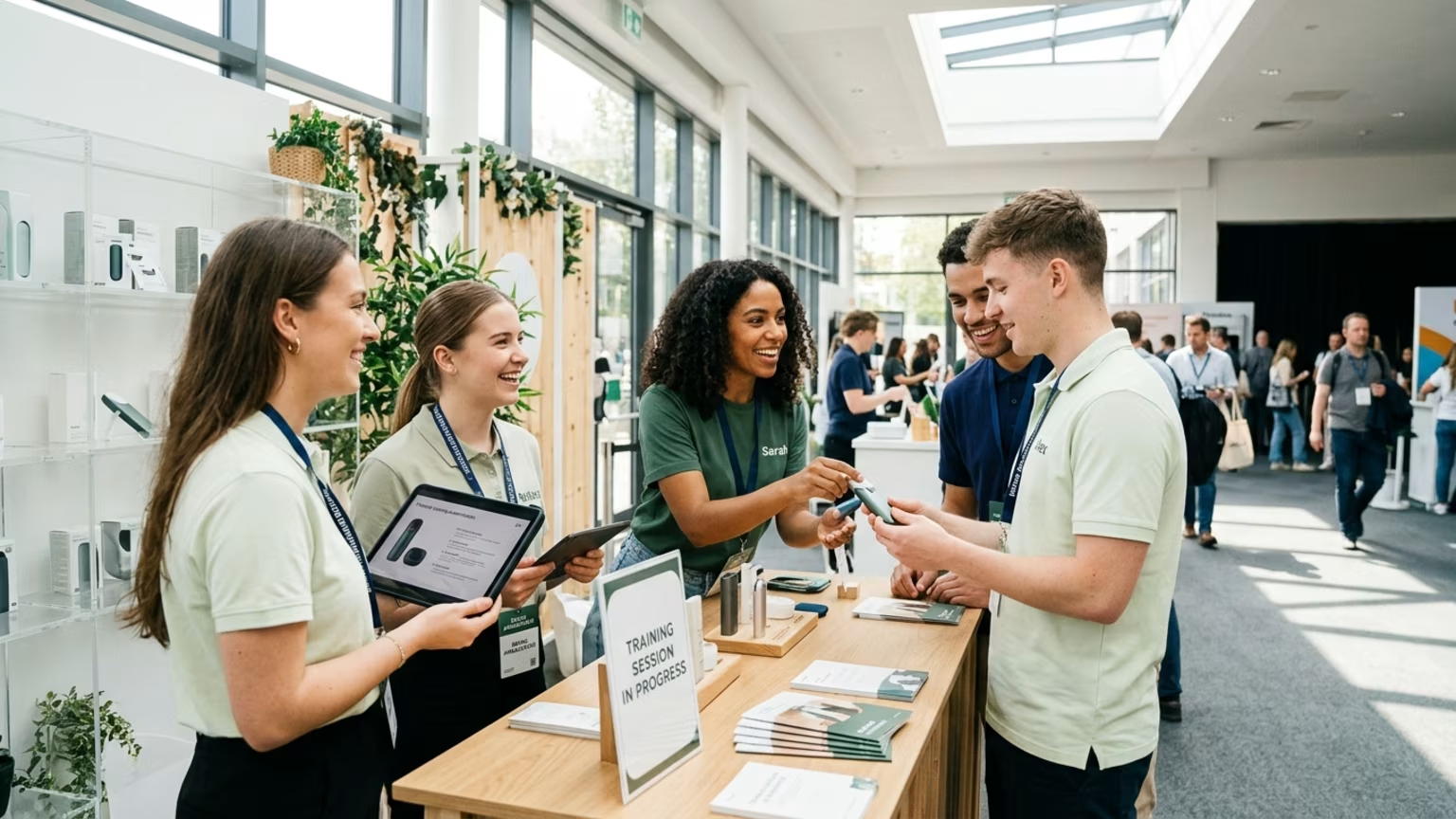
To achieve these outcomes, ambassadors need rigorous and highly specific instruction. Practitioner guidance recommends training ambassadors on brand history, key talking points, approved product facts, and prohibited claims. The training must also cover escalation contacts, lead capture instructions, privacy requirements, and uniform standards. Finally, they need strict instruction regarding break schedules, photography restrictions, inventory procedures, and emergency information.
Rote memorization is useless if the staff member cannot read social cues. They must know exactly when to push for a sale and when to back off. Training programs must focus heavily on judgment and boundary setting. Product training should cover not only what to say, but also what not to say and when to call a manager.
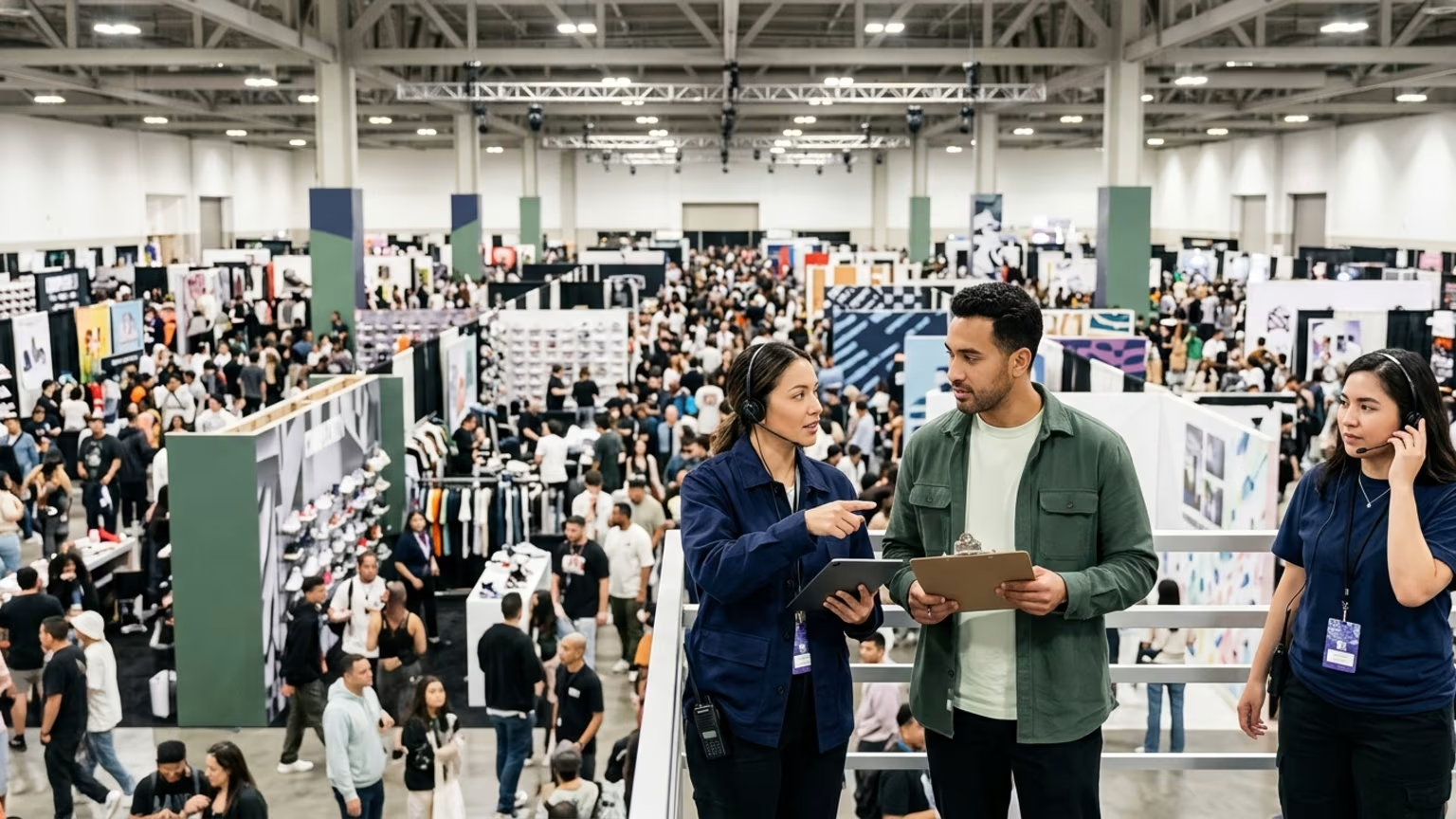
Staff must also know exactly how to handle unexpected consumer behavior. For events approaching or exceeding 100 guests, one staffing checklist recommends an on site supervisor to manage real time communication. If a consumer asks a difficult technical question, staff must know exactly when to escalate. In our experience, this operator grade discipline ensures every consumer interaction remains safe and commercially productive.
The specific context of the audience also dictates the required training approach. Guidance for a large entertainment and pop culture activation recommends recruiting staff with prior convention or experiential experience, ideally around gaming, entertainment, or fan driven audiences. Understanding the culture of the attendees helps build immediate rapport. This localized expertise allows brands to build high performing brand activations that generate actual retail meetings rather than just temporary noise.
A high volume event can easily produce weak outcomes if staff fail to qualify, educate, or convert interactions. You cannot judge an activation solely by the amount of foot traffic passing by your designated footprint. Instead, you must track ambassador level and team level measures to understand true performance. Measuring confirmed attendance, on time arrival, and training completion establishes a baseline for operational reliability.
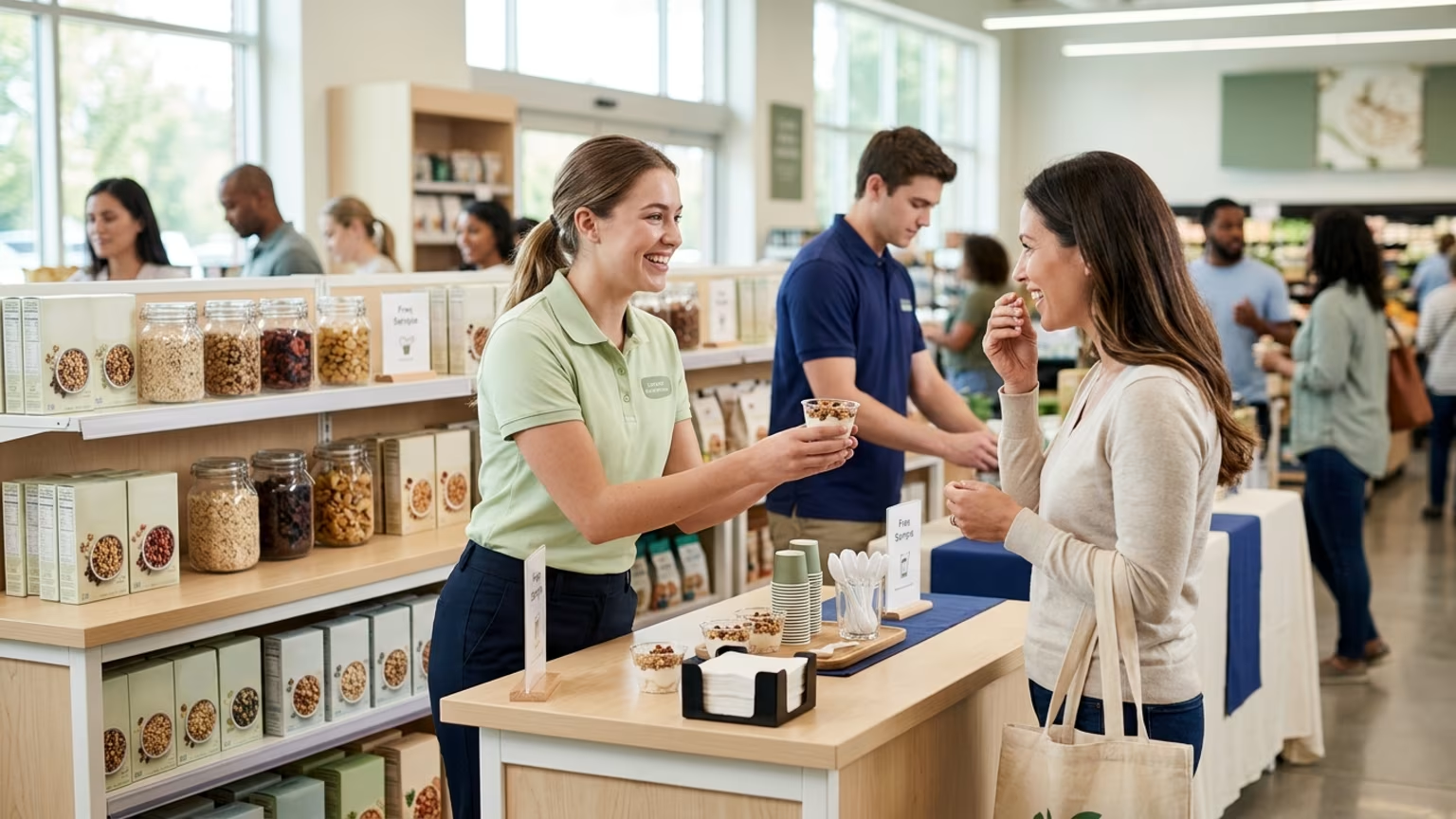
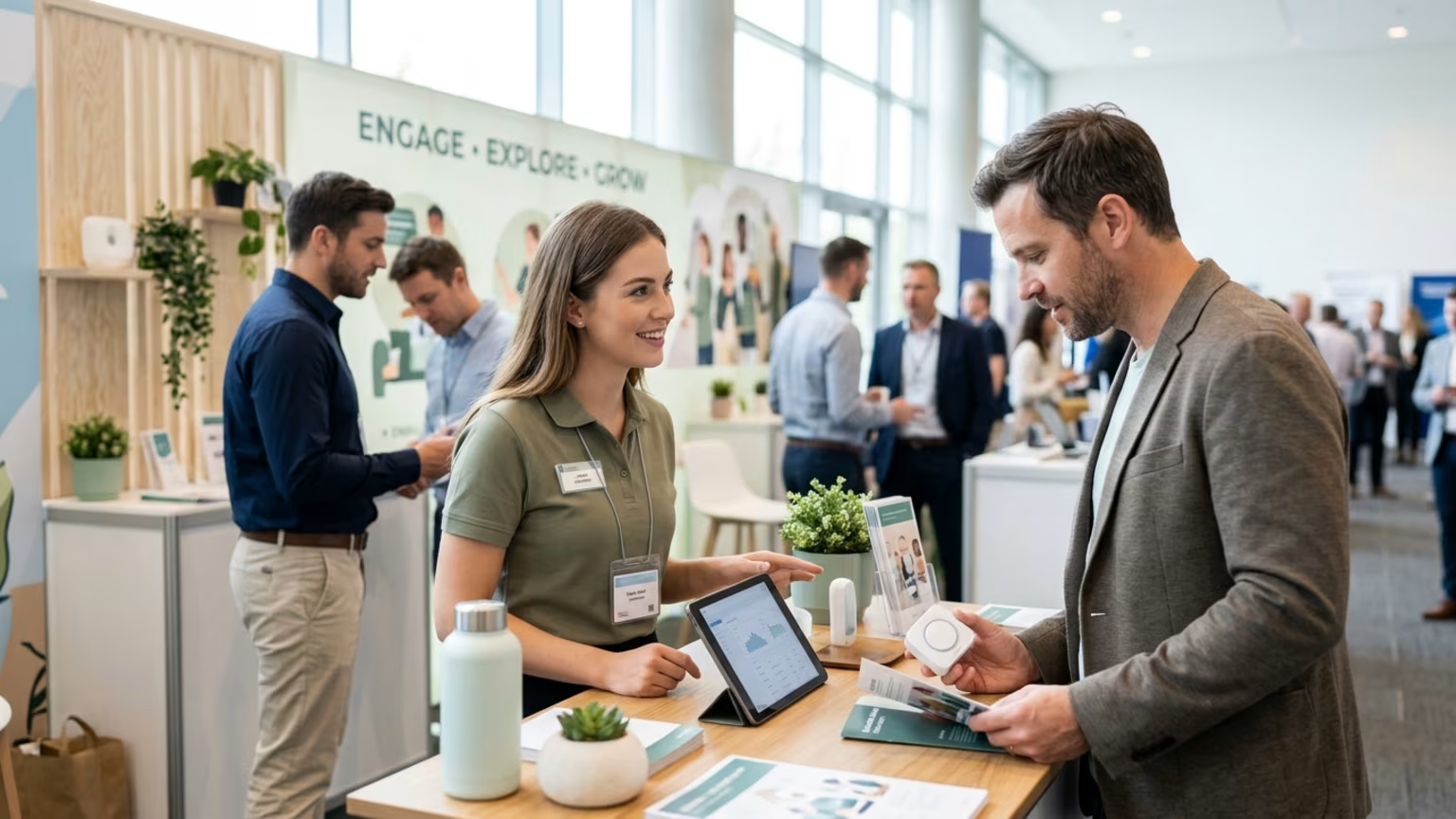
Experiential measurement requires connecting staff behavior directly to tangible business outcomes. A sampling program should track samples served, trial rate, purchase intent, and retail conversion. A trade show presence must be evaluated on qualified scans, meetings booked, and actual pipeline contribution. By clearly defining these metrics before launch, you give your field staff a concrete target to hit.
The reporting model must accurately reflect the quality of the interactions taking place. Gathering consumer feedback, noting compliance incidents, and tracking inventory accuracy are all critical steps for proving campaign value. If your team cannot accurately complete an end of shift report, calculating your true return becomes nearly impossible. This relentless focus on data collection separates amateur event planners from true experiential marketing experts.
A premium consumer experience relies entirely on the people delivering it on the ground. When marketing teams demand structured training and strict accountability, live events shift from unpredictable expenses into reliable sales drivers. Consistency beats fleeting intensity every single time. Demanding flawless execution from your field teams is the only way to build lasting brand trust.
Treating brand ambassador recruitment as an afterthought guarantees chaotic interactions during your most critical regional deployments. Makai removes the burden of navigating complex event logistics, permits, and staffing, giving your team complete operational control. We deploy our Mobile Sampling Tours capability to deliver your brand directly to audiences through on the go experiences that drive trial and awareness.

30 Years Experiential & Retail Activation Partner for CPG & Beverage Brands | Multi-Market Demos, Roadshows & Costco/Club Programs That Actually Sell