Robbie Thain
Founder, CEO

Spotify and Coach launched the Tabby Tour to blend live music with digital tracking. See how modular physical footprints drive measurable field execution.
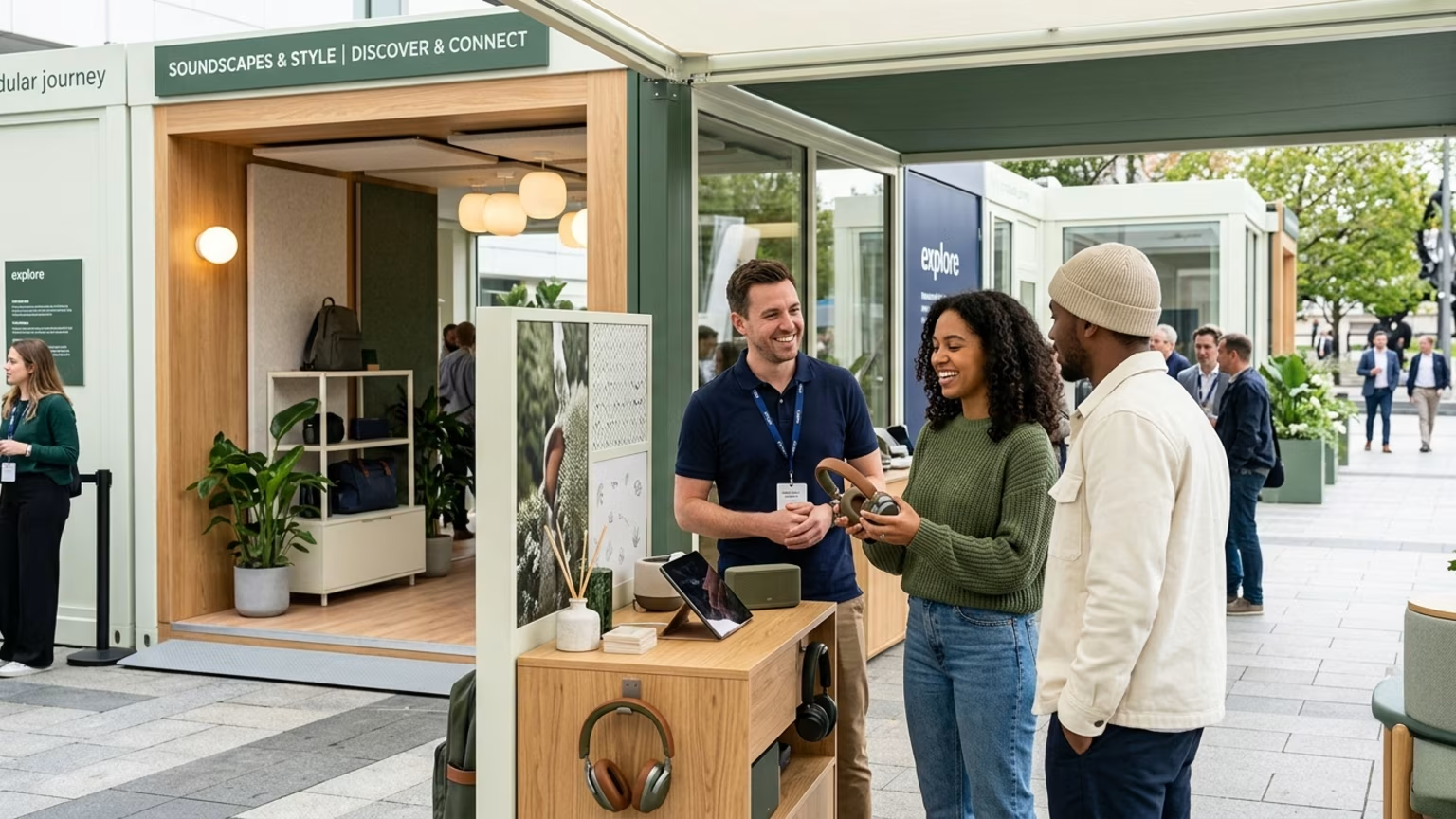
On September 16, 2026, Spotify and Coach launched the Tabby Tour as a traveling physical and digital experience. The activation began in New York City and will continue through early 2027. The public schedule outlines stops at college campuses and high traffic venues across the United States, the United Kingdom, Japan, and South Korea. This campaign turns a traditional product showcase into a highly coordinated mobile operation.
Spotify utilized its in house AUX consultancy to design the tour around a highly customized bus. This central vehicle serves as the operational anchor for multiple interactive spaces focused on finding new music and creativity. Visitors start their journey at a dedicated ticket booth displaying special edition Tabby bags. At this specific station, attendees can pick up customizable Coach hangtags embedded with functional Spotify playlist codes.
The physical footprint extends far beyond a simple vehicle display to encourage longer dwell times. A dedicated photo booth allows guests to print personalized concert ticket keepsakes directly on site. A separate community message board invites attendees to write responses to specific prompts on custom cards. These physical cards connect audiences across different cities as the roadshow travels from market to market.
Live entertainment provides a substantial draw for local audiences at each scheduled stop. A dedicated main stage allows artists to share stories about their personal creative journeys before closing the event with a performance. Billboard reports that the musical lineup includes Tinashe and Rachel Chinouriri alongside acts like Nxdia and Fousheé. The space also features a styled photo entrance decorated with musical instruments and touring equipment.
A secondary digital layer guarantees the experience continues long after visitors leave the physical space. A digital tool named Courage Frequency analyzes a user's Spotify listening data to assign one of six Courage Signs. This specific system generates a personalized music playlist that guests can save to their personal accounts. A companion tool called Track the Tour follows the bus in real time to reveal upcoming locations and artist lineups.
Coach is also publishing six Courage Signs playlists directly on its Spotify brand profile. These curated collections feature emerging artists connected to the global route of the tour. This additional digital touchpoint gives consumers another way to interact with the campaign without leaving their homes. It effectively turns a localized physical event into a global digital asset.
For consumer packaged goods and beverage marketers, this campaign establishes a vital operational blueprint. Many consumer packaged goods brands utilize mobile tours to scale their physical marketing reach. The roadshow demonstrates how brands must blend physical touchpoints with immediate digital actions to drive measurable engagement. Every interactive station on the route serves a specific data collection or retention purpose.
We blend physical and digital activations by integrating QR codes and mobile technology into a cohesive layer across retail and tour experiences. This operational upgrade captures true shopper intent and routes it directly into a measurable sales pipeline. When a snack brand distributes product samples without a digital capture mechanism, the relationship ends at the trash can. If that same brand implements a modular footprint with personalized digital offers, the activation builds a highly repeatable consumer connection.
The official itinerary confirms thirteen specific stops across four distinct international markets. The published United States schedule begins in New York on September 16 before moving to Boston and Washington. The route continues through Columbus and Iowa City before reaching Atlanta in November. The final announced domestic stops include Charlotte on November 10 and Nashville on November 13.
International venues include Manchester and London in the United Kingdom. The tour also visits Tokyo and Osaka in Japan. The South Korean leg features a single scheduled stop in Seoul on October 30. Although neither company has publicly disclosed attendance figures or commercial conversion results, their methodology remains operationally sound.
They are proactively solving the common problem of inefficient post event follow up and CRM routing. By turning physical keepsakes into digital access points, they ensure the interaction survives the initial consumer visit. Brands can easily measure return on investment on mobile tours when the footprint actively funnels visitors toward a measurable digital action.
Marketing directors face intense pressure to justify the cost of touring physical assets. Executives want to see qualified pipeline rather than just vanity metrics like total foot traffic or social media impressions. The architecture of this music tour directly answers that operational demand. By forcing a digital scan to access a personalized playlist, the brands capture hard interaction data instantly.
Deploying this level of complex architecture across multiple geographic markets triggers significant downstream operational challenges. Multi station layouts require rigid queuing protocols to prevent scattered attention and poor booth flow. Field managers must direct foot traffic seamlessly from the ticket booth to the photo station and finally to the main stage. If the crowd bottlenecks near the entrance, the entire physical experience breaks down and frustration builds.
The heavy reliance on customizable merchandise demands flawless inventory management at a national level. Touring crews must track stock levels of the specialized hangtags and message board cards constantly. A mid event shortage of physical assets directly neutralizes the digital data capture strategy. If the materials run out, the campaign loses its primary mechanism for extending the visitor relationship.
Technical production standards must remain perfect regardless of local weather conditions or complex venue constraints. The digital integration requires reliable internet connectivity to scan codes and sync Spotify listening data instantly. Field marketing leaders have to implement rigorous contingency planning frameworks to manage potential connectivity failures. When a digital tool fails to load on a busy college campus, the attendee will simply walk away.
Consistent brand messaging also requires extensive field staff training across multiple geographic markets. Brand ambassadors must understand how to operate the photo booths and troubleshoot the personalized playlist generators. If a guest asks a question about their Courage Sign, the field staff must deliver a coherent explanation immediately. Inconsistent local staffing will quickly degrade the premium nature of the national campaign.
Permitting and venue compliance become exponentially harder when live performances are added to the public schedule. Local jurisdictions require strict adherence to sound ordinances, crowd control measures, and safety regulations for live music events. Touring teams must secure these complex approvals long before the branded bus arrives in a new city. Every local activation has to navigate a distinct set of municipal rules without compromising the national brand standard.
Brand executives designed this layered consumer experience to reflect modern purchasing behavior patterns. Coach Chief Marketing Officer Joon Silverstein stated that the partnership was built directly on conversations with younger audiences. Silverstein explained that Gen Z consumers do not separate identity into discrete lifestyle categories. They view clothing, music, and community as interconnected elements of a single personal narrative.
Spotify Global Head of Business Marketing Bridget Evans reinforced this strategic structural alignment. Evans noted that the activation brings together the fashion brand's focus on confidence with the daily music connection provided by Spotify. The joint corporate effort explicitly seeks to merge online digital habits with offline physical interactions in real time.
The emphasis on self expression aligns perfectly with the demand for authentic brand interactions. Younger demographics quickly ignore marketing efforts that feel like traditional sales pitches or generic billboard advertisements. The combination of live storytelling from independent artists and customized merchandise creates a highly participatory environment. It gives attendees a compelling reason to spend time with the brand on a busy afternoon.
This integration is not limited to the touring bus or the live event spaces alone. Billboard reports that selected Coach retail stores will also feature listening stations connected directly to the campaign. Shoppers can scan QR codes in store to access the digital experience while browsing physical merchandise. This retail extension proves that experiential event mechanics can successfully transition into traditional brick and mortar environments.
The branded bus that rolled into New York City on September 16 set a rigorous standard for modern field logistics. It proved that successful consumer activations must function as highly integrated physical and digital systems. A clever creative concept will always fail if the local field execution cannot support the required technology layers.
When you plan your next national roadshow or retail demonstration program, take a hard look at your operational design. Does your field footprint actively capture consumer intent and route it into a trackable system, or are you just hoping the crowd remembers your name?
Turning a multi city experiential tour into measurable digital engagement demands rigid oversight of every physical touchpoint. When low quality leads from crowded trade shows limit your pipeline, Makai takes total control of your execution. Through our Retail Demonstrations capability, our trained brand ambassadors drive in store sales through real conversations and product trials.

30 Years Experiential & Retail Activation Partner for CPG & Beverage Brands | Multi-Market Demos, Roadshows & Costco/Club Programs That Actually Sell