Robbie Thain
Founder, CEO

Learn how to transform trade show booths into launching pads for co-funded retail activations and roadshows that drive measurable sales lift and pipeline.

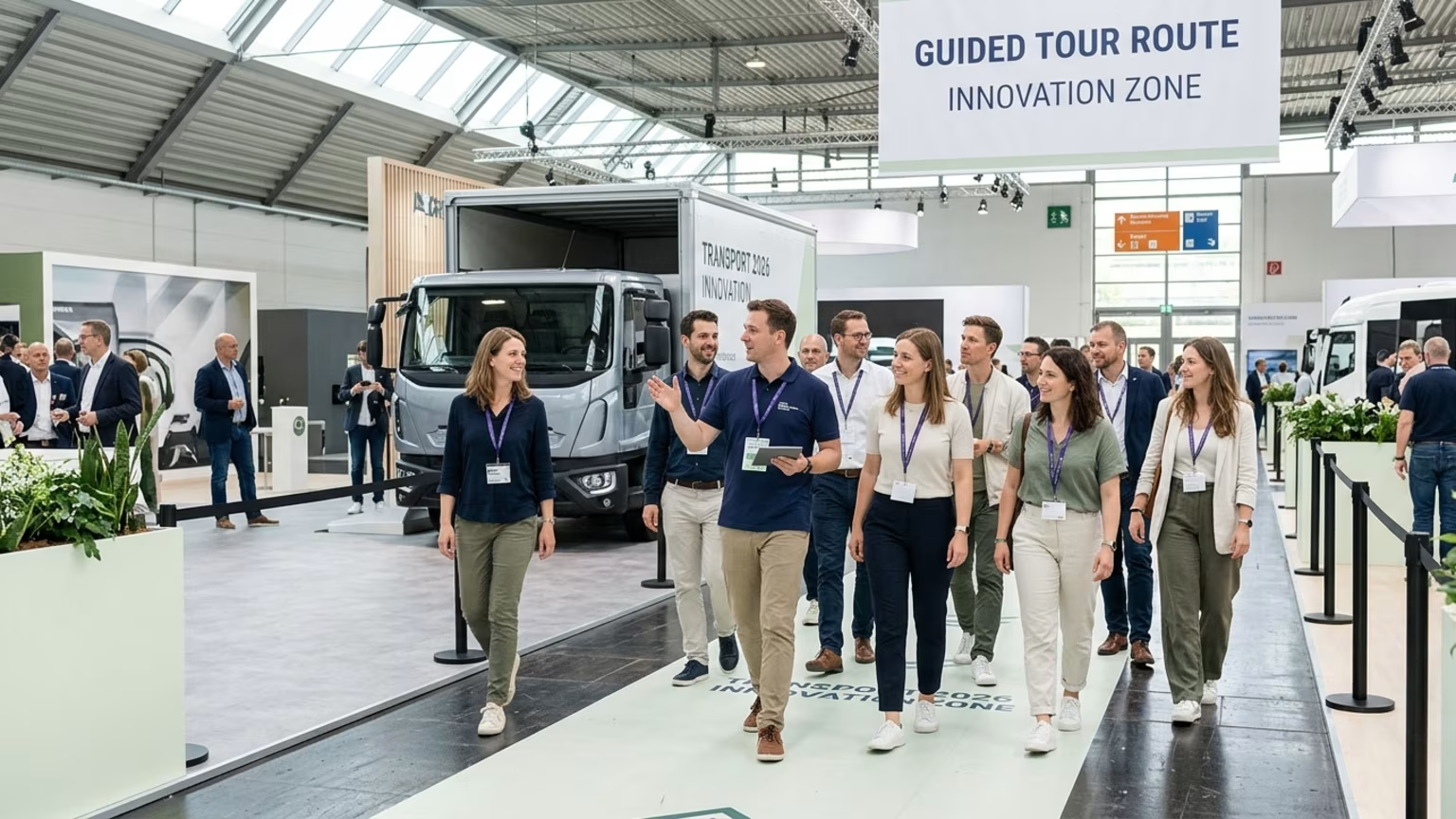
Most trade show booths operate like expensive isolated islands. Marketing teams spend six figures to build a walled fortress of product displays and branded giveaways. The smartest operators realize a booth is a launching pad to secure co-funded retail and sponsorship activations.
The best trade show strategies shift focus from solo brand promotion to co-planning impactful campaigns with retail partners. You will learn how to structure joint metrics, co-fund street teams, and design post-show roadshows that accelerate product sell-through.
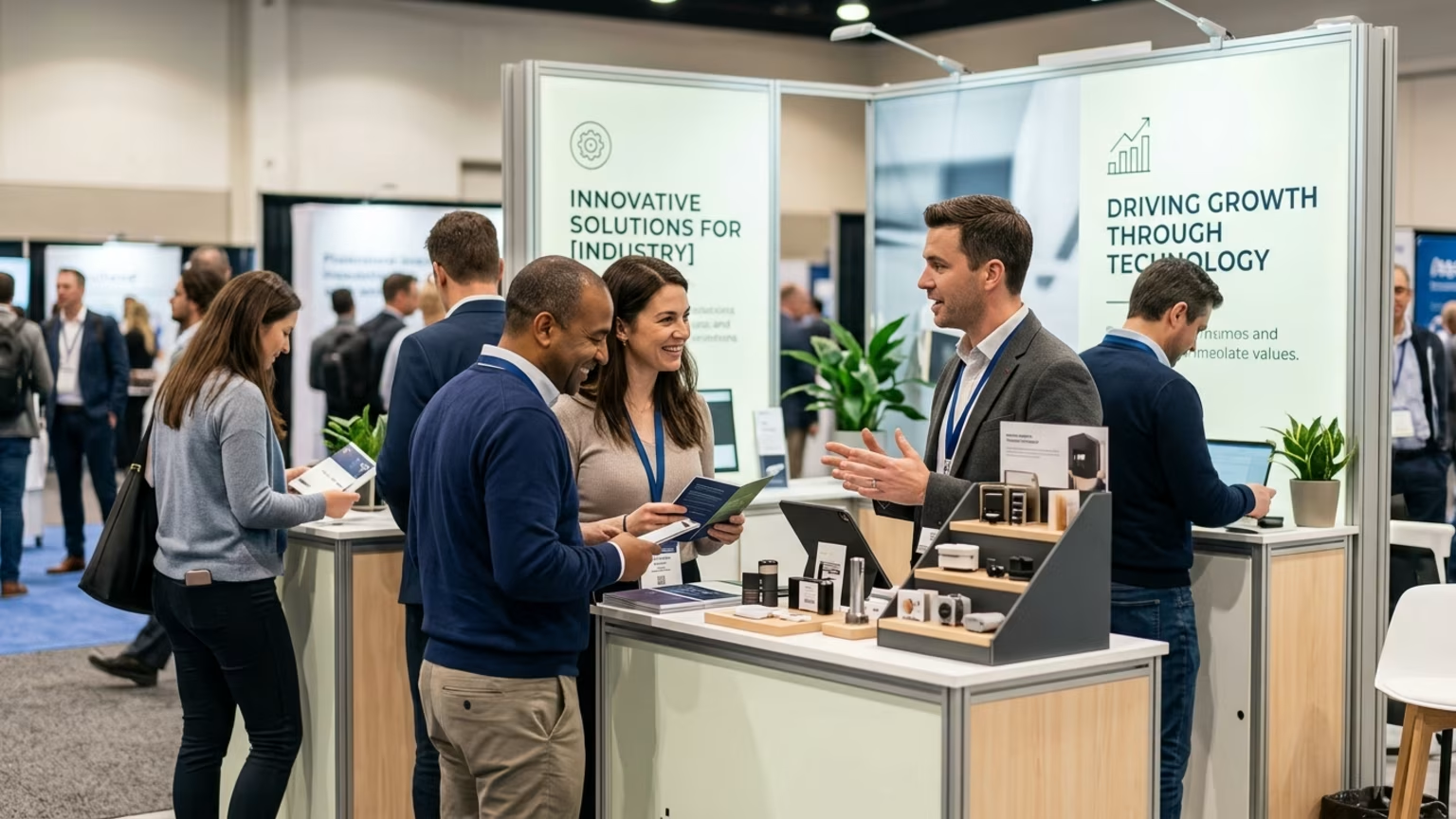
The expo floor is a battlefield of noise and flashing screens. Competitors shout over each other to scan the exact same badges. You stand in your booth watching key retail buyers walk past to your competitors. When you finally get five minutes with a major distributor, the conversation stays completely superficial.
You hand them a product sheet and hope they reply to your follow-up email next week. This fragmented approach guarantees a low Return on Investment. It leaves your sales team staring at a spreadsheet of unengaged leads instead of actual pipeline. CPG brands cannot afford to waste these rare face-to-face interactions.
Field marketing leaders carry the heavy burden of justifying physical event costs to skeptical financial officers. Every dollar spent on an expo space feels like a gamble when attribution remains murky. You collect business cards from regional distributors, put them in a CRM system, and wait for magic to happen. Hope is not a scalable business model for modern experiential campaigns.
The pressure mounts when leadership asks for proof of sales lift. They want to see how that massive trade show budget translated into real retail velocity. Handing out thousands of free snacks does not pay the bills. You need a structured mechanism to turn those fleeting conversations into committed retail partnerships.
To break this cycle, you must treat your trade show presence as a partnership incubator. Instead of pitching products, you co-plan off-site events and in-market activations with your most valuable retailers. This framework aligns your booth operations directly with shared business goals. You transition from a vendor begging for shelf space to a strategic ally funding joint success.
It involves mapping out post-show store blitzes, setting joint metrics, and proving you can drive actual consumer demand. By pooling resources, both parties reduce financial risk and multiply their street-level impact. The smartest brands use the trade show to finalize these plans in person. It is much easier to secure budget commitments when you are sitting across from the retail buyer.
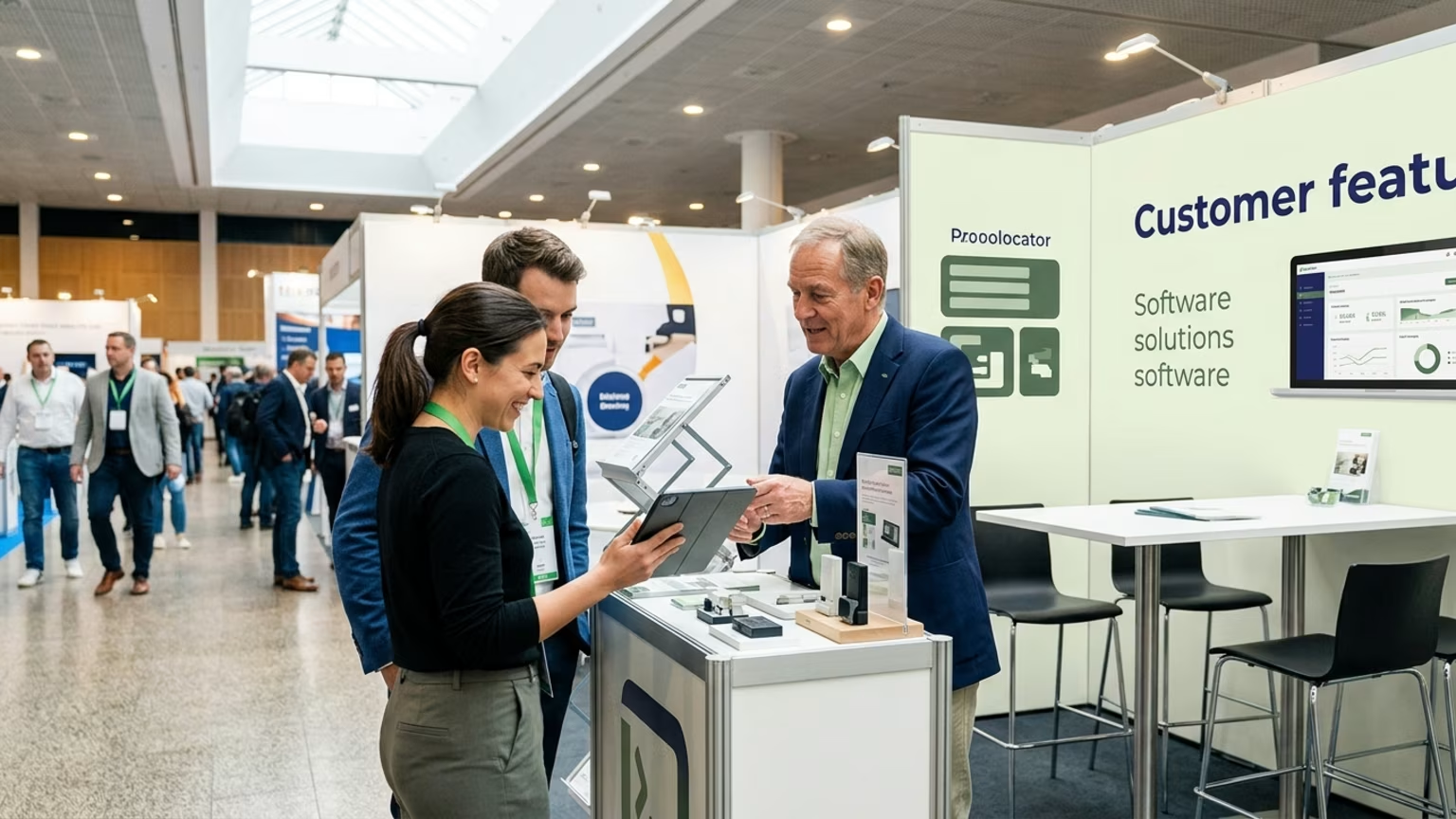
Think of your booth as a high-stakes meeting room rather than a billboard. You want to bring your retail counterparts into a dedicated space to review regional sales data. Show them exactly where their stores are underperforming and offer a physical activation as the solution. This transforms a standard buyer meeting into a collaborative problem-solving session.
This is where integrating surround-show campaigns becomes incredibly powerful for your brand. You invite the retail partner to an exclusive off-site dinner or a VIP activation near the convention center. You present a data-backed plan showing exactly how a co-funded mobile sampling tour will drive foot traffic to their specific locations. The conversation shifts from wholesale pricing to active consumer acquisition.
Transforming a trade show handshake into a funded retail activation requires a rigorous sequence of events. You cannot improvise this on the convention floor. Follow this structured framework to operationalize your partnership.
Tracking success requires looking past vanity numbers like booth scans or total samples distributed. Lead metrics should include the number of joint strategy meetings booked and the volume of co-funded budget secured. You must track the immediate foot traffic generated during your partner activations. High engagement on the ground is the first indicator of a healthy retail campaign.
Industry analysts report that highly measured experiential campaigns secure repeat funding at three times the rate of unmeasured events. You must track cost per acquisition during these post-show retail blitzes. Compare this metric directly against your digital ad spend to highlight the efficiency of physical marketing. When you prove that a live product demonstration acquires customers cheaper than a social media ad, budgets unlock instantly.
Lag metrics are where the true financial impact becomes visible to your leadership team. Measure the exact percentage increase in retail sell-through across participating locations over a ninety-day window. Track the retention rate of new customers who trialed the product during your joint events. Compare the performance of activated stores against a control group of non-activated locations.
Calculate the overall pipeline velocity of deals tied directly to these partnership campaigns. A successful co-marketing program should drastically shorten the time it takes to negotiate secondary placements or endcap displays. When a retailer sees you actively driving consumers into their aisles, they reward you with better real estate. Hard data is the only currency that matters in these negotiations. Book a strategy call with our team to map out these measurement frameworks.
Executing these co-branded campaigns requires mastering intense logistical puzzles. You have to move event assets from a convention center directly into a retail parking lot. Coordinating shipping, local permits, and brand ambassador schedules demands operator-grade discipline. One missed delivery can ruin a carefully planned launch window and damage your retail relationship permanently.
Brands often underestimate the complexity of managing perishable inventory across multiple state lines. You need strict cold chain compliance if you are sampling a new beverage or frozen food item. Relying on the retailer to handle your promotional stock is a massive operational mistake. You must control the entire supply chain to guarantee your product shines during the live event.
This is where professional storage and logistics support becomes non-negotiable for growing CPG companies. You need a central hub to inspect, clean, and route your activation gear between events. Proper maintenance guarantees your displays look pristine whether they are in a busy expo hall or a local grocery store. Treat your physical assets with the same respect you give your digital infrastructure.
Retailers like Costco provide a perfect template for co-planned physical marketing. A successful club store roadshow requires immense coordination between the brand and the retail buyer long before the event starts. You do not just show up with a folding table and a box of samples. You build a strategic deployment plan that aligns with the exact regional foot traffic patterns of the retailer.
When you pitch a similar model at a trade show, you speak the language of retail operators. You offer them a turnkey solution that drives immediate trial and clears inventory rapidly. This shifts the power dynamic from a traditional vendor relationship to a true business partnership. You become a revenue generator rather than an expense line item.
Operating at this level demands strict adherence to brand standards and staffing excellence. Your field teams must represent the product with the same passion as your internal sales directors. This means investing heavily in brand ambassador training before a single sample is poured. Excellence in the field dictates the longevity of your retail partnerships.
Consider a rapidly growing snack brand preparing for a massive national expo push. Instead of just pouring samples at their booth, they approached a major grocery chain with a co-marketing pitch. They used their booth as a staging ground to finalize a joint regional sampling tour.
We design mobile activations and roadshows that accelerate consumer trial, build trust, and boost retail velocity during 90-day product launch windows. Our structured approach transforms initial product trial into sustained consumer confidence and retail performance. The brand applied this exact methodology to their new retail partner.
By launching co-branded street teams right after the show, they drove a massive spike in localized sales. The retailer saw immediate foot traffic, and the brand secured premium endcap placement across fifty locations. The trade show was just the catalyst for a much larger revenue-generating machine. This proves that transitioning event momentum into pop-up roadshows yields massive dividends.
The most powerful business relationships are not forged by exchanging business cards under fluorescent lights. They are built on the shared risk of stepping out into the real world. When you commit to driving foot traffic together, the empty promises of the expo hall fade away. What remains is a lasting alliance rooted in undeniable results.

30 Years Experiential & Retail Activation Partner for CPG & Beverage Brands | Multi-Market Demos, Roadshows & Costco/Club Programs That Actually Sell