Robbie Thain
Founder, CEO

Marketers are materially increasing budgets for event tech. Learn how mobile apps, CRM integrations, and standardized data turn trade shows into measurable ROI.
Improvado reports that AI-driven automation in marketing analytics has been adopted by 56 percent of marketers in 2026, up from 31 percent in 2024. This shift matters because manual event data workflows can no longer keep pace with modern attribution models. Marketers are moving past manual data entry and upgrading event technology to turn trade show interactions into measurable revenue.
Retail demo programs get judged on cups poured rather than incremental pipeline. That mismatch is exactly why live activations often feel chaotic and disconnected from real sales. Field teams spend days scanning badges with rented hardware. They scribble notes on business cards and promise to follow up soon.
By the time the booth breaks down, the team is exhausted. Data sits in unorganized spreadsheets for weeks. Blinq notes that lead conversion rates fall sharply after 48 hours, which makes fast post-event follow-up critical to Return on Investment. When lead processing takes too long, your best prospects simply buy from competitors.
Callbox defines event lead generation as attracting, capturing, and qualifying high-intent B2B prospects via conferences, trade shows, webinars, and summits. However, managing this process manually ruins the experience. Without proper systems, your sales team receives poor quality information that they cannot trust.
Brands spend massive portions of their marketing budgets securing premium booth locations and designing beautiful experiences. However, that investment wastes away when the final metric is merely the number of brochures handed out. The lack of standardized data collection means marketing leaders walk into planning meetings without hard evidence of success. This missing link between physical presence and digital revenue tracking is a critical operational flaw.
The current solution requires treating live events as integrated data channels. According to MarketsandMarkets, the global Event Management Software Market is expanding rapidly. Market researchers project the market size rising from about USD 18.6 billion in 2026 to USD 36.8 billion by 2031, reflecting a 14.6 percent growth rate. Marketers are funding this massive growth to gain visibility.
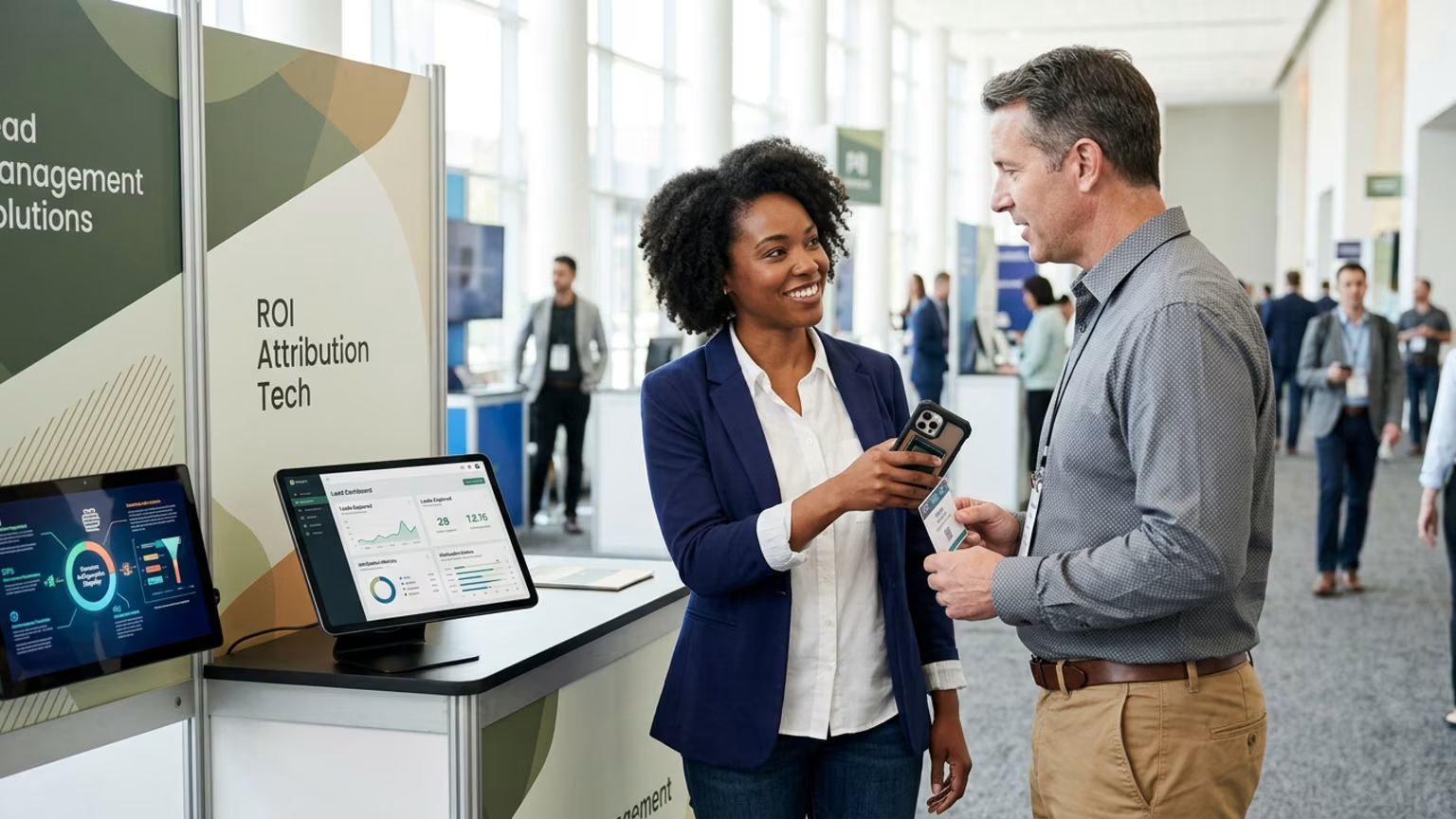
Effective use of lead capture software is the single most important factor in maximizing event ROI, as argued by Blinq. Teams must equip staff with mobile applications that support universal scanning and instant data syncing. Event-Technology Portal reports that updated exhibitor lead capture apps now support mobile note-taking, tagging, and direct CRM sync via open APIs. According to Event-Technology Portal, many recent event tech releases highlight open APIs and integrations across registration, marketing automation, and event apps to provide a unified view of attendee behavior.
Event-Technology Portal notes that event organizers increasingly rely on specialized platforms, with travel management apps and exhibitor lead systems now central to planning and measurement. Major players are recognizing the need for advanced software. ContentGrip reports that Cvent plans to invest about $1 billion in technology, AI, and product innovation between July 2026 and July 2029. This massive capital commitment highlights how central tech has become to planning physical activations.
Counterten highlights data standardization across events and teams as a key benefit of using lead capture software. When every field representative uses identical data entry fields, comparing performance across different activations becomes simple. This uniformity allows regional managers to identify which specific trade shows generate the highest quality conversations. Consistent data architecture transforms isolated field events into a coherent marketing channel.
Captello positions itself as a system of record for third-party events and competes with Cvent, iCapture, vFairs, and Webex Events. ContentGrip describes Captello’s Event Intelligence Platform as enriching data on attendees, exhibitors, sponsors, and speakers. This enriched data then syncs into CRM and marketing automation platforms to prioritize outreach.
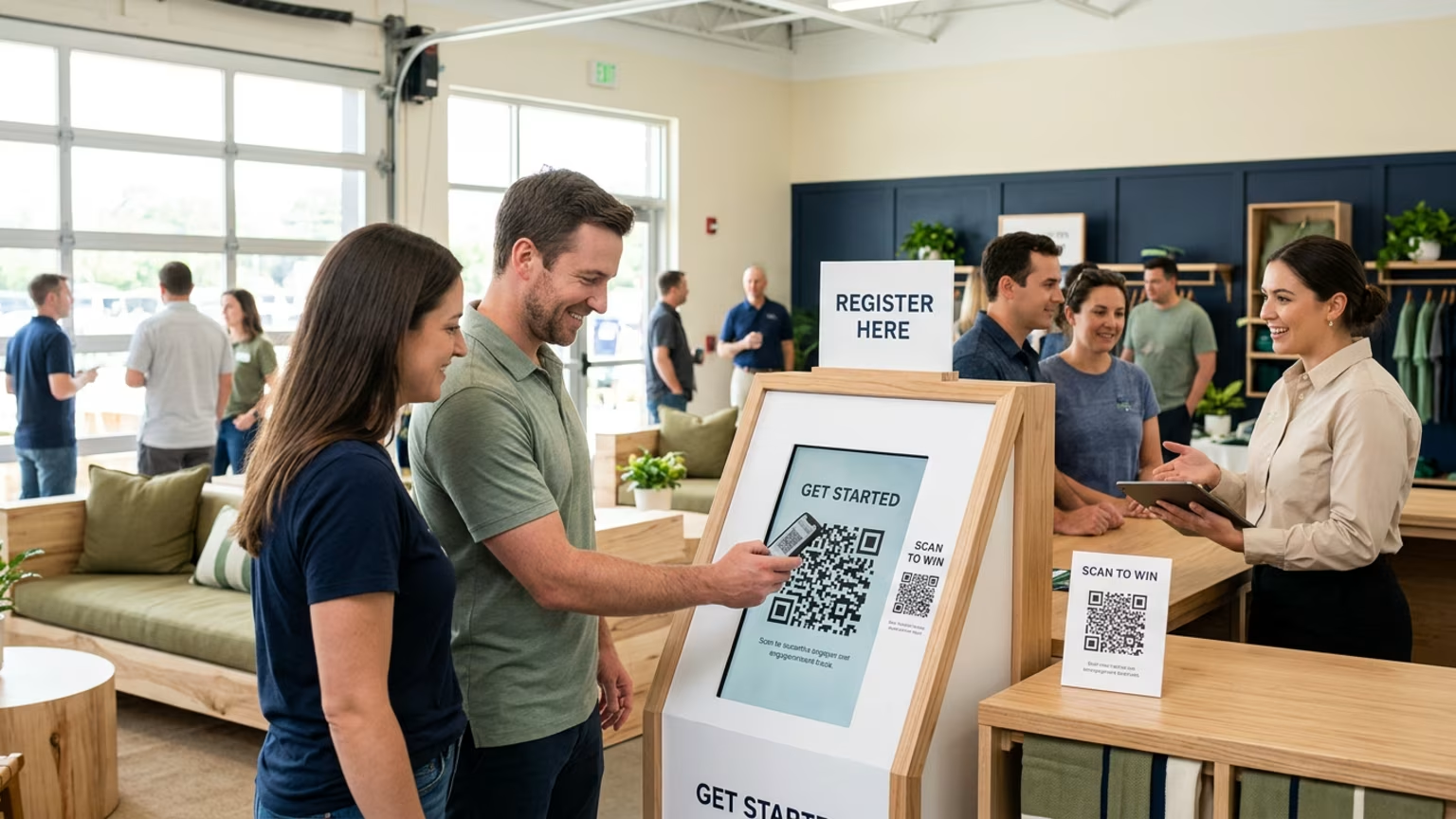
We blend physical and digital experiences by integrating mobile technology and QR codes into a cohesive layer. This upgrades real-world retail and event activations to drive connected results. Investing in automated lead systems creates a predictable revenue machine.
Transitioning to a modern data framework requires strict field discipline. Without structured workflows, even the best applications fail to produce pipeline. Here is how to execute a high performing strategy.
Replace outdated clipboards with unified lead capture applications that your field team can use anywhere. OnSpot Social argues that elite teams use unified lead capture apps with universal scanning, offline reliability, gamification, and instant CRM automation to capture leads effectively. This standardization prevents rogue data collection. Every team member uses the exact same interface to record conversations.
Automate immediate responses for high intent prospects directly from the trade show floor. Responding to a lead within five minutes can increase conversion rates by up to 8 times, according to OnSpot Social. Setting up automated email triggers gives your brand an immediate advantage over competitors. Speed creates trust and proves your operational competence to potential buyers.
Software should communicate instantly without requiring manual data formatting. Blinq recommends that modern lead capture tools provide a mobile-first experience, universal scanning, AI enrichment, and native CRM integrations. Avoid manual exports that delay outreach and introduce human errors. Integrating systems natively keeps your data clean and actionable.
Data must connect directly to the exact activation where the conversation occurred. Blinq recommends configuring separate campaigns per event so leads can be auto-tagged and attributed on a one-to-one basis to specific events. This discipline ensures that your finance team can measure the exact cost per lead. Proper tagging removes the guesswork from performance evaluations.
Assign value based on retailer type and engagement depth to prioritize the right conversations. Counterten states that lead capture software can turn event engagement into tangible business results by streamlining data collection, follow-up, and analysis. When representatives input specific answers, the system can automatically grade the prospect. This grading ensures that top tier accounts receive personalized phone calls immediately.
Attribution models are shifting quickly. Improvado cites forecasts that last-click attribution usage will decline by roughly 45 percent by 2027. Teams are building holistic frameworks instead.
Enterprise adoption of integrated multi-touch attribution and marketing mix modeling frameworks reached 27 percent in 2026, more than doubling from 14 percent in 2024. Gartner predicts organizations using integrated approaches will achieve 40 percent efficiency gains by 2028 compared to those using attribution or modeling in isolation. Event marketers must track specific metrics to align with these sophisticated models.
Your leading metrics should focus on engagement quality and speed. Track the percentage of leads scored onsite and the average time to first follow-up. Using centralized event data frameworks helps you monitor these inputs daily. Today, brands investing heavily in sponsorships require real-time data collection to validate their massive event spend.
Analytics tools cannot repair broken data from the field. If your representatives skip data fields or mislabel prospect intent, your expensive modeling software will generate inaccurate revenue predictions. Field governance and software adoption must walk hand in hand. Training your staff to use these mobile capture tools properly protects your larger technology investment.
Your lagging metrics must prove pipeline impact. Measure the cost per qualified opportunity, 90-day conversion rates, and total attributed revenue. Leaving behind vanity event metrics allows you to defend your budget during planning season.
Trade show floors will always be noisy and unpredictable. You cannot control the foot traffic, the competing booths, or the rented hardware malfunctions. However, you can control how your team captures and acts on data.
By replacing manual scanning with integrated mobile tools, your team can pack up knowing the work is already done. Leads are already routed to sales, automated emails are sent, and follow-ups are scheduled. The chaos is gone, replaced by clear and measurable pipeline. Book a strategy call with makai to build your next measurable activation.

30 Years Experiential & Retail Activation Partner for CPG & Beverage Brands | Multi-Market Demos, Roadshows & Costco/Club Programs That Actually Sell


Since 1995, Makai has been connecting brands with people through live experiences, retail programs, and national activations.