Robbie Thain
Founder, CEO

Strategic field teams deployed in the first 90 days provide physical validation, prevent phantom distribution, and secure retail shelf space for new brands.
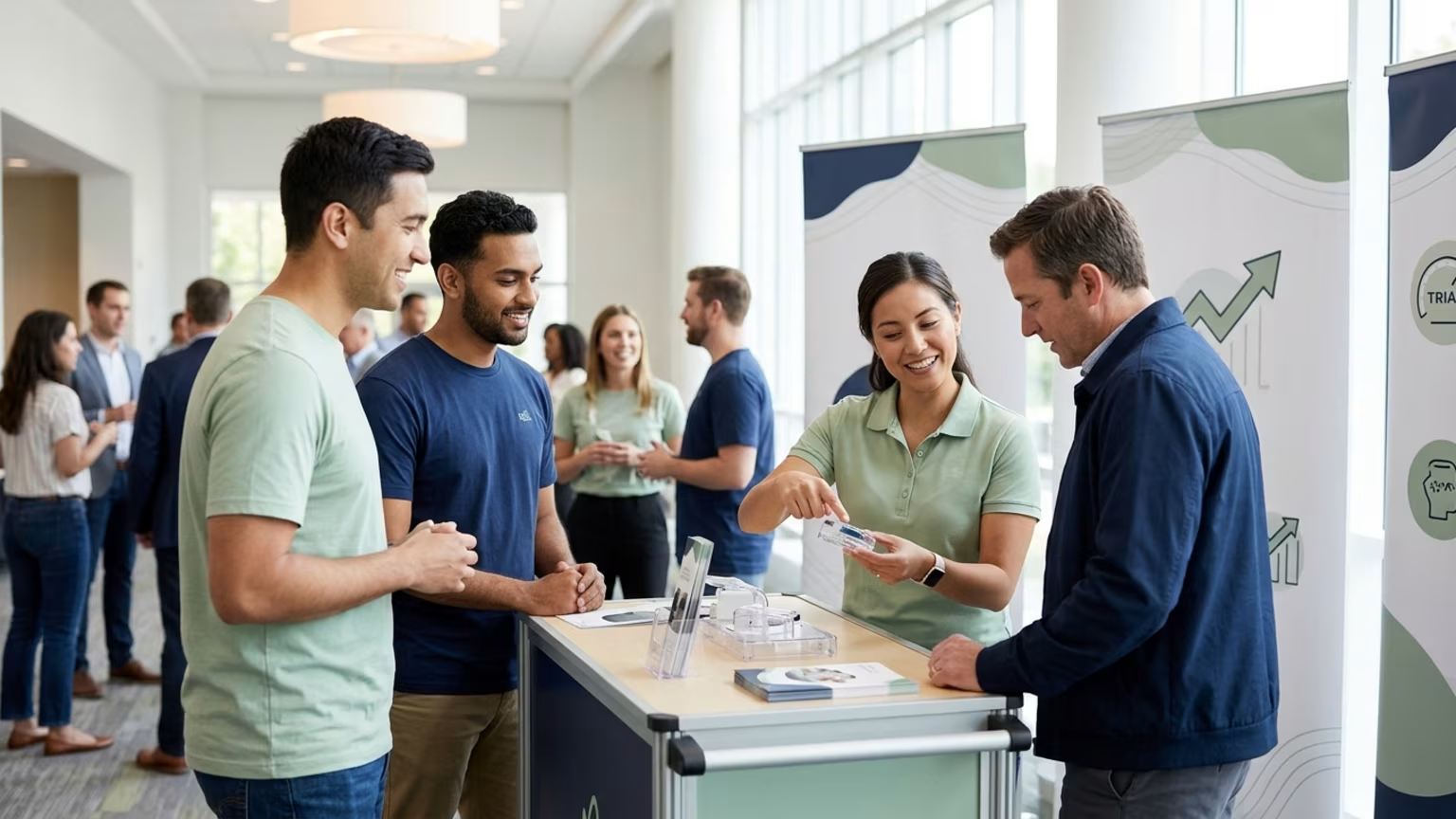
A folding table in aisle six, or a retrofitted airstream in downtown Austin. For new retail products, the first 90 days are a definitive test of survival. Retail buyers use this exact period to observe initial rotation and validate their shelf placement decisions. If product velocity does not establish itself quickly, the chain often cuts the assigned space entirely.
To survive this critical window, marketing leaders face a strict strategic choice regarding consumer trial. Do they deploy localized trained ambassadors inside the store, or do they launch mobile tours to aggregate massive crowds? The right execution model dictates market survival.
This tactic places field staff directly at the point of sale. The core mechanic relies on intercepting consumers who are already pushing a cart and carrying a wallet. Field teams set up a modest footprint mere steps from the targeted product shelf. They offer immediate physical validation of a new item through taste, touch, or active demonstration.
The logistical constraints of this approach are highly rigid. Teams must secure store-level approvals and coordinate delivery schedules precisely. If the product is not on the shelf when the ambassador arrives, the activation fails completely. This demands strict inventory management and tight alignment with distribution partners.
Successful in-store programs execute the three critical movements of a product launch. First, they generate initial trial by intercepting shoppers in the aisle. Second, they convert that immediate trial into a confirmed repurchase by offering compelling educational points. Finally, they demonstrate sustained rotation to the retailer by maintaining high sales velocity over time.
A critical component of this rapid-response strategy is the pre-exit audit. Field teams verify that the product is in its negotiated space before their shift ends. They confirm the item is correctly priced and supported by proper materials. This administrative rigor guarantees the brand maximizes the short launch window.
The second approach pulls the brand out of the retail aisle entirely. Mobile sampling tours rely on custom vehicles, pop-up tents, and high-energy street teams to intercept consumers in public spaces. The core mechanic shifts from quiet in-store conversions to loud, highly visible public interactions. This tactic creates an unavoidable physical presence in targeted neighborhoods.
Execution and footprint differ drastically from retail demonstrations. Instead of working within the strict confines of a grocery chain, brands must navigate city permitting and complex routing. Teams manage large-scale asset logistics, weather contingencies, and variable crowd dynamics. The footprint is large, loud, and designed to manufacture its own gravity.
Rather than relying on existing retail foot traffic, mobile tours aggregate new audiences. Field teams engage thousands of people at festivals, office parks, or busy downtown intersections. This broad street sampling approach serves as a predictable conversion engine when synchronized with multi-channel digital efforts.
To manage the sheer scale of these operations, brands utilize specialized logistics and storage solutions. Field managers store sampling products and event gear centrally, shipping assets nationwide to keep activations on schedule. This backend infrastructure guarantees that street teams never run out of inventory during peak engagement hours. Consistent supply chain management is what separates a professional tour from a disorganized pop-up.
Retail demonstrations are the clear winner under three specific conditions. First, they dominate when a brand faces strict budget constraints and needs immediate, measurable sales lift. Placing an ambassador next to the shelf removes all friction between trial and purchase. Shoppers sample the product and place it directly into their carts.
Second, this tactic is mandatory when proximity to the shelf is the primary goal. Brands need to prove their value to retail buyers quickly. Marketing experts advise linking field team hours directly to register receipts. This closed-loop proof isolates the exact sales lift generated by the activation.
Third, retail demos are the best defense against phantom distribution. Trade-marketing research from EcomLabs360 highlights this operational trap, which occurs when outlets stock a new item but fail to receive a second delivery within 30 days. The product appears active in the system but remains functionally unavailable to shoppers. In-store ambassadors act as an insurance policy, guaranteeing the product stays visible, stocked, and moving.
Retail activations also allow brands to target prime real estate within the physical store. Savvy field managers avoid stationing demo teams near exits or express lanes where shoppers are in a hurry. Instead, they move products from the back of the store to high-visibility front areas during the activation. This strategic placement intercepts the consumer before their shopping basket is completely full.
To maximize these results, brands should deploy control market testing. Marketing strategists at OverseerOS recommend activating field teams in specific regions while maintaining matched control stores. This scientific approach helps brands isolate the actual lift generated by the physical trial. It provides undeniable proof to retail buyers that the product deserves its shelf space.
Mobile sampling tours dominate when a brand launch requires massive crowd aggregation. If a company is introducing an entirely new product category, relying on quiet aisles is a strategic error. Consumers need to see others engaging with the brand to build social proof. A high-energy tour creates the necessary momentum to validate a strange or novel product.
This tactic also wins when a brand needs to support a wide regional drop rather than a single retail chain. A mobile tour can hit multiple key markets in rapid succession. Field teams build localized hype that drives consumers to seek the product out across various retailers. This strategy forces distribution by generating consumer demand from the outside in.
Mobile activations also excel at producing digital content. Strategic frameworks outlined by Scalarly show that brands increasingly use micro-creator data as a proxy for turn rate. A stunning airstream activation provides the perfect backdrop for social media engagement. This localized buzz often reduces the need for traditional trade spend while building authentic consumer trust.
For tech and software launches, mobile pop-ups provide crucial physical touchpoints. Rapid-response support systems on launch day prevent initial user confusion from turning into negative reviews. Face-to-face interactions allow field teams to guide users through their first digital experience in a real-world setting. This approach turns skeptical early adopters into vocal brand advocates.
The choice between these two tactics comes down to a simple operator calculation. Over-investing in static store displays while under-funding human interaction often leads to launch failure. Launching an expensive mobile tour that fails to drive actual retail volume drains budgets needlessly. Brands must measure their field activations by the cost per unit sold and long-term buyer loyalty.
A common mistake is creating a massive flash launch that produces a brief sales spike. Retailers evaluate the long-term trend line, not just the initial peak. If the drop-off after an activation is too steep, the product risks being delisted. Strategic field teams must focus on generating initial trial, converting that trial into repurchase, and demonstrating sustained rotation.
To maintain operational control, leaders should prioritize weekly reporting over monthly reviews. This cadence allows for course correction while the launch window is still open. A VP of Marketing reflected on our partnership: "Robbie, it was a pleasure working with you and your team. You turned our launch into an experience that connected with shoppers and built lasting excitement for our brand. We're already looking forward to the next project together."
Our team at makai created a launch experience that resonated with retail shoppers and generated momentum for future collaborations. Execution on the floor ultimately decides the fate of a new brand introduction. Real longevity requires physical proof, human connection, and operational discipline. The best product in the world only succeeds if someone is willing to taste it first.

30 Years Experiential & Retail Activation Partner for CPG & Beverage Brands | Multi-Market Demos, Roadshows & Costco/Club Programs That Actually Sell