Robbie Thain
Founder, CEO

Analyze how NYFW 2026 street-level pop-ups from Target, Moncler, and Gap are redefining field marketing logistics and retail integration for CPG brands.
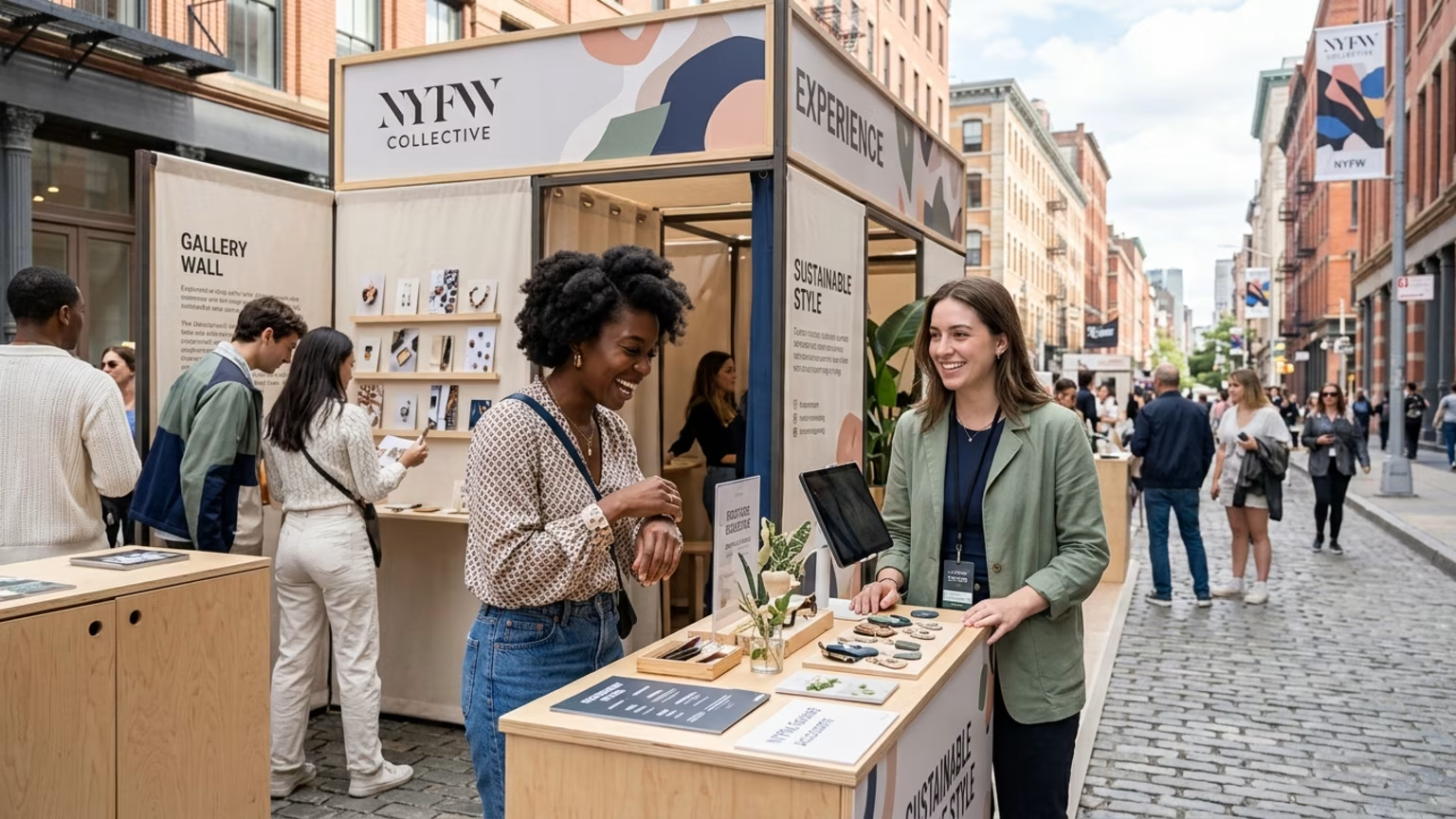
On September 10, 2026, New York Fashion Week officially launched. The event features approximately 70 runway shows and presentations on the official CFDA calendar. However, the real operational shifts are happening outside the traditional venues. On September 11, Women’s Wear Daily published a Digital Daily focused on the surrounding brand activity.
The publication documented a massive wave of temporary retail footprints and street-level installations taking over Manhattan. Brands are trading exclusive invite-only spaces for highly visible public executions. The CFDA calendar alone brings massive crowds to the city. This creates an incredibly competitive physical environment for marketers.
The logistical approach to cultural event marketing has fundamentally shifted. Rather than relying on standard runway sponsorships, retail giants are treating the entire city as a connected operating environment. Gap launched its new GapBag collection by Reed Krakoff on September 10. They bypassed traditional venues and placed a pop-up directly in Rockefeller Center.
Target executed a heavily compressed operational model. The retailer staged a two-day Target by Design experience at 235 Bowery. This free installation required timed-entry registration to manage audience flow. Target then shifted the activation to its SoHo concept store on September 12 with an interactive customization experience.
Moncler took a similarly multi-pronged approach. From September 9 to September 13, they presented an open-air exhibition featuring large-scale photographs across New York. Simultaneously, Moncler opened a 23,680-square-foot Fifth Avenue flagship in the General Motors Building. Italian business publication Il Sole 24 Ore reports this two-level space serves as an events hub for monthly experiential formats.
Vansza ran a highly condensed public schedule at 260 Bowery. Their immersive NYFW experience was open on September 10 from 2 p.m. to 8 p.m. and on September 11 from noon to 4 p.m. WOW Fashion Week hosted an event at The Matriarch on September 10. The programming combined fashion with private capital, wellness concepts, and brand activations. The shared thread across all these operations is temporary, location-specific execution.
We have been connecting brands with people through live experiences, retail programs, and national activations since 1995. In our experience, what happens at fashion week directly impacts how food, beverage, and tech brands plan their own field marketing. These recent Manhattan activations prove that cultural framing works for mass-market products. Target successfully transformed everyday items into a New Museum Retail Experience.
They proved you do not need luxury apparel to justify a temporary physical footprint. For a beverage or snack brand, the lesson is about building a connected physical ecosystem. You cannot just park a sampling truck and hope for the best. You must define the specific job of every individual location.
A public installation generates initial visibility. A targeted pop-up drives direct product trial. A retail extension captures the actual purchase. Target connected a short-duration design installation directly to a SoHo retail extension. This strategy creates a logical path from consumer curiosity to measurable action.
We watch brands plan mobile roadshow tours and pop-up activations using this exact framework. They are shifting away from isolated event sites. Instead, they treat major cultural moments as catalysts for citywide retail integration. This strategy turns raw venue traffic into trackable pipeline. It ensures your experiential budget actually supports your commercial goals.
The physical geography of these activations is just as important as the formats themselves. Rockefeller Center, the Bowery, Fifth Avenue, and Midtown all serve entirely different strategic purposes. Gap's choice of Rockefeller Center maximized exposure to both locals and tourists. In contrast, Target chose the Bowery. Target utilized 235 Bowery to present everyday objects as cultural artifacts. These location choices are highly deliberate.
They match the activation's intended job to the neighborhood's specific foot traffic profile. This location-specific precision is exactly what we implement when deploying national campaigns. CPG brands face intense pressure to prove event Return on Investment through qualified pipeline. They cannot rely on just vanity metrics like badge scans.
Brands are realizing they must separate awareness metrics from commercial metrics. An open-air photographic exhibition might generate incredible foot traffic and earned media. However, it will not necessarily produce same-day retail sell-through. Marketing leaders need to set clear performance expectations based on the venue format.
They must recognize that brand activations require careful planning to attract people who actually convert. If a brand fails to connect the temporary space to a measurable endpoint, the budget is wasted. Target avoided this trap by scheduling an interactive customization experience at their SoHo store immediately after. This guarantees the initial Bowery buzz translated directly into owned retail foot traffic.
A mass-market retailer successfully participated in a high-end design conversation by rethinking its product presentation. A food or beverage brand can execute the exact same pivot. Instead of merely handing out product samples, you can build a sensory lab or a design installation. The cultural wrapper gives consumers a compelling reason to stop, engage, and register their data.
These short-duration formats create immense operational pressure. Vansza limited its public operating hours to just ten hours across two days. Target confined its Bowery installation to a strict two-day window. When your operating timeframe is this narrow, you have absolutely zero room to recover from execution failures.
Staffing gaps, inventory shortages, or poor queue management will instantly ruin the results. This reality forces a complete overhaul of field logistics. You must finalize your structural flow long before the doors open. Target managed their Bowery crowds using timed-entry registration.
This is a crucial tactic for 5 key metrics every field marketing leader needs from pop-up activations. Controlling entry speed prevents scattered attention and poor booth flow. It ensures your brand ambassadors can actually have meaningful conversations with attendees. Furthermore, these strategies impact how brands secure permits and select venues.
Deploying a public exhibition like Moncler requires different regulatory navigation than activating a private space. Every logistical choice must support the final measurement goal. A visually appealing open-air footprint means nothing if you cannot track the downstream retail impact. Marketers must integrate QR scans, retailer redemptions, and data capture into the initial floor plan.
Moncler's strategy proves that temporary activations should ideally feed into a permanent physical channel. The brand fundamentally split its footprint to manage different consumer behaviors. The open-air exhibition generated broad, decentralized visibility. Meanwhile, the new Fifth Avenue flagship captured high-intent foot traffic.
Il Sole 24 Ore noted this flagship is Moncler's largest globally. By designating the store as a dedicated events hub, Moncler built a repeatable marketing engine. The pressure of scarcity also forces brands to rethink their contingency plans. A two-day experience cannot afford a delayed shipment or a broken registration scanner.
Everything must function perfectly from minute one. This demands a rigorous approach to field marketing logistics. Marketers must integrate digital touchpoints natively into the physical build. If you require timed entry, your digital ticketing system must communicate instantly with your on-site ambassadors.
If you want to drive visitors to a nearby retail store, your CRM routing must trigger immediately. You have to establish a trackable baseline for every physical maneuver. Leaving traffic flow to chance usually results in missed opportunities. Brand ambassadors must transition smoothly from crowd control to product education.
When execution is flawless, the consumer never sees the operational friction. They only see a unified, premium brand experience. Marketers must document their consumer-flow plans and post-event learnings carefully. This ensures the next activation functions as an improved operating system.
The most successful experiential footprints no longer operate in isolation. As you evaluate your upcoming field marketing calendar, you must ask a critical question. Is your brand treating live events as temporary theater, or are you actively routing that highly qualified foot traffic into permanent, measurable retail pipeline?
Clear operational oversight is what separates a chaotic pop-up from a high-converting retail engine. Plan the flow, control the floor, and turn every physical interaction into a business outcome.
Short-duration pop-ups demand flawless execution because scattered attention and poor booth flow will immediately ruin your conversion metrics. Makai establishes total operational control to prevent those failures. We deploy our Brand Activations capability to solve this exact issue. We create high energy activations that turn awareness into participation and drive measurable consumer response. Your physical footprint should never feel chaotic. Request a proposal

30 Years Experiential & Retail Activation Partner for CPG & Beverage Brands | Multi-Market Demos, Roadshows & Costco/Club Programs That Actually Sell


