Robbie Thain
Founder, CEO

Learn how to evaluate event venues for operational reality rather than just audience scale. Master key checks for power, access, sampling, and measurement.
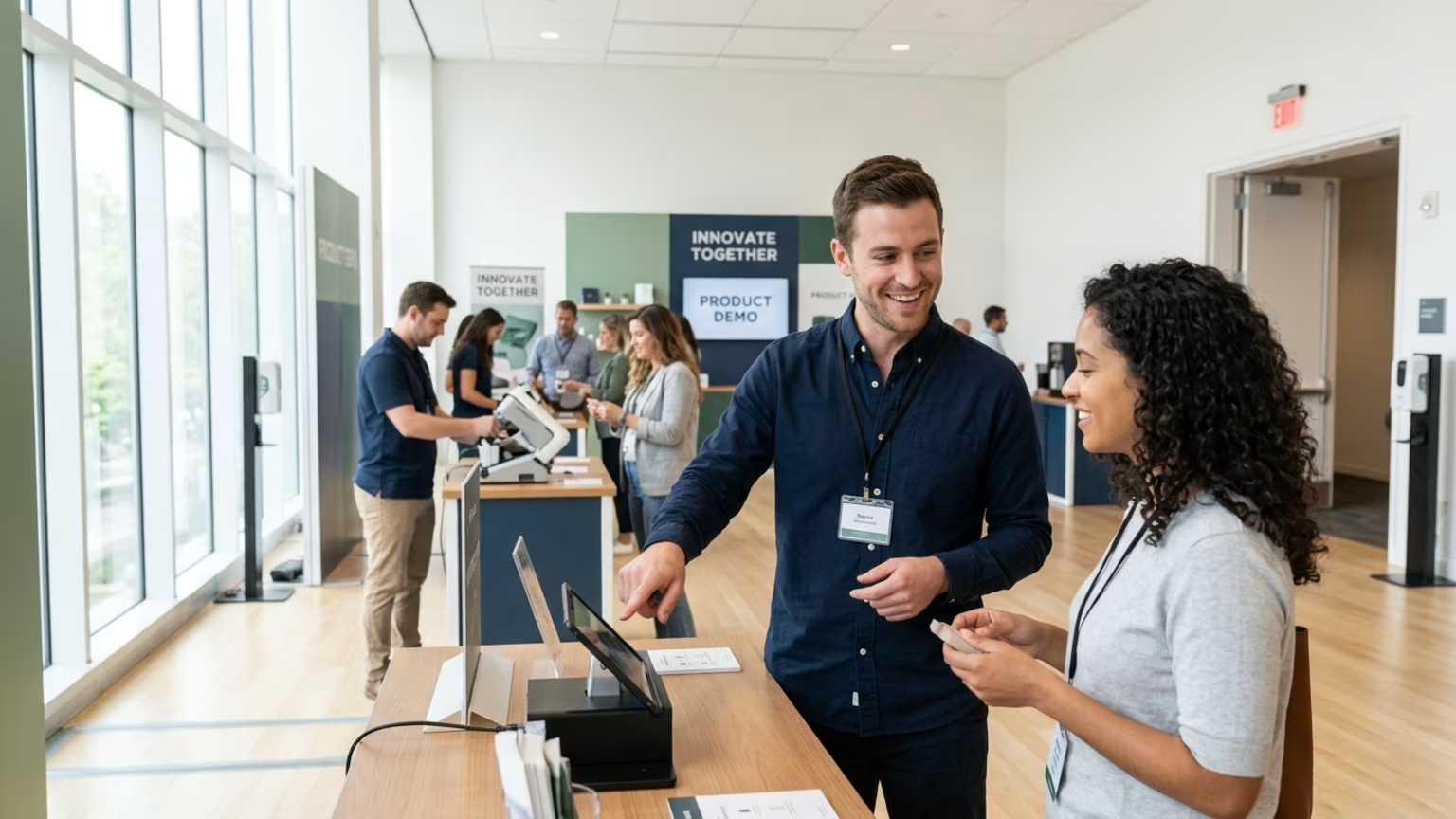
Myth: You just need a venue with massive foot traffic to guarantee a successful experiential activation.
Truth: A high-traffic venue will burn your budget if your field team cannot actually operate within it.
Smart marketing leaders often fall into this trap because audience scale is incredibly seductive. Selecting a high-profile location feels like a guaranteed win for a new product launch. High pedestrian counts seem to solve the hardest part of field marketing by putting the audience directly in front of the brand. Marketers face intense pressure to prove reach.
When reviewing massive festival grounds or famous landmark plazas, the sheer volume of passing traffic dominates the discussion. Convention venues are also evolving toward more integrated environments. These spaces include meeting spaces, hotels, transit connections, and other on-site amenities intended to reduce transfers and simplify coordination. A populated landmark looks like a safe bet on paper.
Brands spend months perfecting their physical booth designs and promotional messaging. When they finally select a location, they often prioritize aesthetics over pure functionality. A visually striking plaza might seem perfect for a premium beverage launch. However, these spaces often lack the structural support necessary for complex experiential marketing.
Many teams assume that any major public space is automatically equipped for brand marketing. They trust that high foot traffic will naturally translate into high product trial. This mindset ignores the hidden friction of executing complex logistics in a shared environment.
High foot traffic is not a sufficient criterion when an activation requires product handling or complex production. A venue's audience volume is useless if the brand cannot move supplies or manage safe public circulation. The physical reality of the site always overrides the theoretical demographic reach. Operational gaps will quickly derail the most creative consumer experience.
When you ignore basic operational requirements, field teams are forced into constant crisis management. Instead of engaging with potential buyers, your staff spends hours troubleshooting broken power circuits. Product availability drops when replenishment routes are blocked by heavy crowds. Every minute spent fixing logistical failures is a minute lost for direct consumer interaction.
A poorly planned footprint directly harms your brand equity. Consumers will not remember your creative signage if they have to wait in a disorganized queue. They will walk away if the sampling station runs out of clean supplies.
Event-safety guidance identifies several material risks for promotional events. These risks include emergency routes, electrical systems, and extreme weather. Crowding, fire safety, and environmental conditions are also major concerns. Inadequate planning can lead to injuries, reputational damage, claims, and unsuccessful promotional execution.
Safety protocols specifically recommend establishing access and egress routes for the expected audience. They require keeping emergency routes unobstructed and using qualified electricians. You must also inspect equipment before connection to power. Securing generators and covering cables in public areas are strictly required.
Convention venues are investing in more operationally efficient environments. These upgrades include private meeting spaces, transit improvements, hotel connections, and sustainability certifications. While these amenities streamline some logistics, they can also create tight restrictions on outside vendors or loading schedules. You have to evaluate how these rules impact your specific physical build.
Recent activations in unconventional spaces demand modular production. Teams need adaptable staging and compact audio. They also require easy-to-install scenic elements alongside careful attention to sightlines. Consistent lighting is crucial for photography and content capture.
You cannot execute these requirements if the venue restricts truck access or limits safe cable paths. A technically adequate venue can still fail if the power distribution forces the team to place equipment far away. Your field managers need control over the exact placement of every single asset.
When managing field teams across multiple regions, you need absolute control over how consumers approach your physical footprint. By evaluating a location purely on its operational merits, field teams can maintain a predictable run of show. This protects the conversion pipeline from basic logistical failures.
Start with the complete movement chain to coordinate field teams with event partners. Confirm truck delivery hours, dock availability, and security check-in procedures. For CPG activations, evaluate whether cases can be stored close enough for rapid replenishment. Your staff cannot spend hours hauling inventory across a massive convention hall.
Map out the exact path that your equipment will take from the delivery truck to the final footprint. Measure the width of service elevators and loading corridors. Identify any stairs or narrow doorways that could delay the installation process. Every structural barrier adds expensive labor hours to your setup schedule.
Verbal assurances about electrical capacity are never enough. Temporary-power planning requires documenting load assumptions, distribution, and grounding details. Teams must track cable routes, inspection records, and routine monitoring. You must also document formal escalation and shutdown procedures.
Generators must be properly secured from public access and supported by a clear refueling plan.
True accessibility extends far beyond the main entrance. Accessibility must be evaluated as a continuous route connecting arrival points, entrances, and required public spaces. Temporary flooring, queue rails, and branded storage cases can obstruct routes even when the permanent building complies with regulations. Your field managers must walk the exact route during a site visit.
Weather resilience requires far more than just renting a tent. Scenario-based promotional planning helps teams adapt quickly. It suggests building retail partnerships that can respond to sudden weather changes. Flexible food-service programs and clear run-of-show contingencies are also highly advised.
These plans must be built around specific weather triggers. The backup plan must preserve safe access and retail conversion. Teams must document exactly who makes the call to pause the activation.
Sampling regulations dictate what you can legally execute inside a venue. You must verify local guidelines regarding open product service and handwashing stations. Temperature-control rules and waste removal mandates vary drastically across different jurisdictions. A venue might look visually stunning while strictly prohibiting food preparation.
The brand should obtain written confirmation from local health authorities. Do not rely on generic national assumptions when planning a sampling footprint. Venue contracts must explicitly outline who handles waste removal and sanitation protocols. This protects your operation from unexpected fines or shutdown orders.
Registrations and scans are not the ultimate finish line. You should treat registrations, scans, and content views as intent signals rather than final proof. You should connect event engagement to CRM outcomes such as opportunities, pipeline, and revenue. You must define the desired commercial outcome before you finalize your field measurement framework.
Measuring experiential programs requires looking across reach and engagement. Teams should also track affinity and pipeline development. This includes metrics such as dwell time and overall participation. Tracking opt-ins, redemptions, and qualified leads is equally vital.
When you align your venue selection with specific business goals, field teams perform better. They can focus on capturing high-quality leads instead of just managing crowd chaos. A well-operated physical footprint creates a seamless environment for meaningful brand conversations. This operational clarity is what actually generates measurable Return on Investment.
Execution quality heavily influences these metrics. A Director of Brand Strategy in the CPG snack division shared: "The Makai team turned our product launch into a sensory event that shoppers still talk about. From creative storytelling to flawless in-store execution, they made snack time unforgettable. We couldn't have asked for a stronger partner." Our team created an in-store experience that left a lasting impression on consumers and became a memorable brand moment.
A successful live experience is driven by operational reality on the floor, not just the number of people walking past the door.
Field marketing directors responsible for site selection need complete operational control to turn raw venue traffic into trackable pipeline. When scattered attention and poor booth flow threaten your conversion rates, Makai steps in. We manage end to end Costco roadshows that bring brands to shoppers through live demos, real conversations, and measurable sales impact.

30 Years Experiential & Retail Activation Partner for CPG & Beverage Brands | Multi-Market Demos, Roadshows & Costco/Club Programs That Actually Sell


