Robbie Thain
Founder, CEO

Learn how the Cisco Formula 1 experiential role proves that premium brand activations require rigorous field logistics and strict operational playbooks.
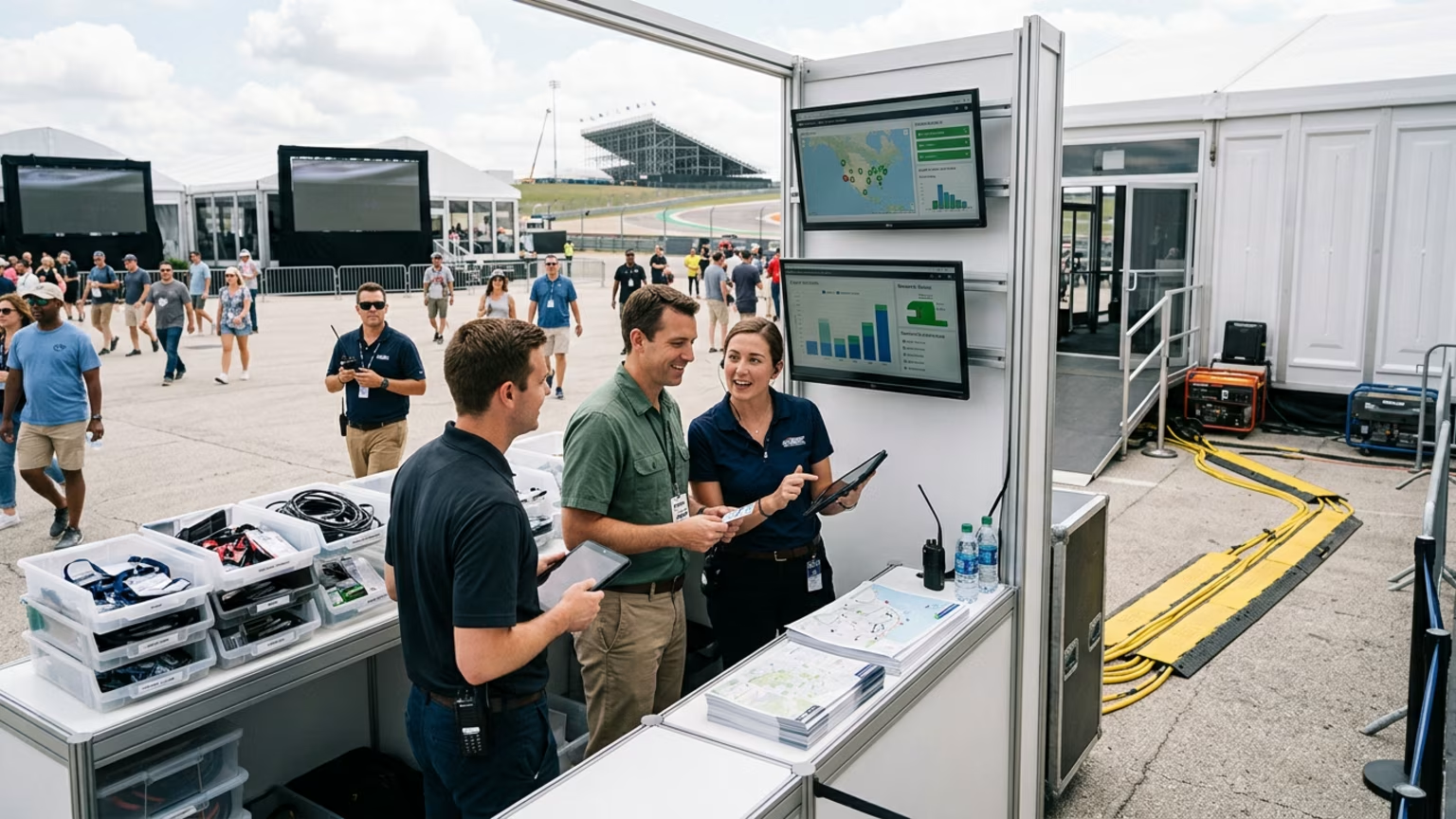
The hospitality tent opens in exactly ten minutes. A frantic brand manager stares at a pallet of unchilled product as two key brand ambassadors remain missing. The VIP guests are already walking down the paddock.
Cisco recently posted a high-stakes event marketing manager role to lead its McLaren Formula 1 hospitality programs. This opening proves that executing premium live activations requires rigorous logistical frameworks rather than just creative vision.
The pressure of a massive live event creates an unforgiving environment for marketing teams. You spend months designing beautiful brand architecture and securing premium venue space. Then the reality of event day hits you directly in the face. Trade show floors and sports activation zones become chaotic areas of unpredictable physical variables.
Brand leaders often realize too late that their local staffing agency failed to properly train the promotional team. A missing city permit delays the main product attraction. The highly anticipated VIP guest pathway breaks down when the digital check-in technology suddenly loses connectivity. These moments turn expensive marketing investments into very public disasters.
The gap between creative ideation and physical reality is where most experiential budgets drain away. A creative agency can design a breathtaking consumer activation on paper. Yet, they often completely ignore the unglamorous reality of loading docks, union labor rules, and restricted venue access hours. The field marketing team is left scrambling to piece together a broken puzzle on the morning of the event.
Many field marketing managers face this exact operational nightmare when launching national sampling campaigns. They are tasked with connecting digital marketing touchpoints to real physical environments. They lack the dedicated logistical support to manage the overwhelming flood of consumer traffic. The result is usually a beautiful footprint that produces fog instead of measurable sales evidence.
A typical U.S. trade show produces scattered attention and low quality leads. Attendees wander through crowded aisles without ever experiencing a meaningful brand interaction. Without a structured operational plan, field teams simply hand out expensive merchandise to people who will never buy the product. This lack of discipline creates a deep disconnect between the creative agency and the actual sales pipeline.
The recent Cisco Event Marketing Manager job description highlights a demand for end-to-end execution of premium hospitality programs. Global brands recognize that winning consumer attention requires operator-grade discipline. You must treat large consumer brand activations like a highly secure military supply chain. Every single vendor coordination and live event performance relies on a documented strategic framework.
We create experiential marketing programs built to connect emotion with action. Our process blends creativity, strategy, and data so every brand interaction drives measurable results. We craft experiences that engage all five senses, helping people not just see brands but feel them. This turns fleeting moments into meaningful business outcomes.
Building a resilient live marketing system starts with centralizing your field operations. Marketing leaders need to align local event personnel with strict national brand objectives. When you actively manage scalable event operations, you remove the dangerous guesswork from live execution. A unified operational strategy guarantees that the standard remains identical across all local retail demos.
An effective strategy also accounts for the specific nuances of consumer psychology in physical environments. People walking through a busy sports activation zone have incredibly short attention spans. If your operational flow creates a bottleneck at the product sampling station, consumers will simply walk away. A systematized approach maps physical foot traffic patterns to keep the brand experience moving smoothly.
Every successful framework requires clear delegation of authority on the event floor. You cannot have a senior brand director managing ice deliveries and trash removal. Your strategy must assign dedicated logistical duties to trained field managers. This division of labor allows the core marketing team to focus entirely on high-value guest interactions.
To truly optimize your live event operations, mandate comprehensive advance planning for every activation. Finalize all permits, staging locations, and staffing contracts weeks before the event dates. A proactive strategy eliminates the expensive rush fees and panicked decisions that plague amateur event planners. Discipline is the final secret weapon for creating memorable physical experiences.
Translating a premium marketing strategy into a live event setting demands a clear and highly actionable playbook. You cannot expect operational perfection without giving your field team explicit instructions. Experiential success is built on a strict foundation of repetitive processes. Here is the operational sequence required to build a resilient event environment.
You must also establish a clear reporting chain of command before the activation begins. Field ambassadors should never bypass their direct site manager to call a national brand director with minor questions. This operational hierarchy protects senior leaders from being dragged into trivial logistical debates. It keeps the entire execution process focused, professional, and moving forward efficiently.
Following these exact steps creates an invisible operational shield around your live brand experience. When unexpected weather or technical issues inevitably arise, your team will rely on their training instead of panic. They will solve complex problems quietly without ever alerting the attending consumers. This precise operational rigor is exactly why major corporations demand experienced managers.
A well-executed playbook protects your brand reputation in highly competitive markets. If a consumer has a poor experience at your physical activation footprint, they will likely abandon your product forever. Your playbook guarantees that every single interaction remains consistently positive and deeply engaging. This reliability builds tremendous trust with major retail partners and local distributors.
Return on Investment is the true and final judge of any live brand experience. Senior executives do not care how visually stunning the trade show booth looked if it fails to generate pipeline. You must define the exact metrics that matter long before the local activation begins. Vague consumer awareness goals are no longer acceptable for modern corporate marketing budgets.
Lead metrics tell you if your live event strategy is actually functioning in real time. You should track total active consumer engagements, sample product distribution rates, and average visitor dwell time. Another major lead metric is the hourly quota of qualified contact captures per brand ambassador. If these numbers fall behind the daily schedule, you can adjust your field tactics immediately.
Accurate reporting also requires giving your field team the right technological tools on the floor. A paper clipboard is entirely insufficient for a modern trade show activation. You need to deploy secure tablets with offline capabilities to capture consumer data during peak rush hours. This dedicated technology infrastructure stops leads from falling through the cracks when venue internet inevitably crashes.
Lag metrics prove the long-term financial impact of your experiential campaigns. These major data points include total sales pipeline generated, direct retail sales lift, and total cost per qualified lead. By properly tracking these specific outcomes, you connect all physical event leads directly to your digital CRM system. This alignment connects local brand execution with national corporate goals.
Brands that fail to rigorously measure these specific data points usually leak significant experiential revenue after the event concludes. When you prioritize event marketing pipeline alignment, you connect local brand execution directly to corporate sales goals. Data transforms an unproven creative activation into a highly defensible business asset. Marketing operators must prioritize this measurable evidence above all other campaign elements.
The high-performance operational environment of a Formula 1 paddock translates perfectly to consumer packaged goods activations. Consider a national premium beverage brand launching a new product across thirty major retail markets. The logistical complexity of shipping perishable goods perfectly mirrors the intense vendor coordination required for global sports hospitality. Both scenarios require flawless delivery timing and highly trained personnel to succeed.
Winning in the consumer packaged goods sector demands a relentless focus on physical product trial. You cannot convince a shopper to switch their favorite snack brand with a digital advertisement alone. They must taste the product, interact with a passionate brand ambassador, and feel the brand energy in person. Operational discipline makes these magical conversion moments possible on a national scale.
During a recent national promotional sampling tour, a major food brand faced severe weather threats at multiple outdoor festival stops. The team utilized a strict operational playbook, allowing them to seamlessly pivot to their pre-planned indoor retail backup locations. The trained brand ambassadors easily maintained their daily consumer sampling quotas despite the chaotic environment. The local distribution partners still saw a massive spike in weekend retail sales.
This exact centralized logistics framework saved the entire regional campaign from total failure. It provided a stable foundation that allowed the creative brand message to shine through the operational noise. When brands apply this rigorous mindset to high-volume Costco roadshows, they consistently maximize their retail pipeline. You cannot scale a national program without mastering these localized operational variables.
This deep level of control gives marketing leaders incredible confidence in their field strategies. Every single physical touchpoint becomes a carefully calculated opportunity to drive consumer trial and build lasting brand loyalty. When you need to scale your physical brand presence without losing sleep, you must rely on proven operational experts. Book a strategy call with our team to start building a highly resilient field marketing plan today.
Audit your current event checklist today and add a mandatory dry run of your consumer pathway twenty-four hours before your next activation.

30 Years Experiential & Retail Activation Partner for CPG & Beverage Brands | Multi-Market Demos, Roadshows & Costco/Club Programs That Actually Sell


