Robbie Thain
Founder, CEO

Learn how Mars-owned Snickers uses a flexible mobile roadshow to drive measurable product trial and real-world fan engagement at major sports stadiums.
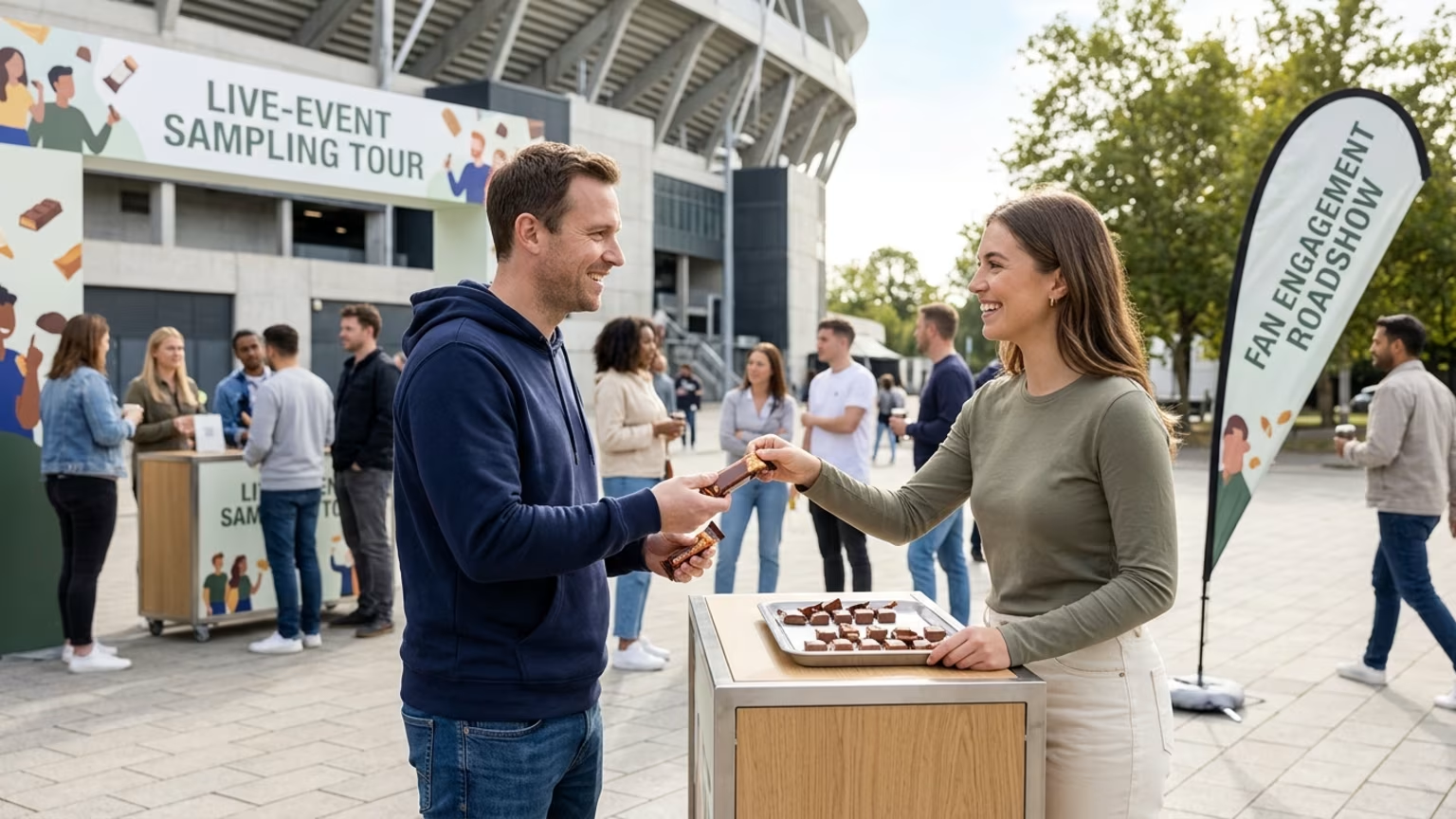
The stadium concourse is loud, crowded, and unforgiving. Fans move quickly toward their seats with limited attention to spare. A marketing team cannot survive this environment with passive signage alone. They need a physical footprint that stops traffic and puts a product directly into hands.
A scalable stadium roadshow is a repeatable mobile infrastructure that converts passive event audiences into measurable product trial. It operates as an engine for customer acquisition rather than a vehicle for vague awareness. For marketing operators, this means moving away from expensive one-off custom builds. Instead, it requires investing in a flexible kit that can adapt to different venues while maintaining high visibility.
This model demands operational discipline and a strict focus on physical engagement. A successful roadshow treats the live event space as a highly efficient distribution channel for product sampling. The ultimate goal is building a measurable pipeline of engaged consumers through direct interaction. By prioritizing repeatability, brands can achieve massive scale without breaking their marketing budgets.
For consumer packaged goods companies, the reality of live event marketing often devolves into vanity projects with poor tracking. The multi-city stadium tour launched by Mars-owned Snickers offers a masterclass in shifting this dynamic. According to PR Week, Snickers is deploying this tour specifically to drive product trial and brand engagement among live event audiences. These fans represent a high-density environment of potential consumers who want active participation over passive viewing.
The strategy relies heavily on a mobile tour footprint designed for flexibility across various stadium environments. This capability allows the brand to maintain a consistent presence while adapting to the unique physical layouts of different sports venues. Instead of throwing money at temporary installations, the brand secures high visibility through repeatable touchpoints. For marketing leaders, this model proves that physical activations can be both highly impactful and operationally disciplined.
For consumer packaged goods, visibility does not equal purchase intent. Getting a logo on a stadium screen might satisfy legacy advertising metrics, but it does very little to change shopper behavior. Real impact happens when a physical product crosses the threshold into a consumer's hand. This is why the strategic objective of the Snickers tour is so firmly rooted in direct trial.
The brand is utilizing the high-density environment of sports stadiums to capture massive potential audiences. These audiences are already primed for consumption and entertainment. A well-placed physical activation capitalizes on that energy to create a meaningful brand connection. Many brands are beginning to realize that the digital space is increasingly saturated.
There is a clear industry-wide trend toward sampling-led activations in high-traffic physical settings like stadiums and festivals. Brands are actively seeking ways to bypass digital noise and secure genuine consumer attention. By building an asset once and deploying it multiple times, operators avoid the heavy costs associated with single-event stunts. This approach directly challenges the assumption that broad reach requires endless digital ad spending.
Providing a consumer with a physical product in a high-energy environment builds immediate brand trust. Our teams have seen firsthand how this kind of direct interaction outperforms static digital impressions. The physical reality of a mobile roadshow cuts through the noise with an undeniable presence. It forces the consumer to stop, interact, and form a tangible memory of the brand.
Executing a campaign of this magnitude requires strict adherence to core operational principles. We have executed over 1000 campaigns across all 50 states, bringing brands to life in every major U.S. market. From retail demos in Seattle to roadshows in Miami and events in Honolulu, our teams activate brands wherever our clients' audiences are located. Based on that field reality, a successful live event strategy requires three non-negotiable components.
The foundation of the Snickers tour is an aggressive product trial mechanism. This is not simply handing out flyers to uninterested crowds. The brand distributes physical chocolate products, requiring strict operational logistics like on-site refrigeration. Operators must navigate varying stadium security protocols and vendor regulations to execute this successfully.
The research highlights that executing a multi-city tour requires navigating a complex web of logistical hurdles. Managing staffing across different state lines demands rigorous scheduling and oversight. Transporting perishable food items requires uninterrupted cold chain logistics and specialized fleet management. These operational realities dictate whether a sampling program succeeds or fails long before the stadium gates open.
Getting the product into the hands of fans is the critical first step toward building brand loyalty. When deciding how to structure a CPG sampling strategy, teams must prioritize methods that guarantee a high volume of physical trials. Interactive sampling achieves this by directly placing the product in the consumer's hands. The tactile experience of trying a product leaves a lasting impression that static advertising simply cannot match.
Passive signage is losing effectiveness, especially for major sponsors of sports leagues like the NFL. Consumers expect active participation within the fan zone or stadium concourse. The Snickers footprint includes on-site games that invite people to interact directly with the brand. This turns a fleeting glance into a memorable and highly engaging exchange.
Historically, sports sponsorships relied heavily on naming rights and passive stadium banners. The current trend among CPG brands represents a massive shift away from that passive model. Engaging the fan zone with physical games turns spectators into active participants. This level of participation is critical for generating authentic word-of-mouth marketing among attendees.
Interactive elements keep attendees lingering at the footprint much longer. This increased dwell time provides brand ambassadors with more opportunities to communicate key brand messaging. It also increases the likelihood that fans will share their experience on social channels. A well-designed game can transform a standard sampling station into a true destination within the stadium.
Even a standardized mobile footprint must feel native to the local market. The tour achieves this by offering customized experiences that adapt to the specific sports venue. This localized approach ensures the activation resonates deeply with different fan bases across multiple cities. Consumers appreciate brands that take the time to acknowledge their specific local culture and environment.
A mobile tour footprint must act like a chameleon within the stadium architecture. It must fit seamlessly into a wide concourse one weekend and adapt to a tight fan plaza the next. This flex capability protects the brand's capital investment by ensuring the kit can be used universally. It eliminates the need to pay for new structural fabrication at every stop on the tour schedule.
The flexible footprint is what makes this level of customization possible at scale. A rigid booth design would fail to accommodate the wildly different layouts found in professional sports venues. Brands that leverage experiential roadshows to drive retail growth understand that adaptability is critical to maintaining a consistent national presence. The physical infrastructure must bend without breaking the core brand identity.
The recurring challenge for large-scale consumer events is the fog of reporting. Connecting a live sample at a stadium directly to a future grocery store purchase requires highly sophisticated tracking. While specific Return on Investment figures for the Snickers tour remain proprietary, the broader food and snack sector is aggressively pursuing measurable outcomes. The primary focus is tracking conversion rates from the sampling interaction directly to retail sell-through.
Field teams might report high engagement numbers, but corporate leaders struggle to connect those metrics to actual revenue. Connecting a stadium sample to a future retail purchase remains a complex attribution challenge. Brands must bridge this gap by deploying rigorous post-event tracking methodologies. Capturing first-party data at the event allows the brand to continue the conversation long after the game ends.
Smart brands also leverage high-visibility stadium tours to influence major retail partners. When a brand demonstrates that it is actively driving trial in a local market, retailers like Costco or Walmart take notice. This localized momentum can be used to secure better shelf placement or promotional support. The activation becomes a powerful business development tool rather than just a consumer touchpoint.
Retail buyers are constantly seeking evidence that a brand can drive its own consumer demand. A high-visibility stadium tour provides compelling proof of that precise capability. When a brand director walks into a buyer meeting, showcasing a successful regional activation changes the conversation entirely. It proves that the brand is willing to invest heavily in driving foot traffic to regional retail locations.
Without a dedicated system to capture leads or track regional sales lift, the investment becomes impossible to justify. The operators who win are the ones who treat live events as an extension of their performance marketing funnel. They demand clear data collection protocols during the event planning phase. Ultimately, building a data-driven business case for live events protects the marketing budget from arbitrary cuts.
A flexible mobile kit is fundamentally more cost-effective for long-term engagement than building bespoke one-off installations. The Snickers multi-city tour demonstrates that scale and impact are not mutually exclusive when a brand prioritizes operational discipline. By moving past static signage and prioritizing active fan participation, brands can bypass the noise and establish genuine physical trust. These repeatable touchpoints generate real business value in highly dense consumer environments.
The bottom line is that scalable experiential marketing turns passive live-event audiences into a measurable pipeline of engaged consumers.
makai teams remain ready to help you deploy these precise strategies in your next major market rollout.

30 Years Experiential & Retail Activation Partner for CPG & Beverage Brands | Multi-Market Demos, Roadshows & Costco/Club Programs That Actually Sell


