Robbie Thain
Founder, CEO

Modern Retail reports brands are turning hotels into active physical showrooms. Learn how hospitality placements and environmental context drive retail impact.
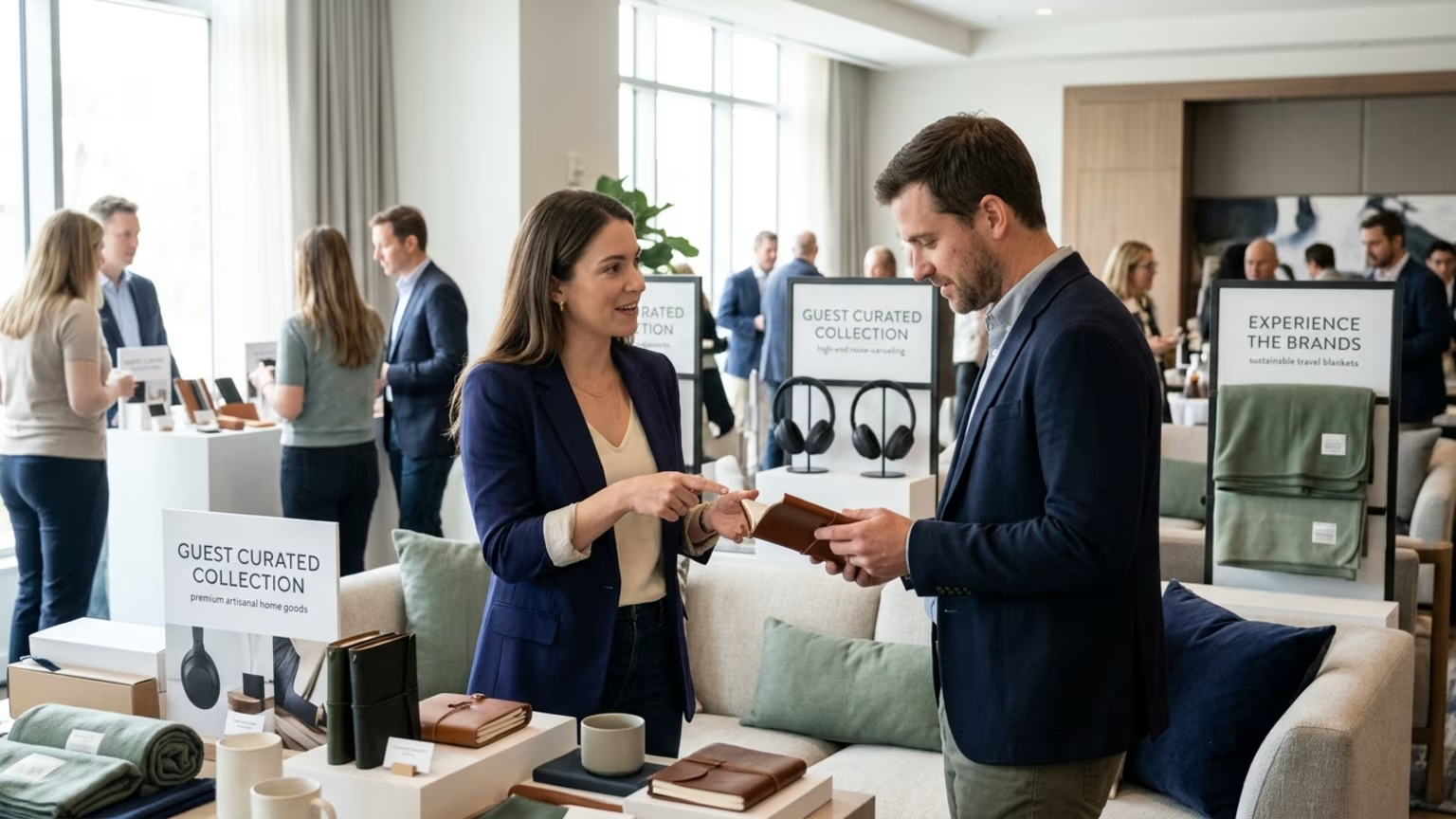
On September 22, 2026, Modern Retail reported a measurable shift in physical marketing strategy across the consumer market. Brands are increasingly using hotels and resorts as physical environments for product trial, branded interaction, and customer acquisition. This development moves product sampling out of the supermarket and into hospitality spaces. It represents a tactical pivot for marketers seeking alternatives to traditional retail shelves and crowded trade show floors.
This shift moves beyond passive mints on a pillow. Modern Retail documented several active operational models that companies are deploying right now. HVAC brand Quilt equipped rooms at the Madrona Hotel in California and Hotel Lillian in New York with its electric heat pumps. The company placed instructional manuals inside the rooms to explain the systems. This allows guests to test a complex product in a real living space.
Other companies are building pop-up retail footprints inside luxury resorts. Lela Rose recently executed a three-day après-ski pop-up at Caldera House in Wyoming. The activation featured hot chocolate, popcorn, and specialized Western merchandise. The company later set up a pop-up and dinner at Montage Big Sky in Montana. This second activation was timed precisely to the Professional Bull Riders’ Big Sky event.
Consumer packaged goods are also integrating directly into the guest routine. Public Goods supplies refillable toiletries to hospitality partners like Mint House by Kasa and Stanly Ranch. Guests use these products repeatedly during their stay. In the hospitality-branded space, St. Regis Chicago released a four-accessory capsule collection with British menswear brand Drake’s. Spanx partnered with The Shelborne By Proper and Montauk Yacht Club to launch a dedicated resort capsule.
Lela Rose treated these destination activations as extensions of its lived-in showroom concept. The approach allowed the company to present merchandise tailored specifically to the regional environment rather than relying on a standardized catalog. By tying the product assortment to local events like a rodeo, the brand shifted the transaction from a basic retail purchase to a curated vacation memory.
The model also supports substantial content creation efforts. Quilt hosted five creators at Hotel Lillian for an initiative called Camp Cool. These influencers made videos for their own channels and Quilt’s channels while participating in hiking and hotel activities. Marriott expanded on this by treating its own properties as shoppable spaces. The company began selling décor, linens, and table settings used directly in its hotel rooms.
Retail demos and product sampling programs often get judged strictly on foot traffic volume. However, we have found that volume without context rarely builds qualified sales pipeline. The hotel showroom model addresses a fundamental flaw in traditional retail environments. It gives a consumer time and space to experience a product naturally over several days. When a brand places an item in a relaxed setting, it removes the immediate pressure of a crowded supermarket aisle.
This matters deeply for lifestyle brands trying to secure initial trial and trust. Public Goods reported that 9.6% of its new customers year to date found the brand through an Airbnb. Another 3.1% cited a hotel or restaurant as their point of first contact. The company noted that hospitality makes up approximately 75% of its business-to-business segment. The numbers show that a captive audience in a premium setting pays attention to physical details.
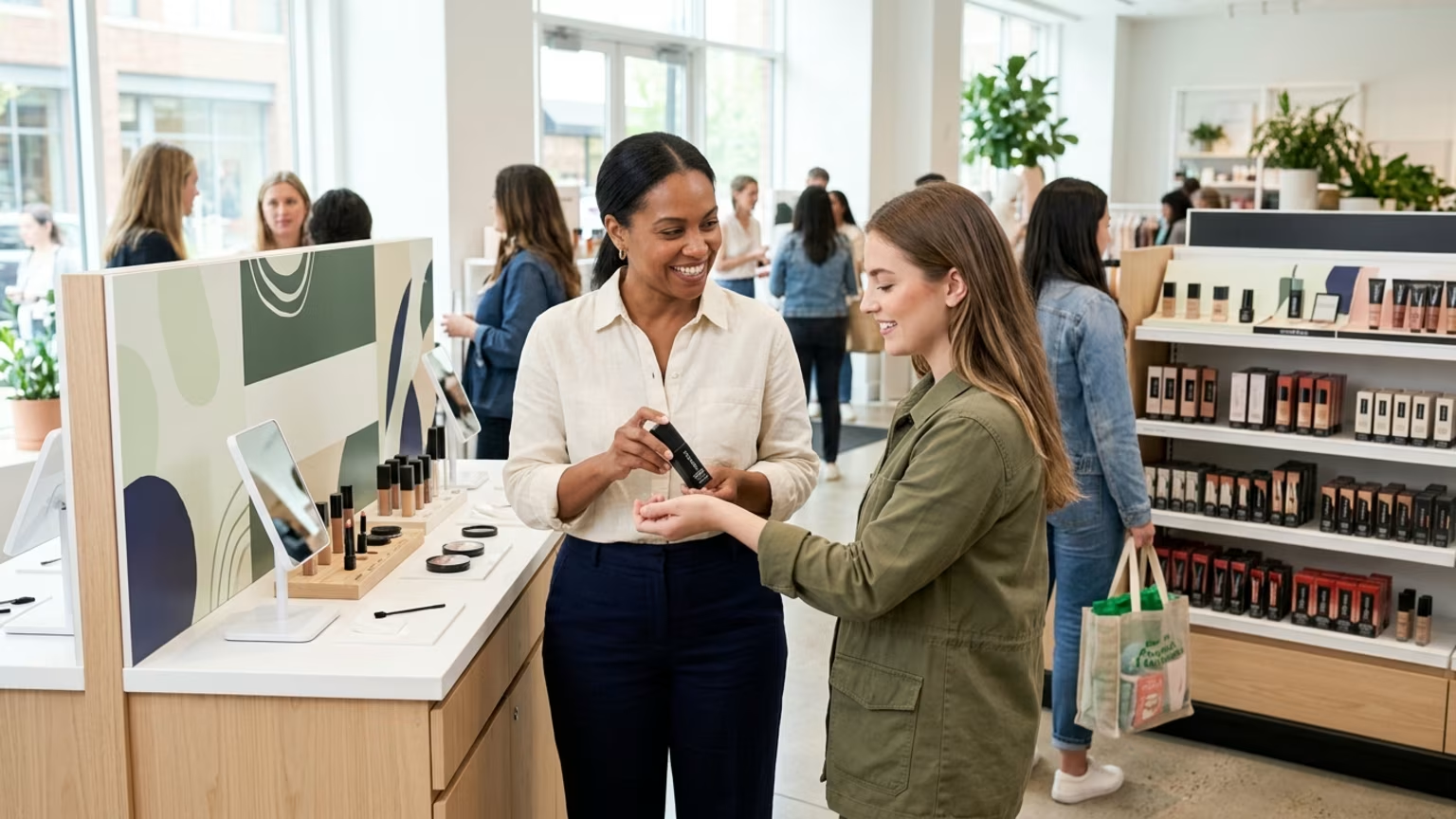
We specialize in creating retail demos, product sampling programs, and roadshows that bring brands face to face with their audiences. Each program is designed to drive trial, build consumer relationships, and accelerate retail velocity across multiple locations. We design mobile activations and roadshows that accelerate consumer trial, build trust, and boost retail velocity during 90-day product launch windows. Our structured approach transforms initial product trial into sustained consumer confidence and retail performance.
In our experience, forcing a rushed sample often wastes marketing budget. A hotel room acts as a private, high-retention sampling booth. It connects physical product trials to actual consumer routines. This strategy capitalizes on a highly specific consumer mindset. Modern Retail cited PwC research indicating that consumers spend an average of $198 on shopping and souvenirs during summer vacations.
Furthermore, domestic travel spending is projected to grow 1% in 2026 and 3% in both 2027 and 2028. Brands that understand the attribution gap in physical product trials know that capturing consumers during a relaxed vacation moment creates massive value. A thoughtful field execution plan can convert this vacation mindset into lasting retail habits.
Moving an activation from a conventional trade show floor to a resort changes every logistical variable. Hotel partnerships introduce strict operational constraints that marketers must manage carefully. A brand cannot simply drop a pallet of goods at a loading dock and walk away. Field marketing teams must coordinate directly with hotel management, housekeeping staff, and local municipal regulations.
These environments also demand flawless inventory control and room access protocols. Quilt’s approach required actual physical installation of heat pumps in active guest rooms. That level of integration requires specialized permits, licensed installers, and strict compliance with the property’s guest experience standards. For brands running pop-ups, the challenges mirror those of scaling localized activations. You must adapt merchandise to the specific property without losing brand consistency.
Staffing requires a completely different approach in premium hospitality settings. The people representing your brand must blend into the service-first culture of a luxury resort. If a brand sets up an activation in a hotel lobby, the flow of traffic dictates a softer engagement style. Companies must align their field teams with the hotel's existing guest flow. Marketers reviewing budget benchmarks for street team and product sampling activations must account for the specialized training required to operate inside these venues.
Finally, the measurement metrics shift significantly away from basic badge scans. Quilt reported approximately 2.5 million impressions from its hotel-related content. However, measuring the exact commercial impact requires tracking beyond top-line visibility. Without clear mechanisms to track subsequent purchases, calculating a true Return on Investment becomes impossible, and a hotel activation risks becoming expensive branded theater.
The travel environment itself remains highly price-sensitive despite the luxury surroundings. Modern Retail noted that consumers are still dealing with higher supermarket prices even as many continue to seek trips and experiences. A hotel activation may reach consumers in a premium mindset, but it does not eliminate basic affordability concerns. Marketers must ensure that the product featured in the hotel room aligns with the guest's actual purchasing power at home.
Executives operating in this space clearly recognize the value of environmental context. Erin Anderson, president and COO of Lela Rose, noted that hotels are service first. She explained that the brand views hospitality as a direct extension of how it serves clients. Anderson characterized these partnerships as a highly effective method to get in front of new customers.
She added that hotels allow the brand to reach audiences beyond its standalone physical footprint. Lela Rose tailors its physical merchandise to the local audience and the specific occasion. For the Big Sky activation, the brand curated Western products for visitors attending the rodeo. The company framed these purchases as tangible mementos of the trip.
The strategy yielded measurable results for that specific event. The company reported that 82% of customers at the Big Sky pop-up were new to the brand. Other brands use the hospitality space to reshape entire product categories. Lizz Niemeyer, Quilt’s vice president of marketing and communications, said the company is trying to be the first lifestyle brand in HVAC.
She argued that hotel rooms help consumers understand a complex product more effectively than a big-box retail environment. Niemeyer characterized the hotel rooms as a critical content-production resource. She noted that the properties almost became a content studio for the brand. Public Goods co-founder and COO Michael Ferchak argued that hotel placements provide a superior trial mechanism.
He noted that guests can experience products over multiple days rather than encountering a single sample or an ad. This extended exposure is particularly useful for assessing the quality and formula of toiletries. Letting consumers use products repeatedly builds stronger familiarity than a standard retail demonstration.
These alternative physical footprints require a hard look at how you currently define consumer engagement. It is easy to rely on familiar grocery store aisles or standard expo halls. However, capturing undivided attention often means placing your product where your customer actually lives, rests, or travels. When evaluating how CPG brands design trade show booths for product trials, marketers must ask if the environment itself adds value to the interaction.
If your most critical product trial happened tomorrow, would your current physical footprint give the consumer enough time to actually understand the value?
Generating qualified pipeline from physical product trials requires an operational framework that connects natural consumer interactions to measurable sales data. When inefficient post event follow up and CRM routing obscure the commercial impact of alternative showrooms, Makai stabilizes your execution. Through our Expo / Trade Shows capability, we plan and manage trade show spaces that attract attention, start conversations, and convert visitors into customers.

30 Years Experiential & Retail Activation Partner for CPG & Beverage Brands | Multi-Market Demos, Roadshows & Costco/Club Programs That Actually Sell