Robbie Thain
Founder, CEO

Turn everyday logistics into a scalable experiential platform. Learn how wrapping delivery fleets drives measurable brand visibility and retail ROI.
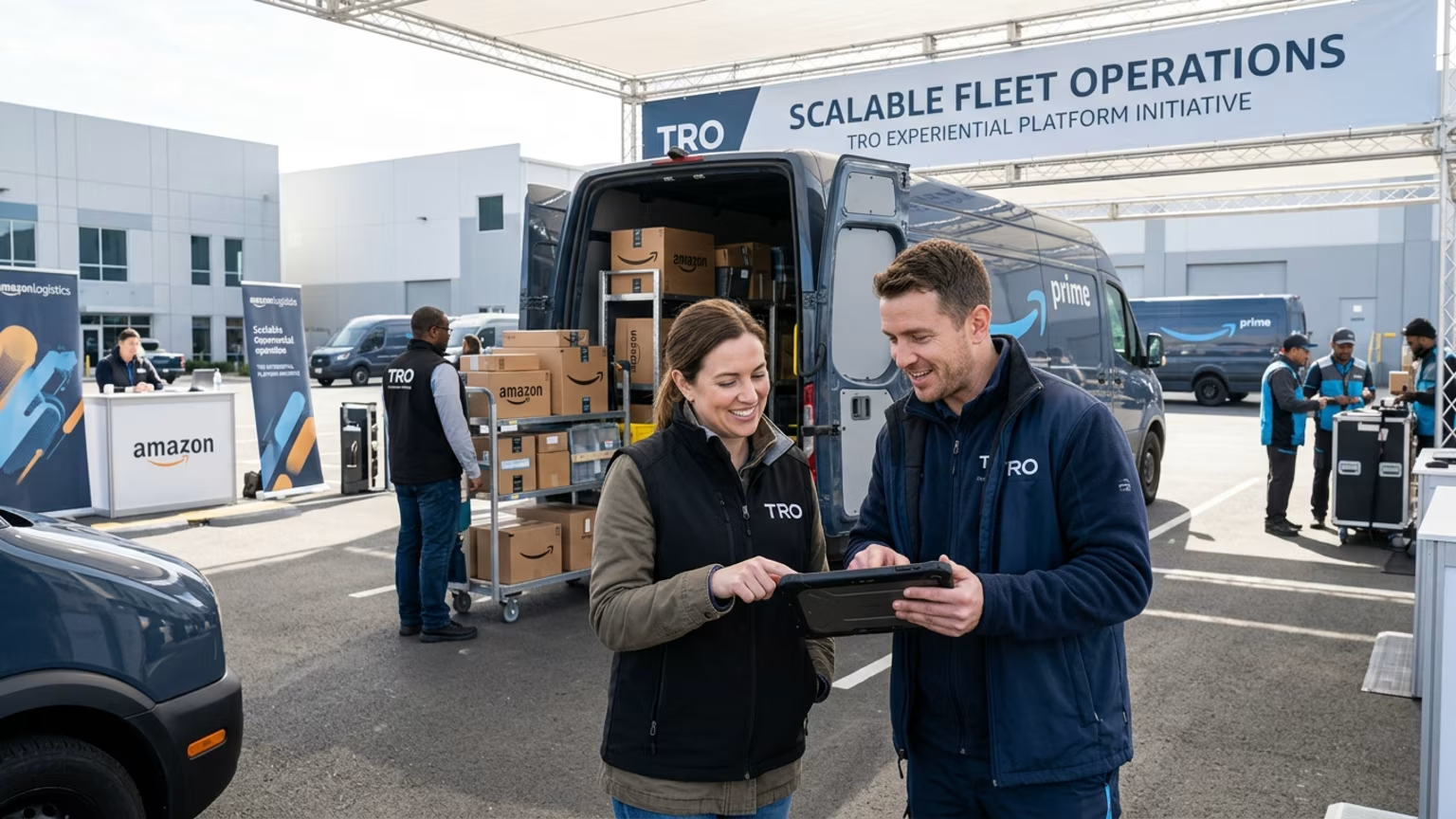
Sarah stares at the map on her tablet in total frustration. Her activation trucks are stuck in gridlocked city traffic as the launch window closes. Thousands of dollars are burning on the highway without a single consumer interaction.
Brands can turn existing logistics networks into rolling experiential media by wrapping delivery fleets in strategic creative. This approach generates measurable consumer impressions without adding operational friction or interrupting standard routes.
Most field marketers know the pain of disjointed live activations. You rent expensive floor space at a convention or deploy an elaborate pop-up tent. Staffing proves inconsistent, logistics turn into a nightmare, and measuring foot traffic feels like absolute guesswork. The result is an exhausted team and very little pipeline to show for the effort.
Field marketing leaders face immense pressure to justify their activation budgets. They spend weeks planning elaborate event builds that last only a few days. The setup requires managing separate vendors for fabrication, freight shipping, and on-site labor. If a storm hits the convention center or staffing falls through, the entire investment disappears overnight.
Industry data shows that 60 percent of marketers admit execution inconsistency ruins their retail activations. They struggle with complex permits, unreliable brand ambassadors, and a total disconnect from physical sales. You end up with a beautiful display that no one sees outside a rigid three-day window.
What if the vehicles bringing the gear were the actual event? Brands spend fortunes moving marketing assets from warehouses to retail centers. They completely miss the opportunity to use that constant motion as a physical media network. Leaving this asset untouched ignores how buyers actually behave in the real world.
Creative agency TRO recently demonstrated a brilliant structural shift for Amazon. They transformed Amazon's UK delivery fleet into a nationwide media engine. By wrapping live vans in branded creative, they established rolling experiential touchpoints embedded in everyday consumer life.
The genius of this campaign was the strict protection of standard routes. The agency executed the entire program without disrupting a single delivery window, according to Little Black Book. This proves that high-impact brand visibility can layer perfectly over existing supply chain movements.
We create experiential marketing programs built to connect emotion with action. Our process blends creativity, strategy, and data to guarantee every brand interaction drives measurable results. We craft experiences that engage all five senses, helping people not just see brands, but feel them, turning moments into meaningful business outcomes.
Brands miss out on massive revenue simply by keeping their vehicles blank. Think about the daily driving patterns of a typical delivery vehicle. They travel through high-traffic consumer zones, park near dense shopping centers, and sit at major intersections. This represents hours of free exposure that your brand already owns.
When you treat trucks and vans as programmable assets, you unlock continuous market exposure. Forward-thinking marketing teams use advanced event tech tools to turn pop-up routing into a measurable pipeline. This strategy reframes logistics from a pure cost center into an active marketing channel. Out-of-home advertising delivers massive reach and drives immediate online search activity.
A successful fleet operation requires military-grade precision. You cannot treat vehicles like static billboards if you want to drive retail action. Proper route planning guarantees your physical presence overlaps perfectly with your target buyer demographics.
Follow this playbook to turn your logistics into a measurable marketing asset:
Treat your operations team as creative partners from the very start. Mapping where vans stop and park dictates how consumers will interact with the physical brand. Designing for standard delivery windows prevents costly driver overtime or missed freight deadlines. Smart agencies treat logistics like a co-equal input to the creative brief.
Standardize your graphic templates so you can swap creative elements quickly as promotions change. Keep maintenance logs to guarantee the vehicle graphics always look pristine in the wild. A peeling decal damages brand trust faster than no advertisement at all. You must prioritize pristine execution over rapid deployment.
Generating hype is useless if you cannot prove a strong Return on Investment to the executive team. CMOs demand hard evidence that physical activations directly influence retail movement. You must track specific lead indicators to validate the program with the finance department.
Route mapping software combined with traffic data provides highly accurate daily impression counts. Industry benchmarks suggest vehicle wraps can generate 30,000 to 70,000 daily impressions in dense urban areas. Monitoring search spikes in zip codes along the delivery route proves immediate digital interest.
Lag indicators reveal the true business impact. Compare sell-through rates at grocery locations situated along the branded fleet route. Marketers frequently see incremental sales lifts between 20 and 60 percent when displays feature interactive elements. Tracking display compliance and retailer feedback helps quantify long-term partnership value.
Measuring this impact requires stitching data together from multiple sources. We advise our clients to establish a baseline before the trucks ever leave the facility. Capture your pre-program sales numbers, brand awareness scores, and standard out-of-home metrics in the target markets. Once the branded fleet deploys, hold other regions back as a control group.
This test-and-control methodology gives you clear evidence of the sales lift generated by the vehicles. You must connect the outdoor fleet exposure with inside-the-store activity. EventTrack research indicates that 91 percent of consumers intend to purchase after participating in branded experiences. If you need help building a rigid data framework for your next roadshow, book a strategy call with our operations team.
Imagine a fast-growing sparkling water brand securing new distribution at Costco. They need localized awareness to drive immediate shopper trial. Instead of just buying standard local ads, they wrap their direct-store-delivery fleet.
The branded trucks run their normal restocking routes from warehouse to warehouse. During peak weekend shopping hours, the drivers park near the store entrances. This creates a massive physical signal for shoppers before they even grab a shopping cart. Inside the store, brand ambassadors execute targeted beverage sampling strategies to close the sale.
The strategy works precisely since the logistics dictate the marketing. The delivery vehicle acts as a hyper-local awareness engine pointing directly to the retail shelf. It costs a fraction of a standalone pop-up build, yet it runs continuously. This physical scale supports broader multichannel experiences linked to consumer IP across regions.
Pull up your current field marketing schedule and identify one existing delivery route you can co-opt for branding next month.

30 Years Experiential & Retail Activation Partner for CPG & Beverage Brands | Multi-Market Demos, Roadshows & Costco/Club Programs That Actually Sell