Robbie Thain
Founder, CEO

Amazon’s global partnership with Hyrox and its Gear Grab activation provide a powerful blueprint for experiential commerce and localized trade show conversions.
Experiential commerce is the operational practice of converting live event traffic into measurable digital pipeline and verifiable retail sales. This framework moves beyond passive brand awareness by forcing physical activations to function as highly qualified lead generation engines. Global brands like Amazon and fitness racing series Hyrox are proving this model right now. Their new global partnership turns traditional event sponsorship into a connected product selection platform.
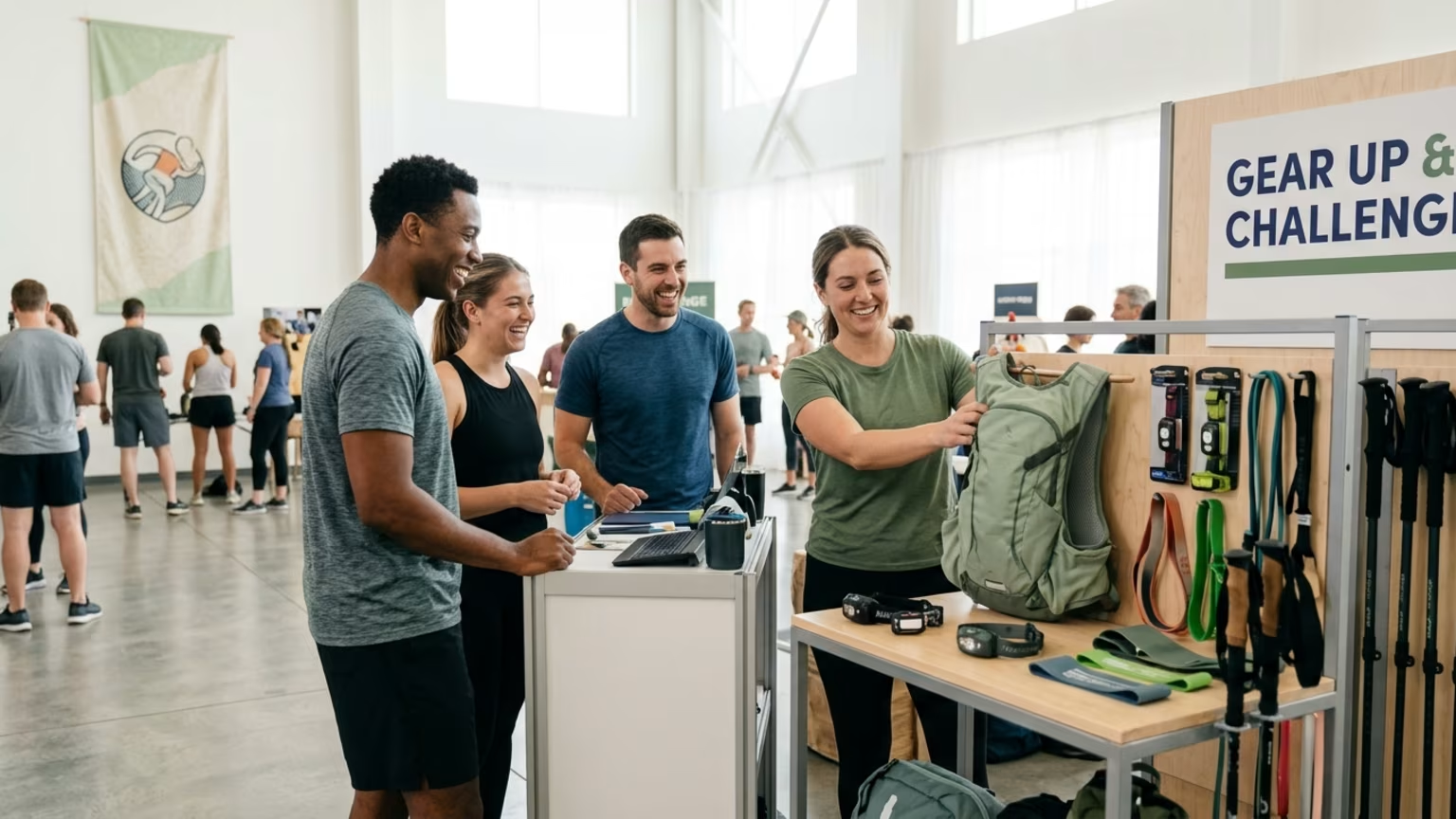
Many brand activations rely on flashy displays that fail to capture usable consumer data. Actionable engagement marketing replaces this vanity theater with structured environments that guide attendees toward a clear purchase decision. Amazon is demonstrating this shift with its traveling Gear Grab activation at major Hyrox events across Europe during the 2026/27 season. Athletech News reports that Gear Grab will combine personalized recommendations, fitness challenges, recovery technology, and targeted shopping.
Instead of presenting an overwhelming and undifferentiated catalog, this setup asks attendees for specific information about their training styles and goals. The activation then returns tailored product recommendations centered on training and race-day necessities. This mechanism shows how operational planning drives successful live brand events for consumer packaged goods companies with complex portfolios. A premium snack or supplement brand can mimic this by organizing trials around distinct consumer occasions like pre-workout energy or post-race recovery.
The rollout is heavily localized and highly practical. The initial storefront rollout covers the United Kingdom, Germany, and France. It also includes digital operations in Italy, Spain, and the Netherlands. These storefronts organize products by the athlete journey across categories like sports nutrition, supplements, wearables, and training equipment. The digital stores also feature necessary recovery products and skincare items.
The partnership extends beyond just physical booths to encompass audio and creator activity. The strategy integrates Hyrox-related Amazon Music playlists curated around specific runs and functional workout stations. This audio integration keeps the brand present during the athlete's actual training and event experience. Furthermore, the company will use events to promote its Influencer Program to athletes producing social media content.
Hyrox has successfully attracted other major partners like Puma, Red Bull, and Centr. The presence of multiple established brands suggests that sponsors treat the fitness-racing series as a highly valuable commercial platform. These companies recognize that organizing live events around real consumer tasks yields superior engagement data. Brand marketers should merchandise physical environments around practical attendee needs rather than relying only on a standard product catalog.
Building a campaign that connects physical traffic to ecommerce pipelines requires strict operational discipline. Field marketing teams must align consumer needs with flawless logistics to avoid fragmented execution. Several core pillars make this high-volume integration possible.
Event attendees will ignore generic product displays that do not solve an immediate problem. Successful campaigns require an intake process that qualifies the consumer and delivers relevant value immediately. Amazon DACH country manager Rocco Braeuniger noted the partnership aims to help athletes find necessary products. The ultimate goal is to improve product access for athletes preparing, training, racing, and recovering.
Consumer packaged goods companies often struggle to present their full catalog without overwhelming the shopper. The Gear Grab model solves this by reversing the standard interaction dynamic entirely. The athlete supplies information about their specific training style, and the experience returns a highly targeted suggestion. This approach reduces choice overload and makes product relevance immediately visible to the consumer.
The physical booth is only the beginning of a connected consumer journey. Trade show operations must link the live experience to digital touchpoints to capture real interest. The Amazon and Hyrox partnership links in-person Gear Grab activations to digital storefronts, curated Amazon Music playlists, and influencer programs. This interconnected web turns fleeting attention into an ongoing relationship.
This connected environment creates multiple continuation paths for the consumer. Attendees can easily revisit curated digital stores or consume related training content long after the event ends. Providing clear digital off-ramps ensures that physical excitement translates directly into digital data capture.
Live activations must be standardized to travel efficiently across multiple cities. Hyrox provides a standardized fitness-racing series that combines eight one-kilometer runs with eight functional workout stations. This predictable format is highly relevant when brands plan mobile roadshow tours and pop-up activations to scale campaigns regionally.
Executing repeatable campaigns builds brand loyalty and quantifiable results. One of our clients, a Brand Manager in the alcohol beverage space, shared their experience: "Working with Makai was a game-changer. The activation blew past all our KPIs and created a lasting emotional connection with our customers. Simply outstanding work."
Providing a targeted recommendation works best when it is paired with physical participation. Gear Grab incorporates distinct fitness challenges alongside specialized recovery technology. This strategic pairing gives attendees a compelling reason to stop rather than simply walking past branded signage. A well-designed challenge should naturally lead to a product demonstration, consultation, or clear purchase path.
Activities should always demonstrate a benefit that matters directly to the core product. If a brand sells hydration solutions, the physical activity must make hydration behavior tangible and urgent. If the company sells wearable technology, the experience should show exactly how data tracking changes immediate decision-making. The activity should never function as an unrelated game merely attached to a corporate logo.
The Gear Grab model suggests organizing physical displays around real consumer needs rather than traditional catalog hierarchies. A practical trade show layout might include a quick diagnostic point, a product demonstration zone, and a recommendation station. It should also incorporate a clear trial area and an immediate purchase or follow-up path. This structured environment requires carefully matching the physical environment with shopper intent to maximize engagement.
A major tension in field marketing is the pressure to prove Return on Investment through qualified pipeline rather than vanity metrics. Event traffic is simply an input, while the true outcome is verified commercial performance. While Amazon has not yet disclosed Gear Grab conversion rates or sales figures, smart brands establish strict measurement frameworks before launch. Marketers should never present any partnership as proof that experiential commerce guarantees a specific financial return without published performance data.
Effective measurement requires tracking physical interactions that indicate genuine purchase intent. Teams should monitor qualified product trials, recommendation completions, and demonstration completion rates to gauge true engagement. These physical actions must then be directly tied to digital tracking mechanisms. Important digital indicators include landing page visits, promo-code redemptions, and opted-in leads.
Retail sell-through and incremental sales in exposed markets provide the ultimate proof of campaign effectiveness. If an event attracts massive crowds but fails to lift local retail performance, the activation strategy is fundamentally flawed. According to Athletech News, Hyrox reported more than 1.5 million athletes across 105 events in 35 countries last season. The organization expects more than 2 million participants across 107 race weekends in 2026/27.
Scale means little without robust customer relationship management processes and clear attribution models. Capturing quality leads from audiences this large demands reliable experiential marketing reporting to ensure no opportunity is wasted. Converting even a fraction of this audience requires ruthless data hygiene.
Large-scale anchor events further highlight the need for precise execution. Amazon is scheduled to serve as the title partner of Hyrox London ExCeL from December 2 to 6, 2026. Athletech News reports that the previous London ExCeL event drew 40,000 participants. Unmanaged footfall at this scale will only create operational chaos without structured lead routing.
U.S.-based brands observing this activation should carefully distinguish between a global ambition and its currently documented geographic execution. The public reporting supports a Europe-first rollout, and available sources do not confirm a specific United States launch date. Marketers must evaluate audience quality data and activation-level reporting rather than relying solely on total event-wide participation numbers. Scale alone does not automatically guarantee a high proportion of relevant, qualified buyers.
By forcing event logistics to serve a measurable commercial purpose, physical brand experiences transition from costly awareness exercises into powerful pipeline generators.
Navigating the trade-off between generating massive event footfall and capturing usable consumer data often results in scattered attention and poor booth flow. Makai enforces strict operational control on the exhibition floor to ensure every interaction drives measurable pipeline. We utilize our Expo / Trade Shows capability to plan and manage trade show spaces that attract attention, start conversations, and convert visitors into customers.

30 Years Experiential & Retail Activation Partner for CPG & Beverage Brands | Multi-Market Demos, Roadshows & Costco/Club Programs That Actually Sell