Robbie Thain
Founder, CEO

Discover how AI-driven lead management and predictive scoring can increase event appointment conversions by up to 43% and bridge the gap to sales.

On July 23, 2026, a NextCTL report confirmed exactly what frustrated field marketing managers have suspected while watching badge scans disappear into CRM black holes. The report highlighted a 2024 NAR study proving that AI-driven lead management increases lead-to-appointment conversions by up to 43%. This release validates that the tension between busy event floors and empty sales pipelines is an operational problem, not just a staffing issue. Rapid, automated lead prioritization finally offers a clear way to turn live brand interactions into immediate revenue opportunities.
The core shift revolves around closing the gap between a physical interaction and a digital sales process. Traditional event reporting often focuses heavily on vanity metrics like total registrations or overall booth visits. However, industry best practices indicate that targeting a lead response time of under 15 minutes is necessary to maximize engagement. Systems that prioritize contacts automatically give teams the ability to hit that incredibly narrow time window.
When leads sit in a database for days, the momentum of the physical encounter completely evaporates. The 43% conversion boost observed in the 2024 NAR study proves that speed is a critical factor for driving revenue. This data proves that waiting until after a trade show to process contacts is a massive operational failure. The most successful marketing organizations prioritize immediate action over delayed perfection.
This data matters immensely for consumer packaged goods and beverage brands relying on physical marketing. We have been connecting brands with people through live experiences, retail programs, and national activations since 1995. Over three decades, we have built a track record of creating meaningful brand moments across the country. In our experience, creating a warm brand activation is only half the job, because setups often fail to produce Return on Investment when post event follow up is disconnected.
The experiential marketing industry often suffers from what analysts call the fog of event data. Without consolidated scoring, valuable attendee signals remain trapped in isolated silos. When data is disjointed, sales teams miss immediate opportunities to capitalize on the momentum of a live encounter. Borrowing AI-driven management frameworks from adjacent sectors provides a clear roadmap for event marketers to clear that fog.
The adoption of AI-driven lead management forces a complete overhaul of how field programs operate downstream. When a system scores leads in real time, the primary function of a brand ambassador shifts dramatically. Staffing logistics must pivot from simple headcount management to technical execution on the show floor. Field teams must be trained to capture the exact data points required to feed the predictive models accurately.
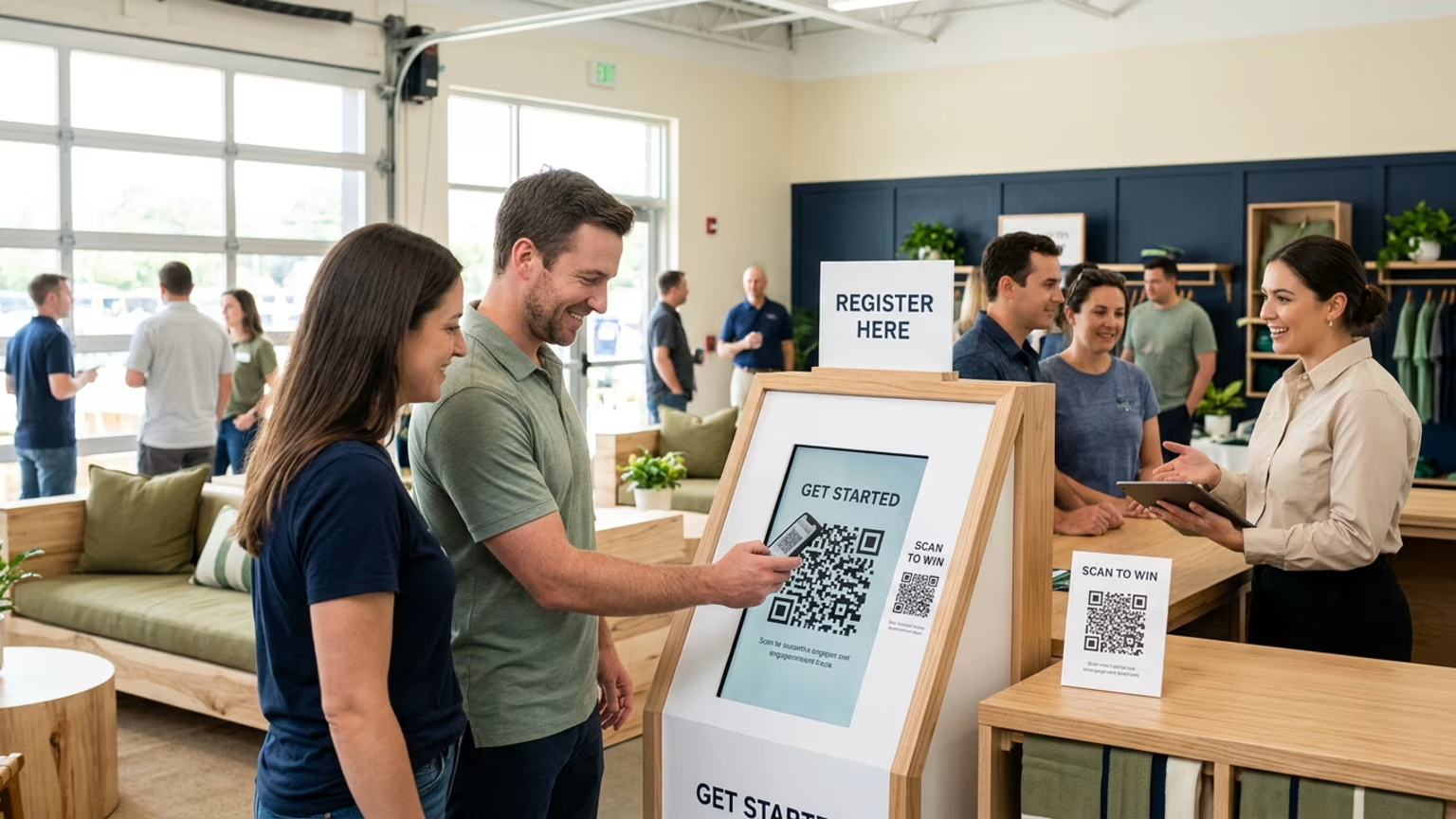
If your brand ambassadors fail to record specific intent signals, the entire scoring mechanism collapses. This shift also forces brands to redesign their trade show footprint flow. Planners must optimize the physical space to encourage digital check ins and fast engagements that register immediately. Marketing operators must ensure that their physical environments support rapid data collection seamlessly.
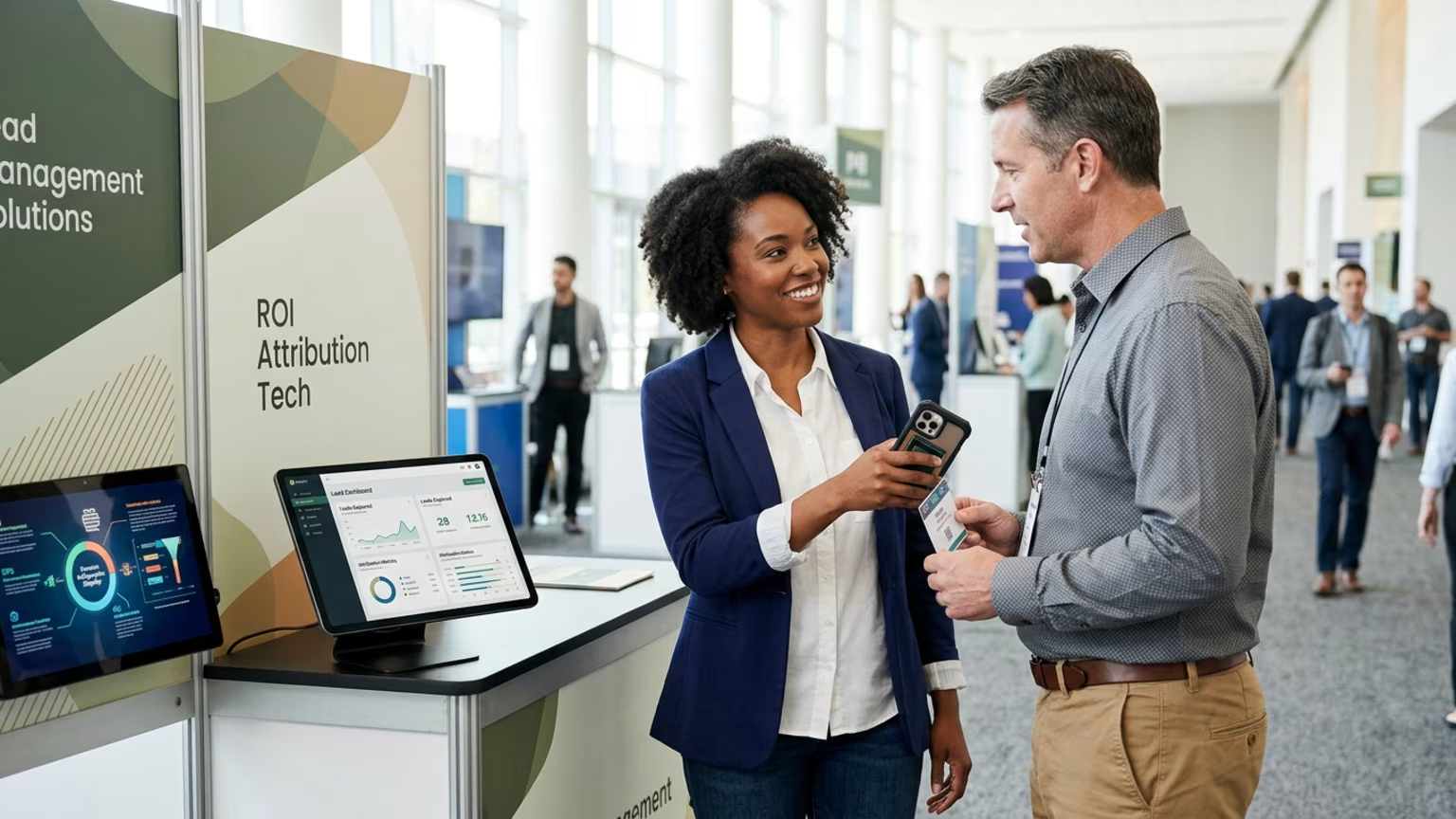
The disconnect between event marketing and sales operations is a notorious historical pain point. Marketing teams constantly struggle to prove that their expensive physical activations actually generated real revenue. When organizations implement automated workflows for universal lead capture, they bridge this historical gap effectively. A unified system takes a simple badge scan and turns it into an actionable sales step instantly.
This approach changes the conversation in executive boardrooms entirely. A Chief Marketing Officer can finally present clear evidence that live events act as a measurable performance channel. Moving away from attendance metrics to pipeline velocity metrics gives experiential marketing much needed credibility. A streamlined data flow ensures that every interaction on the show floor has a measurable business outcome attached.
Consumer behavior increasingly favors environments where trust is built through direct physical interaction. Brands in the beverage, CPG, and automotive sectors are moving away from broad reach digital advertising. Instead, they are investing in high touch physical experiences where trial and trust can be measured accurately. When a consumer tastes a new snack or tests a product, buying intent peaks right on the floor.
Capturing intent signals during these exact moments provides a massive competitive advantage. When a buyer signals high intent, the sales response must be absolutely immediate. Integrating predictive workflows into these environments allows marketing teams to tailor their follow up messages perfectly. This level of personalization drastically improves the chances of securing a retail buyer meeting or direct sale.
Trade shows are critical venues for securing shelf space with major national retailers. When a buyer visits a booth, they are evaluating the product and the brand's operational competence simultaneously. If a field team cannot follow up with accurate pricing and inventory data quickly, the buyer moves on. The 15 minute response window applies directly to hot leads on the floor.
Brands that utilize predictive lead scoring can segment retail buyers from casual consumers instantly. This segmentation allows field marketing directors to route high priority contacts directly to senior sales executives. A fast, coordinated response demonstrates to the buyer that the brand is ready for scale. Operational efficiency during the follow up phase is what converts a booth conversation into a retail contract.
Mobile sampling tours offer a unique challenge for real time data synchronization. Brand ambassadors are often moving rapidly between locations to hand out product samples to hundreds of people. Traditional operations treat these activations purely as brand awareness exercises with no expectation of direct lead generation. Predictive lead scoring turns a simple street team activation into an aggressive pipeline generator.
By equipping field teams with mobile applications tied to central databases, every QR code scan becomes a trackable intent signal. If a consumer scans a code to claim a digital coupon after trying a sample, the system records that action immediately. The automated workflow then begins nurturing that prospect while they are still holding the product wrapper. This approach ensures that mobile tours generate verifiable business value beyond simple distribution counts.
The transition to AI-driven lead management requires a fundamental shift in how temporary staff are trained. Historically, training manuals focused exclusively on brand messaging, product knowledge, and basic consumer engagement tactics. Now, brand ambassadors must act as the primary data entry point for complex predictive models. If staff members rush through the lead capture process, the resulting data will be completely useless.
Field marketing managers must build data collection protocols directly into their standard operating procedures. Staff should be evaluated on the quality of their lead notes, not just the volume of badge scans. Training programs must emphasize the clear connection between a thorough on site conversation and downstream revenue. When temporary staff understand their role in the sales pipeline, data accuracy improves dramatically.
While a 43% increase in conversions sounds appealing, deploying advanced software is never a magic fix. Advanced analytics require a level of data literacy that smaller marketing teams might currently lack. If the underlying sales process is slow, no amount of AI prioritization will save the pipeline. The technology only works when human operators follow up diligently on the prioritized target lists.
To succeed with these advanced platforms, brand leaders must mandate strict alignment between field staff and inside sales. Poor data hygiene will severely limit the effectiveness of any new predictive tool. Marketing leaders must realize that poor data hygiene destroys AI targeting models before they invest heavily in software. True event return on investment requires operational discipline and technical capability working in perfect harmony.
Event execution will continue to rely heavily on the speed and accuracy of your data collection. Are your current field operations capturing actionable data quickly enough, or are you just counting the number of people who walked past your booth?

30 Years Experiential & Retail Activation Partner for CPG & Beverage Brands | Multi-Market Demos, Roadshows & Costco/Club Programs That Actually Sell


Since 1995, Makai has been connecting brands with people through live experiences, retail programs, and national activations.