Robbie Thain
Founder, CEO

Weverse temporarily suspended its Lucky Store pop-up for safety. Learn how physical activations protect fans and secure conversions during a disruption.
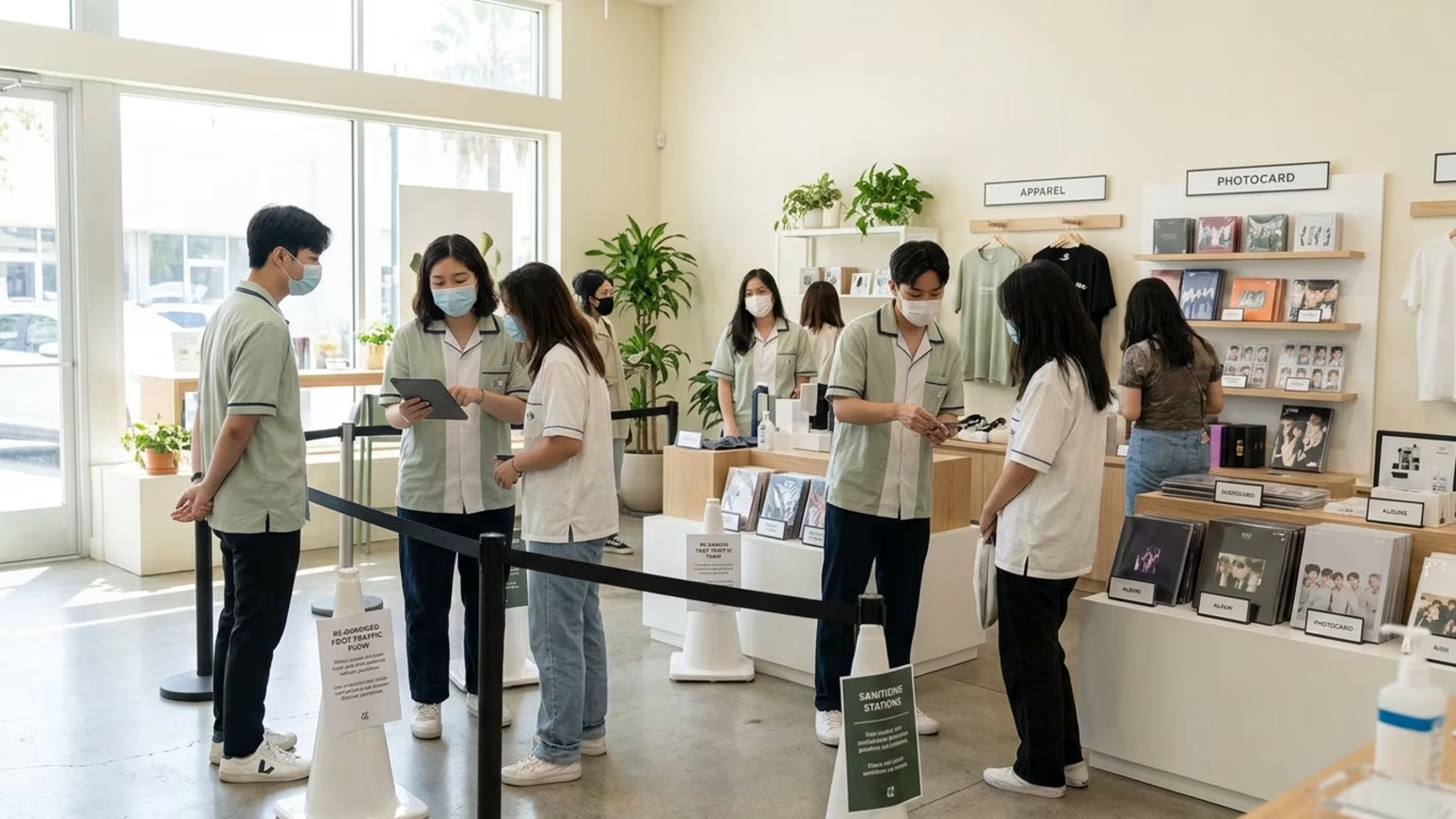
The seventh floor of CGV Yongsan I’Park Mall normally hums with predictable foot traffic. On August 25, 2026, the atmosphere at Open Studio shifted abruptly. Staff began intercepting visitors and routing them away from a highly anticipated physical activation. The inventory was still there, but the Weverse event was temporarily halting.
This exact scenario keeps field marketing directors awake at night. A carefully planned physical retail moment suddenly encounters real-world friction. When a live brand experience faces sudden operational limits, the response dictates the ultimate Return on Investment. Protecting the fan experience requires swift and decisive floor management.
Field marketing leaders face intense pressure to keep physical doors open at all costs. An unexpected closure feels like an operational failure. However, professional operators view a temporary suspension as a necessary safety mechanism. According to official company notices, Weverse temporarily suspended Lucky Store operations to ensure on-site safety.
The company did not abandon the physical space completely. Instead, the operation executed a deliberate operational reset. Weverse scheduled a three-hour reopening window from 5:00 p.m. to 8:00 p.m. Korea Standard Time on August 25. The revised product list retained merchandise from several Weverse artists.
This included KATSEYE’s 3rd EP “WILD” in random and set versions. TXT’s Japanese fifth single “Setsuna Hanabi” remained available in standard, special, and photobook editions. ENHYPEN’s “THE SIN : BLISS” and TUIDE’s “The 1st EP [TUNE & PLAY]” also survived the inventory revision.
The operator made one critical concession to manage capacity. Weverse excluded the CORTIS Ball version from on-site sales after the suspension. This strategic pivot protected the broader event while isolating a single logistical complication. The physical experience retained value even though a high-demand item was absent.
Pop-up retail represents a major investment of capital and brand equity. Operators cannot simply shut the doors and hope for the best. A defined reopening window gives anxious fans a concrete expectation. It transforms a chaotic cancellation into a structured delay.
This level of control separates professional event management from amateur brand theater. Merchandise planning operates as a critical component of experience design.
Operational agility requires rigorous preparation long before the first attendee arrives. The activation was located at Open Studio on the seventh floor of CGV Yongsan I’Park Mall. A venue of this scale demands precise capacity tracking and immediate response capabilities. Planners must establish strict structural guidelines to prevent minor issues from escalating.
Weverse warned visitors that operating schedules and methods could change with on-site conditions. Anticipating these shifts is a baseline requirement for modern field execution. Brands must identify who holds the authority to stop physical operations. This pre-agreed stop-work authority ensures that venue managers can halt operations without a bureaucratic delay.
Establishing a center of excellence for field marketing operations helps teams codify these safety protocols. Clear documentation prevents panic when conditions deteriorate. The permitting process itself should account for capacity pauses. Real-time status communication prevents fans from traveling to an inactive site.
The objective is to protect the consumer from making a trip based on an outdated promise. Updating signage, social channels, and event pages provides a single source of truth. When planning a high-impact product launch, cross-functional alignment is absolutely mandatory. Security personnel, brand ambassadors, and venue operators must share a unified communication protocol.
A sudden surge in foot traffic should trigger a pre-planned operational phase. Leaving these decisions to chance guarantees a scattered and ineffective response. Professional planners script these transitions months in advance.
A suspended operation immediately tests the composure of your frontline staff. Weverse specifically asked visitors to follow on-site staff guidance for safety and smooth operations. Staff must project calm authority when an eager crowd faces a sudden delay. Makai approaches this exact tension through our human-centric aloha methodology.
Our trained brand ambassadors lead with empathy, clear communication, and absolute respect for the consumer. Frontline teams de-escalate frustration by offering immediate and factual updates. They avoid vague excuses that breed suspicion among attendees. When a physical queue stalls, the staff on the floor become your most valuable safety valve.
They translate a frustrating logistical pause into an organized holding pattern. Treating brand ambassador recruitment as a serious operational requirement pays dividends here. Staff must also physically rearrange the space to accommodate the pause. They might need to cap the line, distribute informational cards, or secure inventory.
The goal is to maintain brand trust while the physical transaction is unavailable. A well-trained team turns a negative operational delay into a neutral, managed experience. The human connection often dictates how consumers remember a brand interaction. Technology might manage the digital queue, but human staff manage the emotional temperature.
Experiential marketing relies heavily on this interpersonal trust. Our aloha methodology ensures that every visitor feels respected and valued. This respect remains constant even when the physical product is out of reach.
A suspended physical floor does not have to mean a complete loss of pipeline. When Weverse pulled one specific item from physical availability, they executed a deliberate channel transition. The notice directed shoppers to Weverse Shop for online purchase of the affected item. This maneuver separated the physical experience from a specific SKU dependency.
Shoppers could still complete their transaction digitally while the physical footprint managed capacity limits. Connecting roadshows to retail requires this exact type of digital safety net. Providing a credible alternative purchase route secures the conversion and protects the brand relationship. Operators should map out digital coupons, ship-to-home options, or digital reservation systems.
Treating inventory visibility as a core component of the customer experience prevents dead ends. Brands must track these digital referrals during a physical disruption. Distinguishing between a physical conversion and an assisted digital conversion is critical for accurate reporting. This data helps operators prove that the activation protected revenue during a crisis.
It shows that a physical disruption did not destroy the ultimate commercial objective. Creating a seamless handoff between physical and digital spaces requires robust backend routing. CRM systems must be ready to capture lead data from frustrated physical shoppers.
A simple QR code can redirect a stranded buyer to a VIP digital checkout. This tactic captures the immediate intent before the shopper leaves the venue entirely. It turns a missed physical transaction into a verified digital lead.
When floor conditions deteriorate rapidly, the field general must implement a phased fallback hierarchy. The response should pause activity, issue a public update, and establish a new operating window. Weverse executed this sequence by publishing their 5:00 p.m. to 8:00 p.m. reopening schedule. They then revised the physical offer by pulling the CORTIS Ball version entirely.
This targeted reduction allowed the remaining product lines to trade successfully. Brands executing complex activations must rely on rigorous contingency planning to manage these pivots. You must define what happens if physical sales or sampling must stop completely. The equivalent plan for a consumer package goods brand might involve a reduced sampling menu.
It could also include a digital coupon or a revised time-slot system. Measurement frameworks must also adapt to the disruption. Do not assume that a busy pop-up performed well just because the venue looked crowded. Track metrics like queue abandonment, out-of-stock duration, and revenue recovered through online substitution.
These figures prove whether the activation remained resilient under pressure. The public notice does not disclose attendance or sales results for the Lucky Store. A successful pivot prioritizes safety over vanity metrics. The experience should retain value even when a specific hero product is unavailable.
Adjusting the footprint on the fly requires separating the emotional brand experience from the physical transaction. True operational resilience is measured by how quickly order is restored. Brands should document every disruption to improve future execution playbooks. Post-event debriefs must analyze the exact timeline of the shutdown and the recovery.
This forensic approach to event management builds institutional knowledge. It ensures that the same operational failure does not happen twice.
Marketing decision-makers must evaluate their upcoming field activations for structural flexibility. Teams should define their stop-work authority and digital fallback paths before their next major deployment. Every activation needs a designated leader who can modify the physical product mix immediately.
Marketers should regularly stress-test their field operations before deployment. Simulating a sudden venue closure reveals gaps in communication and digital routing. These simulations build muscle memory for the entire field marketing team. A prepared team reacts with precision rather than panic.
Execution is a science of preparation, constant testing, and real-time adjustment. Proper planning turns live disruptions into manageable transitions. The best brands anticipate the chaos and engineer a profitable path forward.
Allowing unmanaged physical demand to overwhelm a merchandise activation guarantees frustrated fans and lost conversion. Makai resolves the difficulty measuring real ROI from live events by engineering flexible environments that adapt to real-time capacity constraints. We deploy our Consumer Events capability to design memorable live experiences that bring brands and people together through interaction, emotion, and engagement. Request a proposal

30 Years Experiential & Retail Activation Partner for CPG & Beverage Brands | Multi-Market Demos, Roadshows & Costco/Club Programs That Actually Sell