Robbie Thain
Founder, CEO

Learn how apps like Outernet are bridging the gap between digital discovery and measurable physical trials in modern experiential marketing.

Consumers consistently save inspiring social posts as reminders but often forget about them as they continue scrolling through new content. This behavioral problem represents a massive point of friction for modern marketing operators. Unresolved intent leaves millions of dollars stranded in the gap between online interest and physical engagement. Brands pay heavily for digital impressions but fail to connect that attention to measurable physical trials.
The tech startup Outernet has directly attacked this operational gap. The platform converts content users find online into organized real-world plans. This simple function marks a definitive shift in how operators must view the relationship between social media and field marketing. The gap between seeing a post and showing up at a live event is finally closing.
Digital platforms are excellent at generating initial interest for consumer products. However, digital likes do not put products into shopping carts. Experiential marketing has always provided the physical touchpoint necessary to close that loop. Now, emerging technology is building a direct bridge between the screen and the street.
The most important sector signal here is not the creation of a new social network. Outernet is building an action layer directly on top of existing social behaviors. Users can share a post directly to Outernet, paste a URL, or upload a photograph of a physical flyer. From there, the application structures the scattered information into a usable format.
The application uses artificial intelligence to extract an event’s date, time, location, and activity details. Outernet then organizes this saved content into a chronological event feed. It provides separate tabs for undated activities and places to visit alongside a dedicated map view. This structure turns chaotic inspiration into a precise schedule.
Users can add events to Apple Calendar or Google Calendar to lock in their plans. They also receive timely reminders and nudges from the application. This creates a concrete bridge between digital inspiration and physical attendance. By delivering these automated nudges, the platform forces users to confront their own unresolved intent.
This workflow completely shifts how we must track consumer engagement. Brands can no longer view a saved post as a dead end. Instead, a saved post acts as the primary input for a physical journey. The technology transforms a passive viewer into an active participant.
For a VP of Marketing looking at a fragmented trade budget, this new workflow changes everything. Saving a post clearly represents unresolved intent from a potential buyer. A user has expressed distinct interest in a place or activity but has not yet acted. Historically, marketing operators had absolutely no way to capture this specific subset of consumers.
Brands routinely pour money into mobile tours hoping the right people will remember to show up. Now, the workflow is relatively simple and highly trackable. Consumers find a post on a platform like TikTok or Instagram and share it to Outernet. They let the application structure the information and eventually visit the targeted location.
This means every piece of social content must function as a logistical prompt. If a brand wants its content to drive physical action, the post must contain durable details. Locations, dates, and times must be clear enough for artificial intelligence to extract them efficiently. The days of relying purely on aesthetic product shots to drive retail velocity are permanently over.
Every marketing dollar must now serve the goal of generating an itinerary addition. Operators must train their teams to view social media output through the lens of field execution. Content must directly instruct the consumer on where to go and what to do. Clear directives will always outperform vague brand messaging.
This new action layer forces a total redesign of physical retail operations. Modern field execution can no longer rely on passive foot traffic alone. Teams must build activations that reward users who follow these digital itineraries. The application’s organization around places and maps suggests a clear structure for multi-stop experiences.
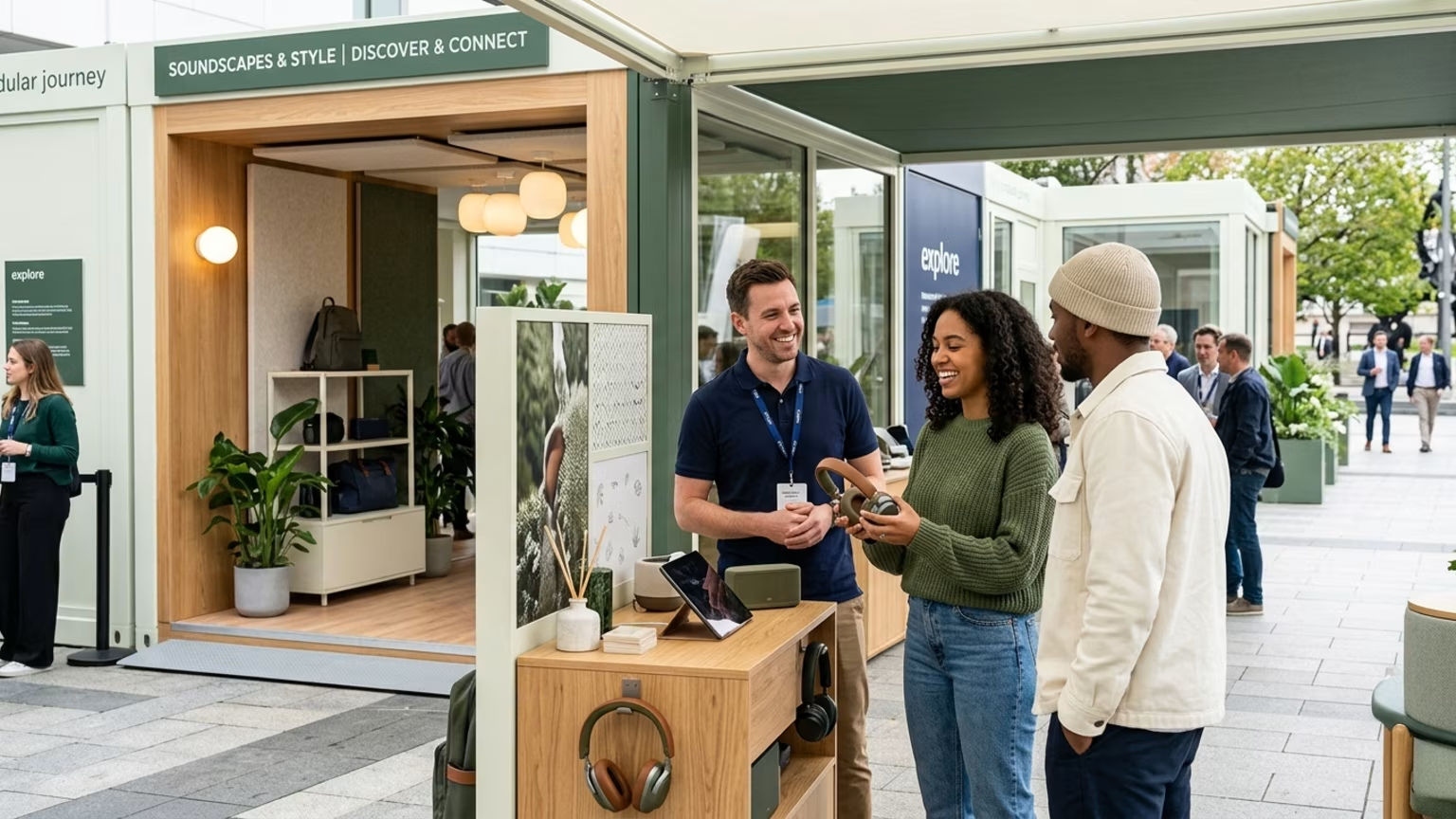
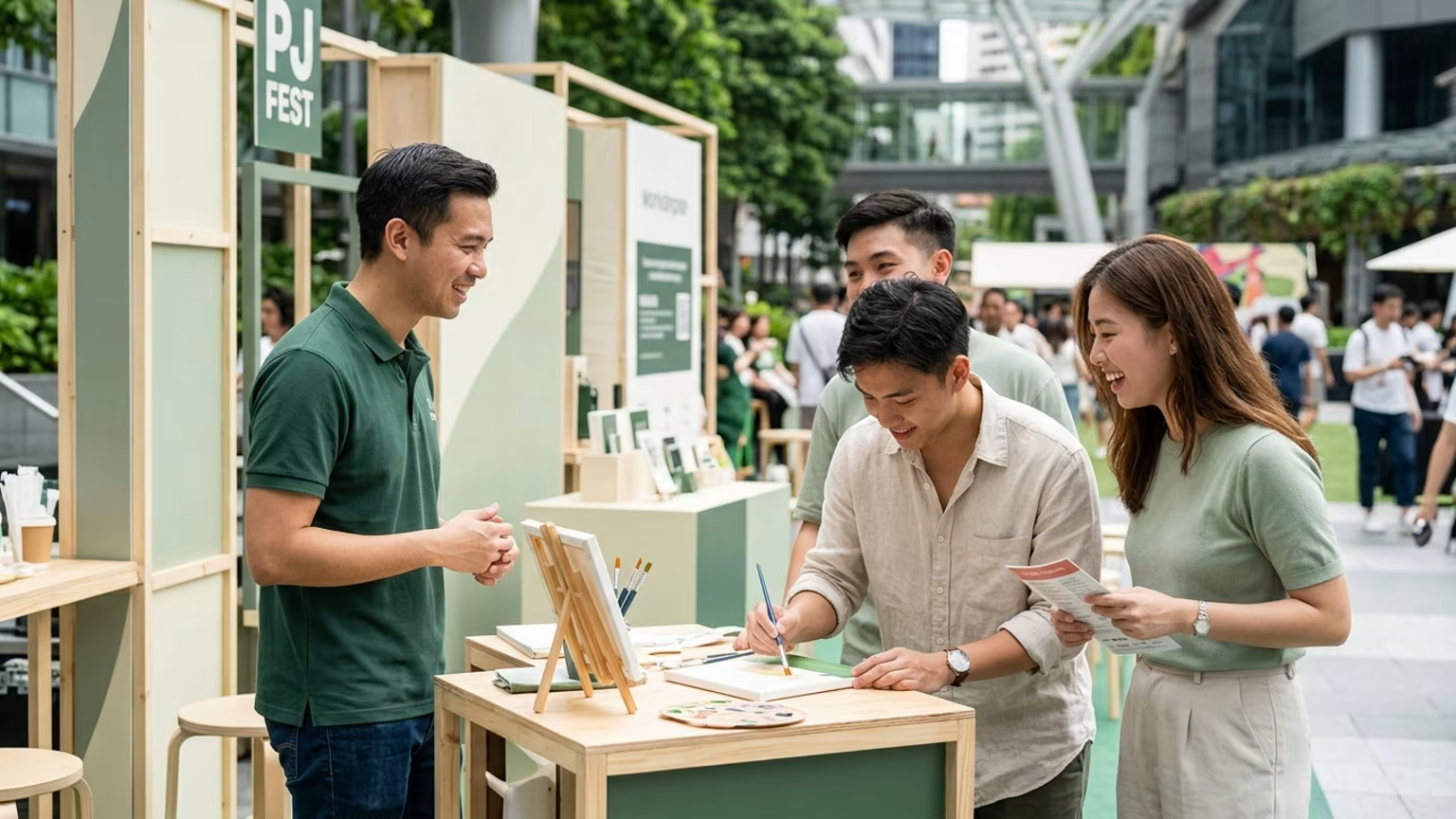
A beverage brand could design a defined route guiding consumers through multiple retail stops. Our team at makai blends physical and digital experiences by integrating QR codes, mobile technology, and real-world activations into a cohesive layer across retail, event, and tour experiences. This blended approach is not a standalone service but an upgrade we apply to many types of experiential work to drive connected results.
When consumers finally arrive at these destinations, the interaction must validate their entire journey. Outernet allows users to stamp places after visiting them. Brands must mirror this satisfying completion mechanic directly on the event floor. Whether it is a product sample or an exclusive offer, the physical reward must match the digital promise.
Operators must also prepare for severe logistical pressure points during these campaigns. When digital content sets a strict physical itinerary, any breakdown in operations destroys consumer trust immediately. If a user arrives at a location and the event is closed, the brand permanently loses a customer. Every detail in the field must align perfectly with the extracted digital data.
Experiential marketing is rapidly shifting from isolated spectacles to connected consumer journeys. The basic workflow from an online post to a real-world visit requires rigorous tracking. Operators must measure the full path from initial content exposure to final itinerary creation. When consumers receive a calendar reminder and arrive onsite, that exact arrival must trigger a measurable event.
This completely changes how brands evaluate their brand activations and street-level campaigns. Success is no longer defined merely by how many people walked past a branded booth. It is defined by how many people saved a post, traveled to the site, and completed an interaction. The digital intent is finally married directly to the physical trial.
To properly support this new standard, brands must focus heavily on the data they publish. Event pages, website links, and even photographs of physical flyers must be relentlessly optimized for extraction. Artificial intelligence systems need clear operational parameters to correctly build user itineraries. Ambiguity in marketing copy will undoubtedly result in failed real-world routing.
Marketing leaders must demand absolute precision from their creative agencies. A beautiful social asset is completely useless if the artificial intelligence cannot extract a time and place. Field managers must work closely with digital teams to ensure all published content supports physical logistics. This level of operational alignment is what separates premium campaigns from expensive failures.
Consumers consistently save inspiring social posts as reminders but often forget them in the endless scroll. Unresolved intent is the silent killer of marketing Return on Investment (ROI) across the entire industry. Platforms like Outernet prove that this massive gap can be bridged with structured data and automated nudges. Operators must completely adjust their KPI dashboards this quarter to track these specific new workflows.
The experiential industry is finally moving past simple and outdated attendance metrics. Operators must measure the precise conversion rate from a saved itinerary to a physical stamp. If your retail demos and roadshows are not actively capturing digital intent, you are wasting valuable pipeline. The future of experiential marketing belongs to those who turn fleeting online interest into undeniable physical action.

30 Years Experiential & Retail Activation Partner for CPG & Beverage Brands | Multi-Market Demos, Roadshows & Costco/Club Programs That Actually Sell