Robbie Thain
Founder, CEO

Learn how to optimize your trade show booth budget by saving on rental structures and splurging on high impact graphics that drive real sales conversions.

The forklifts beep relentlessly across the bare concrete aisles of the convention center floor. A field marketing director stares at an empty patch of expensive rented carpet. Just one aisle over, a direct competitor unloads brilliant backlit displays that instantly command authority.
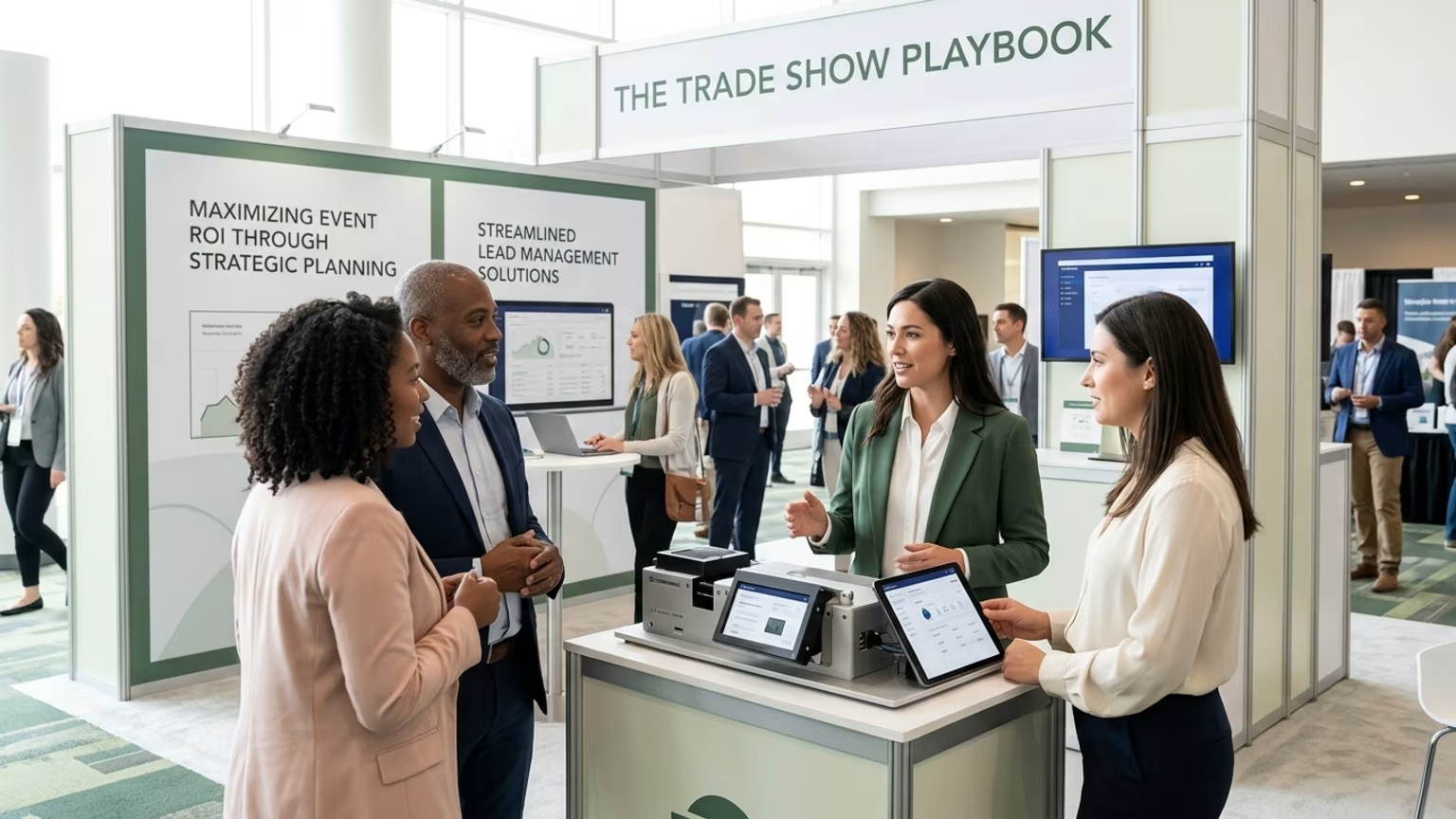
Budgeting for trade show properties requires a strict division between structural real estate and experiential conversion tools. Smart operators cut costs on the hidden booth framework to fund the high impact visual graphics that actually capture attention and drive sales pipeline.
Most trade show budgets fail from misallocation rather than overspending. The 2026 CEIR Exhibitor Spending Report reveals the largest share of an exhibitor budget goes directly to exhibit space. Companies routinely burn over forty percent of their funds on the floor footprint itself. This leaves a tiny fraction for the staff, show services, and visual graphics that generate actual consumer conversations.
A massive footprint with generic signage turns into an expensive waiting room. Brands under pressure to prove Return on Investment (ROI) often default to renting larger spaces. They make this mistake without calculating if the extra square footage drives proportional engagement. Exhibitors with smaller marketing budgets feel this squeeze the hardest.
They devote their funds to core necessities like space and travel. This structural trap punishes brands competing for consumer trial. You cannot afford to look generic on a crowded exhibition floor. The design budget gets starved right where high impact differentiation matters most.
A poorly planned budget leaves your team standing in a large but uninviting box. Cost effective booth configurations are available for teams willing to rethink their footprint. In line displays fitting a ten by ten or ten by twenty space offer a highly efficient way to make a strong visual impact. Island exhibits commanding larger spaces provide high visibility but drain resources from the actual sampling experience.
A successful booth budget is not structured as a real estate expense first and an experiential design second. You must reverse engineer the entire spend from your hard conversion goals. If your premium beverage brand needs five hundred trial conversions to justify the trip, you calculate the exact visual investment required to capture that traffic. This mathematical approach eliminates the constant debate over where to spend.
Every dollar is explicitly tied to a measurable business outcome. About half of surveyed exhibitors plan to change their exhibit properties soon. The CEIR Exhibitor Spending Report notes this is an encouraging sign. Companies want to avoid delivering a repetitive booth experience to regular attendees.
Brands that reuse the exact same static booth year after year look underfunded. Your competitive set is updating their visuals to signal quality. A flexible approach lets you adapt your physical presence to match changing brand positioning and target markets. Custom interactivity drives much higher trial conversion than an outdated stationary display.
Custom fabrication requires unique architectural elements built exclusively for your brand. This path demands a much larger budget than pre designed modular rentals. For premium food brands launching into new retail chains, custom design sometimes makes sense to signal aggressive investment. For most mid market operators, the smartest play is renting the physical structure and customizing only the graphic skins.
Controlling your budget requires discipline across several distinct phases of event preparation. The goal is moving funds away from invisible infrastructure and into consumer facing touchpoints. You must ruthlessly cut unnecessary structural costs.
There is limited public data proving that spending one hundred thousand dollars produces better sales conversion than a fifty thousand dollar budget. You have to establish your own internal benchmarks to justify future trade show requests. This requires tracking both immediate lead indicators and lagging business metrics. Hard numbers protect your event marketing budget from future cuts.
Leading metrics happen directly on the show floor during the event. Track your cost per qualified conversation and the total number of verified product trials. Count the scheduled follow up meetings booked before the exhibition ends. When you attend the Sweets and Snacks Expo, your lead metrics tell you if your budget allocation actually stopped foot traffic.
Lagging metrics measure the true financial impact months later. You must monitor the percentage of show leads that convert into wholesale orders or retail placements. Calculate the fully loaded cost of acquiring each new retail door. This data proves to your executive team that live trade show experiences generate predictable pipeline rather than just empty brand theater.
Consider a fast growing snack brand preparing for a major national food expo. They initially planned to spend sixty thousand dollars purchasing a heavy custom twenty by twenty island booth. This purchase would have drained their operating budget. It would have left zero funds for specialized staff training or premium sampling materials.
They pivoted to a high end modular rental structure for less than twenty thousand dollars. They redirected the massive savings into bright custom backlit fabric graphics and specialized lighting arrays. They spent the remaining surplus on hiring top tier promotional talent to work the aisles. The strategy shifted the focus entirely to consumer engagement.
The rented frame remained completely invisible to the attendees passing by. The striking illuminated graphics signaled premium brand status. This smart reallocation of funds generated record breaking retail buyer meetings. Their return on investment doubled simply by moving money from structure to visuals.
If you are tired of spending massive budgets on booths that look beautiful but fail to convert, it is time for a new approach. We build physical experiences that turn crowded aisles into qualified sales. Book a strategy call with our experiential team today to outline your next event.
Stop funding the floor space and start funding the conversation.

30 Years Experiential & Retail Activation Partner for CPG & Beverage Brands | Multi-Market Demos, Roadshows & Costco/Club Programs That Actually Sell