Robbie Thain
Founder, CEO

Discover how Sweetgreen uses retail sampling to launch packaged salads into grocery stores and learn the execution playbook for driving CPG sales.
Transitioning a beloved restaurant brand into the grocery aisle requires more than just shelf space and nice packaging. Physical sampling bridges the hospitality gap to turn curious shoppers into loyal retail buyers.
The category buyer checks her watch near the refrigerated aisle. A stack of expensive new packaged salads sits perfectly faced but untouched. Shoppers walk past the premium price tag without slowing down. The gap between brand awareness and immediate trial is costing the launch its momentum.
Expanding a hospitality concept into consumer packaged goods is a massive operational hurdle. Retail shelves lack the warm lighting and human touch of a brick-and-mortar restaurant. You lose the familiar ambiance that convinces people to pay premium prices for fresh food. A beautifully designed label cannot communicate taste, texture, or freshness on its own.
When a restaurant chain pilots grocery placements, they face immense retail apathy. Shoppers might recognize the name from their usual office lunch run. Getting them to trust a packaged version on a busy Sunday grocery trip requires immediate physical proof. Static shelf presence rarely commands enough attention to overcome buyer hesitation in crowded aisles.
Brands quickly realize that hoping for organic trial is not a valid retail strategy. You have to intercept the shopper and force a moment of interaction to break their autopilot routine. Bridging the gap between hospitality and retail requires putting the product directly into the hands of your consumer.
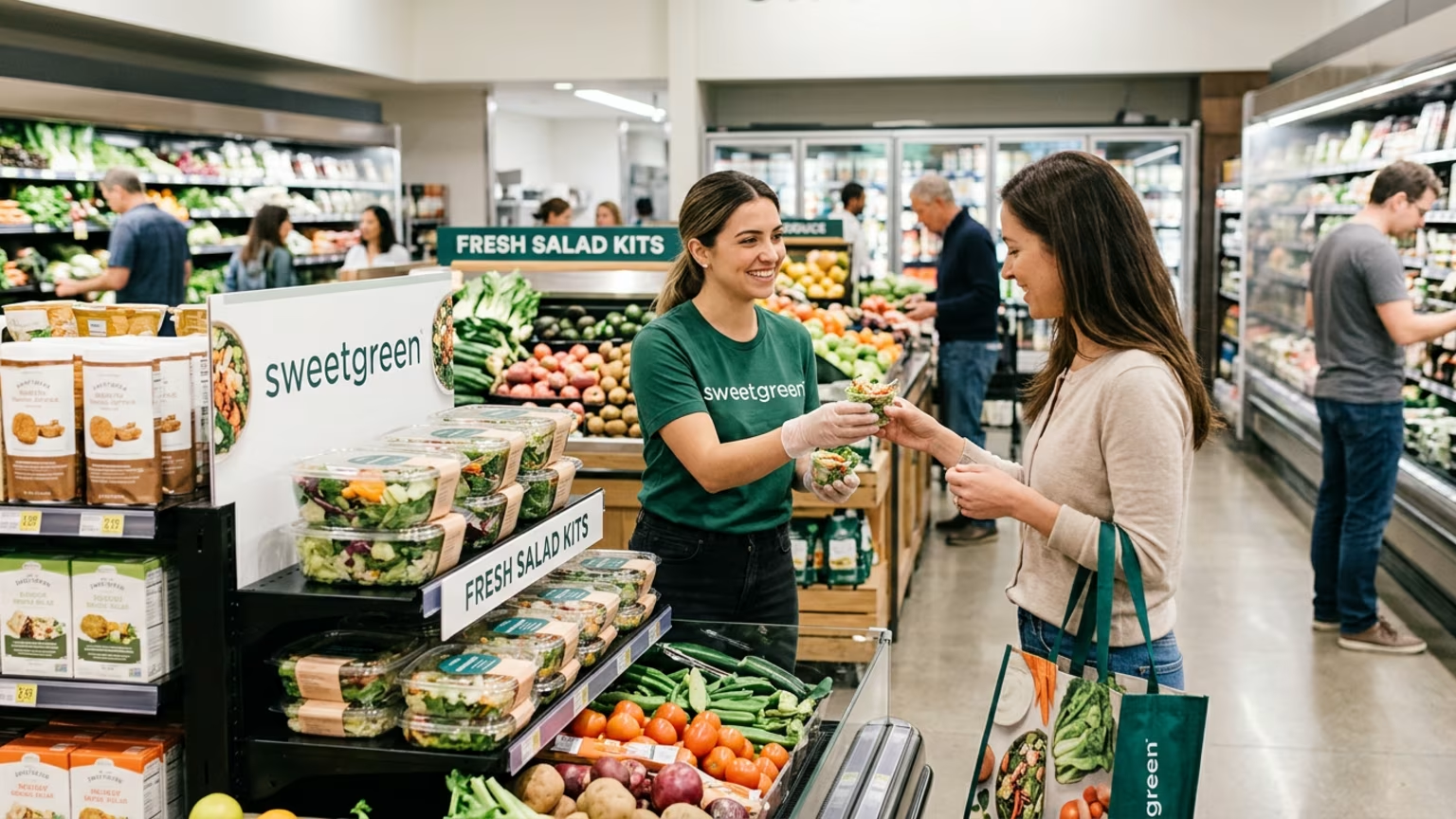
The answer lies in engineering a controlled trial environment right at the point of purchase. Brands must bring their distinct hospitality experience directly to the grocery floor. This means replacing passive endcaps with active flavor flight-style sampling stations. Industry coverage details how Sweetgreen is testing grocery channel expansion with limited retail placements.
These pilots include on-site tasting experiences to translate their famous restaurant flavors into packaged items. The brand uses targeted demos to help shoppers understand the new product translation from restaurant to shelf. Early internal data suggests a clear lift in conversion when tasting is available versus static shelf presence alone. The physical trial bridges the gap between customer curiosity and their final purchasing decision.
Achieving this Return on Investment requires field teams to have absolute operational discipline. Every single activation must perfectly align staff training, product temperature, and localized inventory levels. The primary goal is to strip away the financial risk of trying a new premium product. Shoppers need to taste the quality before they will justify a higher price point.
This strategy is not about giving away free food to hungry deal hunters. It is about qualifying interested buyers and proving your brand promise in real time. We have seen that understanding how to execute grocery store sampling effectively is the true foundation of moving premium SKUs. Field marketing must serve as a direct extension of your sales team.
Transitioning from a strategic concept to high-volume execution requires a strict operational playbook. Brands cannot rely on untrained store staff to represent their premium equity. You need a deliberate sequence to turn passing foot traffic into a measurable sales pipeline. Following a standardized process eliminates variables and guarantees a consistent shopper experience.
Never sample a product that is not fully stocked on the shelf within fifty feet of the table. Confirm delivery schedules with your distribution partners three days prior to the event date. A brilliant demo is entirely wasted if the shopper cannot immediately buy the item they just tasted. Stockouts during an activation actively damage your relationship with the retail buyer and frustrate the consumer.
Hire and train dedicated field staff who understand your brand narrative completely from day one. They must memorize the transition story between your original product and the new retail version. Many leaders highlight that properly trained field staff can drastically improve retail sell-through across all major regions. The right ambassador acts as an educator rather than just a passive sample distributor.
Replicate the ideal serving conditions exactly as intended by your corporate culinary team. Maintain strict temperature controls and use premium presentation materials to reflect the brand quality perfectly. If a salad is meant to be served chilled, a lukewarm sample will instantly kill the sale. Precision in execution separates operator-grade campaigns from amateur marketing attempts on the store floor.
Implement digital reporting tools for field teams to log hourly interactions and inventory depletion seamlessly. Track qualitative feedback on flavor profiles right at the sampling station for immediate review. This real-world intelligence is invaluable for your product development and broader marketing teams back at headquarters. Immediate data collection allows managers to course-correct underperforming locations by mid-day without losing momentum.
Train staff to hand the physical product directly to the consumer after a positive reaction occurs. Guide the shopper straight to the checkout or main shelf display immediately after the interaction. The conversation must end with a clear prompt to place the item in their grocery cart. Do not let the consumer walk away without a gentle push toward a final conversion.
Beautiful displays mean nothing without hard numbers to justify the field marketing spend. We track specific lead and lag indicators to prove true financial impact. You need a solid reporting system that tracks key metrics to prove the financial impact of your sampling events. Relying on subjective feedback is a quick way to lose your marketing budget entirely.
Lead metrics tell you if the execution is working in real time on the floor. We monitor hourly interactions, total samples distributed, and initial positive feedback rates. These immediate numbers help field managers adjust staffing and traffic flow on the fly. If interaction rates drop, the team can pivot their intercept strategy instantly to recover.
Lag metrics prove the long term viability of the retail launch over time. We measure same day sales lift by comparing unit movement during the activation against baseline days. We track repeat purchase rates over the following four weeks to confirm the trial created genuine loyalty. A successful demo program creates a measurable spike that establishes a higher permanent sales baseline.
Tying these numbers together gives marketing leaders the hard evidence they need for future investments. Retail buyers want to see this data before they agree to expand your shelf footprint nationally. Demonstrating clear velocity improvements makes your brand an undeniable asset to the grocery category. If you need help structuring this measurement framework, book a strategy call with our team today.
Theoretical frameworks fail if they cannot survive a busy weekend at a major retailer. We recently took a premium food brand into several major regional grocers to bridge their retail launch. The client faced identical challenges to any hospitality brand entering a crowded grocery category. Shoppers simply were not picking up the higher priced item without tasting it first.
We deployed a highly controlled sampling tour with trained ambassadors executing strict flavor flights. The team intercepted shoppers, explained the fresh ingredients, and provided immediate product tastes. The immediate conversion rate spiked, and local category managers noticed the strong unit velocity. Retail buyers love brands that actively drive their own foot traffic and create palpable excitement.
A VP of Marketing reflected on our partnership and shared some thoughts on the execution. They told us, 'Robbie, it was a pleasure working with you and your team. You turned our launch into an experience that connected with shoppers and built lasting excitement for our brand. We're already looking forward to the next project together.' Our team created a launch experience that resonated with retail shoppers and generated momentum for future collaborations.
The strategy works when operator-grade discipline meets a great consumer product. The crossover from foodservice to retail packaging is an incredibly lucrative move when executed correctly. It requires a deep understanding of shopper psychology and a commitment to field marketing excellence. Brands that commit to physical engagement consistently outperform those that rely on packaging alone. Winning the grocery shelf demands a proactive approach to consumer trial and trust building.
Build an active trial program today that places your new product directly into the hands of your ideal customer.

30 Years Experiential & Retail Activation Partner for CPG & Beverage Brands | Multi-Market Demos, Roadshows & Costco/Club Programs That Actually Sell