Robbie Thain
Founder, CEO

Learn how Subway transformed a simple mobile sampling tour into an interactive menu education experience that generated user-generated content and retail sales.
The typical sampling station is a factory of forgotten interactions. A brand ambassador hands out a small piece of food on a toothpick to a passing shopper. The shopper eats the snack, throws the napkin in the trash, and walks away. The brand learns absolutely nothing from the exchange.
Most sampling activations waste budget by handing out free food without teaching the consumer how to buy. By transforming a simple giveaway into an interactive menu education experience, brands can generate user generated content and build measurable retail pipeline.
The trade show floor is notoriously unforgiving. Attendees wander through crowded aisles in a state of constant sensory overload. Bright lights and loud announcements compete for their fragmented attention. Brands set up expensive booths, stack their tables with free samples, and hope for the best.
Shoppers grab the free items and immediately move to the next shiny distraction. There is rarely any real conversation or product education happening at these tables. This spray and pray method produces low quality leads and zero measurable sales lift. Field marketers return to the office with stacks of useless contact forms.
Marketing leaders look at the budget afterward and struggle to justify the massive expense to their executive team. Handing out product without a guided experience creates fog instead of clear business evidence. When you place a static booth in a busy convention center, you compete with hundreds of other vendors for a fraction of a second of attention. The environment forces people into a purely transactional mindset.
They take the branded pen, eat the snack, and forget your company name by the time they reach the exit doors. Brands need a tactical plan to break this cycle of wasted money.
The solution is shifting your strategy from blind distribution to active menu education. You must treat every physical sample as a diagnostic tool for the buyer. Instead of saying here is a free item, your team should ask what flavor profile fits your lifestyle. This small pivot changes the consumer from a passive receiver into an engaged participant.
Industry analysts report that product trial is one of the most powerful tools for increasing purchase intent. A successful experiential activation pairs that physical trial with targeted knowledge. When menus expand and product options multiply, consumers need help making the right choice for their specific needs. The brands that win are the ones that help buyers understand complexity with total confidence.
You can apply this exact strategy to any physical activation format. Whether you are running a regional pop up or planning full scale Costco roadshows, the core objective remains exactly the same. The physical footprint must serve as an interactive classroom rather than just a basic concession stand.
This educational framework relies on three distinct pillars of execution. First, you need a high visibility visual anchor to draw people in from a distance. Second, you must design interactive learning stations that guide the tasting experience step by step. Third, you must create frictionless sharing moments that turn foot traffic into digital reach for your brand.
Executing this strategy in the field requires military precision. You cannot leave the details to chance. Here is the step by step playbook for turning your next mobile tour into a revenue driving education engine.
Your executive team does not care about how pretty the activation looked on social media. They care about actual business outcomes and hard financial data. It is no longer acceptable to run a marketing activation without proving its financial worth. To prove your value to the company, you must track exact lead and lag metrics that tie directly to your bottom line.
Lead metrics show you immediate engagement on the ground during the event. You should track the total number of samples distributed, the volume of digital opt ins captured, and the number of user generated content pieces created. These numbers give you a real time pulse on how well your educational hooks are working that day. A high volume of user generated content acts as a powerful proxy for immediate brand advocacy.
Lag metrics prove the actual financial impact weeks or months after the event ends. You need to measure incremental sales in the exact regions where your tour operated. Track retailer sell through rates and monitor new distribution wins that resulted from the field activation. You can measure Return on Investment on mobile tours by comparing these figures against baseline control markets.
Field teams must operate with the same analytical rigor as digital marketing departments. Instrument your physical footprint for accurate measurement from the very beginning of the planning phase. Use unique landing pages, trackable discount offer codes, and point of sale data from local retail partners. Build a rolling digital dashboard so you can report your numbers to stakeholders on a weekly basis.
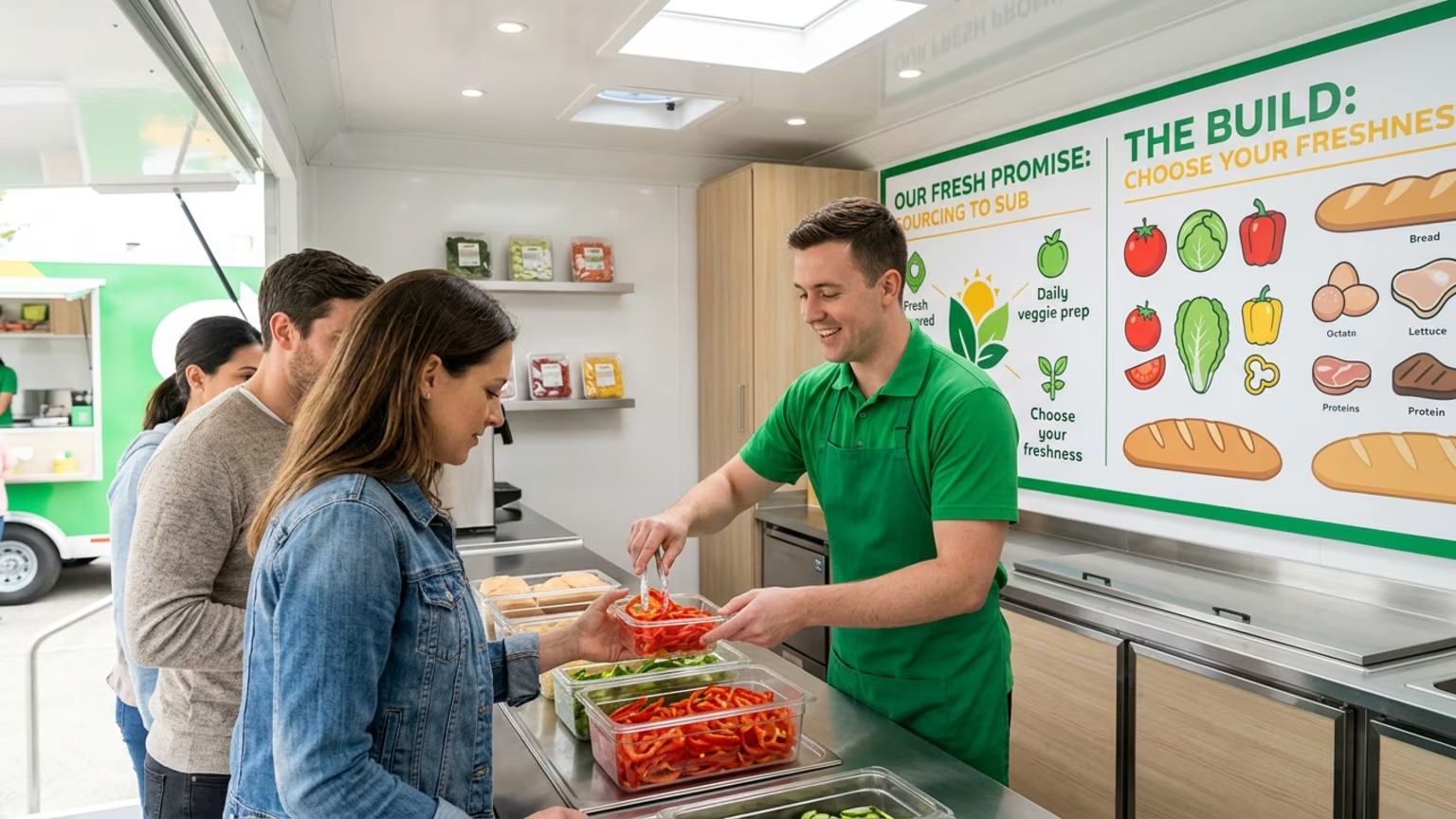
The recent Subway mobile tour provides a perfect case study in executing this exact educational framework. The brand launched a massive roadshow along the U.S. East Coast to promote their newly refreshed menu options. They did not just hand out free sandwiches to passing crowds in random parking lots. They built a highly interactive environment designed to teach consumers exactly how to customize their daily orders.
The brand deployed a giant billboard bus that served as a massive visual anchor for the tour. They set up interactive sampling stations where attendees learned about new ingredients and exciting sandwich builds. By offering limited edition merchandise as an incentive, they encouraged visitors to post their tasting experiences online. This focused strategy helped them turn mobile roadshows into retail revenue engines by bridging the gap between physical trial and digital reach.
The results of this educational approach were highly measurable and deeply impactful. According to recent coverage of the campaign, the activation generated over 4,000 pieces of user generated content across platforms. The tour successfully positioned everyday attendees as active brand advocates rather than just passive snackers. Instead of merely consuming a product, these shoppers learned a new menu and shared that valuable knowledge with their personal networks.
This type of structured execution delivers the absolute reliability that senior marketers demand today, which one VP of Marketing noted when reflecting on our partnership: 'Robbie, it was a pleasure working with you and your team. You turned our launch into an experience that connected with shoppers and built lasting excitement for our brand. We're already looking forward to the next project together.' Our team created a launch experience that resonated with retail shoppers and generated momentum for future collaborations.
Stop wasting your field marketing budget on aimless product distribution. You need a strategy that pairs physical trial with focused education. When you teach consumers how to engage with your product, you create lasting habits and measurable sales lift.
If you are ready to build an experiential campaign that drives real numbers, we should talk. Book a strategy call with our team today. We will help you turn those fleeting interactions into a permanent advantage.

30 Years Experiential & Retail Activation Partner for CPG & Beverage Brands | Multi-Market Demos, Roadshows & Costco/Club Programs That Actually Sell