Robbie Thain
Founder, CEO

The Experiential Marketing Summit 2026 focuses heavily on mobile tours, roadshows, and field activations that drive real retail pipeline and measurable ROI.
Spending marketing budget on beautiful event spaces that generate zero retail pipeline is a failing strategy. The upcoming Experiential Marketing Summit 2026 reflects a massive industry correction by focusing heavily on how mobile tours and field activations drive measurable sales.
Walk onto any major trade show floor or festival ground today. You will see the same costly mistakes repeated in every single aisle. Brands deploy stunning fabrication, beautiful lighting, and energetic staff to draw a massive crowd. Consumers smile at the displays, take a free sample, walk away, and never think about the product again.
The field teams are exhausted from the punishing travel schedules. The logistics are complicated by missing inventory and late freight deliveries. Post-event reporting relies entirely on vanity metrics like total foot traffic or social media impressions. Marketing leaders are left staring at empty spreadsheets in quiet frustration.
They struggle to explain to their finance teams why heavy booth traffic did not translate into a Return on Investment. Unreliable staffing and poor data collection turn what should be a sales engine into a beautiful disaster. Mid-level managers spend hours trying to piece together fragmented field reports to find any sign of actual pipeline growth. The lack of operational discipline creates a deep disconnect between physical brand presence and retail performance.
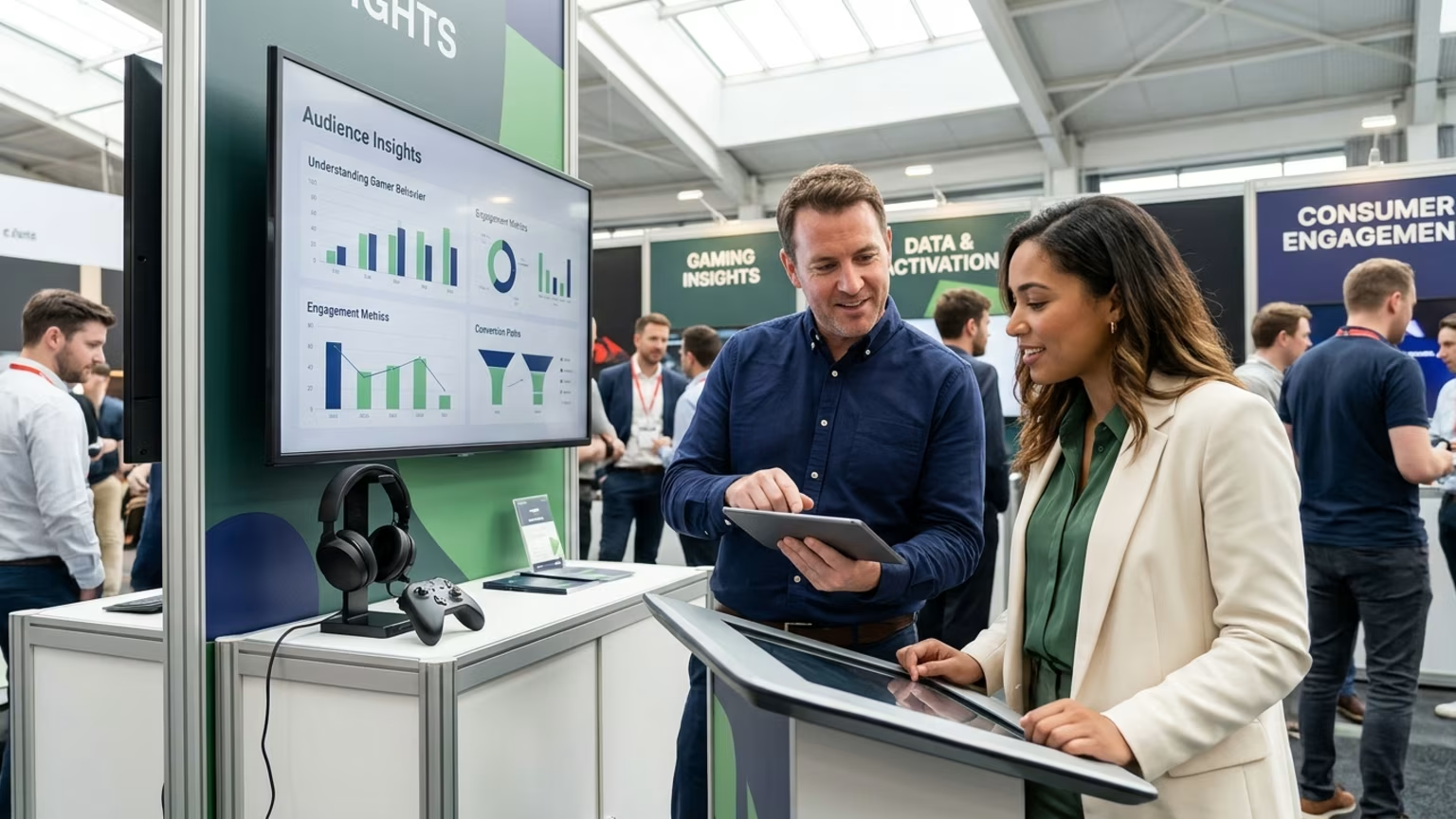
Event Marketer has officially opened registration for the Experiential Marketing Summit 2026. The programming agenda for this May conference tells a clear story about the future of live experiences. Industry leaders are abandoning untrackable stunts to prioritize mobile tours, pop-up strategies, and multi-market roadshows. Industry analyst reports consistently show that a large portion of consumer marketing executives are increasing their spending on experiential campaigns compared to previous years.
To capture that budget effectively, brands require a highly systematic framework. Operations dictate outcomes in field marketing every single time. The strategic approach shifts the focus from pure aesthetic design to rigorous operational discipline. Brands must build their roadshows backwards from the retail shelf.
They need to integrate local market data, exact routing, and comprehensive brand activation services to win. Every touchpoint must be engineered to capture attention and convert it into a measurable consumer action. We create experiential marketing programs built to connect emotion with action.
Our process blends creativity, strategy, and data to guarantee every brand interaction drives measurable results. We craft experiences that engage all five senses. We help people not just see brands but feel them. We turn everyday moments into meaningful business outcomes. Book a strategy call with our team to start building your next tour.
Brands are completely rethinking the balance between national mass media and targeted local presence. Mid-level marketing budgets are shifting away from saturated online advertising to fund multi-market touring programs. These local roadshows support specific retailers, focus on high-opportunity regions, and generate authentic content for social media usage. Physical experiences cut through digital fatigue with real human contact.
Transitioning from a chaotic event calendar to a revenue-generating roadshow requires an exacting methodology. You cannot rely on hope and good weather. Field activations demand a playbook that removes guesswork from the equation.
The pressure to prove performance has reached a boiling point for marketing operators. Marketing industry studies confirm that nearly all brand leaders face intense demands from leadership to prove clear financial returns from their experiential investments. You need cold facts to justify a national mobile tour to a skeptical board. Relying on smiling faces and busy crowds is no longer an acceptable reporting standard.
Extensive consumer research shows that buyers are significantly more likely to purchase after participating in live events. Shoppers routinely report having far more positive feelings about brands after attending branded experiences. To capture that value, brands need rigorous tracking systems. Leading indicators tell you if the operation is running smoothly on the ground. These metrics include cost per sample distributed, the volume of opted-in leads, and the percentage of qualified interactions.
Daily footprint traffic and dwell time offer immediate feedback on the attractiveness of your physical setup. Track these numbers daily to adjust your field strategy in real time. Lag metrics prove the actual business impact weeks or months after the trucks roll out of town.
The most powerful lag metrics are regional retailer sell-through, test market sales lift, and pipeline velocity for B2B brands. Tracking the right field marketing metrics transforms a marketing expense into a highly traceable asset. A post-event analysis should clearly show how physical interactions moved the needle on corporate revenue goals.
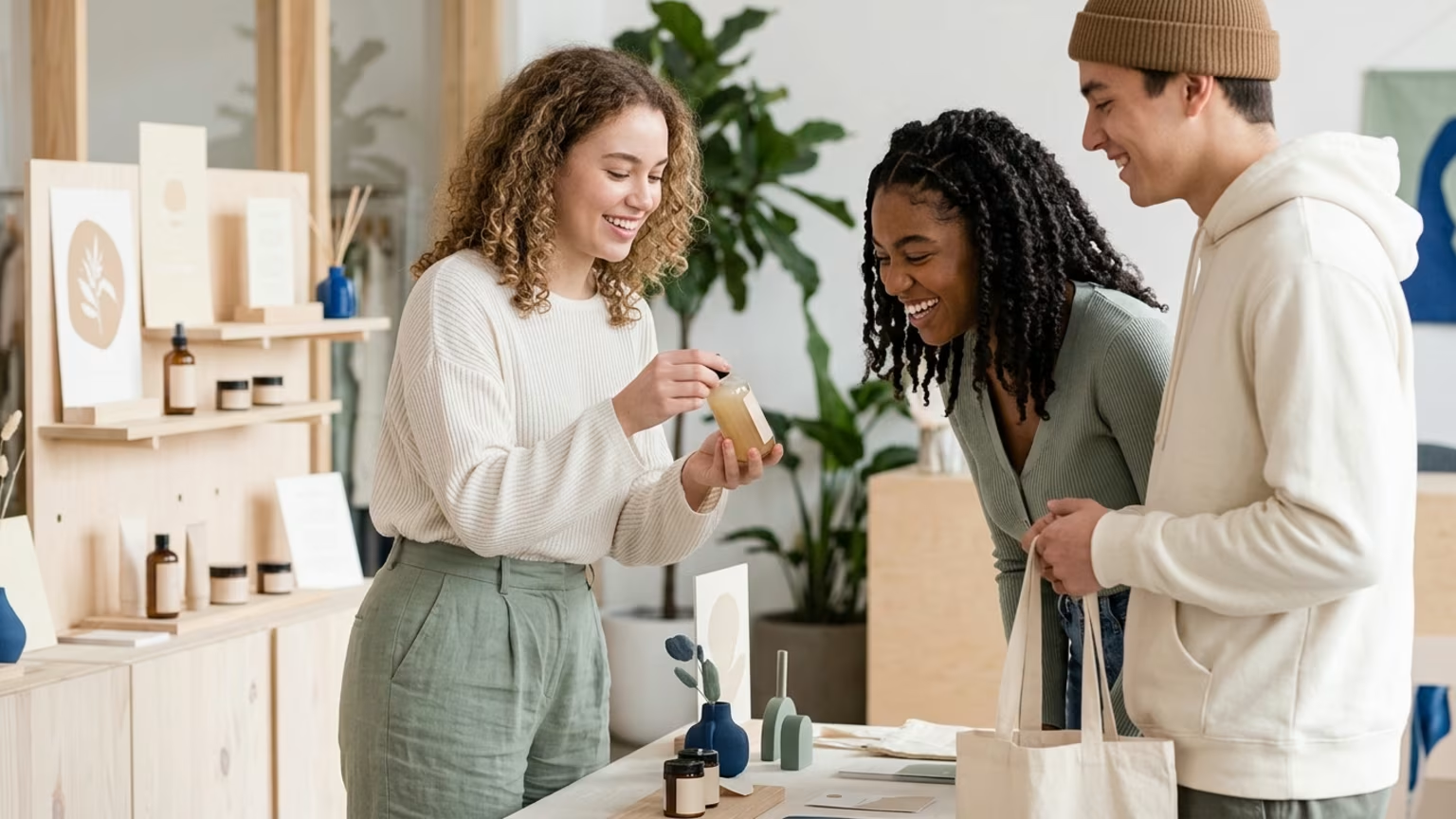
The theory sounds great in a boardroom, but physical execution proves the model in the real world. Consider the performance of a national snack brand running an intensive program inside big-box retailers. Instead of just handing out product from a folding table, the brand utilized highly trained ambassadors to drive real conversations. They focused on educating the shopper about ingredients, usage occasions, and value.
Industry sampling data consistently proves that the vast majority of consumers are more likely to buy a product after trying it. This exact snack brand program consistently drove double the normal sales volume during activation days. The operational discipline applied to staffing and messaging created an immediate spike in localized revenue. The impact did not stop at the end of the shift.
The brand experienced a massive sustained lift in sales during the weeks following the in-store events. Many of those trial consumers became repeat buyers within a sixty-day window. The program worked smoothly by connecting the physical sampling moment directly to the immediate retail environment.
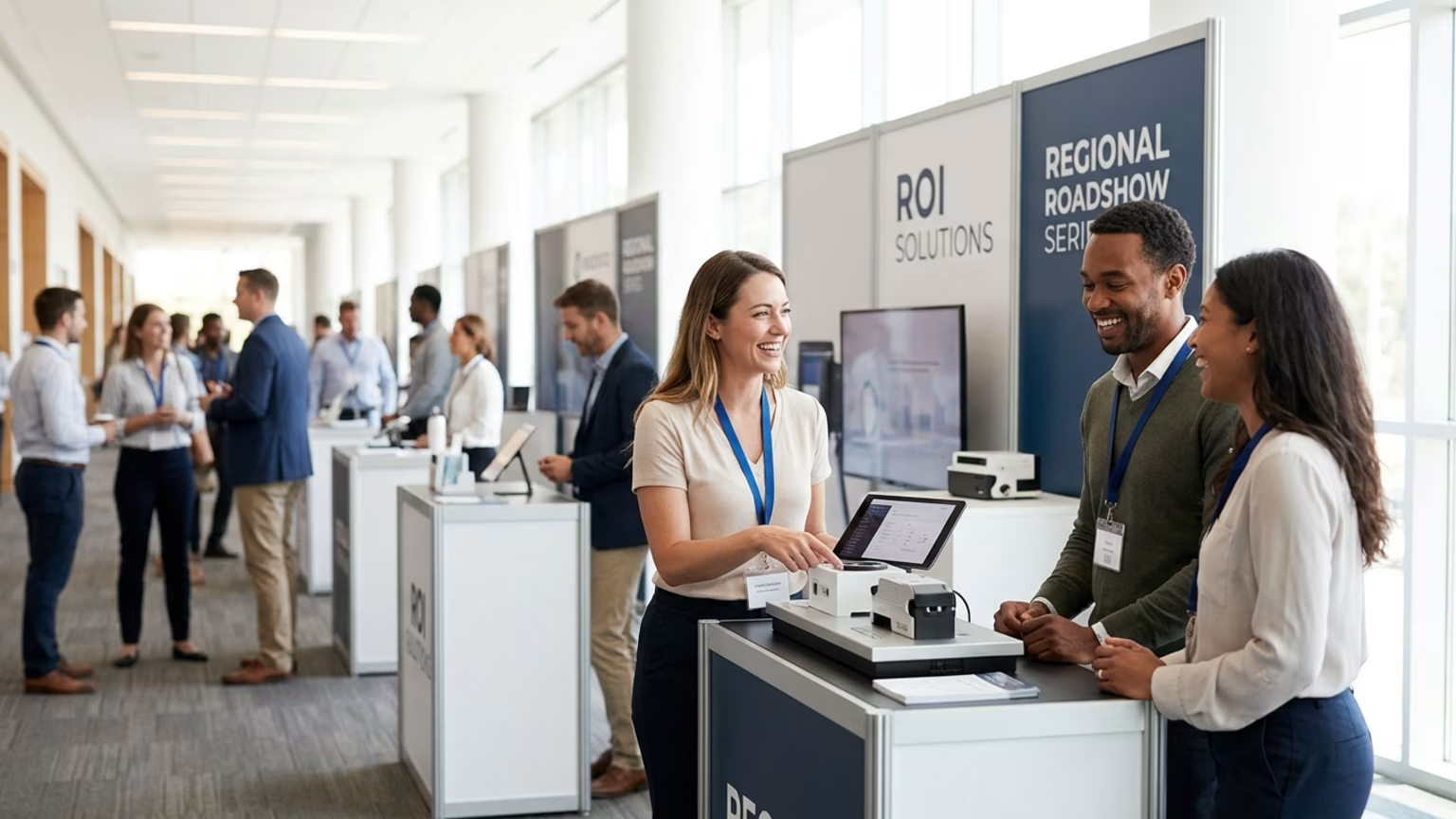
B2B brands see similar outcomes when they treat roadshows with military precision. A fifteen-city technology demo truck tour can produce thousands of qualified pipeline opportunities when executed correctly. The secret always lies in treating the event as a disciplined sales channel rather than a purely creative exercise.
The most memorable brand moments are rarely the loudest ones. They happen when a person holds a product, understands its value, and quietly decides to make it part of their life.

30 Years Experiential & Retail Activation Partner for CPG & Beverage Brands | Multi-Market Demos, Roadshows & Costco/Club Programs That Actually Sell