Robbie Thain
Founder, CEO

Discover how PepsiCo's agile mobile sampling tour for bubly and Rockstar turns high traffic festivals and retail parking lots into measurable retail pipeline.

The refrigerated truck rolls into the retailer parking lot three hours late. Brand ambassadors scramble to assemble tents in the sweltering heat. Early shoppers walk right past them. The product is barely cold, and the QR code scanners refuse to connect to the spotty network.
PepsiCo is setting a new standard for field marketing with a data-driven summer roadshow that routes bubly and Rockstar directly to high traffic festivals and retail parking lots. This agile approach proves that mobile activations must function as measurable commercial operations rather than isolated brand stunts.
Many consumer packaged goods brands view mobile sampling as a simple numbers game. They deploy fleets of branded trucks to music festivals and busy intersections with the vague goal of creating awareness. The operations team throws cases of product at passing crowds.
At the end of the weekend, they report thousands of impressions and empty inventory pallets. The activation looks busy, but it produces fog instead of evidence.
Marketing operators know this chaotic scenario all too well. You invest heavily in sponsorships and vehicle wraps, but the follow up is practically non existent. Staffing is inconsistent across regions, and data capture is treated as an afterthought. Without a clear link to a nearby cash register, you are left with a very expensive distribution method that fails to show Return on Investment.
Brands under pressure to prove financial outcomes can no longer tolerate vanity activations. Industry analysts report that chief marketing officers now demand clear proof of sales lift within a few months of an event. When pure brand theater fails to move the needle at retail, budgets get slashed. The physical footprint must justify its existence through verifiable commercial data.
PepsiCo solves this disconnect by treating its mobile tour as a flexible pipeline engine. The strategy pairs high profile lifestyle events with targeted retail parking lot stops. Activating near the point of purchase allows brands to capture existing foot traffic without overwhelming in store promotions. It bridges the gap between a fun brand moment and a measurable shopping trip.
Industry analysts report that a vast majority of consumers who experience a brand event say they understand the product better. Many of those participants become regular customers shortly after the experiential marketing event. Recent retail studies show that over a third of customers who sample a product buy it during the exact same shopping trip. A strategic tour capitalizes on this intent.
Music festivals and action sports events offer a rich environment for engagement. Industry sources note that over ninety percent of festivalgoers are open to engaging with brands on site when the activation adds real value. A well executed footprint provides shade, hydration, or exclusive entertainment. This transforms the brand from an interruption into a welcomed part of the weekend.
The route is never set in stone. Field teams review performance metrics weekly and re-route trucks to markets showing the highest incremental lift. If a region underperforms, the assets move to where they can generate a higher return.
We blend physical and digital experiences by integrating QR codes, mobile technology, and real-world activations into a cohesive layer across retail, event, and tour experiences. This connected framework is not a standalone service but an upgrade we apply to many types of experiential work to drive connected results. Every sample distributed must trigger a data capture event or a direct commercial outcome.
Retailer integration sits at the core of this modern methodology. Brands co-design the activation footprint with shopper marketing teams to match in store promotions. Shoppers receive an instant digital coupon outside and redeem it inside minutes later.
This precise alignment turns an unpredictable field event into a reliable driver of product velocity. Taking the time to build a CPG sampling strategy helps these elements work in perfect harmony.
Translating a national sampling strategy into flawless regional execution requires strict operational discipline. You need a playbook that standardizes the consumer experience and adapts to local conditions. Execution falls apart when brands prioritize flashy design over operational realities.
Retailer buy-in is the lifeblood of a successful parking lot activation. You must prove to the store manager that your presence will drive foot traffic rather than create a nuisance. Present a clean operational plan that details trash removal, power needs, and staffing limits. A professional approach earns you prime placement right near the entrance.
Logistics can derail even the most creative campaigns. Moving a branded vehicle across multiple state lines requires rigorous permitting and compliance planning. You must account for Department of Transportation regulations, local food handling permits, and venue specific insurance requirements.
Missing a single piece of paperwork can shut down an entire weekend of sampling. Handling the route planning and permits for a mobile tour must be mapped out months in advance.
Measuring success in the field demands a shift away from vanity metrics. Tracking the sheer volume of distributed cans is no longer sufficient. Marketing leaders must isolate the lead indicators that predict behavior and the lag indicators that prove financial impact. Establishing clear parameters early on protects the integrity of your reporting.
Lead metrics provide immediate feedback on site. You should monitor the number of samples distributed per hour per station. Track the opt in rate for your digital data capture efforts. A healthy operation usually sees a significant percentage of samplers trade their contact information for a tangible reward.
You must track the operational cost per sample to keep your logistics financially sound. Marketing operators looking to track deeper outcomes can review five indicators that prove roadshows generate retail volume for a better baseline.
Lag metrics determine the long term value of your activation. The most telling indicator is incremental sales lift in the specific markets or stores surrounding the tour stops. Compare these figures against control markets that did not receive field support. You should track digital coupon redemption rates to see how many samples translated into immediate purchases.
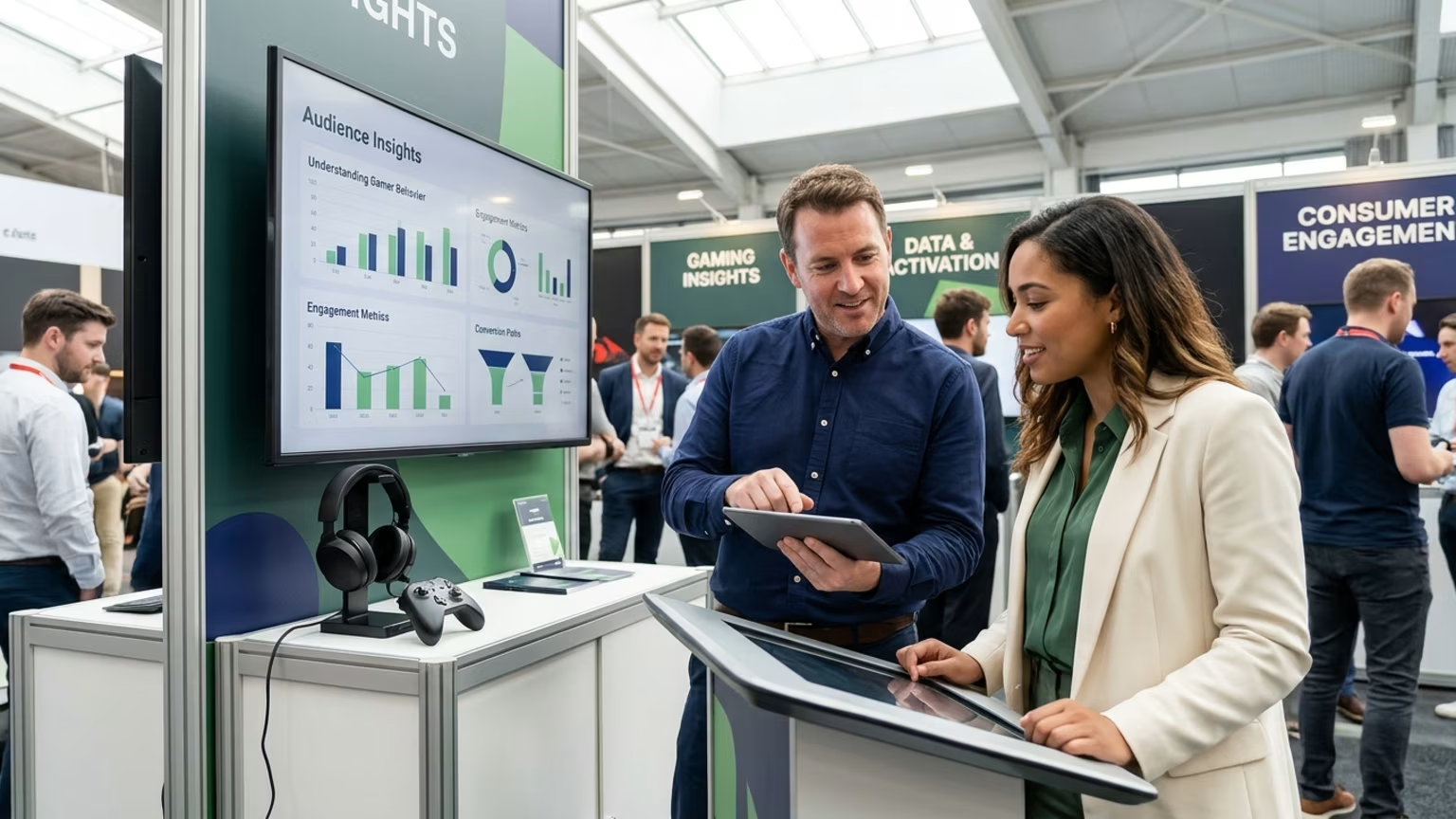
Tracking these numbers requires robust technical integration. Unique digital tracking codes should be assigned to specific trucks, markets, or retail partners. This discipline transforms a stack of disconnected spreadsheets into a clean dashboard of commercial truth. Reliable data reporting is what separates a professional activation from a messy weekend project.
The current summer tour featuring bubly and Rockstar provides a masterclass in portfolio balancing. PepsiCo operates in highly competitive categories where taste trials are the primary driver of adoption. By combining a sparkling water and an energy brand, the tour captures morning hydration needs and afternoon energy slumps within a single footprint. The activation is structured to funnel excitement directly into commerce.
PepsiCo acquired Rockstar for several billion dollars to compete aggressively in the energy category. They paired it with bubly, a top flavored sparkling water, to create a dominant experiential footprint. The dual brand tour covers a massive demographic spread. A single physical footprint engages gamers seeking energy and health conscious shoppers seeking refreshment.
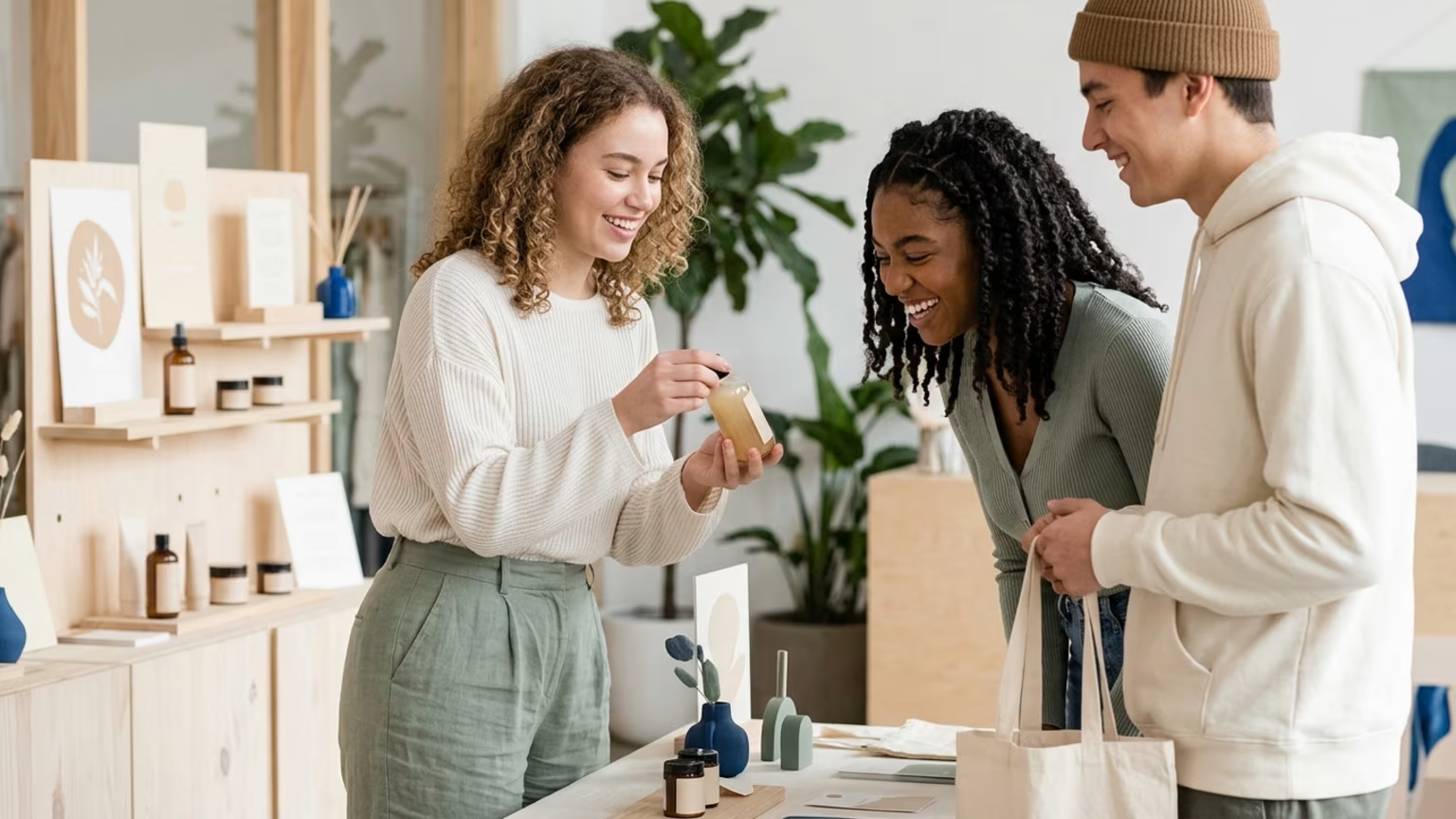
A consumer might try a new Rockstar flavor outside a major big box retailer. They scan a code to enter a summer sweepstakes and receive a digital rebate instantly. They walk inside the store, locate the product on a promotional display, and make a purchase. Learning how to turn energy drink sampling into a retail pipeline requires exactly this kind of seamless handoff.
This setup allows the field team to track the exact conversion rate from a parking lot interaction to a verified sale. If a specific region underperforms, the operations manager can adjust the route or tweak the ambassador script. This level of control turns an unpredictable field event into a reliable customer acquisition channel.
Operating multiple brands under one roof creates operational efficiencies. Shared logistics, shared staffing, and shared data platforms reduce the overhead cost per activation. The brand team gets double the exposure for a fraction of the standalone deployment cost. This approach maximizes pipeline and minimizes wasted resources.
You do not have to settle for scattered attention and poor booth flow. Live brand experiences should build your pipeline and strengthen your retailer relationships. If you are ready to upgrade your next activation from a logistical headache to a measurable success, it is time to act. Book a strategy call with our team today. We build campaigns that connect, convert, and command attention.

30 Years Experiential & Retail Activation Partner for CPG & Beverage Brands | Multi-Market Demos, Roadshows & Costco/Club Programs That Actually Sell