Robbie Thain
Founder, CEO

Learn the operational framework behind scalable roadshows. We break down staffing, inventory, compliance, and data metrics to drive consistent retail lift.
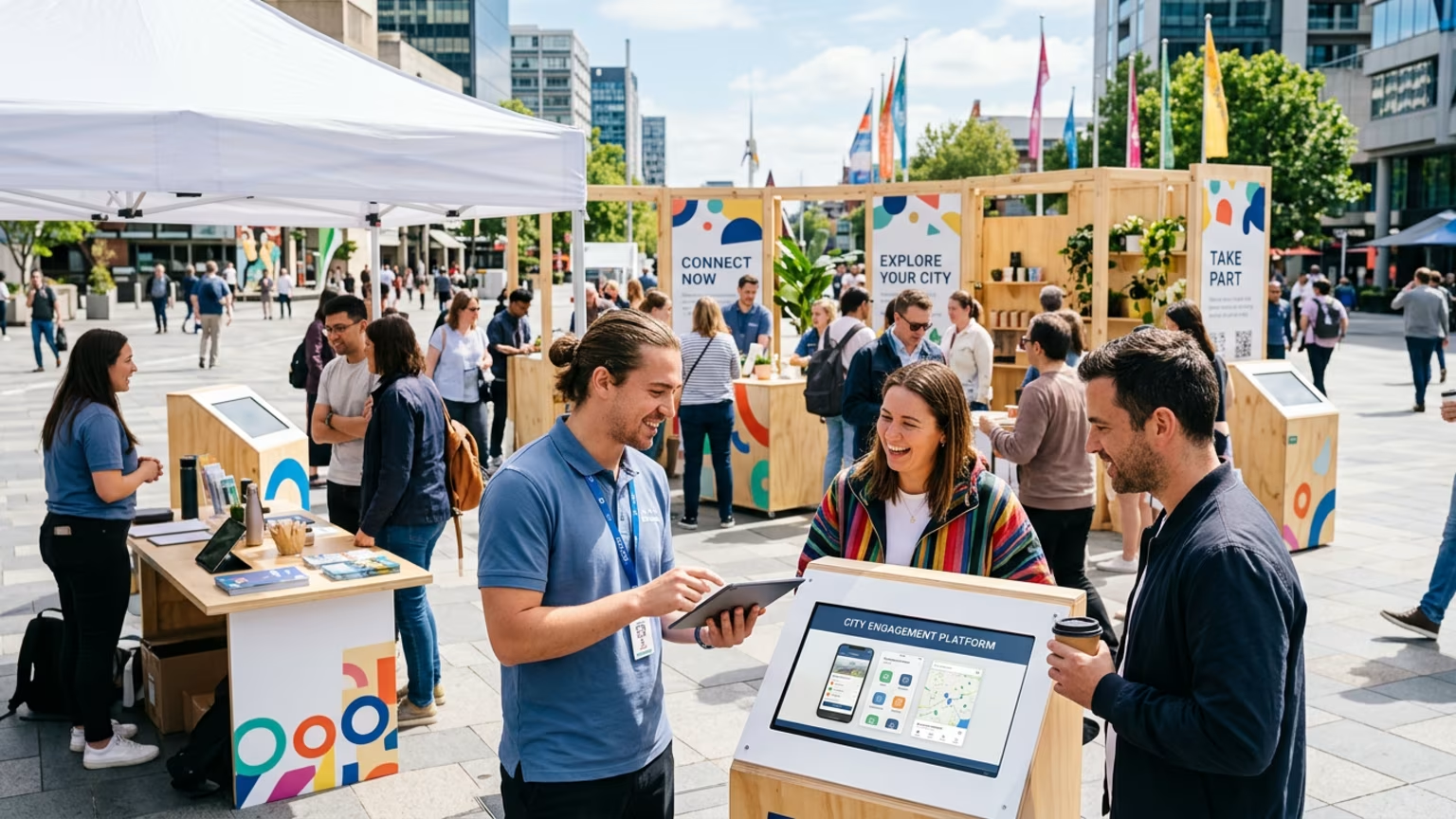
Many multi-city campaigns fail fast when a brilliant creative concept meets a fragile execution strategy. This guide breaks down the precise operational model needed for repeatable activations to keep brand presentation perfectly consistent across every U.S. market.
Sarah stood next to an empty sampling booth at 8 AM in downtown Chicago. The product pallets were completely missing. The city health permit listed the wrong activation date. Her lead brand ambassador quit via a text message five minutes ago.
Trade show floors and crowded street corners expose weak planning immediately. Field marketing leaders face immense pressure to deliver measurable Return on Investment from these live moments. A six-figure budget turns into an expensive scramble when logistics crumble under the pressure of live execution.
Brands need real-world consumer engagement to drive retail lift. Experiential marketing relies heavily on human variables and physical assets. Human variables often introduce extreme unpredictability into tight event timelines.
We have executed over 1000 campaigns across all 50 states, bringing brands to life in every major U.S. market. From retail demos in Seattle to roadshows in Miami and events in Honolulu, our teams activate brands wherever our clients' audiences are located. This volume of work teaches a harsh lesson early on. Operational discipline matters far more than beautiful booth renderings.
The correct approach requires treating experiential marketing like an industrial supply chain. Creativity attracts consumer attention initially. Operations keep the campaign alive across multiple cities safely. You need a rigorous system that removes the guesswork from field execution entirely.
A consumer in Texas must get the exact same experience as a consumer in New York. The brand messaging must remain sharp everywhere. The product temperature must remain perfectly controlled at all times. This happens through a standardized operating system instead of isolated local event planning.
Marketers must shift their mindset from event planning to enterprise system building. A single pop-up is a localized event. A 40-city mobile tour is a massive enterprise operation. Teams that excel at anticipating urban logistics bottlenecks scale faster without losing output quality.
Modern operations integrate predictive tools to handle complex schedules. Industry analysts at Forrester note that major tech companies are heavily integrating AI models to optimize workflows and scale output efficiently. Field marketing teams can apply similar operational logic to inventory tracking and complex route planning.
Brand decision-makers want people to try their product in physical environments. They want target audiences to trust and buy their items. This requires a strong framework that handles everything from permitting to post-event CRM reporting seamlessly.
A scalable system relies on strict operational protocols. You cannot run a national campaign on assumptions and good intentions. Every step requires a documented procedure to protect the brand integrity.
Building reliable talent pools is a mandatory step. Do not rely on random local agencies for every new stop. You must build a trusted roster of trained professionals who understand your specific industry domain. Maintaining consistent talent across markets guarantees that brand ambassadors represent your product accurately.
Staffing consistency directly impacts the consumer experience. Trained ambassadors drive in-store sales through real conversations. Untrained temporary workers just hand out free things silently. Strong teams turn audiences into active participants with live experiences that invite people to try and act.
Product handling dictates consumer perception completely. A warm beverage sample ruins the brand promise instantly. You must mandate exact protocols for pallets, dry ice, and refrigerated transport. A broken cold chain destroys the budget and damages the consumer relationship.
Tour managers need clear guidelines for restocking inventory locally. Storage and logistics protocols keep every single activation on schedule. Teams must store sampling product securely and track delivery nationwide meticulously.
Municipal rules change across city lines constantly. Health department codes in California look very different from fire marshal rules in Texas. Managing municipal health codes correctly prevents costly shutdowns on event day.
Your operating system must track all deadlines for paperwork submissions. Missing a permit window forces your team to change locations at the last minute. Location changes reduce foot traffic and destroy event profitability entirely.
The home office needs constant visibility into the field operations. Implement strict digital checklists for setup and breakdown phases. Require date-stamped photos of the footprint before the activation opens to the public.
Tour managers must submit daily recaps before clocking out. These recaps should include exact distribution numbers and qualitative consumer feedback. Fast feedback loops allow headquarters to adjust messaging for the next city rapidly.
Move physical assets efficiently between markets. Map out exact drive times and schedule mandatory maintenance days for vehicles. Do not burn out your tour managers with impossible cross-country travel schedules.
Smart routing prevents mechanical breakdowns and dangerous driver fatigue. Experiential marketing relies on mobile sampling tours showing up on time. A broken truck on a highway means a lost weekend of sales.
Experiential campaigns must generate qualified leads and retail lift. You cannot judge success purely by the number of smiles at a booth. You must track both lead and lag metrics diligently to prove true impact.
Lead metrics show immediate traction during the live event. Track daily foot traffic through the physical footprint. Count the exact number of premium sample distributions given to consumers. Monitor the volume of high-quality brand conversations initiated by the field staff.
Lag metrics prove the financial impact after the trucks roll away. Measure the direct sales lift at nearby retail locations over a thirty-day period. Analyze the CRM capture rate from digital engagements and sweepstakes entries. Tracking direct retail impact provides the concrete proof that executives demand.
Return on Investment requires comparing the total activation cost against these clear financial indicators. Clear data gives CMOs the confidence to fund future roadshows. Vague reporting leads to budget cuts in the next fiscal year.
A premium sparkling water brand needed to expand from regional dominance to national visibility. Their previous scattered approach resulted in mismatched booth designs and inconsistent consumer interactions. Some markets ran out of product by noon on a busy Saturday. Other locations suffered from poorly trained staff who could not explain the product benefits clearly.
They implemented a centralized operating system for a massive 20-city mobile sampling tour. Every tour manager used the exact same inventory tracking software daily. Brand ambassadors received standardized video training before stepping into the footprint. The entire fleet followed a mathematically optimized routing schedule.
The results spoke for themselves through undeniable hard data. The brand achieved zero permit violations across all municipalities visited. Sample waste dropped dramatically thanks to much better cold chain management protocols. Above all, nearby grocery retailers reported a massive spike in category sales during the activation weeks.
Live events are unpredictable by nature. A strong operating system absorbs that unpredictability gracefully. It turns chaotic physical environments into controlled brand moments that generate real sales and consumer loyalty.
Stop hoping that local teams will figure it out on the fly. Build the solid frameworks that make success repeatable across every single market. Precision execution separates amateur pop-ups from dominant brand movements.
Ready to turn your next live campaign into a precise revenue engine? Book a strategy call today to map out your exact operational blueprint.

30 Years Experiential & Retail Activation Partner for CPG & Beverage Brands | Multi-Market Demos, Roadshows & Costco/Club Programs That Actually Sell