Robbie Thain
Founder, CEO

See how experiential marketers use municipal permitting and city coordination to eliminate costly cancellations and drive measurable ROI.

The special events permit was denied at 4 PM on a Thursday. Three pallets of premium sparkling water sat idle in a staging lot. The street activation was slated to open in less than twenty hours. The marketing director stared at the email and realized the weekend revenue projection just vanished.
Experiential marketing success now hinges on mastering municipal permitting and safety compliance long before the first footprint hits the ground. By treating these operational elements as strategic infrastructure, brand leaders can eliminate costly cancellations and turn complex roadshows into measurable revenue engines.
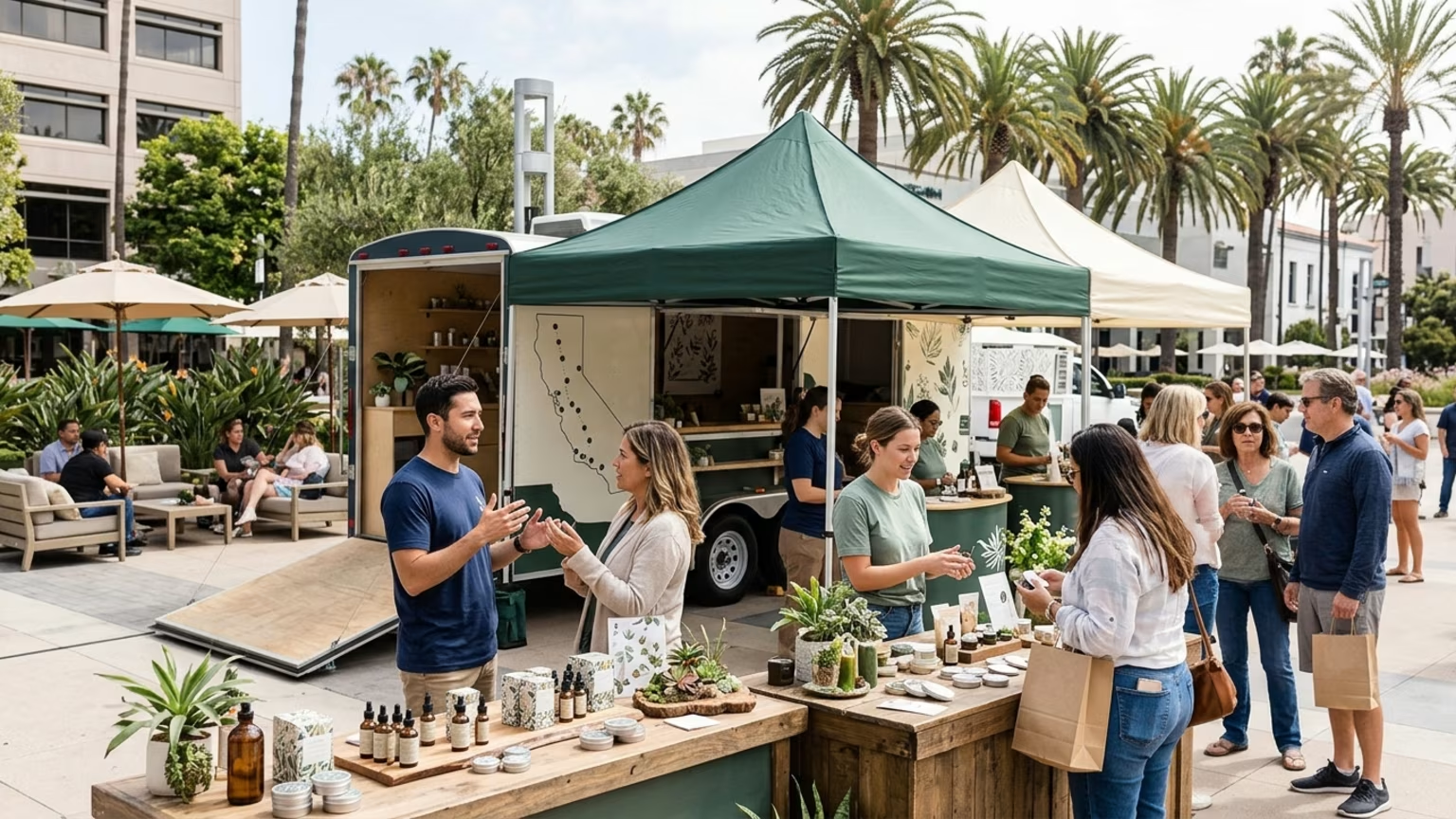
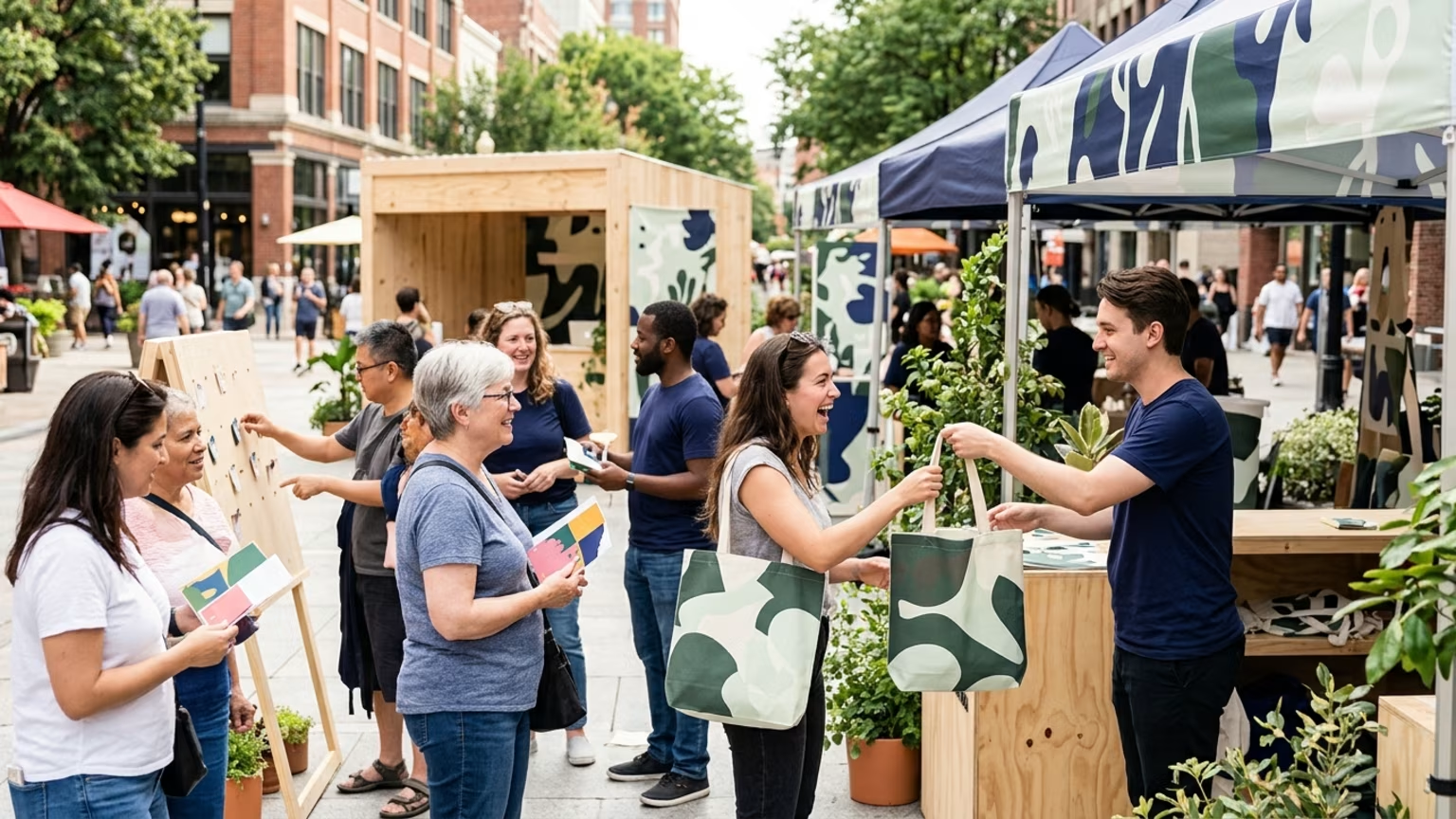
Let us look at the reality of modern field marketing. Brands are pouring massive budgets into pop up shops, street activations, and high impact roadshows. They want to reach consumers physically. The creative concepts look incredible in the boardroom pitch deck.
The actual execution tells a completely different story. Teams show up to prime public squares only to be shut down by local authorities. The global experiential market is growing rapidly, pushing more branded activity into public spaces. This shift exposes brands to a complex web of municipal control.
For a typical street level activation, teams often need approvals from the special events office, the police department for lane closures, and the fire department for generators. They might need sign off from the local health department for food sampling. City guidelines routinely demand detailed site plans, crowd management protocols, and fire safety documents 30 to 90 days in advance. Teams that figure out permits later often discover these lead times too late.
This forces them to shrink their footprint or cancel the activation entirely. Post pandemic regulatory tightening has only made this worse. Many cities updated their ordinances regarding outdoor dining, temporary structures, and emergency response coordination.
A late permit denial triggers a brutal financial chain reaction. Brands lose non refundable vendor deposits. They pay massive rush fees to relocate to private venues. The team wastes custom fabrication, printed signage, and perishable product.
Even a modest multi city roadshow carries six figure exposure if just one anchor market falls through. The financial impact of ignoring this reality is staggering. Industry risk advisors note that compliance failures are among the leading causes of event cancellations. A single noise complaint to a police captain can trigger an early shutdown.
We have executed over 1000 campaigns across all 50 states, bringing brands to life in every major U.S. market. In our experience, the most brilliant creative concept fails if you cannot secure the right approvals. Permitting is no longer a back office administrative task. It is the core foundation of a successful live activation.
Recent job listings for live event permitting specialists highlight this exact shift. These dedicated professionals handle all required permits and regulatory approvals. They coordinate directly with local authorities to meet safety regulations and avoid execution delays. Industry data shows that agencies and venues increasingly staff dedicated permitting specialists and government relations officers.
Brands are now asking their partners to own the end to end municipal workflow. They need a comprehensive city-by-city regulatory playbook that outlines local rules. This approach creates predictable timelines for each market. It builds distinct contingency scenarios for weather, traffic, and last minute city ordinance changes.
Relying purely on private venues to avoid city complexity is no longer a viable workaround. Using private mall parking lots or stadium grounds still requires proof of municipal compliance for fire safety and food handling. You simply trade municipal friction for property management friction. The best path forward is mastering the public permitting process directly.
Brands must stop treating these rules as minor administrative hurdles. They must build a standing permitting playbook that accelerates the entire planning lifecycle. Teams that maintain pre approved templates can move much faster than disconnected groups starting from scratch every single time.
Transitioning from reactive planning to proactive compliance requires a strict operational framework. You need a systematic checklist to survive complex municipal requirements. Implementing these steps will protect your budget.
Operational friction directly impacts your campaign performance and Return on Investment. Lost hours mean lost consumer impressions. It means fewer samples distributed and fewer qualified leads collected. You cannot prove field success if the booth never opens.
You need to track lead and lag metrics tied directly to compliance. The primary lead metric is your permit approval timeline. Track the days between application submission and final city sign off. A healthy program shows this window shrinking as your team builds local relationships and standardizes paperwork.
The critical lag metric is activation uptime. Measure the percentage of planned operational hours your team actually executed. Document every delay, early shutdown, or forced location change. You must track trial shortfalls directly against these lost hours to show the true cost of poor planning.
Failed or compromised activations erode internal support for experiential marketing. For a consumer packaged goods brand tying an activation to a limited time offer, a missed window is devastating. It can mean lost end cap displays, weaker store resets, or reduced future support from the retailer.
You need precise reporting to defend your field budget. Use your operational data to demonstrate that meticulous planning drives direct commercial impact. Connecting these data points changes the internal conversation. It proves that investing in upfront permitting expertise protects the bottom line.
Predictable operations generate clean data. Clean data builds confidence with your retail buyers.
A national snack brand recently planned an aggressive ten city street sampling tour. Their goal was to intercept foot traffic near major downtown business districts. The creative agency designed massive interactive inflatables and custom cooking stations. They did not consult the local fire marshals during the design phase.
Two weeks before the launch, three major municipalities flagged the cooking stations for safety violations. The city health departments also demanded separate permits for the open food sampling. The brand faced a complete shutdown in their most important anchor markets. The marketing director risked missing a massive retail promotion window tied to the tour.
Our team stepped in to audit the compliance gaps and rebuild the operational plan. We immediately stripped down the cooking elements to meet local fire codes. We transitioned the open sampling to pre packaged units that bypassed the strict health department delays. We submitted revised site maps and expedited the safety reviews through our established city contacts.
We deployed a dedicated compliance officer to each site to manage real time inspector feedback. The tour launched on time across all ten markets. The brand avoided hundreds of thousands of dollars in wasted materials and protected their retail commitments. By treating the city officials as partners rather than obstacles, we turned a guaranteed disaster into a measurable victory.
If your internal team feels overwhelmed by the complexity of multi city compliance, it is time to bring in operational specialists. We can audit your upcoming experiential calendar and build a bulletproof regulatory strategy. Book a strategy call with our operations team today to protect your next major launch.
Audit your next campaign brief today and add a mandatory 90 day compliance checkpoint before approving any custom fabrication.

30 Years Experiential & Retail Activation Partner for CPG & Beverage Brands | Multi-Market Demos, Roadshows & Costco/Club Programs That Actually Sell