Robbie Thain
Founder, CEO

Learn how curated tasting events bypass massive expo chaos to connect CPG brands directly with retail buyers for measurable wholesale pipeline and trial.

Massive trade show floors are the least effective places to close a premium retail buyer. Curated tasting events compress product testing and buyer conversations into a single high-conversion evening.
Most field marketing managers know the familiar pain of a massive expo floor, where thousands of dollars are spent on a custom booth layout. Your team hands out hundreds of expensive product samples to random attendees, hoping for a serious conversation. Those attendees take the free product, smile politely, and immediately walk away without a second glance. The actual retail buyers are overwhelmed by the sheer volume of competing vendors.
They rush through the aisles with their heads down, completely focused on their next scheduled meeting. They simply have no time to stop for a meaningful conversation about margins, distribution, or shelf placement. This scattered attention makes real business development almost impossible. Brands leave the venue with empty sample boxes, exhausted teams, and zero qualified pipeline.
The entire operation turns into a beautiful dumpster fire of wasted resources. Your field team feels exhausted from answering the exact same basic questions all day. You end up with a stack of generic business cards from people who will never buy your product. The lack of genuine connection destroys any chance of meaningful retail expansion.
Worse still, measuring the success of these mega-events is incredibly difficult. You cannot separate the casual snackers from the serious decision-makers. Your post-show follow-up emails get lost in crowded buyer inboxes. The event looks busy on the surface but produces thick fog instead of concrete evidence.
Marketing operators face intense pressure to prove that activations lead to sales lift. A loud expo hall rarely provides that necessary data. When brands attempt to stand out in these massive convention centers, they often resort to loud gimmicks. These tactics might draw a crowd, but that crowd rarely consists of actual purchasing managers.
Instead, the booth is swarmed by entry-level employees looking for a free afternoon snack. The cost per acquisition skyrockets when you factor in the massive venue fees. Your premium product gets lost in a sea of identical pop-up tents. The entire environment is hostile to deep relationship building.
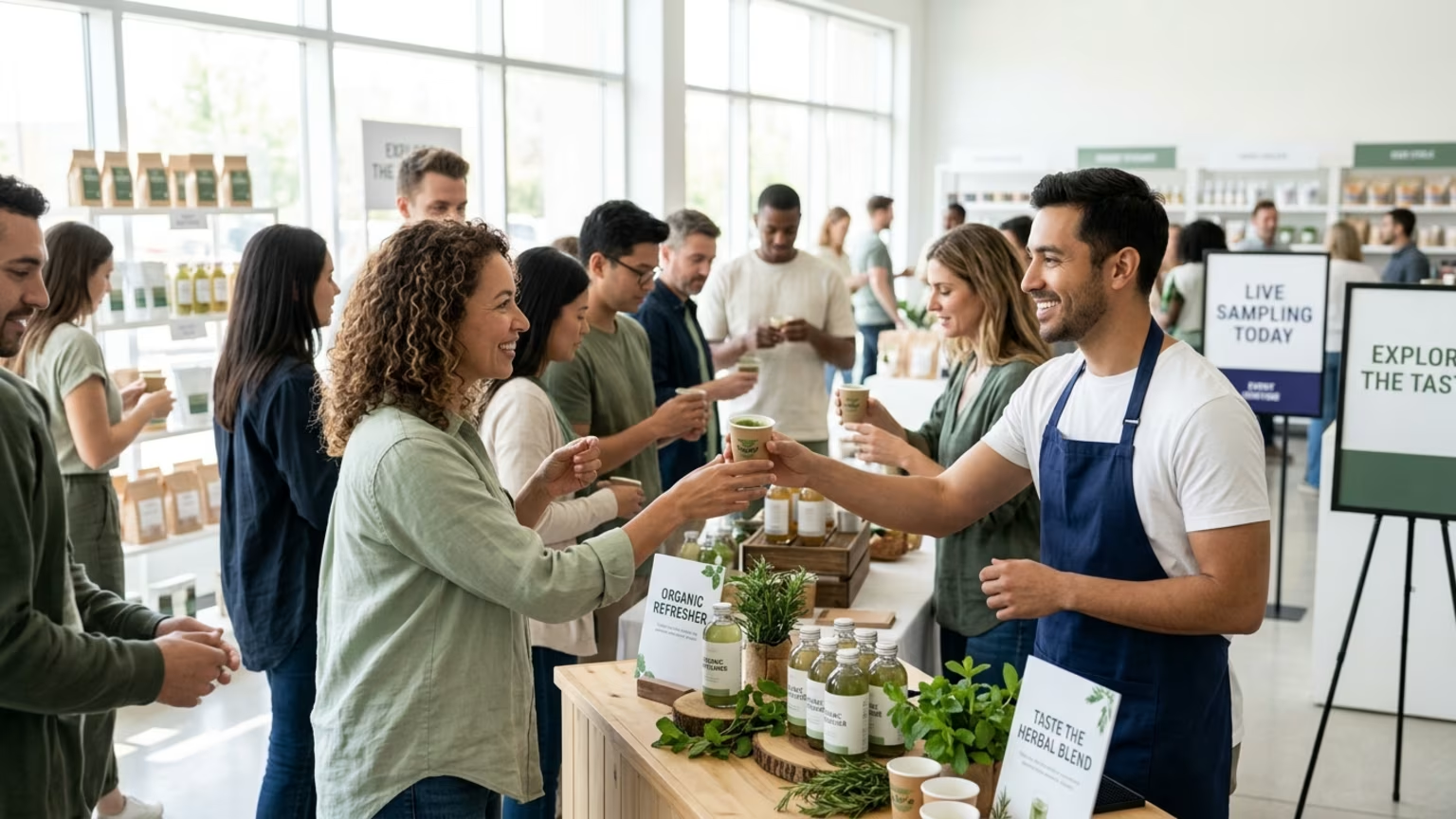
Savvy consumer packaged goods brands are replacing massive expos with hyper-targeted tasting events. The strategy functions as a trade-floor lite, entirely removing the noise of thousands of competing booths. Brands host live focus groups in a controlled, relaxed setting. This model places key decision-makers and founders in the exact same room, creating instant alignment.
Startup CPG recently proved the power of this exact format by announcing a July 2026 Boston Founder Social at Dray Drinks. The gathering features live pouring from non-alcoholic beverage brands, directly connecting them with invited retail buyers. This curated environment turns fragmented store pitching into a single, streamlined session. Buyers arrive with the expressed intent to taste new products, free from the distractions of flashing lights or aggressive sales pitches.
This targeted method creates a controlled environment for physical product trials for emerging labels. We have been connecting brands with people through live experiences, retail programs, and national activations since 1995. Over three decades, we have built a track record of creating meaningful brand moments across the country.
In our experience, targeted events always outperform chaotic megashows, yielding higher conversion rates. We see buyers respond best when they can actually taste the product in peace, far away from the convention center madness. Creating a dedicated space for engagement forces a deeper level of interaction. Buyers ask exact questions about supply chain logistics and ingredient sourcing.
Founders can read the body language of the buyer during the initial taste test. This real-time feedback loop is incredibly valuable for product development. The interaction shifts from a rapid transactional pitch to a genuine relationship-building moment. A curated event forces a completely different psychological dynamic.
The buyer feels like an honored guest rather than a sales target. They are given the space to interact with the product on their own terms. This environment builds immediate trust and retailer confidence. It strips away the aggressive sales pressure, keeping the focus entirely on the quality of the product.
According to the latest announcements, the Boston gathering brings together local decision-makers actively looking for better-for-you options. This hyper-local focus allows regional managers to find products that resonate with their exact demographics. It is a highly efficient way to vet new suppliers. The format respects the limited time of the buyer, delivering immediate value to the participating brands.
Executing a successful trade-floor lite event requires operator-grade discipline. You must control every single variable from guest lists to live pouring mechanics. Relying on hope is not a strategy. You need a structured plan to turn these intimate gatherings into measurable pipeline.
Here is the step-by-step playbook for pulling off a high-conversion buyer event.
Once you secure the retail relationship, you must support that shelf space with actual consumer pull. Securing the buyer contract is only the first step of the retail battle. Brands must deploy trained ambassadors to drive in-store sales through real conversations and product trials. This is where physical activations transition from buyer education to consumer conversion.
A highly curated buyer event opens the door, and structured retail demonstrations keep the product moving off the shelf. Your field team must operate like a well-oiled machine during every interaction. Staffing consistency is critical for maintaining a premium brand image. Every ambassador needs deep knowledge of the product formulation and target demographics.
They must be prepared to answer tough questions about gross margins, retail velocity, and supply chain stability. They should know the exact distribution partners available in the local region. A poorly trained ambassador can ruin a promising buyer interaction in seconds. The staff must pivot seamlessly from casual hospitality to serious commercial negotiation.
They must recognize when to let the product speak for itself, remaining silent during the initial taste test. They need the emotional intelligence to read the room and adjust their pitch accordingly. This level of execution transforms a simple tasting into a masterclass in premium brand positioning. Reviewing a complete pre-event operational framework keeps your field team organized before the doors ever open.
Proper preparation prevents the typical operational failures that ruin live experiences. Every single touchpoint should reinforce your brand authority. You must store your sampling product and event gear securely, tracking every shipment to maintain absolute precision. If the product arrives late or damaged, the entire activation falls apart.
Logistics management is the silent engine behind every successful field marketing campaign. Your brand deserves flawless execution on the big night. Integrating these localized events into your broader CRM strategy is non-negotiable. Every captured lead should enter a targeted nurture sequence.
Fluffy brand theater does not pay the bills. You must track exact lead and lag metrics to prove the financial value of your live activations. Return on Investment requires clear documentation and ruthless tracking. You cannot manage what you do not measure.
Lead metrics show the immediate health of the event execution. You should track the number of verified buyers in attendance, logging their exact retail affiliations. You must count the exact number of samples poured to qualified leads. Track the percentage of attendees who complete your digital CRM intake form.
Measure the average length of conversation with target accounts, noting any immediate buying signals. These numbers prove that your field team engaged the right people on the very first night. Lag metrics prove the actual business impact over time. Track the total wholesale order volume generated directly from event leads.
Measure the new retail shelf placements secured within ninety days of the gathering. Monitor the repeat purchase rate from those new retail partners to prove long-term viability. Calculate the final Return on Investment by comparing total event costs against the new pipeline revenue. Relying on vanity metrics will destroy your credibility with the executive team.
Social media impressions from an event do not correlate with retailer confidence or actual case movement. You need hard data to justify the operational expense of sending your team into the field. Tracking the progression from initial sample to finalized contract provides that necessary proof. This rigorous reporting turns experiential marketing from a vague cost center into a documented revenue driver.
The non-alcoholic beverage category perfectly illustrates the power of this strategy. Brands in this space face a steep education hurdle with traditional retail buyers. Buyers need to taste the exact flavor profile before they commit valuable shelf space. The upcoming Startup CPG Boston Founder Social at Dray Drinks solves this exact problem directly.
By hosting NA beverage brands in a dedicated zero-proof bottle shop, the event creates instant context. Buyers arrive ready to taste and evaluate. They engage in unhurried conversations with the actual brand founders. This setup functions as a live focus group for emerging products.
Brands leave with immediate feedback and highly qualified wholesale leads. This format eliminates the friction of traditional retail pitching. The buyers are completely relaxed and open to trying unfamiliar flavor combinations. The intimate setting encourages honest dialogue about market trends and consumer preferences.
This targeted approach is an excellent way of connecting smaller buyer meetings with national sales pushes across different regions. It proves that smaller gatherings often yield much larger commercial contracts. The format respects the limited time of the buyer, prioritizing genuine connection over rushed pitches. It delivers immediate value to the participating brands, giving them a captive audience of true decision-makers.
Instead of hoping a buyer wanders past a booth, brands know exactly who is in the room. This predictability allows marketing directors to forecast potential pipeline with much higher accuracy. When these private events are executed with military precision, they set a new standard for field marketing. The non-alcoholic category is just one example of an industry benefiting from this hyper-focused strategy.
Any premium consumer brand can adopt this playbook to bypass the traditional expo chaos. The key is maintaining strict control over the guest list, the venue environment, and the final follow-up sequence.
Massive trade show floors will always struggle to deliver consistent buyer attention. Curated tasting events offer a structured path to genuine retail partnerships. You can completely trade the chaotic expo aisles for intimate settings that actually produce revenue. By focusing on hyper-targeted interactions, brands can turn fleeting consumer moments into measurable pipeline.
Book a strategy call with our team to start planning your next high-impact buyer event.

30 Years Experiential & Retail Activation Partner for CPG & Beverage Brands | Multi-Market Demos, Roadshows & Costco/Club Programs That Actually Sell