Robbie Thain
Founder, CEO

Headed to the National Restaurant Association Show 2026 in Chicago? Use this booth plan to run demos, tag buyers, and book follow ups before you fly home.
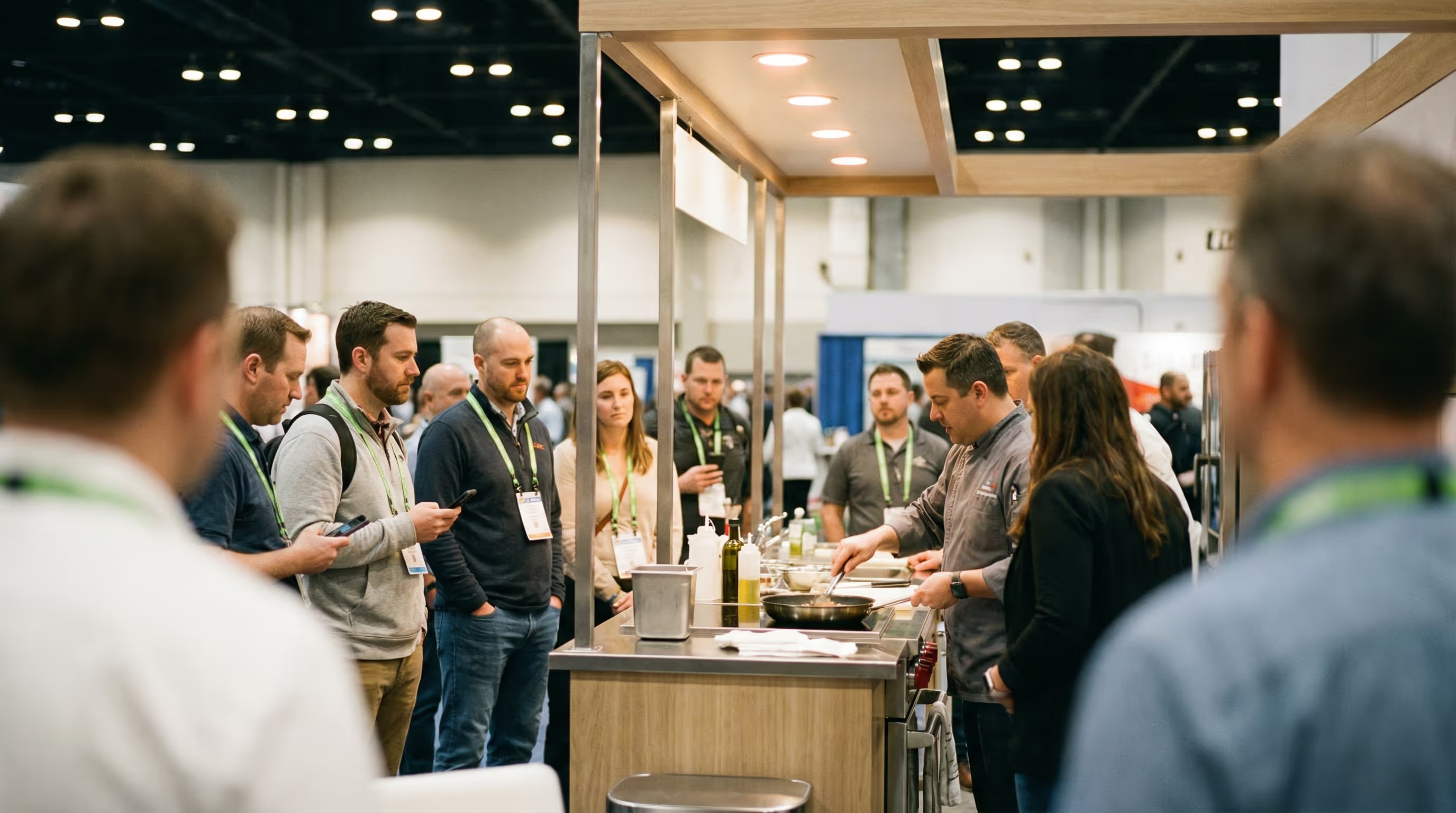
The National Restaurant Association Show 2026 runs May 16 to May 19, 2026 at McCormick Place in Chicago. It is a trade show where foodservice operators and suppliers come to see what is new, compare options, and make buying decisions.
If you are exhibiting, your booth has one job. Create a fast proof moment, capture intent, and book a next step. If you are attending, your job is to leave Chicago with a short list of vendors you trust and a plan to test them.
This guide is a practical playbook. It covers timing, booth flow, staffing, lead capture, and a reporting plan leadership can trust.
If you want support with planning and execution, start with trade show experiences and experiential marketing.
The National Restaurant Association Show 2026 is May 16 to May 19, 2026.
It takes place at McCormick Place in Chicago, Illinois. The venue address listed by the show is 2301 S Martin Luther King Dr., Chicago, IL 60616.
Saturday, May 16 to Monday, May 18 runs 9:30 a.m. to 5:00 p.m. Tuesday, May 19 runs 9:30 a.m. to 3:00 p.m.
The show is for trade only, not the general public. You must be affiliated with the restaurant, foodservice, or lodging industry. The show notes that a business card or a tax ID number is required to register.
The show notes that registration is paid by credit card only. It says it does not accept checks, purchase orders, or wire transfers for attendee registration.
The show lists an Expo badge at $149 for qualified attendee categories, with an Expo plus Education add-on option shown on the registration page.
The show highlights 2,000 plus exhibitors and solutions across 900 plus product categories. It also notes the show floor spans more than 10 football fields.
For first-time attendees, the show highlights key pavilions such as Kitchen Innovations and Organic and Natural in the South Hall, TECH Pavilion and Taste of the States in the North Hall, and The Beverage Room and Global Food Expo in Lakeside Center.
The show points to The Show To Go as its platform to find sessions and exhibitors, build your profile, and create a schedule.
This show is big. A lot of teams arrive with a nice booth and a lot of hope, then leave with a spreadsheet full of weak leads. That happens for one reason. The booth did not make it easy for a busy operator to say yes to the next step.
Operators move fast on the floor. They are looking for products that solve real problems such as labor, speed, food cost, packaging, and guest experience. They do not want long pitches. They want proof.
Your plan should match how buyers behave. Give them a simple reason to stop. Show the product working. Ask one short question to qualify. Then capture intent in a way your sales team can act on.
This approach fits Makai work across food, beverage, and CPG and FMCG brands who need clear trial moments and clean reporting.
Write a single goal for the show. Pick one that your team can control.
Then define “qualified” in plain terms. For example, operator with buying power, multi unit manager, distributor, dealer, or tech buyer. Your team should tag the same way every time.
This show spans everything from equipment to ingredients to tech. Your booth needs a lane.
Your proof moment should take under 30 seconds to understand. If it takes longer, turn it into a timed demo every 10 minutes so the booth always feels active.
The show points out pavilions that cluster specific buyers. Use them as a planning tool even if you are not inside the pavilion.
Build your daily plan around when your best buyers are most likely to be in your zone. Then staff peaks with your strongest closers.
A strong booth is a simple funnel in a small space. Use this five-step flow.
Keep the flow calm. A hard pitch can push serious buyers away.
The fastest way to lose leads is to have the same person demo, talk, scan, and restock. Split roles.
If you want a simple sizing model, use trade show staffing plan as your base and adjust for your demo style.
Most teams scan badges and move on. The problem is that the scan has no meaning. Fix it with a two-part capture.
This is the core idea in trade show lead capture. Better leads come from better tagging.
The show pushes The Show To Go as the place to build your schedule and find exhibitors and sessions. Use the same idea on the exhibitor side.
Keep invites simple. Your goal is a short booth visit that ends with a booked follow up.
If you are attending, your biggest risk is trying to see everything. The show itself warns first-time attendees not to try to see it all. Build a plan that matches your job.
Write a short list of problems you need to solve in the next 90 days. Examples, staffing, speed of service, new menu items, packaging, beverage program, tech stack.
If you attend with two or more people, split zones. One person covers tech and equipment. One person covers ingredients. One person covers packaging and supplies. Then compare notes at lunch.
The first-time attendee guide highlights pavilions in each hall. Use them as your shortcut list for focused discovery. Spend your first hours in the pavilion that matches your biggest problem.
Every booth should end with one clear note. What problem does this solve, what is the price shape, what is the next step, and who owns it internally. This keeps your post-show follow up clean.
Leadership does not want a recap full of photos and feelings. They want numbers and a clear next step plan.
If you want a reporting structure that works across programs, use experiential marketing reporting as your template.
If you are a CMO, brand lead, or head of sales, ask for these items before you approve spend for the National Restaurant Association Show 2026.
This keeps the show focused. It turns a booth into a repeatable growth channel.
If the National Restaurant Association Show 2026 is on your calendar and you want a booth plan that drives real outcomes, Makai can help with strategy, staffing, and reporting. Start at Request a proposal. If you are building a broader field plan around the show, see where we work and coverage for Illinois.

30 Years Experiential & Retail Activation Partner for CPG & Beverage Brands | Multi-Market Demos, Roadshows & Costco/Club Programs That Actually Sell