Robbie Thain
Founder, CEO

Physical customer experience is the new battleground for FMCG growth. Learn how top retail CMOs allocate budgets to drive in store conversions and proven ROI.
Pouring your marketing budget into digital ads is the fastest way to become invisible on a physical retail shelf. Recent insights from top marketing chiefs confirm that physical consumer experience dictates modern retail dominance. This framework reveals how leading consumer brands now direct their spending toward measurable activations to drive actual product movement.
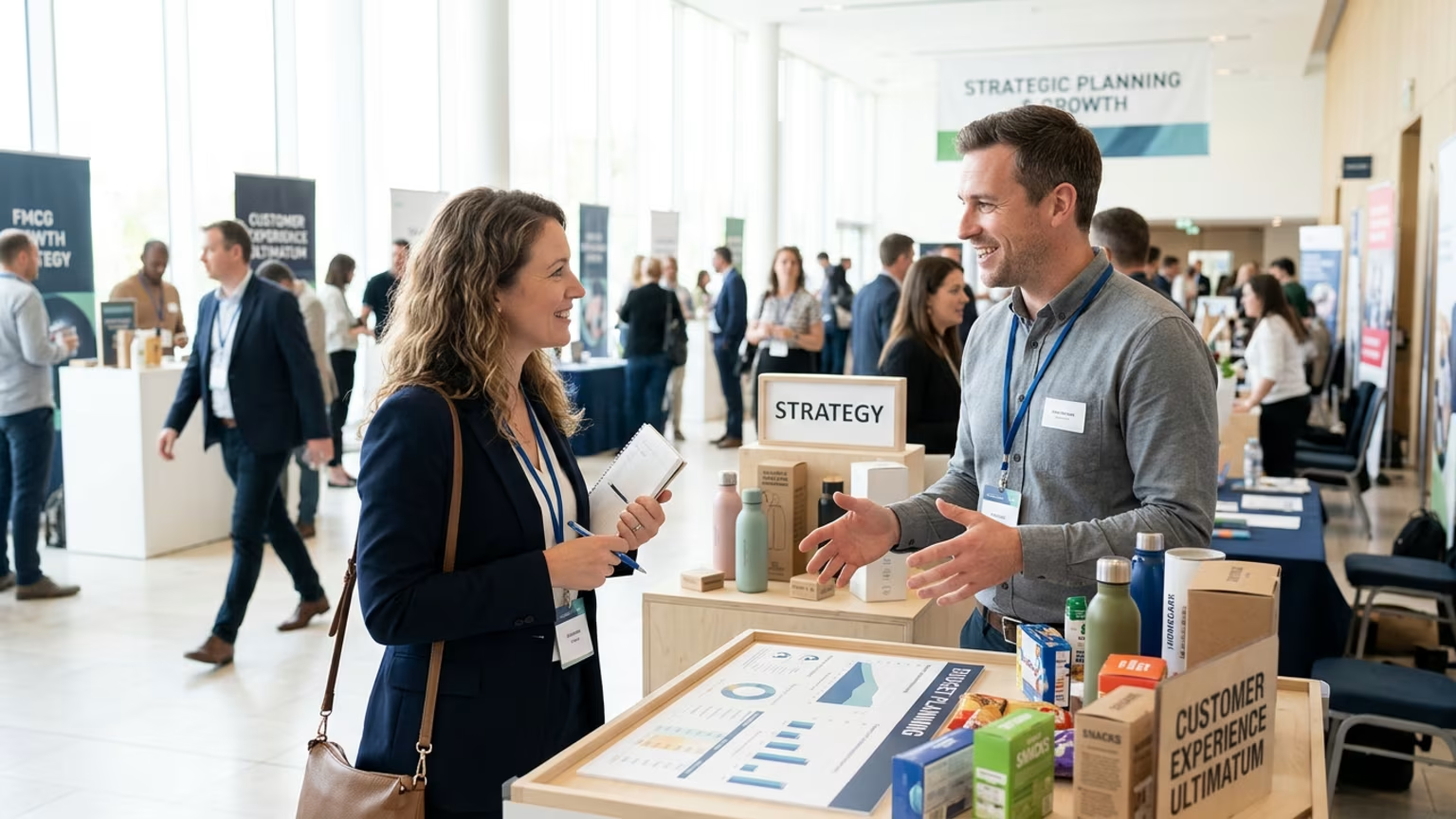
Imagine the typical convention center floor during a major industry expo. Brightly lit booths blast generic promotional videos at attendees passing by without any clear strategy. Temporary staff hand out cheap plastic pens to people who will never buy your product. The sheer noise creates total confusion for both the brand ambassadors and the target buyers. No one seems to know what the actual goal of the event is.
Marketing operators stand at the edge of their expensive footprint watching the budget evaporate. They realize that scanning badges for random prize draws produces a weak pipeline. This chaotic environment generates terrible data and zero actual retail traction. Field teams are left trying to make sense of scattered contact lists long after the lights go down.
The disconnect between corporate expectations and field reality is staggering. Brand managers spend months designing beautiful graphics that look great in a presentation deck. They forget to plan for the unpredictable flow of foot traffic in a massive hall. When the doors open, the activation completely falls flat.
These failures happen when companies treat live interactions as a simple logistical checklist. Ordering branded shirts and shipping a crate of samples is not a strategy. True experiential execution requires a tactical plan to intercept and convert moving crowds. Without operator grade discipline, your physical presence becomes an expensive distraction.
Top executives are entirely rethinking how they deploy major campaign funds. During a recent marketing leadership panel covered by The Economic Times, retail executives debated allocating a massive budget across various channels. The panel weighed the merits of television spots against influencer campaigns and performance marketing. The consensus was clear that physical customer interactions build the actual foundation for brand growth.
These leaders treat live shopper marketing as a primary Return on Investment (ROI) engine rather than optional theater. They understand that awareness means nothing if the consumer never holds the product. To win in physical stores requires connecting online awareness directly to tactile product moments. This forces a shift from isolated media buying to unified physical experiences.
Instead of treating field events as an afterthought, operators must build activations that actively capture intent. This means integrating your digital promotions with hands on retail sales conversions. When consumers can taste or hold a product, their likelihood to purchase increases dramatically. Physical engagement creates a lasting memory that a banner ad simply cannot replicate.
We advise our clients to book a strategy call before launching major national campaigns. Aligning these critical touchpoints is the only way to protect your marketing investment. Modern consumer packaged goods require a highly orchestrated approach to regional market entry. Brands must treat the trade show floor and the grocery aisle as connected environments.
In an increasingly fragmented media environment, standing out requires actual physical presence. Digital advertisements suffer from terrible ad fatigue and constant algorithm changes. Event marketing provides a controlled environment where you dictate the entire narrative. A well executed trade show booth captures undivided attention for precious minutes.
This level of focus is impossible to achieve on a scrolling mobile feed. By treating live events as serious business development channels, brands create an undeniable competitive advantage.
Executing a high converting campaign in the real world takes intense operational discipline. Planning a successful event means leaving nothing to chance on the show floor. You must map out every single variable weeks before the first attendee arrives. Use this exact sequence to turn your next live appearance into a reliable revenue channel.
Phase one centers on extreme preparation and audience alignment. You must define the exact target buyer profile before signing any booth contracts. Do not assume that everyone walking the floor is a potential customer. Build an aggressive pre event outreach campaign to book meetings before you even pack your bags.
Train your brand ambassadors to ask qualifying questions instead of just reciting features.
Phase two requires flawless execution during the actual event. Your team must manage the physical flow of the booth with complete authority. Do not let people linger if they are not qualified buyers. Keep the energy high and focus entirely on meaningful business conversations.
Route all collected contact information straight to your sales team via automated systems instantly.
This methodical process removes the guesswork from field operations. Following these steps guarantees that every interaction serves a specific commercial purpose. Teams that stick to this routine consistently outpace competitors who rely on hope. You can easily adapt these tactical steps for both massive expos and local high performing lead generation events.
Proving the value of live activations requires a strict focus on hard data. Vanity metrics like total event attendance or social media likes mean nothing to the finance department. You must measure the exact inputs and outputs of your physical footprint. A campaign is only successful if you can trace the spending back to closed deals.
Lead metrics show you what is happening right now on the ground. You should track the number of active booth engagements per hour to judge staff performance. Monitor the total number of physical product samples distributed directly to qualified buyers. Measure the cost per engagement to understand your immediate operational efficiency in real time.
Lag metrics prove the actual financial impact of your field work over the long term. Track the total number of CRM contacts acquired and successfully scored by the sales team. Monitor the direct sales lift at nearby retail locations over the following four weeks. Calculate the total cost per acquired customer to validate the entire experiential budget.
Connecting these data points requires a robust software foundation. You cannot rely on paper sign up sheets or manual spreadsheet entry. Your digital capture tools must feed directly into your central marketing database instantly. Integrating these systems optimizes in store engagement and proves your true commercial value.
These data points allow executives to defend their budgets confidently during quarterly reviews. When you present concrete sales figures linked to a specific event, marketing is no longer viewed as a cost center. It becomes a predictable engine for retail expansion. Smart brands build historical databases of this performance data to guide future investments.
They learn exactly which cities and which venues produce the highest volume of qualified buyers. This historical context stops teams from making the same expensive mistakes year after year.
Applying this methodology transforms theoretical marketing plans into actual product movement. A major consumer packaged goods client recently approached us to overhaul their national retail strategy. They had spent heavily on television ads but saw stagnant sales at key grocers. The goal was to convert passive grocery shoppers into active brand advocates through direct intervention.
We deployed trained personnel to manage the interactions and capture direct consumer feedback on site. Our team handled all the complex permitting and logistics to guarantee a smooth rollout. We bypassed the standard sample table and created an immersive brand environment inside the store. Shoppers did not just try the product, they engaged in a memorable conversation about its value.
A VP of Marketing reflected on our partnership: 'Robbie, it was a pleasure working with you and your team. You turned our launch into an experience that connected with shoppers and built lasting excitement for our brand. We're already looking forward to the next project together.' Our team created a launch experience that resonated with retail shoppers and generated momentum for future collaborations.
This kind of disciplined activation provides a massive advantage over standard passive shelf presence. By running structured live retail roadshows, brands bypass the noise of traditional advertising completely. The physical interaction builds trust faster than any sponsored social media post ever could. When buyers experience a product in their own hands, the path to purchase becomes clear.
Marketing budgets will always face scrutiny from executive boards looking for immediate returns. The temptation to hide behind digital dashboards remains a constant threat to authentic brand building. Real human connection happens when a customer can look a brand in the eye. The brands that win tomorrow are the ones that show up in person today.

30 Years Experiential & Retail Activation Partner for CPG & Beverage Brands | Multi-Market Demos, Roadshows & Costco/Club Programs That Actually Sell