Robbie Thain
Founder, CEO

Factory's Events role job description reveals how end-to-end ownership of large-scale experiential program operations prevents field execution failure.
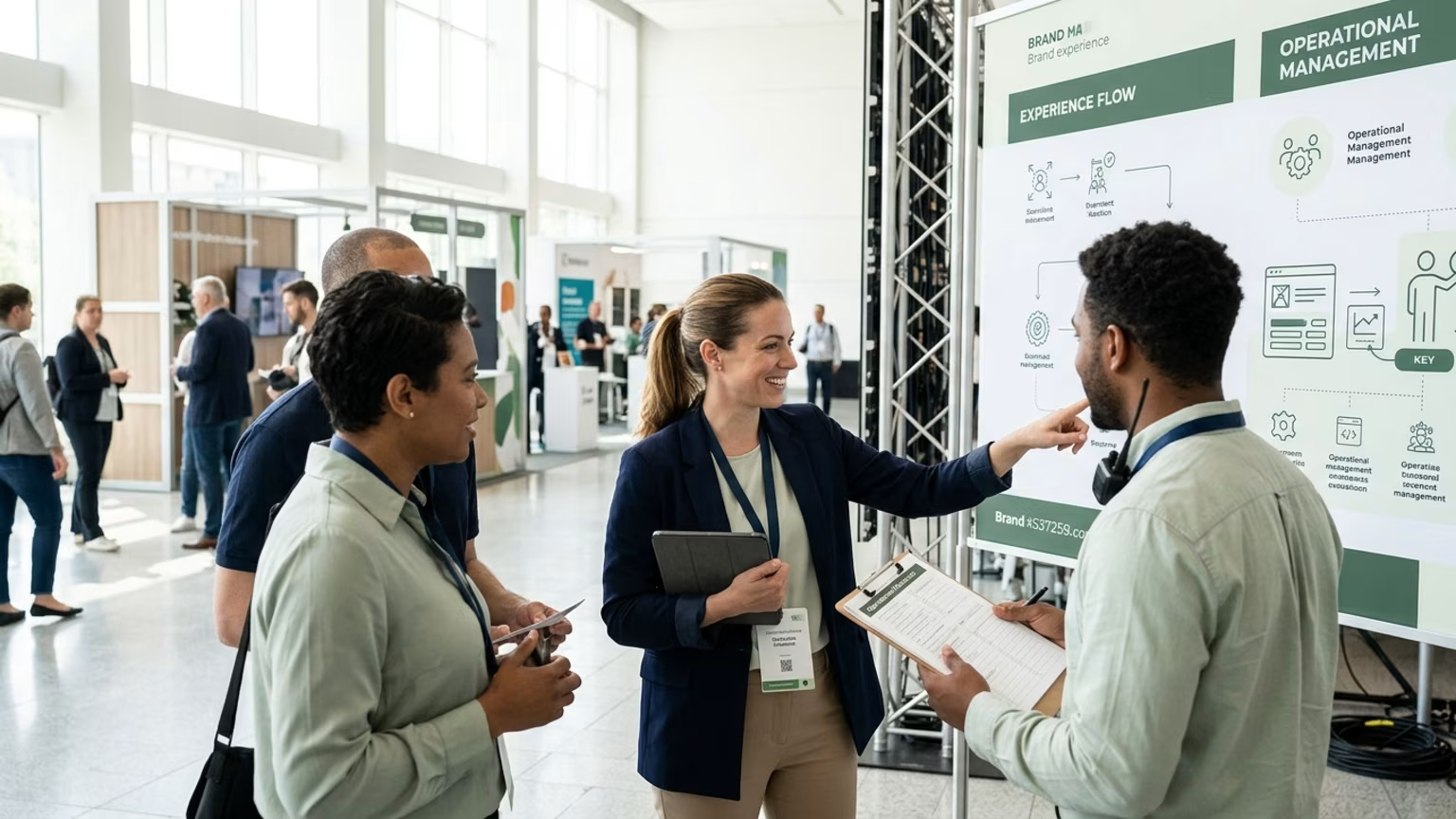
The trade show doors open in two hours. The field team is frantic because the venue network dropped unexpectedly. Lead scanners are failing, and the headline speaker changed their arrival time without warning. For Factory, a provider of software development agents, avoiding this operational chaos is a strict corporate priority.
Myth: You can isolate event strategy from field operations and trust different departments to handle the pieces. Truth: Fragmented logistics guarantee poor execution and burn your brand equity before the activation even begins.
Acknowledge the dilemma facing modern experiential leaders. Budgets are tight, timelines are compressed, and specialized agencies routinely promise seamless execution. It seems highly efficient to let a creative shop design the physical footprint while a junior coordinator books the travel. Leaders under pressure often assume that an approved strategy will naturally translate into smooth onsite realities. They trust that vendors will align perfectly on the day of the show.
On August 28, 2026, a Lux Capital job board posting advertised an Events role based in San Francisco or New York. The position listed a remote option but required significant travel for onsite production. Factory is treating flagship experiences as complex operating systems with strict ownership structures. The role demands end-to-end management spanning initial concept, creative development, and production. It also covers onsite execution and post-event measurement.
This scope is materially broader than simple coordination. Factory expects this leader to manage multimillion-dollar event budgets. The posting specifically assigns responsibility for forecasting, reconciliation, and scenario planning. The role also provides recommendations for maximizing investment.
The executive producer model centralizes accountability immediately. Strategy, creative, production, and staffing are no longer split among disconnected owners. When operations fracture across multiple teams, the activation inevitably suffers. Factory requires the position to establish production plans, critical paths, and onsite operating models.
By formalizing defined RACI assignments, the company ensures that every logistical detail has an owner. The job description says the position will work closely with the Head of Events, Field Marketing, Marketing, and external production partners. Centralized accountability prevents the dangerous gap between strategic plans and floor reality.
The role covers Factory’s most complex event experiences. These include Sales Kickoff, President’s Club, major sponsored experiences, and experiential activations. It also covers Tier-1 conferences such as AWS re:Invent. For a major industry moment like AWS re:Invent, the remit expands dramatically.
The role controls booth experiences, customer programming, and sponsorships. The leader must also manage hospitality, offsite activations, and executive participation. Factory’s careers page says the company raised a $150 million Series C in 2026. The same page names Khosla Ventures, Sequoia, and Blackstone among its investors. Factory also names Ali Ghodsi and Frank Slootman as financial backers.
Factory also identifies major customers such as Nvidia, Adobe, and Adyen on its careers page. The company lists Klarna and Ernst & Young as well. These customer names are company-reported examples rather than independently verified performance evidence. However, they highlight the scale of the audience Factory intends to reach.
Factory describes the position as an Events Lead role responsible for building the events function. The person will define the events strategy, build the team, and own the global budget. They will also establish standards, create playbooks, and manage the portfolio alongside field marketing. The position requires cross-functional collaboration with Product and Communications teams. The leader will also work closely with People, Finance, and Legal departments.
Factory’s Events Lead remit includes establishing an annual calendar, a global budget, and a strict operating rhythm. Brands running product launches, trade shows, sponsorships, and retail activations should document similar baseline standards. Operational clarity prevents field teams from making critical logistical decisions in a vacuum. A standardized playbook ensures that every activation aligns with overarching corporate objectives.
The first requirement is documenting program objectives and identifying the precise target audiences. Teams must establish vendor selection guidelines and a rigorous contracting process before committing funds. Budget categories and approval thresholds must be clearly defined to prevent financial overruns. Proper staffing and training standards ensure that field representatives accurately reflect the brand narrative.
Critical path documents and contingency plans are mandatory for any high-stakes event. Teams need documented onsite escalation procedures to handle sudden venue emergencies or equipment failures. Strict data capture rules and consent requirements protect consumer privacy during lead generation. Finally, clear rules for carrying post-event learning into the next activation ensure continuous operational improvement.
Brands must build a field operations framework that connects live engagement to the commercial system. Field marketing must be integrated rather than treated as a logistical afterthought. The handoff into CRM routing, retail reporting, and sales follow-up should be designed before launch. Factory includes post-event measurement directly in the executive producer remit.
Measuring experiential impact requires rigorous standards. A current experiential-marketing measurement guide recommends comparing activation results with a holdout market or period. Teams should use pre- and post-experience surveys to gauge brand impact. Brands must also attach downstream actions such as unique promo codes or loyalty-linked scans.
These actions should connect QR redemptions directly to point-of-sale data. Event Marketer’s coverage of AWS re:Invent measurement describes several possible outcome categories beyond basic foot traffic. The publication suggests evaluating return on experience, return on emotion or sentiment, and specific post-event actions. These actions might include requesting a meeting or seeking more information.
A measurement guide for experiential programs recommends treating earned media as a secondary signal. Organic user-generated content is helpful but should not serve as the headline performance number. In our experience, mastering event logistics requires connecting emotion with action. We create experiential marketing programs built to connect emotion with action.
Our process blends creativity, strategy, and data to ensure every brand interaction drives measurable results. We craft experiences that engage all five senses. This helps people not just see brands, but feel them, turning moments into meaningful business outcomes. Running experiential programs at scale demands that leaders staff for ownership.
The owner must be able to make rapid tradeoffs across budget, experience quality, timing, and staffing. Before the event begins, the team must decide exactly what counts as a valuable customer action. For a consumer brand, that might be a completed product trial or a retailer meeting. For a technology company, it might be a qualified lead or a demo completion.
Event reporting must expand beyond generic attendance figures to prove commercial value. For consumer-facing brands, the most defensible measurement architecture combines several analytical layers. These layers help leadership answer specific questions without collapsing performance into one inflated number.
The first step is measuring direct participation through verified interactions, samples distributed, or demos completed. Teams should also track engagement quality metrics like dwell time, content interaction, and survey responses. This provides a baseline understanding of whether the intended audience actually interacted with the footprint.
Brand impact requires tracking recall, purchase intent, and recommendation likelihood through structured surveys. Conversion metrics push the analysis further by tracking coupon redemption, loyalty-linked purchase, and lead qualification. Store traffic and measurable sales lift serve as the ultimate indicators of immediate commercial success.
The measurement window often extends well beyond the event itself. Experiential teams must monitor repeat purchase rates, qualified pipeline growth, and closed revenue over time. Tracking retailer performance over an agreed time horizon proves that the activation generated lasting market momentum. These categories are useful recommendations rather than universal guarantees of sales attribution.
A separate source cites an Event Marketing Institute benchmarking report regarding historical return rates. That report stated that 39% of consumer brands and 26% of B2B brands reported event-marketing Return on Investment of at least 10:1. Reaching that level of performance demands strict operational discipline. Achieving these kinds of financial outcomes is impossible without a centralized operator driving the execution process.
Flawless brand activations demand a single, accountable operator who controls both the strategic vision and the granular reality of the event floor.
Managing an end-to-end experiential operations model requires relentless focus from your trade show coordinators who handle complex national campaigns. Makai eliminates the burden of low quality leads from crowded trade shows by deploying our Retail Demonstrations capability. Trained brand ambassadors drive in store sales through real conversations and product trials when our team assumes operational command. Request a proposal

30 Years Experiential & Retail Activation Partner for CPG & Beverage Brands | Multi-Market Demos, Roadshows & Costco/Club Programs That Actually Sell


