Robbie Thain
Founder, CEO

e.l.f. Brands is launching a massive Minnesota State Fair activation with a 10-foot pickle jar, branded Skyride gondolas, and QR-driven product sampling.

Seventy-four percent of Gen Z respondents consider in-person experiences more important than digital experiences. That single data point exposes a massive vulnerability for consumer brands relying entirely on paid social media. Online attention spans are fracturing rapidly as digital inventory becomes saturated. E-commerce metrics often hide the reality that consumers feel completely disconnected from the products they purchase.
e.l.f. Brands understands this shift in consumer behavior perfectly. The company is launching a highly calculated physical operation right now to drive trackable digital interactions. Their strategy proves that physical product sampling remains highly relevant when combined with hard measurement systems. Modern marketers can no longer afford to run public events purely for brand awareness.
They must engineer live environments that force a digital handshake.
A recent release from e.l.f. Brands highlighted specific industry data regarding consumer engagement preferences. According to their cited research, 84 percent of respondents say they have developed close friendships through in-person events. The data also shows that 95 percent of fairgoers attend these large public gatherings specifically to socialize and connect. These figures demonstrate that live events function primarily as community hubs.
The sheer volume of potential impressions at these gatherings cannot be ignored by growth-focused operators. The Minnesota State Fair draws nearly 2 million attendees over its full run. Consumers actively seek out environments where they can build memories together in a physical space. They want to interact with products in a tangible way instead of scrolling past an influencer post.
When a brand infiltrates these communal spaces correctly, the resulting trust scales faster than any digital campaign.
For a Vice President of Marketing, these statistics demand a serious evaluation of current trade marketing budgets. Pouring millions into fragmented online advertisements no longer guarantees consumer loyalty. Shoppers ignore passive media but respond aggressively to well-designed physical environments. Audiences crave physical product interactions that fit natively into their social activities.
Operators must stop treating field activations as simple giveaway booths. They need to view these moments as high-value data acquisition channels. Capturing a customer's attention requires deep contextual relevance. Brands must identify culturally specific behaviors and design their activations directly around those existing habits.
The most successful consumer packaged goods companies align their product messaging with venue rituals. This approach naturally lowers consumer resistance while building immediate goodwill. It transforms a standard retail interaction into an engaging brand moment. Ultimately, physical product experiences generate far more impact than traditional display ads.
Furthermore, creating portfolio-level discovery requires strategic patience from the entire marketing team. When a company includes multiple product divisions under one activation platform, they actively invite consumers to cross-shop. This broadens the sponsorship from a single-SKU sampling exercise into a comprehensive trial platform. Marketing leaders must coordinate these multi-product rollouts with retail buyers to ensure inventory exists on local shelves.
The goal is driving immediate retail trips right after the fair ends. Every dollar spent on physical infrastructure needs to generate corresponding retail velocity. Without that alignment, the field execution simply becomes expensive theater.
This macro trend completely changes how brands should execute mobile tours or retail demos today. Field marketers can no longer drop an isolated tent in a parking lot and expect an immediate Return on Investment. Teams must integrate their physical assets directly into established venue infrastructure. Using existing transit elements or permanent structures increases visibility while efficiently managing crowd flow.
When brands tie their product sampling to a measurable digital capture mechanic, they build actual pipeline. We run experiential and engagement programs coast to coast with local crews, smart logistics, and permit expertise that let us launch fast and maintain quality consistency in every region. Our nationwide infrastructure enables us to activate brands wherever their audiences are located. This level of operational discipline is mandatory when managing "while supplies last" inventory models.
High-volume public events create wildly uneven demand based on daily traffic patterns and weather. Field teams must establish exact daily allocation targets and secure reliable storage routing. They need to implement hourly depletion reporting to prevent embarrassing stockouts during peak attendance windows. A robust plan includes a clear consumer-facing fallback when inventory is exhausted.
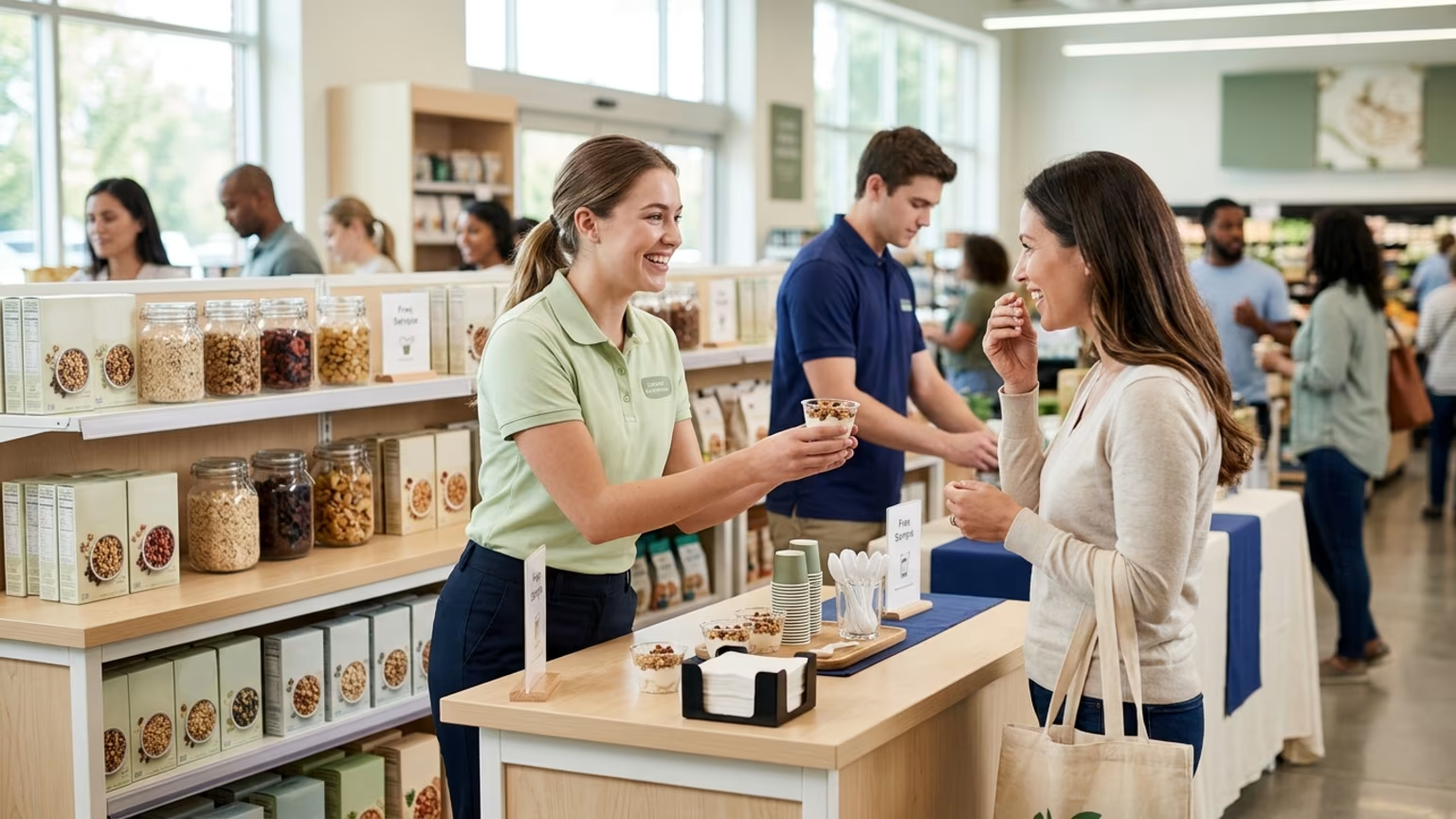
Staff members require clear scripts that avoid overpromising product availability to eager crowds. Training your ambassadors to gently guide attendees through a digital conversion flow is absolutely critical. At a high-volume event, operational consistency is fundamentally part of the brand experience. Using QR codes as measurement architecture is non-negotiable for modern activations.
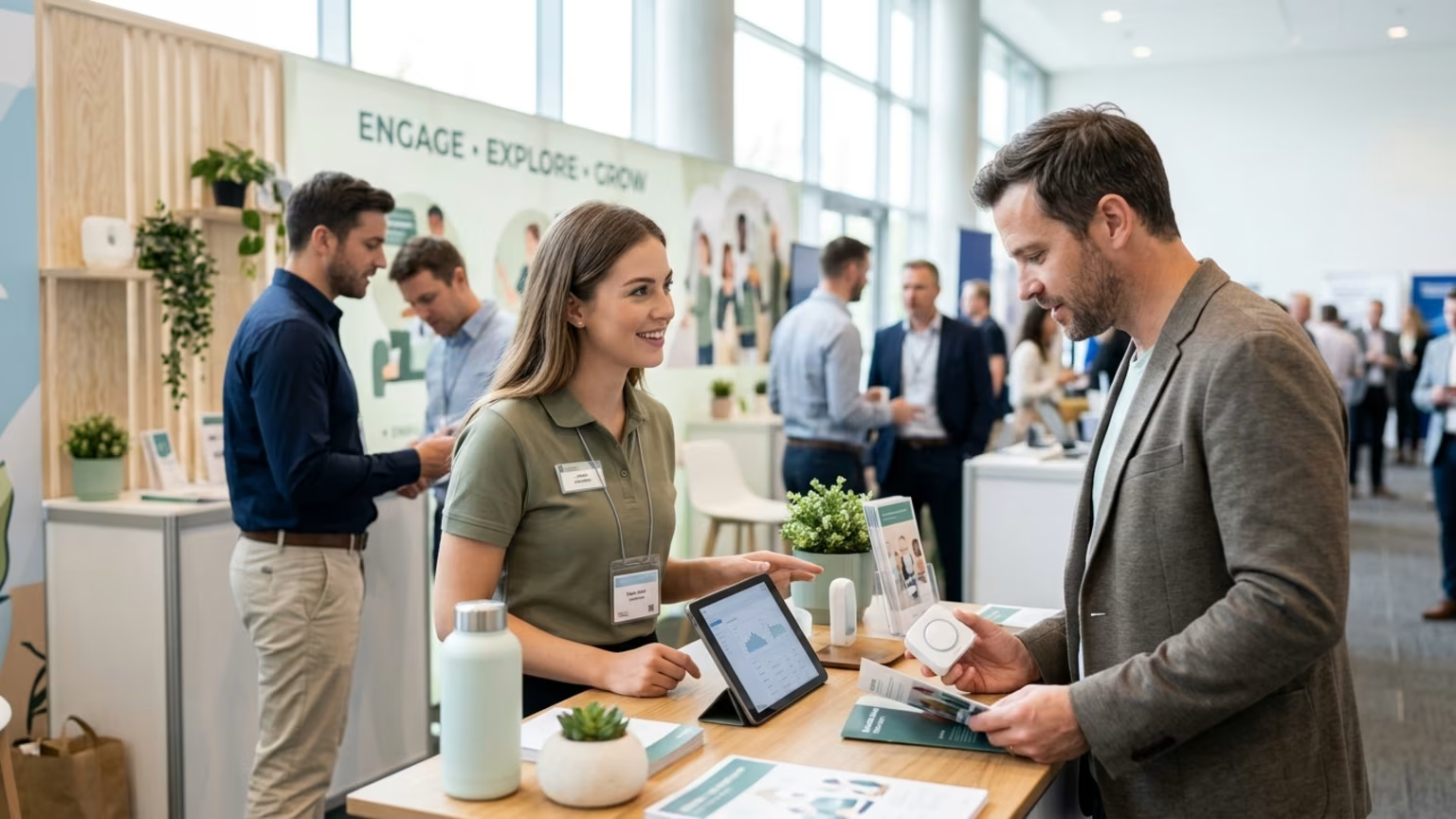
Scan volume alone is merely an exposure metric that provides zero commercial context. The QR journey should track scans by specific location and measure actual landing page completions. By connecting physical product trials to digital retargeting success, operators definitively prove their commercial value. Without proper downstream data, digital extensions remain a vanity project for the marketing department.
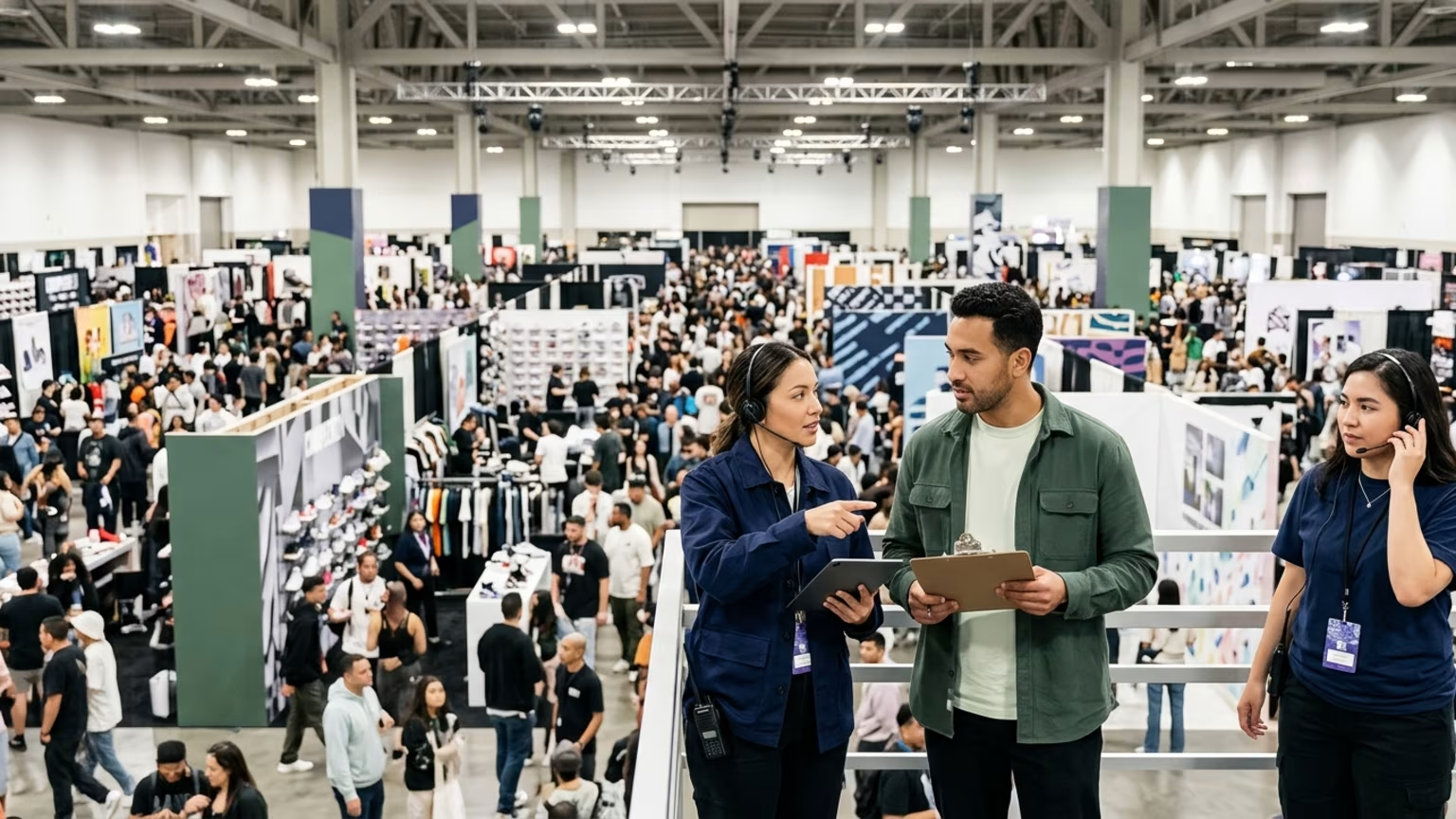
Operators must rigorously separate raw attendance from actual physical product handouts and completed digital actions. Staffing for throughput directly determines whether an experience feels generous or deeply frustrating. The most visually stunning installation will fail if consumers face empty shelves or poorly trained staff. Field teams must accurately forecast expected interactions per hour and establish strict average handoff times.
Queue abandonment rates increase sharply if product replenishment takes too long. Every physical touchpoint needs to funnel into a defined and measurable next step.
e.l.f. Brands is currently running its "eyes.lips.fairgrounds." activation from August 27 to August 30, 2026, at the Minnesota State Fairgrounds in St. Paul. The company says the activation is designed to reach the fair's nearly 2 million attendees. CBS News Minnesota reports that the state fair is a 12-day tradition. e.l.f. claims it is the fair's only official beauty brand sponsor.
The brand also says no beauty brands have appeared on these fairgrounds in at least 20 years. Operating for only four days during a 12-day tradition creates a unique logistical dynamic. This concentrated schedule allows the brand to maximize field staffing and inventory during a tightly defined window. However, this condensed timeline means they will miss portions of the total attendee flow.
A massive crowd does not automatically guarantee meaningful brand interactions. Brands must actively earn attention by blending flawlessly into the environment. The operation centers around a massive 10-foot-tall pickle-jar installation on Wright Avenue. This "surprise-and-dill-light" creative choice directly answers a specific local behavior.
Fair attendees consume nearly 2.1 million pickle chips each year, according to the company. To capitalize on this ritual, the brand introduced three pickle-inspired Glow Reviver Melting Lip Balms. The shades are named The Real Dill, e.l.f. von Dill, and Spicy Lil’ Dill. This type of execution represents excellent data-led experiential marketing.
The company is also transforming the fair's iconic Skyride. Branded gondolas carry QR codes that direct users to a digital giveaway for e.l.f. Cosmetics Fine as Fleck Glitter Eyeshadow. This turns existing transportation infrastructure into a highly visible moving distribution channel. Patrick O’Keefe, chief integrated marketing officer of e.l.f. Brands, explained that shared experiences build emotional connection.
“State fairs bring together every generation, every background and every story. That's the kind of community e.l.f. exists for,” O’Keefe said. Product gifting spans the e.l.f. Cosmetics, e.l.f. SKIN, and e.l.f. Hair portfolios. The company noted this is the first consumer activation of this scale for e.l.f. Hair.
Bringing multiple product lines into one footprint requires careful portfolio architecture. A crowded product message can dilute the memory of the experience if not managed incredibly well. Each product line must serve a clear role to completely avoid choice overload. The brand also plans another on-the-ground event in Dallas this October honoring "Big Tex."
Seventy-four percent of Gen Z value in-person connections over digital interactions. That opening reality should frame every single future marketing decision your team makes. You cannot build a durable consumer community through a phone screen alone. Audiences demand physical proof that a brand understands their specific cultural rituals.
Operators must immediately adjust their performance dashboards to track physical engagement leading into strict digital capture. Field teams need to stop measuring success by raw crowd size or basic impressions. They must evaluate activations based on inventory depletion velocity, QR completions, and subsequent retail traffic. By bridging the gap between a branded gondola and a digital checkout, brands can finally validate their experiential Return on Investment.
The most successful marketing leaders will be those who master both physical logistics and digital attribution.
Trade marketing directors oversee the massive operational burden of public product sampling, but scaling these field activations securely becomes a highly repeatable process when an execution specialist takes control. Makai resolves the difficulty of navigating complex event logistics, permits, and staffing by managing the entire physical footprint. We deploy our Guerilla Marketing capability to launch creative, street level ideas that surprise, delight, and generate authentic word of mouth.

30 Years Experiential & Retail Activation Partner for CPG & Beverage Brands | Multi-Market Demos, Roadshows & Costco/Club Programs That Actually Sell