Robbie Thain
Founder, CEO

Learn how to move past vanity badge scans at trade shows. Tagging event leads by buying stage connects floor interactions directly to closed revenue.
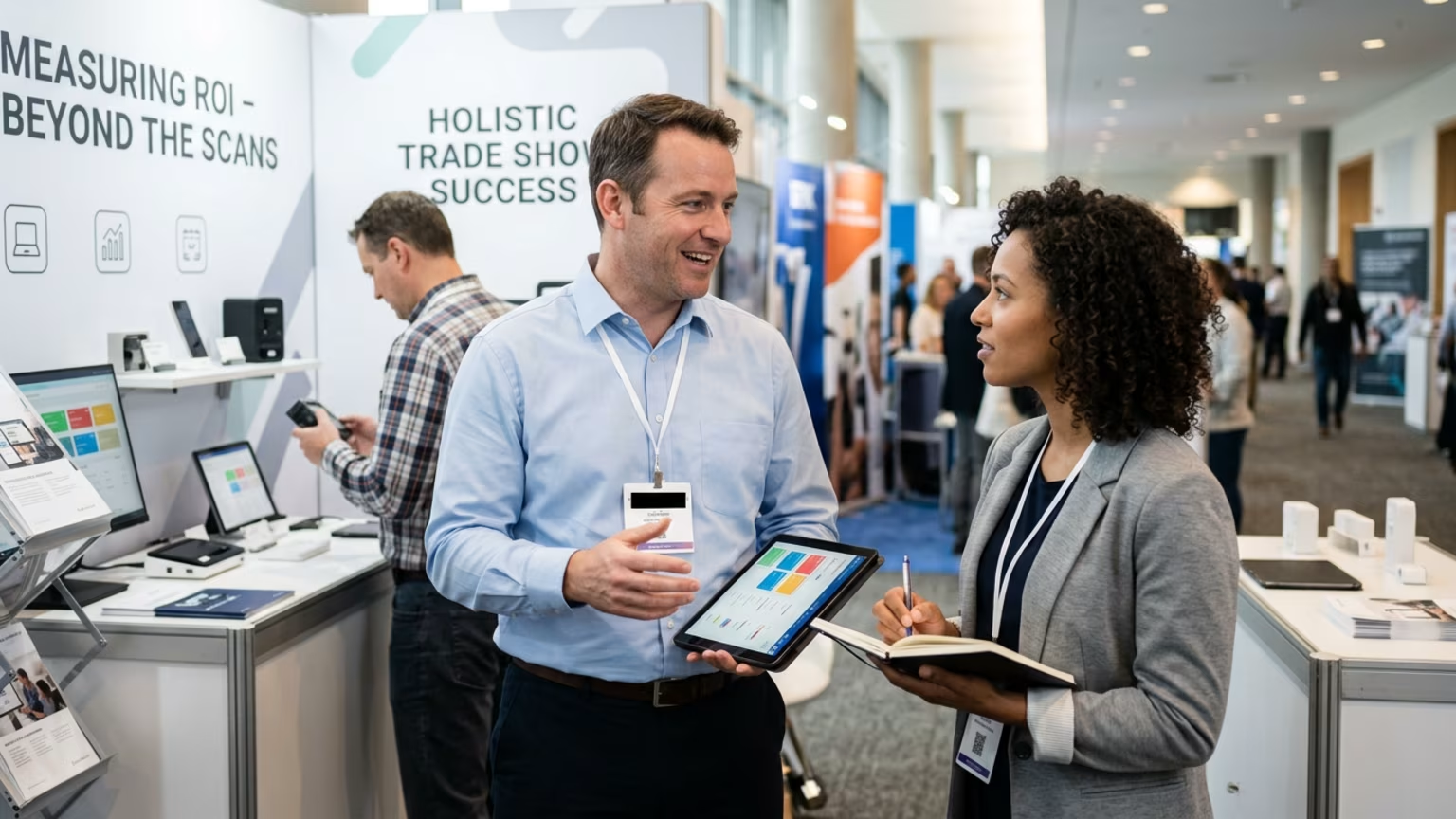
Industry data reveals that a vast majority of trade show leads never receive a follow-up call, representing a massive waste of experiential marketing budgets. By adopting new guidance from Trade Show News Network to tag leads by buying stage, exhibitors can move past simple badge counts and connect floor interactions directly to closed revenue.
It is day two of a massive national food expo. Your booth is packed with attendees grabbing free product samples, and the lead scanning device beeps constantly. Beneath this loud surface, your sales team has absolutely no idea who is actually ready to buy. The floor staff treats every single scan as an equal victory.
Most of these visitors are just polite passersby wanting a quick snack. They smile, take the product, and allow a quick badge scan before disappearing into the thick crowd. Your marketing team is left with an enormous spreadsheet of unqualified names by the time the event ends. When sales reps finally look at the list next week, they see nothing but noise.
The complete lack of context makes follow-up calls feel like totally blind outreach. Sales professionals quickly lose faith in event leads, choosing to ignore the list entirely. The initial excitement of a crowded booth rapidly fades into deep frustration over a poor Return on Investment. This chaotic scenario repeats itself across countless convention centers every single year.
Brand leaders are constantly under intense pressure to justify their large event budgets. Executives want to see how physical engagements actually drive retail sell-through and overall brand growth. When the only proof of success is a high number of badge scans, leadership rightfully questions the strategy. A busy booth does not equal a profitable activation.
Trade show footprints require massive capital outlays for design, travel, and staffing. If the return on that capital is just a list of random names, the marketing team will eventually lose their funding. This harsh reality is forcing operators to seek better measurement tools.
Trade Show News Network recently highlighted a necessary shift in event measurement. Exhibitors must define strict pre-show objectives that tie directly to pipeline velocity rather than simple foot traffic. This demanding approach requires tight alignment between marketing, sales, and field teams before the doors even open.
The primary goal of this framework is categorized intent. Brands need a clear, systematic way to tag leads based on their actual buying stage. A prospect looking for immediate retail distribution needs a very different response than someone vaguely interested in brand messaging.
Staff must understand this sharp distinction perfectly. They have to quickly assess whether the person standing before them is a decision maker, an influencer, or just a fan.
We specialize in creating retail demos, product sampling programs, and roadshows that bring brands face to face with their audiences. Each program is designed to drive trial, build consumer relationships, and accelerate retail velocity across multiple locations.
We apply this identical operational discipline to crowded expo floors. The entire focus shifts to identifying actual buyers among the casual crowd. By treating the booth like a high-stakes retail environment, we filter out the noise and capture real intent.
Moving past simple vanity metrics requires a fundamental change in booth culture. Floor teams must transition from passive hosts into active qualifiers. When you stop chasing meaningless scan volume, you create the space to have meaningful business conversations. This focus is how smart operators begin rethinking the way they capture prospect data for good.
It requires discipline, constant attention, and a refusal to settle for average performance. Marketing leaders must establish clear workflows for the field staff. The strategy relies heavily on gathering specific, actionable information during the brief window of face-to-face interaction.
If the team fails to capture the context of the conversation, the lead immediately loses its value. Context is the bridge between a simple introduction and a closed deal.
Implementing this focused strategy on a loud floor requires a strict, bulletproof workflow. A beautifully designed booth means absolutely nothing if the team cannot process visitors effectively. You need clear systems that guide every interaction from the initial hello to the final handshake.
This structured method forces floor teams to focus entirely on high quality conversations over sheer volume. It leaves absolutely zero room for passive badge swiping or lazy engagement. Every staff member becomes a highly active participant in the revenue engine. The booth transforms from a simple display area into an efficient qualification machine.
Following these specific steps prevents your high value prospects from getting lost in the system. The traditional method of dumping thousands of unverified names into an automated email sequence destroys brand trust. Buyers expect a personalized follow-up that references their exact conversation on the floor. When you deliver that level of precision, you stand out immediately.
Clear communication between marketing and sales is required to make this work. The sales team must agree on the definition of a qualified lead long before the event begins. If marketing delivers names that fit this agreed profile, sales must commit to immediate follow-up. This mutual accountability prevents expensive leads from falling through the cracks.
Training the on-site staff is the final piece of the execution puzzle. Brand ambassadors and sales reps must practice asking qualifying questions naturally. They need to seamlessly transition from offering a product sample to uncovering a business need. Mastering this subtle pivot is what separates professional event teams from amateurs.
Tracking the right numbers is the only way to prove true business impact to the executive team. Lead indicators show the immediate quality of your live event execution. These include the percentage of target accounts engaged, the number of meetings booked on-site, and the volume of intent-tagged interactions. By watching these metrics closely, you can instantly gauge the health of your campaign.
These early signals tell marketing operators if their floor strategy is actually working. If the team is scanning hundreds of badges but tagging very few as high intent, something is wrong.
The staff might need coaching, or the booth might be attracting the wrong type of attendee. Monitoring these numbers closely allows for real-time adjustments during the show. A sharp manager will step in, correct the messaging, and get the team back on track before the day ends.
Lagging indicators prove the final financial value of your event investment. You must track deal velocity, total pipeline generated from booth interactions, and ultimate closed-won revenue. Connecting floor conversations directly to these concrete financial outcomes gives marketing leaders immense internal credibility. It firmly ends the debate over future event funding. When you can point to a specific closed deal and trace it back to a specific booth conversation, your budget is secure.
Integrating these numbers provides a completely transparent picture of your live marketing success. It forces teams to look way past the superficial excitement of a busy weekend. Smart brands know that evaluating event profitability accurately over time requires this exact level of operational rigor. You must relentlessly track the prospect all the way to the final sale. Nothing less will satisfy a modern executive board.
Consider a premium beverage brand launching a new product line at a major national expo. In past years, they collected hundreds of random scans that quickly went cold after a generic email blast. The sales team complained loudly about the total lack of qualified prospects.
For their recent launch, the brand implemented buying stage tags and mandatory staff notes for every scan. They completely ignored the total scan count, choosing instead to focus on detailed buyer conversations. They identified thirty highly qualified regional buyers amidst the massive crowd. The field team routed those specific buyer names to regional sales managers within a single hour.
By capturing the right context up front, the field team bypassed the usual post-event friction. The marketing department did not have to spend weeks cleaning up terrible data. Sales did not have to waste hours calling angry attendees who only wanted a free sample. The entire organization moved in perfect synchronization toward a clear financial goal.
This rapid response allowed the sales team to secure follow-up meetings the very next morning. The result was a clear, documented path to significant retail expansion across the country. Disciplined floor tactics created tangible, measured business value that thrilled the executive team. The entire organization finally understood the true power of live experiential marketing.
The beep of a scanner on day two of a crowded expo should never represent a mystery. It should signify the start of a tracked, intentional path toward closed revenue. Stop guessing about your event impact and start converting those interactions into real growth. Book a strategy call with our team to refine your exact event approach today.

30 Years Experiential & Retail Activation Partner for CPG & Beverage Brands | Multi-Market Demos, Roadshows & Costco/Club Programs That Actually Sell