Robbie Thain
Founder, CEO

T-Mobile Dynamic CX automates network capacity at massive events. Learn how this AI technology gives brands the infrastructure needed for measurable pipeline.
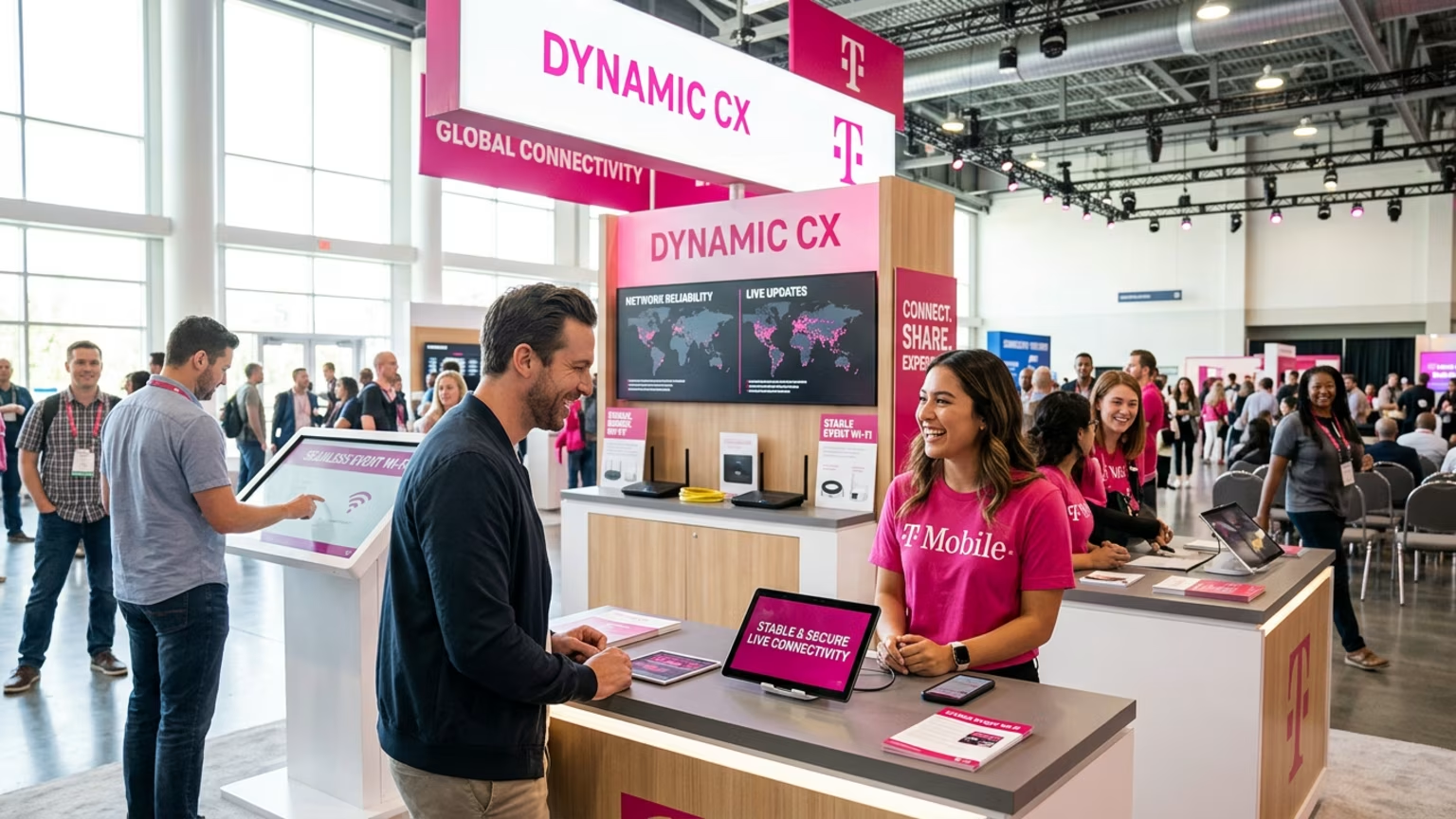
Stop blaming the venue for dead zones that kill your lead capture. T-Mobile recently released Dynamic CX to automate network capacity at massive events, giving brands the reliable infrastructure needed to turn chaotic crowds into measurable pipeline.
The most expensive mistake in experiential marketing is building a digital pathway for a network that does not actually exist. You secure the best footprint at a marquee summer festival. You invest heavily in beautiful fabrication and train your field staff to absolute perfection. Then the gates open and fifty thousand attendees pull out their smartphones at the exact same moment.
Suddenly your smooth activation grinds to a devastating halt. QR codes fail to load on consumer screens. Your point of sale terminals buffer endlessly and frustrated buyers walk away. Your custom lead capture forms time out before the submit button registers a single email address.
This is the reality of high density mobile activations where congestion kills conversion. Brands lose thousands of dollars in potential revenue when the local cell towers choke under heavy pressure. Beautiful booths mean nothing if the fundamental digital plumbing fails during peak foot traffic. Experiential operators desperately need reliable connectivity to process digital interactions at scale.
T-Mobile US introduced a powerful solution to this exact logistical nightmare. The carrier launched Dynamic CX to automate high density network performance using artificial intelligence. According to Mobile World Live, this system predicts and manages traffic surges at major live events in near real time.
Instead of waiting for a network failure, the technology acts as an invisible optimization layer. It uses self organizing network technology combined with machine learning to identify potential mass gatherings well in advance. Industry coverage from SDxCentral notes the system analyzes public event listings and local schedules to prepare capacity. As crowds move and device usage shifts across a stadium, Dynamic CX continuously tunes the exact network resources to keep attendees connected.
Telecoms.com describes this as a system explicitly designed to help the network adapt at busy events. For marketers this creates a stronger and more resilient baseline experience for all digital interactions. The carrier is finally building infrastructure that handles the wildly uneven and bursty traffic patterns of modern experiential marketing. This development alters the strategy for operators focused on proving Return on Investment from expensive physical spaces.
The broader telecommunications industry is moving quickly toward artificial intelligence to manage complex infrastructure needs. Self organizing network technology has existed for years within standard telecommunication operations. T-Mobile is taking a vastly different approach by applying this concept directly to massive temporary gatherings. As highlighted by Telecompetitor, the software looks at real world data points to predict where an immense crowd will appear.
This level of foresight allows network engineers to allocate massive data pipelines to specific geographic coordinates before the first ticket is ever scanned. For an experiential marketing director, this technical upgrade is profoundly beneficial for actual field execution. Your audience expects frictionless digital interactions at every single brand touchpoint. They demand immediate mobile ordering capabilities, location based alerts, and instant social media sharing features.
Any delay in these services destroys the carefully crafted emotional connection you built with your physical presence.
You need a systematic approach to capitalize on this network intelligence during your next massive roadshow. Applying these steps will protect your digital flows from unexpected capacity drops.
Better connectivity only matters if you actually measure the right business outcomes. The days of reporting basic headcount and random smiles are completely over. You must establish strict performance indicators to satisfy your executive team and justify future budgets. You can easily book a strategy call with our team to refine your exact measurement framework for the upcoming season.
Executives want to see hard data validating how mobile roadshows drive sales lift across different national markets. Improved connectivity gives you the exact tools needed to capture this critical information without annoying your prospects. You can push targeted post event surveys directly to mobile devices the moment a visitor leaves your footprint. By tracking these specific engagements, you build a bulletproof case for the experiential marketing channel.
You can show a skeptical financial department exactly how a free sample turned into a loyal repeat buyer at a local retail store. This level of tracking was practically impossible just a few short years ago when field teams relied exclusively on paper clipboards. Now, robust mobile networks turn fleeting festival moments into permanent data assets.
Your lead metrics must track the immediate interactions happening right on the trade show floor. Monitor real time scan rates on your product sampling QR codes. Track the exact number of verified emails captured per hour of the activation. Watch the offline buffering frequency on your point of sale devices to spot localized dead zones.
Your lag metrics prove the true business value weeks after the trucks pack up. Measure the total retail sell through connected to your targeted digital coupons. Analyze the total Return on Investment by calculating the exact cost per acquired customer. Proper network optimization allows these numbers to flow continuously into your universal lead capture strategy.
We have been connecting brands with people through live experiences, retail programs, and national activations since 1995. Over three decades, we have built a track record of creating meaningful brand moments across the country. In our experience the friction between physical reality and digital capability often decides the fate of a campaign.
Consider a recent launch for a premium sparkling water brand at a massive regional music festival. The entire strategy relied on consumers scanning a dynamic code to claim a free product sample at a custom built lounge. Past festivals left the brand completely paralyzed by local network congestion. Thousands of eager attendees could not load the redemption page, creating massive lines and extreme frustration.
The brand suffered thousands of missed engagements and wasted massive amounts of physical inventory. This time the surrounding infrastructure featured adaptive network capabilities similar to the T-Mobile approach. Attendees easily accessed the digital landing page even when surrounded by forty thousand other streaming smartphones. The brand successfully captured verified contact information and delivered immediate text message coupons to every single visitor.
This smooth digital handoff drove a measurable and massive spike in local retail demand the very next week. When the network holds strong, live interactions translate directly into verified sales.
The most powerful technology at a live event is the kind nobody actually notices. We spend endless hours agonizing over booth colors, fabric textures, and exact staffing schedules. Yet the true success of a modern brand experience often hinges on silent data packets moving through the air. When the digital plumbing simply works, a chaotic crowd transforms quietly into a community of engaged buyers.

30 Years Experiential & Retail Activation Partner for CPG & Beverage Brands | Multi-Market Demos, Roadshows & Costco/Club Programs That Actually Sell