Robbie Thain
Founder, CEO

Discover how new retail media intelligence platforms connect digital ad spend with physical in-store execution to drive measurable sales and category growth.
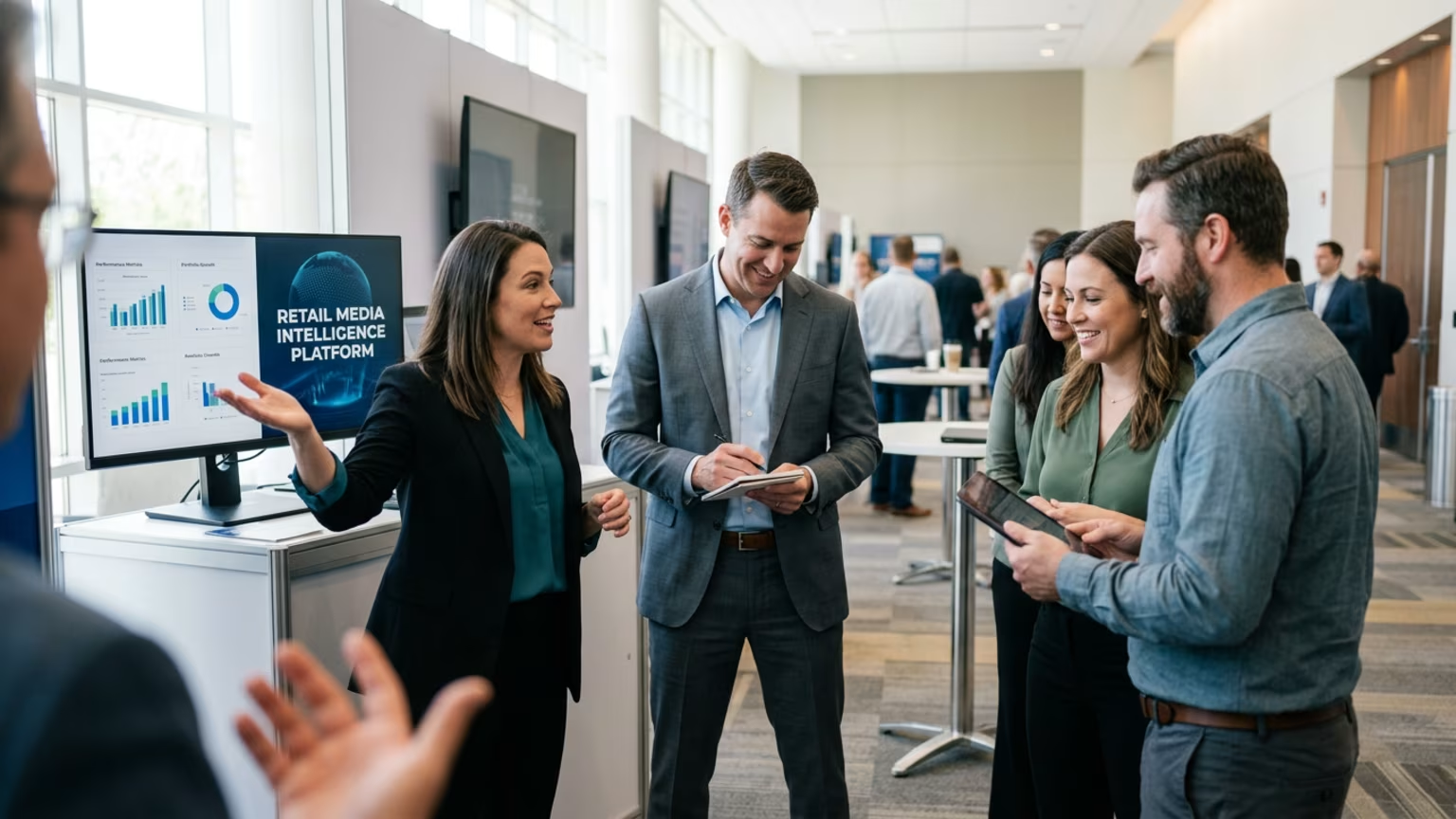
Retail media represents a massive 62 billion dollar opportunity for modern brands. This staggering figure means nothing if digital ad impressions fail to translate into physical store sales. New intelligence solutions are actively closing the gap between screen and shelf. This forces marketing leaders to align digital spend directly with physical in store execution for measurable sales lift.
The trade show floor is a brutal testing ground for retail strategy. You secure premium booth space to show off your latest product lines. Your brand ambassadors work the crowd as attendees rush past your setup. You collect hundreds of badges in a matter of hours.
Costco roadshows and high volume grocery events demand incredible logistical coordination. Your team spends weeks planning the perfect booth layout and training staff. The event goes live and the floor floods with foot traffic. You generate massive engagement but struggle to prove the actual Return on Investment.
The event feels like a massive success until you try to trace those interactions back to actual retail sales. This chaos extends directly to the grocery aisle itself. Brands pour millions into digital retail media networks to drive shopper intent. Shoppers arrive at the physical store only to find empty shelves.
Poor product placement ruins the entire digital investment. The disconnect between digital media spend and physical retail execution creates massive friction. Marketing teams sit in isolated silos with completely different goals. The media buyers celebrate high click rates on grocery apps.
Field marketing teams struggle with missing endcaps and zero promotional support. The brand loses money when both teams claim victory without proving true incrementality. A campaign can look highly efficient on a spreadsheet. That same campaign fails at trial and conversion if the in store activation is weak.
Shopper behavior changes drastically the moment they step off the trade show floor and into the real world. You cannot fix physical merchandising problems with more digital ads. A beautiful digital campaign cannot overcome a broken in store experience. Brands need a system that holds both environments accountable.
Recent industry announcements show that a new retail media intelligence solution aims to fix this exact disconnect. SymphonyAI recently launched a platform that connects merchandising and retail media within a single closed loop system. It helps large scale grocers and their partners find spend gaps to improve negotiations. This approach proves the true incrementality of campaigns across entire store portfolios.
The system uses a proactive artificial intelligence agent to combine audience intelligence with campaign targeting. It uses computer vision based in store attribution to monitor real physical conditions. This setup provides clear visibility into how media dollars affect category turns. Shared visibility gives teams absolute proof of every dollar and every lift.
This new platform does not force you to replace your existing retail media stack. It acts as an intelligence layer that bridges the gap between digital planning and physical execution. The system surfaces spend gaps and automatically builds negotiation briefs for your sales team. The days of guessing the impact of your physical activations are officially over.
The launch timing suggests continued vendor movement in 2026 toward artificial intelligence driven retail operating systems. These systems unify assortment planning with space management and media execution. They stop treating these critical elements as separate isolated functions. For consumer packaged goods leaders, this is a clear signal to rethink budget allocation.
We have been connecting brands with people through live experiences, retail programs, and national activations since 1995. Over three decades, we have built a track record of creating meaningful brand moments across the country. We know firsthand that physical execution requires hard data to prove its worth. A closed loop approach stops marketers from treating media and shelf execution as separate budgets.
These tools turn retail media from a simple ad buying channel into a comprehensive performance layer. The market is clearly moving toward portfolio level accountability. Many brands now realize that physical retail interactions complete the media loop. You must plan your experiential events and retail media buys as one unified campaign.
Applying advanced intelligence to live activations requires strict operational discipline. You must use precise execution to capture the full value of your investments. You can build a strategy that links digital awareness to physical trial. Here is the exact playbook to merge digital intelligence with physical event execution.
Executing these steps gives you a massive advantage over competitors who rely on guesswork. Every single touchpoint becomes an opportunity to measure and improve. You stop treating live events as isolated marketing expenses. They become highly targeted extensions of your overall retail media strategy.
Our team focuses on national experiential marketing strategies that drive real revenue. We know that consistency beats intensity when it comes to retail execution. You need a reliable framework to duplicate success across hundreds of locations. This playbook provides the foundation for scalable and measurable growth.
You need concrete data to prove that your live events actually move the needle. Experiential marketing teams must track specific indicators to justify their budgets. Relying on simple foot traffic or total conversations is no longer enough. You must align your event data with retail media metrics to show true business impact.
Shelf compliance is no longer just a basic operational issue. It becomes a core part of the measurement stack when you use advanced intelligence tools. If your promotional compliance is weak, your closed loop attribution will become noisy. You must guarantee physical availability before you can trust your digital data.
Lead metrics tell you if your live activation is generating immediate interest. You should track total active product trials per hour. You must monitor the conversion rate of trials to immediate purchases on the floor. Capturing the number of qualified conversations gives you a clear view of shopper intent.
Lag metrics prove the long term financial success of your strategy. The most critical metric to monitor is category turns over a thirty day period. You must calculate your trade spend Return on Investment across the entire store portfolio. Tracking gross margin lift will definitively prove the value of your experiential marketing efforts.
Financial teams constantly pressure marketing leaders to justify their experiential spend. They want to see hard evidence that physical activations drive profitable growth. You cannot win this argument with vague metrics like brand awareness or total impressions. You must speak the language of finance by proving gross margin lift.
Brands that master these metrics can easily defend their budgets during planning cycles. They can approach retailer negotiations with absolute confidence. The data provides a clear picture of what works and what fails. Closing the measurement gap for retail media networks makes your entire marketing operation more efficient.
A prominent beverage brand recently faced a massive disconnect between their digital ad spend and store sales. They invested heavily in grocery app banners but saw stagnant checkout numbers. The brand decided to use intelligence tools to pinpoint specific underperforming regions. They realized they needed a physical presence to convert that digital awareness into actual purchases.
The company deployed targeted retail sampling events at the exact locations showing high media engagement. They aligned their in store messaging perfectly with their digital display ads. Shoppers who saw the ads online were greeted by energetic brand ambassadors offering physical product trials. The combination of digital priming and physical sampling created immediate trust.
The real world activation provided a sensory experience that digital screens simply cannot match. Consumers could taste the product, ask questions, and hold the packaging. This physical interaction broke through the digital noise and forced a buying decision. The brand captured valuable feedback directly from the grocery aisle.
The results proved the power of connecting media intelligence with live retail execution. The targeted locations experienced a massive spike in immediate product sales. The brand recorded a significant increase in category turns compared to non activated stores. This success story highlights the value of optimizing retail demonstration performance with intelligent data.
This level of precision separates winning brands from the rest of the pack. You can stop hoping your digital ads will eventually translate into real world sales. You can take control of the entire shopper journey from the screen to the shelf. If you want to see similar results for your own brand, you should book a strategy call with our team.

30 Years Experiential & Retail Activation Partner for CPG & Beverage Brands | Multi-Market Demos, Roadshows & Costco/Club Programs That Actually Sell