Robbie Thain
Founder, CEO

Learn how CPG brands connect street sampling, Costco roadshows, and retail demos into a unified trial engine to drive measurable sales and retail expansion.

Industry analysts report that up to 70 percent of consumer purchasing decisions are made directly at the physical shelf. This proximity to purchase makes physical trial the most reliable driver of product adoption for modern brands. By connecting broad street sampling with high-volume roadshows and targeted retail demos, consumer packaged goods brands can create a predictable conversion engine. This connected approach turns isolated tasting events into a measurable pipeline for long-term retail success.
Step onto any major trade show floor or into a crowded big-box retailer during a seasonal push. You will quickly spot the brands that treat physical sampling as a disjointed afterthought. A street team passes out warm beverages on a random corner without any direct path to purchase. Across town, an untrained ambassador stands behind a folding table with zero product knowledge.
The result is a fog of isolated activities that generate empty cups rather than commercial value. Marketing leaders watch their budgets drain into uncoordinated activations that fail to move the needle on retail sell-through. Buyers demand proof of consumer traction before granting prime shelf space. Without a synchronized effort to capture attention and drive trial, field operations become a massive financial liability.
At major industry expos, brands spend hundreds of thousands of dollars on beautiful booths. Yet, they forget to train their staff to move conversations toward concrete business outcomes. The attendees wander past the display, grab a free sample, and disappear into the crowd. The brand collects a stack of business cards that never translate into meaningful follow up.
This is a massive failure of field marketing mechanics. The same problem occurs at the retail level. A brand secures a coveted endcap display but fails to staff it with an engaging professional. Shoppers walk past the passive product arrangement without a second glance. The retail buyer sees the stagnant sales data and quickly replaces the item with a competitor.
The solution requires treating physical interactions as a continuous funnel rather than standalone events. Top-of-funnel awareness starts with strategic street sampling in high-traffic zones. This captures distracted consumers and introduces them to the core brand flavor or function. Mid-funnel consideration happens through dedicated activations like Costco roadshows that demand deeper engagement.
Bottom-funnel conversion relies on precise retail demonstrations right at the point of purchase. Integrating these three tactics creates a unified trial engine that physically guides a buyer from initial taste to final purchase. This structured approach allows field teams to map their exact geographic footprint to specific retail distribution goals. When you link a mobile sampling tour to local retail availability, every sip directly supports the broader sales pipeline.
A complete field marketing strategy connects physical touchpoints to a central commercial goal. When a brand deploys a street team, the ambassadors must point consumers toward a specific retail location. They hand out coupons or digital codes that are only redeemable at the target grocery chain. This transforms a fleeting brand interaction into an explicit drive to retail.
Mid-funnel roadshows build upon this initial foundation by providing an immersive brand environment. Shoppers at a warehouse club have the time and mindset to hear a deeper product story. An expert ambassador can explain the sourcing, nutritional benefits, and distinct value proposition. This detailed presentation builds trust and encourages the shopper to commit to a larger multi-pack purchase.
Costco roadshows require a unique level of operational sophistication. These events represent a massive opportunity to secure large-scale retail buy-in. When executed properly, a warehouse roadshow proves to corporate buyers that your product can turn high volume rapidly. The physical presence of a dedicated activation booth signals brand strength and reliability to both the consumer and the retailer.
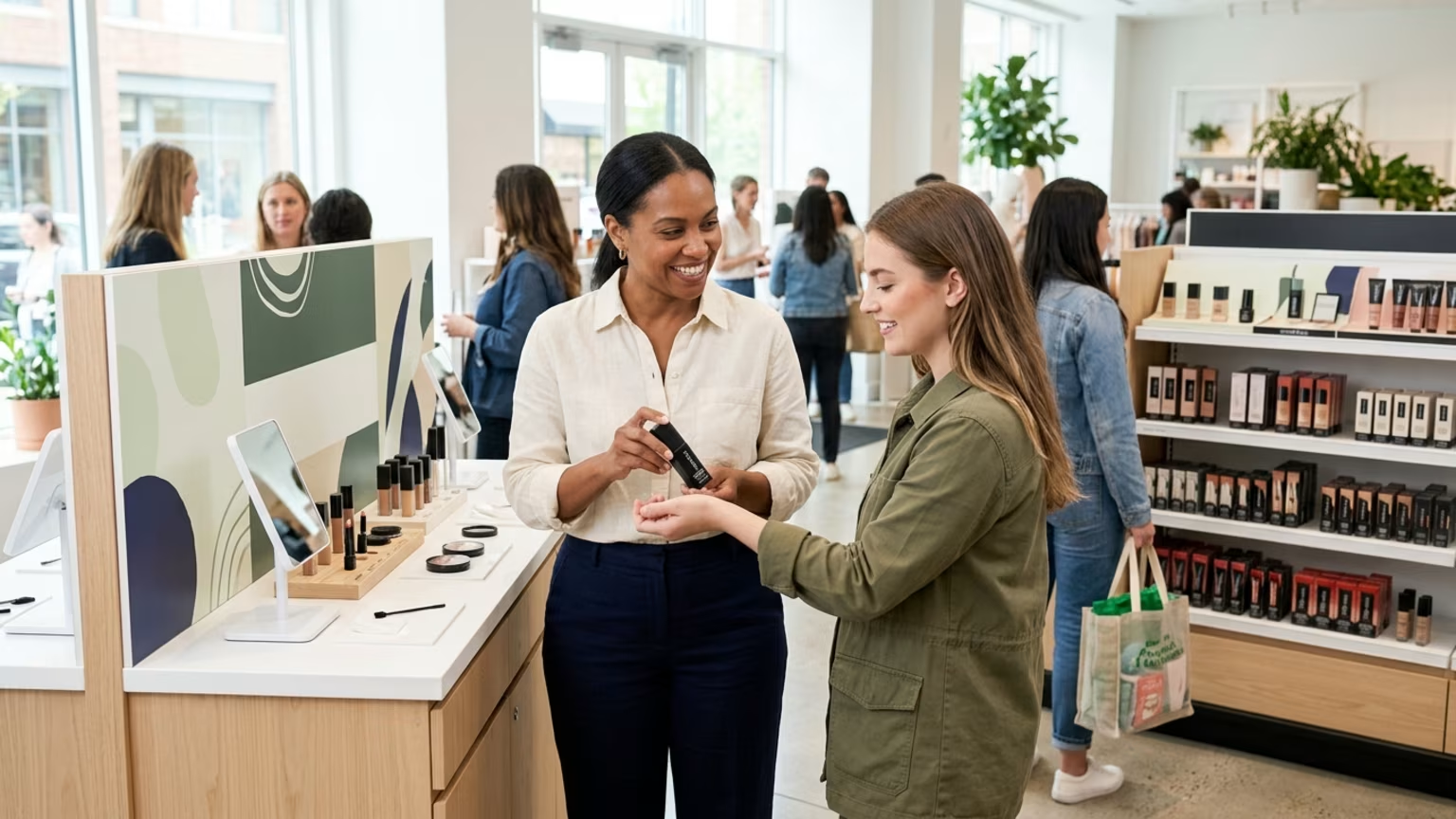
Retail demonstrations serve as the final anchor in this physical conversion strategy. These localized events capture the everyday shopper who might have missed the broader street activations. By placing a trained professional directly at the point of sale, brands intercept consumers at their most decisive moment. This comprehensive system guarantees that no potential customer falls through the cracks of your field marketing efforts.
Turning this conceptual funnel into operational reality requires strict planning and synchronized timing. Your field teams must operate under a centralized command structure. Follow this exact sequence to launch a full-funnel campaign successfully.
A successful rollout demands a precise operational cadence. Field leaders must coordinate logistics, inventory management, and staffing across multiple geographic zones simultaneously. You cannot launch street sampling without verifying that local retailers have fully stocked your product. This requires constant communication between your field marketing team and your supply chain directors.
Your field marketing playbook must address the unexpected variables of physical execution. Bad weather can suddenly ruin a planned street sampling activation. A sudden supply chain delay might leave a target supermarket without adequate product inventory. Field managers must build contingency plans for every possible point of failure.
If a localized street activation is rained out, the team should immediately pivot to an indoor pop up near the target retail zone. If product inventory is delayed, the staff must shift their focus to capturing pre orders and building CRM lists. This agility separates amateur promotional efforts from professional field operations. Constant vigilance guarantees that your sampling budget consistently generates a measurable commercial return.
Maintaining this discipline guarantees that your budget produces measurable sales momentum. When you structure your trade show follow up and retail strategy correctly, field marketing becomes a predictable revenue driver.
Measuring success demands tracking the right variables at every stage of the funnel. Lead metrics show you the immediate performance of the field teams on the ground. These indicators include total samples distributed, average consumer conversation length, and the volume of direct feedback collected. Tracking these daily allows operators to adjust staffing and talking points in real time.
Lag metrics prove the actual commercial value generated by the campaign. These indicators focus on hard retail data like localized sales lift during the activation period. You should track repeat purchase rates in the weeks following a regional sampling blitz. Strong reporting monitors the exact shift in buyer sentiment when presenting compelling retail performance data for broader distribution deals.
Proper reporting requires moving beyond vanity metrics like total impressions or foot traffic. Your executive team needs to see how physical trial translates into market share expansion. Track the conversion rate of samples to actual on-site purchases during warehouse roadshows. This provides a clear mathematical baseline for your field marketing effectiveness.
Compare the baseline sales velocity of a store against the sales velocity during your activation weeks. You should clearly chart the lingering lift that persists after the field team leaves the location. Presenting these concrete numbers transforms your marketing department from a cost center into a documented growth engine. Armed with this data, you can negotiate better placement and stronger promotional support from major retail partners.
Effective measurement requires a standardized post-event debrief protocol. Field managers must submit detailed reports within twenty four hours of an activation closing. These reports should highlight the specific geographic zones that produced the highest consumer engagement. By mapping this engagement data against localized sales figures, your team can refine future route planning.
This continuous feedback loop allows you to eliminate underperforming tactics rapidly. You can immediately reallocate budget away from unresponsive markets and double down on high velocity regions. Financial discipline requires treating every physical activation as an ongoing test of market demand. The ultimate goal is building a highly optimized formula that turns a fixed sampling budget into predictable pipeline volume.
You must track the qualitative data gathered during these live interactions. Brand ambassadors act as an invaluable focus group, capturing real-time objections and flavor preferences directly from the target audience. This direct feedback loop allows product development teams to refine their offerings based on actual market reality. When you combine hard sales data with rich consumer insights, your Return on Investment calculations become incredibly compelling to the executive board.
Consider the trajectory of a premium sparkling water brand attempting to penetrate the highly competitive Pacific Northwest market. They initially struggled to gain traction with isolated event sponsorships and random weekend samplings. By adopting a full-funnel approach, they completely reversed their regional sales slump. They initiated a structured wave of street sampling outside major corporate campuses to introduce the product.
This initial top-of-funnel activity was followed immediately by weekend roadshows at major regional club stores. Finally, they locked in weekly retail demos at specific grocery chains to capture the daily shopper. Before implementing this framework, their field teams operated in frustrating silos. The street samplers had no communication with the trade show staff.
The retail demo teams lacked the basic promotional materials needed to close a sale. By centralizing their command structure, the brand aligned every field asset toward a single commercial goal. This alignment produced an immediate surge in localized retail velocity. The regional grocery buyers noticed the sustained consumer demand and quickly authorized a broader regional rollout.
The brand transformed a struggling market into their most profitable territory within a single fiscal quarter. We have executed over 1000 campaigns across all 50 states, bringing brands to life in every major U.S. market. From retail demos in Seattle to roadshows in Miami and events in Honolulu, our teams activate brands wherever our clients' audiences are located.
By controlling the entire funnel, this beverage brand demonstrated a clear path to profitability for retail buyers. They turned curious pedestrians into bulk purchasers and daily loyalists. This operational discipline is what separates profitable field campaigns from expensive brand theater.
We must return to that chaotic trade show floor or crowded supermarket aisle. The noise and confusion will always exist in any live consumer environment. The brands that win are the ones that impose order on this chaos through disciplined execution. They stop treating sampling as a random act of generosity and start treating it as a structured acquisition channel.
By coordinating these elements, you create an undeniable echo chamber of physical presence. The consumer sees the street team on Tuesday and encounters the immersive warehouse display on Saturday. Finally, they find the product perfectly demonstrated at their local grocery store the following week. This structured repetition physically guides the shopper from casual curiosity to habitual purchasing.
By linking street awareness to roadshow consideration and retail conversion, you build an unstoppable physical pipeline. Every interaction becomes a calculated step toward a long-term customer relationship. If your field marketing lacks this level of operational rigor, it is time to recalibrate your approach. Book a strategy call today to build a trial engine that delivers measurable commercial results.

30 Years Experiential & Retail Activation Partner for CPG & Beverage Brands | Multi-Market Demos, Roadshows & Costco/Club Programs That Actually Sell