Robbie Thain
Founder, CEO

Learn how elite sports logistics principles can transform your multi-city field marketing tours into measurable pipelines that drive retail sales and ROI.
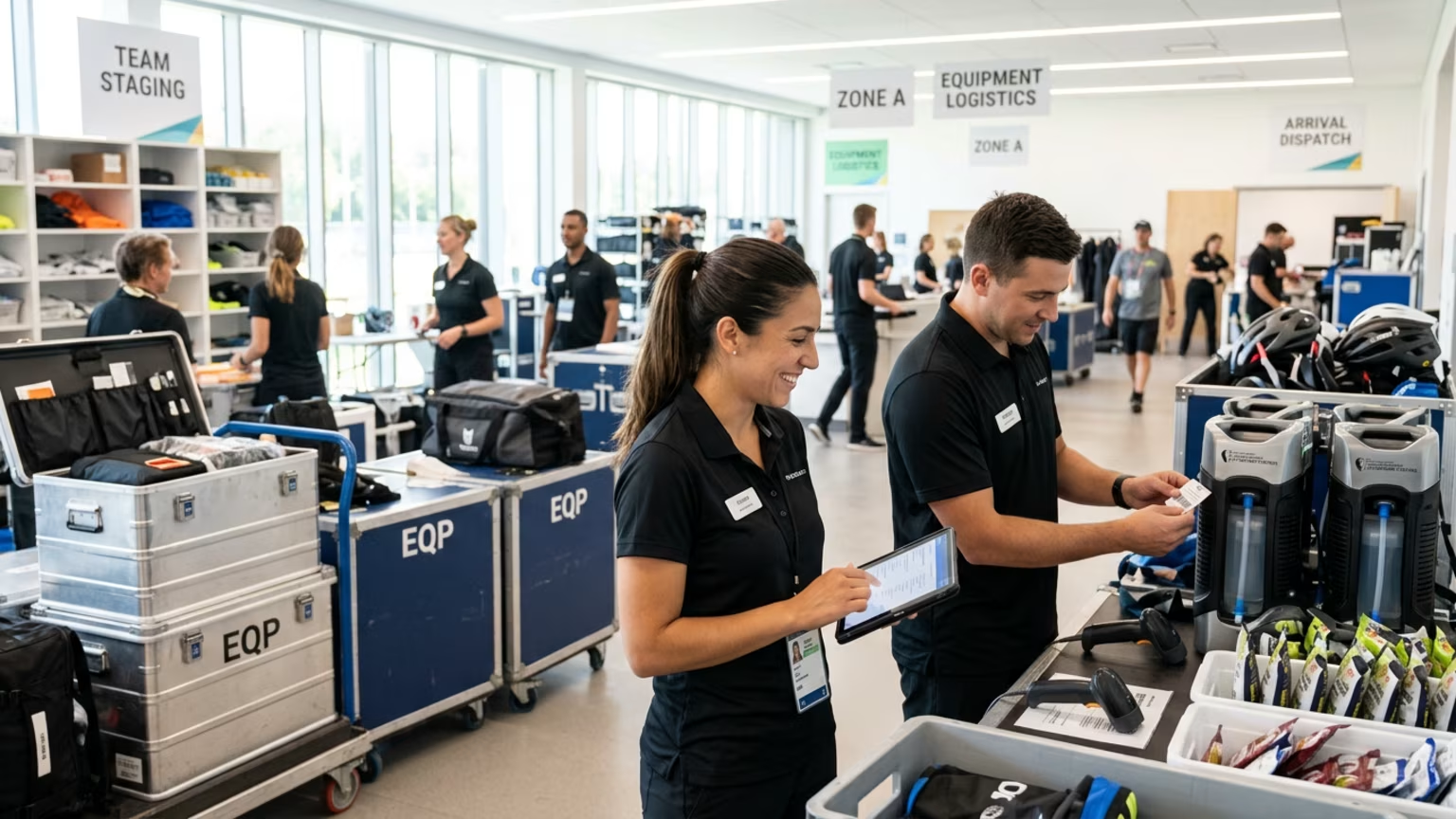
A recent study on global sports travel operations reveals the exact operational frameworks required to execute complex events without failure. By applying these elite sports logistics principles to field marketing, brands can transform multi-city tours into repeatable pipelines that generate measurable sales.
It is 6:00 AM on a Friday in Chicago. Your lead brand ambassador is stuck at an airport hotel, the sampling booth is sitting in a warehouse in Denver, and the event opens to VIPs in three hours. This is the brutal reality of multi-city roadshows when ambition outpaces operational control. Most marketing leaders focus heavily on the creative design of their booth. They ignore the brutal mechanics of moving people and product across state lines.
Creative agencies often design stunning experiential footprints without considering how those assets will travel. A custom-built wooden sampling bar looks fantastic in a digital rendering. It becomes a massive liability when you realize it requires a specialized freight carrier and four union laborers to assemble. This disconnect between design and logistics guarantees budget overruns. Field managers waste valuable hours trying to solve structural problems on site instead of managing their brand ambassadors.
Instead of generating excitement, these poorly planned activations turn into logistical nightmares. When you ignore the basic principles of movement and staging, your multi-city brand activation quickly becomes a dumpster fire of missed opportunities. Field marketing managers often find themselves making panicked phone calls to freight carriers instead of engaging with consumers. The pressure to deliver Return on Investment mounts quickly when expensive display assets never make it to the venue. A beautiful booth rendering means nothing if the physical components are missing in action.
We see this scenario repeatedly with fast-growing consumer packaged goods companies. A brand secures a massive national retail push and decides to launch a supporting sampling tour. The marketing team assumes that event execution is simply a matter of booking a space and shipping a box. They fail to account for loading dock schedules, union labor rules and the strict compliance demands of big-box retailers. The campaign quickly unravels into a chaotic series of late starts and missing inventory.
Recent industry insights detail how top athletic organizations move hundreds of people and tons of equipment seamlessly across global events. According to recent reports on elite sports travel operations, successful teams rely on centralized planning, rigorous scenario modeling and standardized vendor playbooks. We can map these exact principles directly to experiential marketing. When brands treat a retail roadshow like an elite sports season, they regain absolute control over their field execution.
The framework begins with establishing a single source of truth for all operational data. Elite sports teams never rely on scattered spreadsheets or disjointed email threads to coordinate their movements. They use centralized command centers to track every flight, freight shipment and personnel schedule in real time. Field marketing teams must adopt this exact identical discipline to survive modern retail environments. By establishing a unified operations hub, brands can anticipate bottlenecks before they impact the live consumer experience.
Operating a centralized command center requires specific technological investments. Top sports franchises use integrated software platforms to maintain visibility over their assets. Experiential marketing teams must deploy similar asset tracking tools to monitor the movement of high-value booth properties. This visibility allows operations directors to see exactly when a pallet leaves the warehouse and when it arrives at the venue. Predictability is the ultimate goal of any high-performance logistics strategy.
We have executed over 1000 campaigns across all 50 states, bringing brands to life in every major U.S. market. In our experience, brands that build unified field operations systems see a dramatic reduction in day-of-event logistical failures. This strategic approach removes the guesswork from staffing, permitting and product delivery. The team shifts from fighting daily fires to optimizing the consumer interaction.
Another core pillar of the sports logistics framework involves aggressive scenario modeling. Athletic organizations run drills on travel delays, equipment failures and sudden schedule changes. A high-performance field marketing team applies this same rigor to event planning. They ask hard questions about weather contingencies, backup product sourcing and secondary transportation routes. This level of preparation separates amateur sampling efforts from professional brand activations.
Transitioning from a reactive posture to a proactive logistical machine requires strict adherence to a proven process. To build a reliable system for your next sampling tour, follow this precise sequence.
Implementing these steps guarantees that your live experiences match your original creative vision. The goal is to build an unshakeable operational foundation.
Logistical precision must translate directly into financial performance. To measure Return on Investment accurately, field teams must track specific indicators that tie backend operations to frontline sales outcomes. We divide these measurements into distinct leading and lagging indicators.
Leading metrics provide real-time visibility into the current health of your logistics network. Track the on-time delivery rate of your event assets and sampling products across all markets. Monitor the staffing fulfillment rate to guarantee every booth has the correct number of trained ambassadors. Measure the average setup time to identify inefficiencies in your structural design or your team training program.
When field operations teams master their complex logistical requirements, these leading metrics stabilize and improve. Lagging indicators then reveal the true business impact of your national field events. Track the cost per qualified consumer interaction across different retail markets. Calculate the verifiable sales lift in local retail channels during and immediately after the activation. Finally, measure the percentage of consumer trials that convert into direct purchases or qualified lead captures.
By tying logistical efficiency to actual sales impact, marketing leaders can easily defend their experiential budgets. A highly optimized logistical network drives down the overall cost of execution. When you eliminate rush shipping fees and overtime labor charges, your experiential budget stretches much further. This allows brands to reallocate funds toward larger consumer footprints or higher quality sampling products.
Clean operations build deep trust with major retail partners. When your team shows up on time and leaves the parking lot spotless, store managers are eager to welcome your brand back.
Consider the recent launch of a new premium sparkling water brand across the U.S. market. The brand planned a thirty-city sampling tour hitting major retail parking lots, regional food festivals and local sporting events. They initially approached the logistics like a series of isolated weekend road trips. This chaotic strategy resulted in stockouts at key locations and exhausted field staff who spent hours managing delayed freight shipments.
The marketing team realized they were burning capital without driving trial. The brand shifted to an elite sports travel model for the second half of the tour. They centralized their warehousing strategy by using regional hubs to pre-position heavy product pallets. They modeled traffic scenarios for major festival weekends and adjusted their travel transport windows accordingly.
The operations team issued standardized vendor playbooks to local staffing agencies to enforce absolute consistency in setup and breakdown procedures. This complete logistical pivot saved the marketing campaign from total collapse. Setup times decreased by forty percent across the board. Stockouts were eliminated completely from the activation footprint.
The on-site teams focused entirely on high quality consumer engagement instead of chasing missing boxes. The brand saw a massive spike in retail sell-through after guaranteeing the product was always available, perfectly chilled and presented by highly energetic staff. Regional sales managers reported that major retail buyers requested more inventory immediately following the local events. The experiential tour transformed from an expensive marketing experiment into a reliable sales channel.
When your multi-city activation runs like a professional sports operation, you stop fighting fires and start driving revenue. Your live experiences become powerful, measurable engines for brand growth and retail expansion. Stop letting poor execution ruin great marketing ideas. Book a strategy call today to build a bulletproof logistics plan for your next national tour.

30 Years Experiential & Retail Activation Partner for CPG & Beverage Brands | Multi-Market Demos, Roadshows & Costco/Club Programs That Actually Sell


