Robbie Thain
Founder, CEO

Learn a disciplined operational framework for executing multi-city sampling activations that drive immediate consumer trial and sustained retail sales velocity.
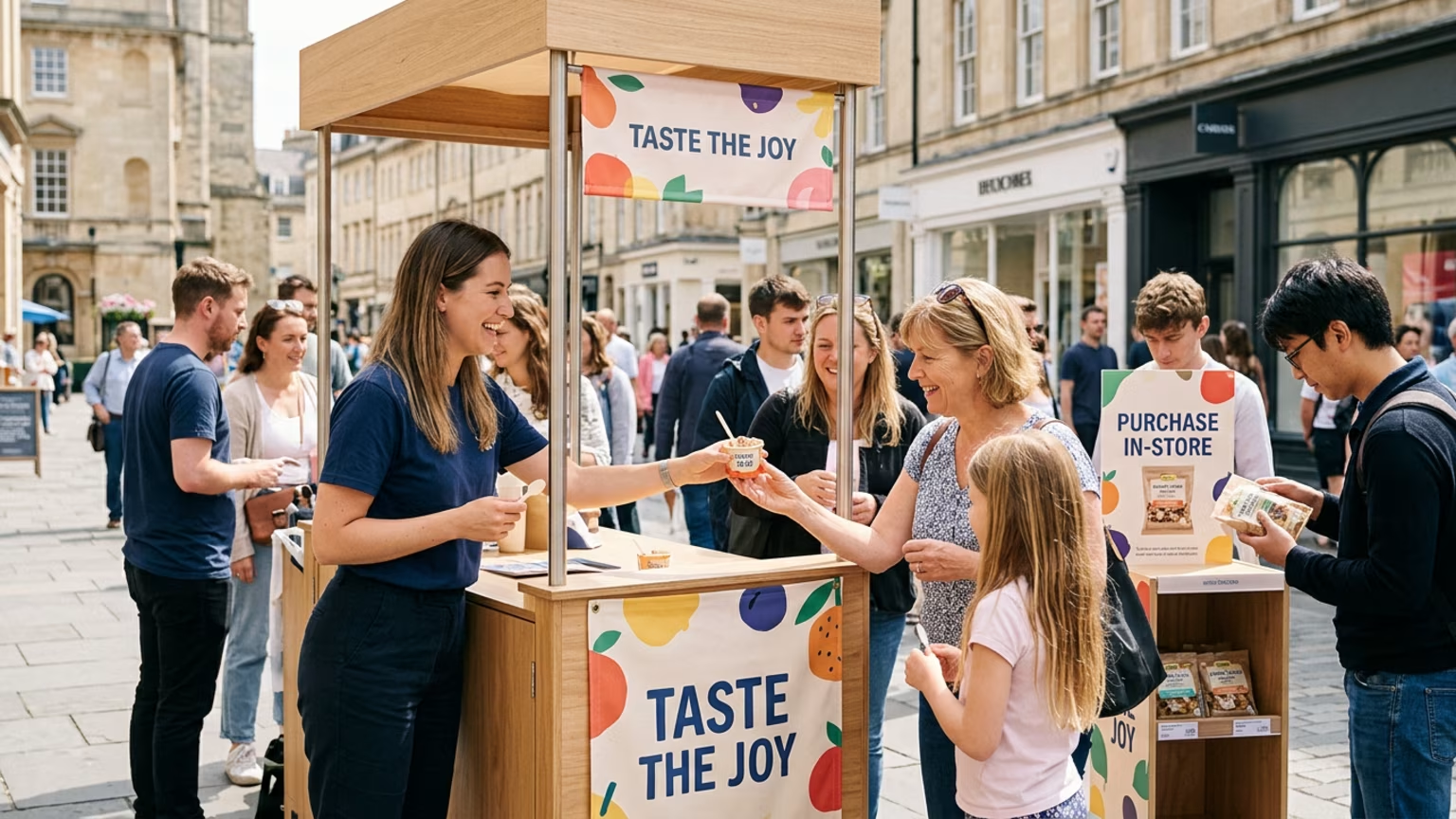
The pallet of refrigerated product sits on the loading dock baking in the morning sun. The local staffing agency sent three brand ambassadors who know nothing about your new formulation. A line of curious consumers forms rapidly. Your expensive field activation is suddenly a beautiful disaster.
Field marketing campaigns must move beyond mere theater to generate measurable retail velocity. This framework provides a disciplined approach to executing multi-city sampling activations that drive immediate consumer trial and sustained shelf-clearing sales.
We have executed over 1000 campaigns across all 50 states. We bring brands to life in every major U.S. market. From retail demos in Seattle to roadshows in Miami, our teams activate brands wherever our clients are located. In our experience, the reality of a multi-city sampling tour is rarely as smooth as the strategy deck suggests.
Logistics fail quickly when untrained teams manage perishable goods. Regional marketing managers often scramble to track down missing event assets. Unprepared field staff hand out premium samples without explaining the core product value. This turns an expensive consumer interaction into a completely wasted freebie.
Retail store managers rapidly lose patience with chaotic pop-up setups. High employee turnover in the retail sector complicates field coordination. Recent workforce surveys indicate that peak season pressure pushes one in three retail workers to consider quitting. Adding a disorganized sampling team to a stressed store environment only creates unnecessary friction.
Brands routinely underestimate the complex tax implications of cross-state sampling operations. Financial analysts note that distributing free products across different states often triggers unexpected use tax liabilities. Marketing budgets shrink rapidly when teams fail to account for local compliance costs. The operation quickly becomes a financial liability instead of a revenue driver.
Local municipal regulations frequently blindside unprepared brand teams. City health departments demand specific permits for distributing open food samples on public sidewalks. An inspector can shut down an entire weekend activation if your team lacks the proper documentation. These sudden operational failures waste thousands of dollars in staff time and unused site rental fees.
Corporate marketing teams often lack visibility into these localized execution failures. The field staff submits a glowing post-event report that glosses over the operational friction. The marketing director assumes the campaign was a success until the quarterly sales data arrives flat. This disconnect between the corporate office and the physical street destroys experiential marketing budgets.
Success requires treating mobile sampling tours as a strict operational science. You need a system that standardizes every consumer interaction across different time zones. The primary goal involves removing friction from the supply chain before the activation ever begins. This allows your field staff to focus entirely on the direct consumer conversation.
High-performing marketing teams centralize their physical logistics and storage. They do not ship product directly to unreliable temporary venues. They ship to secured hubs where inventory is monitored and properly stored. This prevents costly stock-outs and ruined perishable items.
Tying the physical event to a digital endpoint is absolutely non-negotiable. Every sample handed out must include a clear path to immediate purchase. Smart teams use beverage sampling strategies that connect physical taste tests to digital loyalty programs. The interaction must prompt a measurable financial action from the consumer.
Another fundamental pillar involves real-time data integration. The best activations use universal lead capture software to connect street teams directly to corporate CRM systems. When a consumer scans a code or enters their email, that data should route instantly to your central database. This eliminates the delay of manually transcribing messy paper sign-up sheets after the event concludes.
This automated data flow allows your email marketing team to trigger follow-up sequences immediately. A consumer can receive a digital coupon on their phone before they even leave the pop-up footprint. This level of technical sophistication separates professional brand activations from amateur street teams.
Relying on generic event staffing agencies is a guaranteed path to failure. You must recruit individuals who align with your specific brand persona. These ambassadors must undergo rigorous product education before stepping onto the floor. They need to speak with the authority of an actual brand employee.
Deploying a national sampling tour requires disciplined execution and strict oversight. Follow these exact steps to protect your brand image and drive regional sales.
Select locations based on retail density and existing supply chain distribution. Do not waste money activating in cities where your product is missing from local shelves. Align your pop-up locations with nearby retail partners to capture immediate impulse buys. A localized approach creates a closed loop between trial and immediate purchase.
Field staff must understand the exact nutritional or lifestyle product benefits. They need a short script that transitions a free taste into a clear purchase recommendation. Treat your brand ambassadors like a direct extension of your corporate sales team. Roleplay common consumer objections until the responses become pure muscle memory.
Perishable food products require exact temperature controls and strict handling protocols. Secure refrigerated storage facilities near your selected activation sites. Monitor daily inventory levels to prevent spoilage and guarantee consistent physical availability. A broken cold chain destroys both product integrity and consumer trust.
Equip your field teams with digital tools to track foot traffic and sample distribution. Track exactly how many distributed samples convert into digital sign-ups or scanned coupons. This raw data prevents your leadership team from guessing about the daily effectiveness of the event. Adjust your staffing levels based on these real-time conversion metrics.
Alert your retail buyers before launching a localized pop-up campaign. Provide them with projected foot traffic numbers to justify increased stock orders. Coordinated booth traffic blueprints help retailers anticipate the sudden spike in consumer demand. A sold-out shelf is only a victory if the retailer expects the rapid inventory depletion.
Never assume a general event permit covers food or beverage distribution. Research the exact health department requirements for every single municipality on your tour route. Some cities require hand-washing stations and specific sneeze guards for any open sample distribution. Securing these permits months in advance prevents aggressive health inspectors from shutting down your expensive activation.
The physical interaction is only the beginning of the consumer relationship. Trigger an automated text message campaign within one hour of the physical product trial. Offer a high-value digital coupon to incentivize an immediate purchase at a nearby retail location. Brands that ignore this follow-up window leave massive amounts of money on the table.
Proving Return on Investment requires tracking specific revenue-focused numbers. You cannot report on vague feelings of generalized brand awareness. Marketing leadership needs hard data that correlates physical product trial to actual bottom-line revenue. We break these numbers down into leading and lagging indicators.
Leading indicators tell you if the live event is functioning correctly in real time. Track the raw number of qualified consumer engagements per active hour. Monitor the physical sample distribution rate against your daily operational inventory targets. Measure the immediate digital scan rate from your interactive booth signage.
Capturing accurate field marketing metrics keeps your local teams accountable during the actual event. If the QR code scan rate drops below target by noon, the team can pivot their pitch immediately. This agility prevents you from realizing the campaign failed three weeks after it ends.
Lagging indicators prove the long-term financial impact of the physical campaign. The most critical lagging metric is retail sales lift in the surrounding zip codes. Compare the baseline inventory movement at nearby stores against the volume moved during your activation week. You should see a noticeable spike that sustains itself for several weeks.
Track the final redemption rate of any digital coupons distributed at the pop-up over a thirty-day window. Analyze the cost per acquisition by dividing your total event spend by the number of new verified customers. These hard metrics validate your budget requests for the next fiscal year.
Your pop-up activation should directly influence your relationship with retail category buyers. Track the amount of new shelf space or secondary displays secured in the weeks following a local event. Share your localized foot traffic data and conversion metrics directly with these retail partners. When buyers see you driving guaranteed foot traffic to their stores, they will reward you with premium product placement.
Recent industry announcements detail how major consumer packaged goods brands use physical trial to support corporate milestones. Lifeway Foods recently launched a massive sampling initiative to celebrate their fortieth anniversary. They paired a coast-to-coast mobile event strategy with an immersive kefir pop-up shop in SoHo. This dual approach captured both broad national attention and deep local engagement.
The SoHo activation was constructed as an in-store style brand experience rather than a basic folding sample table. Visitors received complimentary products alongside highly targeted promotional giveaways. The physical environment showcased exact product usage in everyday domestic settings. This tactile approach helps curious consumers understand how to incorporate the item into their daily morning routines.
Taking a physical product directly to the target consumer removes the intimidating barrier of a first-time purchase. Shoppers who taste a new beverage in a high-energy environment are much more likely to seek it out in familiar grocery aisles. This strategy relies heavily on precision execution and tight inventory controls across multiple markets simultaneously.
When major brands execute these milestones correctly, the resulting momentum carries over into permanent retail velocity. The pop-up generates immediate excitement that drives foot traffic straight to adjacent retail locations. The combination of local buzz and direct taste testing is incredibly difficult for digital advertising to replicate.
Review your current field marketing plan today and identify any gaps in your localized retail routing. If your brand is planning a high-stakes regional expansion or a national product launch, you need flawless field execution. We can help you build an operational framework that turns live consumer interactions into measurable sales pipeline. Book a strategy call with our operations team today to map out your next successful mobile sampling tour.

30 Years Experiential & Retail Activation Partner for CPG & Beverage Brands | Multi-Market Demos, Roadshows & Costco/Club Programs That Actually Sell