Robbie Thain
Founder, CEO

Learn practical strategies for improving lead quality at trade shows and brand activations to drive measurable sales lift and Return on Investment.

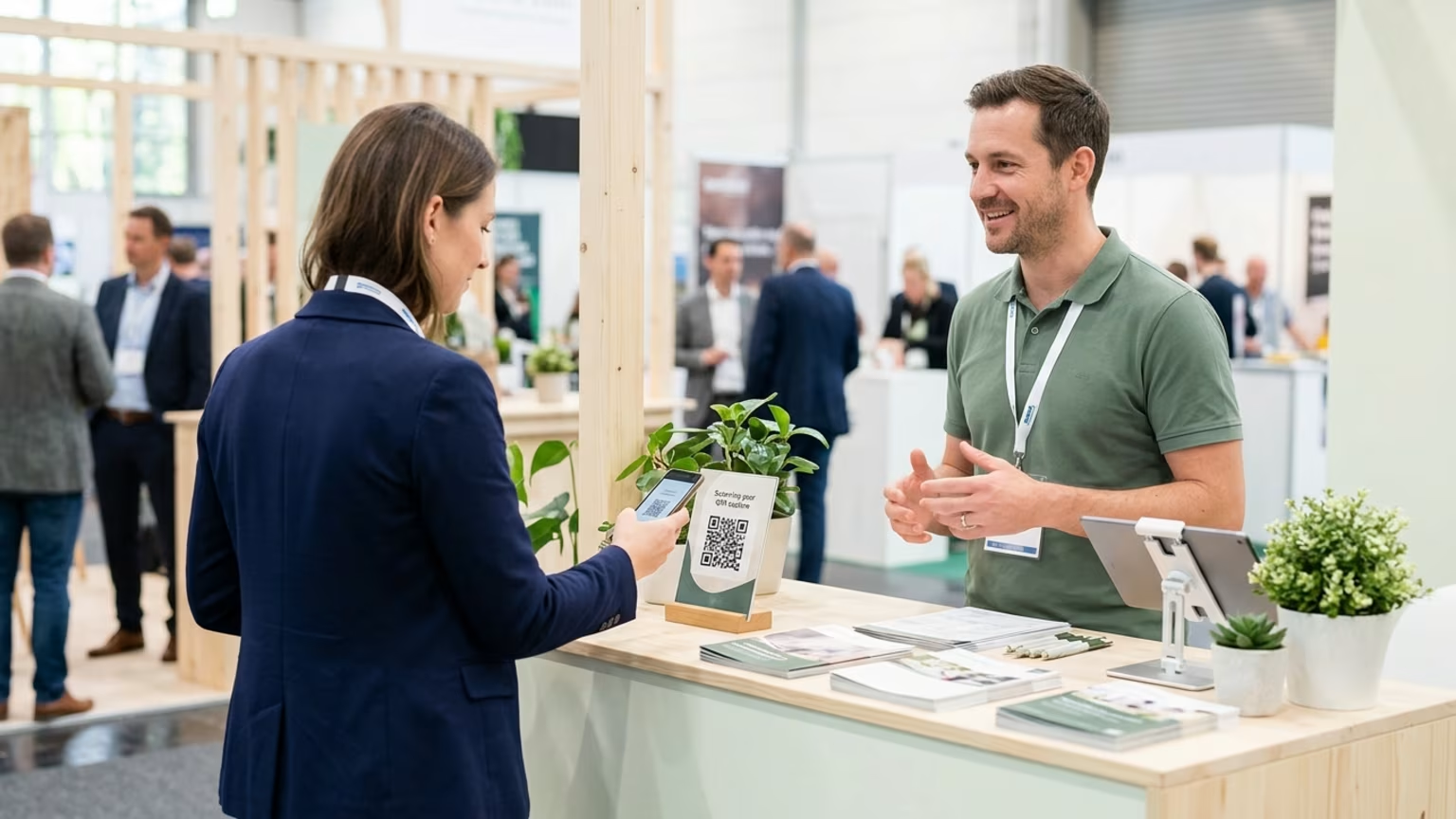
The booth is packed, the promo gear is gone, and the badge scanners are running hot. Yet by Monday morning the sales team is staring at a spreadsheet full of fake names and dead ends. Foot traffic does not pay the bills.
This guide provides practical strategies for identifying and capturing high intent event leads over sheer volume. By aligning sales and marketing on strict qualification criteria you will turn live event interactions into measurable revenue.
The trade show floor is an environment of calculated chaos. Brands spend massive budgets securing prime booth locations, flying out top staff, and designing eye catching displays. When the doors open the pressure to show immediate value hits the field marketing team hard. This pressure often forces brand ambassadors to default to a pure numbers game.
The goal becomes scanning as many badges as possible before the expo hall closes. This creates an illusion of success that completely crumbles during the post event follow up process. According to research from Webbula verified leads can result in a 50 percent increase in sales ready prospects. Capturing every passing attendee simply clogs the sales pipeline with low intent individuals.
A strategy focused solely on volume forces account executives to waste resources filtering out unqualified entries. The sales team then wastes weeks calling people who only wanted a free product sample. Industry experts at Skyhit report that if a lead generation campaign attracts low intent prospects your sales team will struggle. Not all leads are equal.
The disconnect happens right on the trade show floor when expectations are misaligned. Brand ambassadors are incentivized by interaction counts rather than the buyer signals that actually matter. The lack of standard qualification criteria creates massive friction during the handoff from marketing to sales. You need a system that filters out the noise and spotlights the real buyers.
Brands that focus on how to measure lead quality outcomes over lead counts see higher overall sales lift. Measuring actual sales outcomes shifts the narrative from event cost to revenue generation. This operator grade approach separates the top performing consumer brands from those just making noise. True experiential marketing success requires precision rather than blind volume.
The solution requires a complete shift in how you value an event interaction. You must establish a rigid qualification framework before the activation ever begins. Research from RevenueHero states that the best qualification criteria must be measurable, predictive, and practical for field teams to use. We provide clear reporting on reach, trials, leads, and sales to guide campaign optimization.
Our measurement approach tracks awareness, engagement, and conversion, turning brand moments into actionable data that demonstrates business impact. Shared CRM fields between sales and marketing cut handoff friction immediately. Standardized definitions for marketing qualified and sales qualified leads keep both teams strictly accountable. This alignment stops the blame game and focuses everyone on pipeline generation.
A strong strategic framework separates lead fit from lead intent to create a highly accurate scoring model. Fit refers to the static data points like company size, industry classification, and the job title of the attendee. Intent measures behavioral signals like attending a product demonstration, asking about pricing, or requesting a follow up meeting. Combining these two elements allows you to build a reliable matrix for grading every single interaction on the floor.
According to HuboExperts lead scoring is a highly effective method where points are assigned based on specific attendee actions. Rather than static criteria this scoring must evolve based on what actually leads to a closed deal. Software leaders at Monday.com note that AI lead scoring has emerged as a standard for real time conversion prediction. This helps experiential marketers measure real outcomes and accelerate their pipelines.
Implementing a quality first lead strategy requires operator grade discipline on the event floor. You must equip your field teams with clear instructions and immediate feedback loops. A well designed playbook turns an overwhelming expo hall into a predictable lead generation engine. The following steps provide a clear roadmap for capturing and routing the right data.
These steps create a seamless flow of data from the trade show floor directly into your CRM. Brand leaders who enforce this playbook see an immediate reduction in wasted sales hours. Consistent execution of these tactics builds intense trust between field marketing and regional sales teams. This systematic approach transforms brand activations from creative theater into serious business drivers.
Equipping your field staff with this detailed playbook turns them from passive greeters into active pipeline generators. They learn to quickly assess a visitor and direct the conversation toward measurable business goals. This shift in mindset completely changes the energy within your event footprint. The focus moves from handing out free merchandise to booking real sales meetings.
Vanity metrics like booth attendance and total badge scans look great in a recap deck but fail to prove Return on Investment. You need a dashboard that connects field interactions directly to retail sell through and closed deals. The right data reveals the true health of your experiential campaigns and justifies your ongoing budget requests. Industry analysts at Highspot advocate that pipeline insights give you clarity on where to apply targeted fixes.
Start by tracking the exact cost per qualified lead rather than the cost per total booth visitor. This simple shift in perspective instantly changes how executives view the value of your physical activations. Start tracking lead response time alongside conversion rates by score tier. Faster response times to high intent prospects strongly correlate to higher conversion rates.
Track the sales velocity of leads generated from specific activations compared to other digital or inbound channels. You must calculate the revenue generated per lead tier to properly forecast future event outcomes. By reviewing these lead and lag metrics monthly you can continuously refine your scoring thresholds. Measuring these elements proves that experiential marketing is a predictable revenue engine rather than a mere branding exercise.
Real time enrichment tools can add company size and job title data within seconds of a form submission. This allows instant routing and minimizes false disqualifications on the event floor. You can read more about avoiding common lead capture pitfalls in experiential campaigns to protect your data integrity. Clean data and clear reporting metrics provide the exact evidence required to scale your marketing programs.
Consider a national beverage brand launching a new product at an industry expo filled with retail buyers. Instead of swiping every badge for a free sample they built an activation requiring a brief digital questionnaire. The form favored serious buyers by asking specific questions about current distribution challenges and inventory volume. This approach instantly separated casual snackers from retail buyers with actual purchasing power.
The brand implemented real time enrichment tools to verify company revenue and job titles right at the booth. Leads that scored above a specific threshold received immediate text messages with exclusive wholesale pricing details. This rapid routing connected hot prospects with regional sales managers before they even left the venue. The strategy allowed the sales team to book highly qualified meetings during the event itself.
The result was a smaller total lead count but a massively higher lead to opportunity conversion rate. The sales team spent zero hours chasing dead ends and focused entirely on verified buyers. Data from connecting event leads to retail sell-through offers and codes proved the actual sales lift of the activation. This campaign proved that disciplined execution and smart data routing always outperform blind volume strategies.
This strategic alignment completely eliminated the post event fog that plagues most experiential campaigns. The marketing team could immediately point to the exact pipeline value generated by their booth presence. Brand leaders no longer had to defend their event budgets to skeptical financial officers. The activation became a clear and repeatable revenue driver rather than a one off branding expense.
Stop treating trade show interactions as a pure numbers game. Implement a rigid lead scoring system today to make certain your sales team only talks to verified buyers. Book a strategy call with our team to turn your next live activation into measurable pipeline.

30 Years Experiential & Retail Activation Partner for CPG & Beverage Brands | Multi-Market Demos, Roadshows & Costco/Club Programs That Actually Sell