Robbie Thain
Founder, CEO

Discover why 77% of marketers consider experiential marketing their most effective channel and how live events build buyer trust in the age of AI.
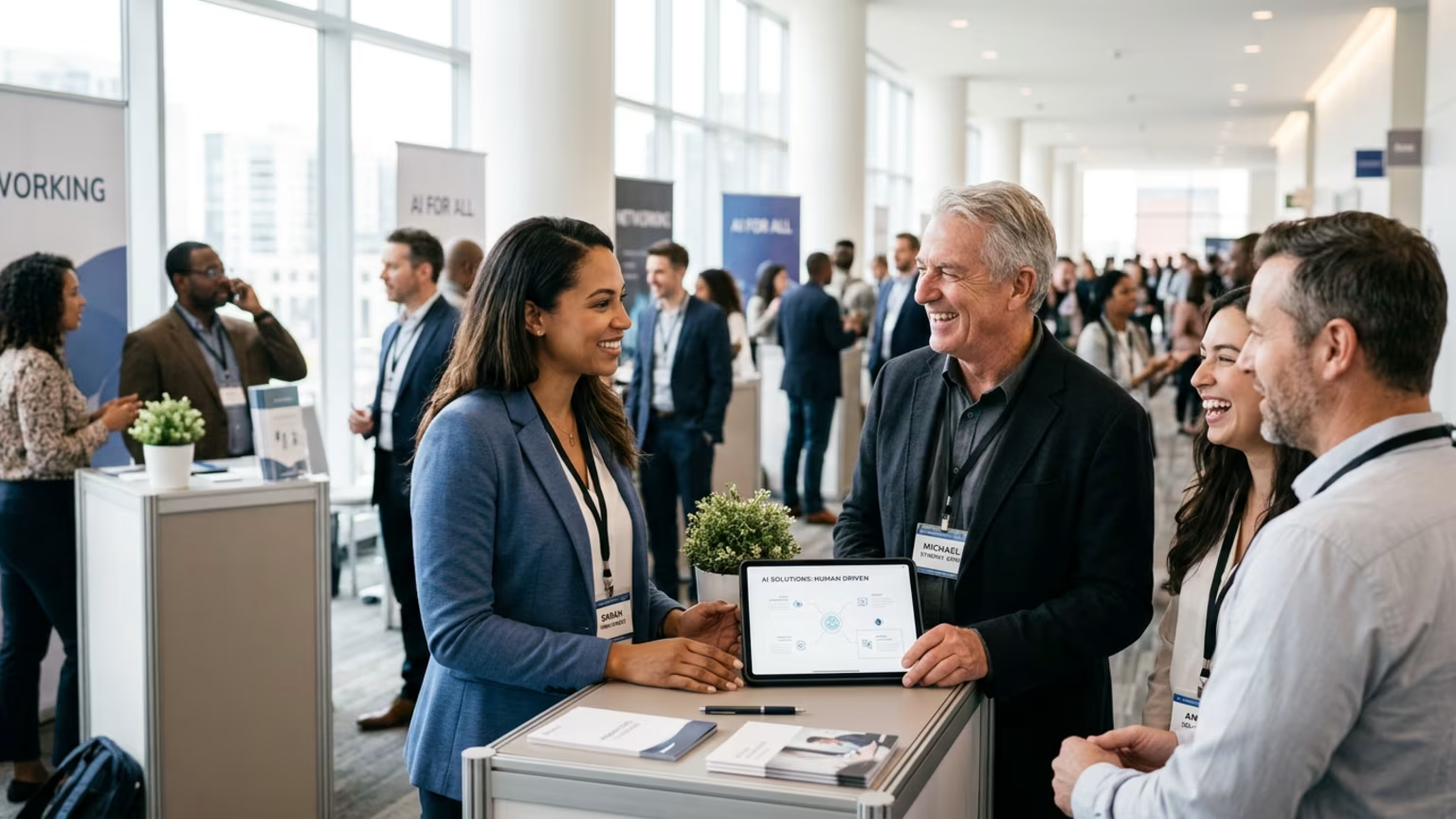
Recent industry research reveals a striking consensus among marketing leaders regarding physical brand environments. Seventy seven percent of marketers consider experiential marketing their most effective channel for driving buyer action. As artificial intelligence floods digital channels with automated content, buyers are increasingly turning to physical spaces to verify product claims. This hands-on verification builds a deep level of trust that digital advertisements simply cannot match.
Marketing operators must prioritize structured live events to cut through digital saturation and secure genuine buyer confidence. A disciplined experiential approach turns standard trade show appearances into highly measurable sales pipeline.
The rapid rise of artificial intelligence has permanently changed how corporate buyers research new products. Endless streams of generated content make it incredibly difficult for consumers to separate fact from fiction online. Real product experiences give buyers the exact proof they crave before making a purchasing decision. The physical trade show floor provides the perfect testing ground for this hands-on reality.
Walk into any major consumer packaged goods convention and you will witness the exact same scene. Aisle after aisle features loud graphics, spinning prize wheels, and entirely disconnected field staff. These representatives scan attendee badges without asking a single meaningful question about the business needs of the buyer. Attendees wander past generic tables stacked high with printed literature that will eventually end up in a hotel trash can.
Sales representatives often stare at their phones or talk to each other instead of engaging the passing crowd. This chaotic environment represents a massive missed opportunity for brands seeking measurable pipeline growth. Marketers spend hundreds of thousands of dollars on booth space, union labor, and complex freight logistics. They ship massive amounts of product across the country for sampling and display purposes.
Yet the actual interaction with the target buyer is often treated as a complete afterthought. Buyers attend these major events seeking clarity, industry connections, and hands-on validation. They want to taste the new beverage formulation, feel the packaging weight, and ask direct questions to a knowledgeable expert. When they face scattered attention and poor booth flow, their confidence in the brand drops immediately.
The physical environment amplifies either your operational excellence or your total lack of preparation. A poorly managed booth tells the buyer that your company might struggle with basic supply chain execution or account management. Every dropped conversation on the floor equals a lost revenue opportunity in the following fiscal quarter.
Hope is never an effective strategy for event marketing or field execution. To succeed in this crowded environment, brands must shift from passive booth presence to an active buyer experience framework. This requires treating the physical footprint as a tightly guided path for the consumer. Every single square foot of the activation space must serve a distinct psychological purpose.
We have been connecting brands with people through live experiences, retail programs, and national activations since 1995. Over three decades, we have built a track record of creating meaningful brand moments across the country. Our framework centers on guiding the buyer from initial curiosity to physical trial and finally to a documented commitment. The goal is removing friction from the interaction so the premium product speaks for itself.
The best marketing campaigns tightly integrate their physical presence with clear post-event follow up protocols. Industry leaders know this is exactly why event professionals view live interactions as the antidote to digital fatigue. When buyers can touch and taste your product in a controlled setting, they form lasting sensory memories. Those physical memories translate directly into increased retail velocity and long term brand loyalty.
A strategic approach requires brands to stop measuring success by the sheer volume of booth visitors. True strategy dictates focusing entirely on the quality of the interactions occurring within the brand footprint. You must train your field staff to act as trusted advisors rather than simple product pushers. This subtle shift in behavior completely changes the dynamic of the trade show conversation.
Transforming a high level strategy into a flawless live activation requires relentless attention to operational detail. Every team member must know their exact role before the show floor opens to the public. Consistency always beats intensity when managing a multi-day event presence. The following steps outline how to execute a high-converting physical brand experience.
These execution steps prevent the common chaotic failures seen at most industry events. Field staff perform much better when they have clear boundaries and precise operational expectations. A structured environment allows your brand ambassadors to focus entirely on building human connections with the attendees.
Technology plays a supporting role in this disciplined approach to field execution. By standardizing lead capture tools, marketing teams eliminate manual data entry and drastically speed up the sales cycle. Speed to lead is absolutely critical when competing against dozens of other vendors at the same exposition. Buyers respect companies that follow up quickly with relevant information based directly on their on-site conversation.
Corporate executives require hard financial data to justify continuing investments in physical marketing channels. You must track distinct lead and lag indicators to prove true Return on Investment. Vanity metrics like total badge scans or gross booth visits provide zero insight into actual business impact. Operational marketers focus entirely on numbers that reflect concrete financial outcomes.
Lead metrics give your field management team real-time visibility into the health of your activation. Track the conversion rate of passing aisle traffic to engaged booth conversations. Monitor the exact number of qualified product trials completed per active hour on the floor. Measure the percentage of conversations that result in a formally scheduled follow up meeting.
Lag metrics tell the final story of your campaign success and financial return. The most critical lag metric is the total value of closed-won pipeline sourced directly from the physical activation. Brands demonstrating retail sampling performance must track regional retail lift in the weeks following the event. A strong physical activation will always create a noticeable spike in downstream purchasing behavior.
Connecting these data points creates a closed loop reporting system for the marketing department. When the Chief Marketing Officer asks for results, you can present a clear timeline from initial handshake to final purchase order. This level of reporting precision secures future budgets and validates the entire experiential marketing function.
A premium sparkling water brand recently faced an aggressive competitive environment during a major national food convention. They needed to secure new distribution deals with regional grocers to hit their quarterly revenue targets. Their previous trade show efforts resulted in hundreds of generic leads that never answered follow up calls. The leadership team knew they had to drastically change their approach to secure a positive financial return.
The brand implemented a strict experiential framework for their next major convention appearance. They replaced standard display tables with an immersive tasting bar that mirrored a high-end cafe experience. Brand ambassadors were trained to identify retail buyers quickly and guide them through a structured tasting flight. Each buyer provided direct verbal feedback that was logged immediately into the central database via tablets.
The field team executed the playbook flawlessly across three exhausting days on the show floor. There was no scattered attention, no ignored visitors, and absolutely no discarded literature. Every interaction was treated as a valuable step in the corporate sales process.
The final results validated the disciplined approach to live consumer events. The beverage brand completed four hundred highly qualified tastings over the course of the expo. This focused engagement generated twenty five immediate follow up meetings with target regional distributors. Within two months, the live activation directly resulted in three new regional retail authorizations.
Artificial intelligence will continue to flood digital channels with automated content and perfect imagery. This ongoing saturation makes that seventy seven percent effectiveness rating for experiential marketing completely logical. When buyers cannot trust what they see on a digital screen, they will instinctively seek out physical environments to verify claims in person. The brands that meet them there with operational excellence will capture the market.
Stop wasting your trade show budget on chaotic executions that fail to generate measurable sales pipeline. It is time to implement a disciplined approach to your physical brand experiences. Book a strategy call today to discuss how we can turn your next event into a highly reliable revenue driver.

30 Years Experiential & Retail Activation Partner for CPG & Beverage Brands | Multi-Market Demos, Roadshows & Costco/Club Programs That Actually Sell