Robbie Thain
Founder, CEO

Learn how Coen Markets used first-party data and a daily free ice cream promotion to double loyalty penetration and increase retail basket sizes for CPG brands.

Brands often fail in experiential marketing by focusing on creating fleeting memories instead of engineering daily habits. A recent convenience store case study proves that the best live activations do not require massive budgets or complex staging. By linking a simple product sampling reward to first-party behavior platforms, smart operators turn casual foot traffic into measurable retail pipeline.
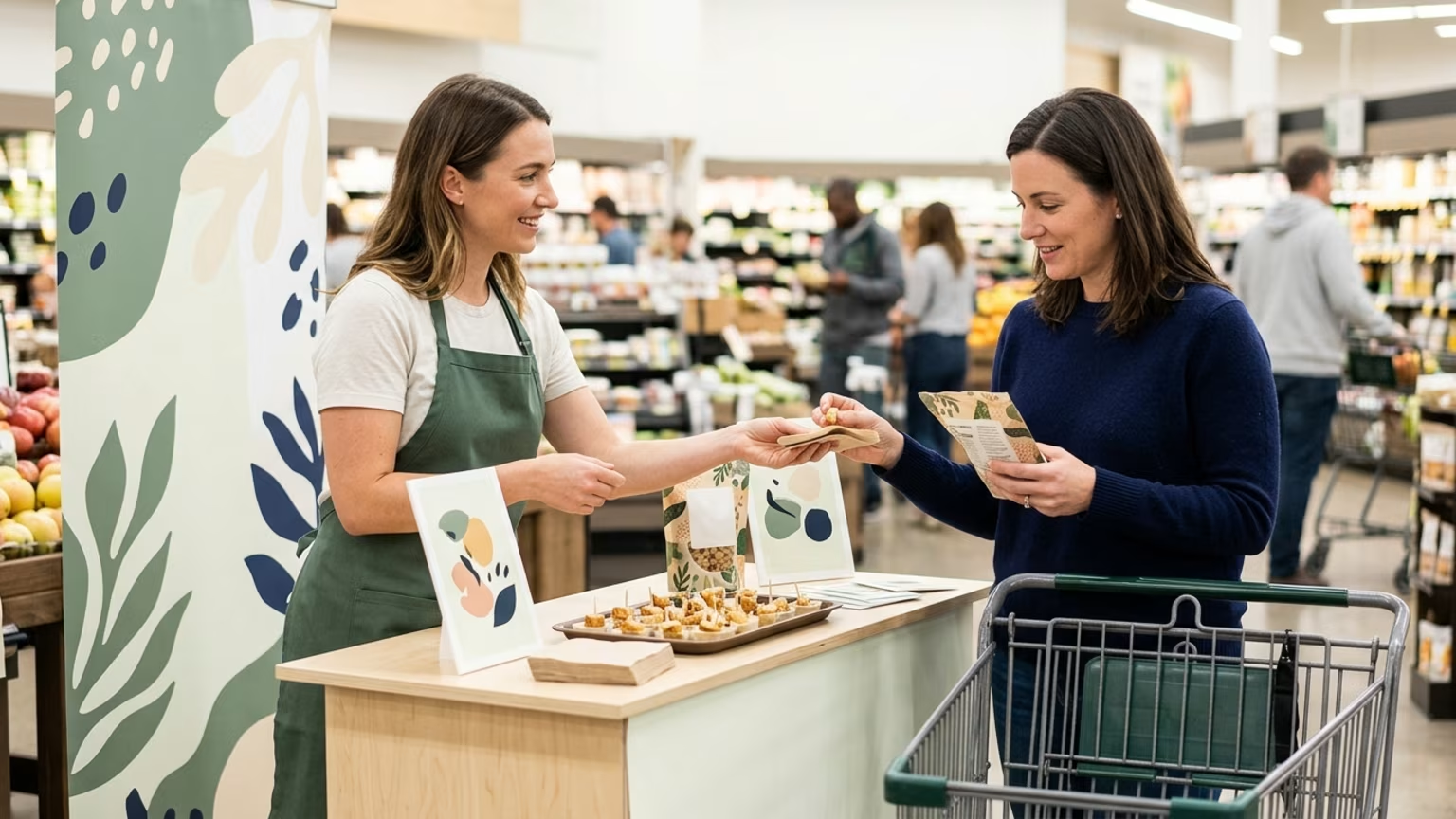
Walk onto any busy retail floor or festival grounds, and you will see the same chaotic scenario unfold. Field teams hand out thousands of free samples to passing crowds with zero mechanisms to capture contact information or track future purchases. The activation area looks incredibly busy, but that crowd is just a mirage. Consumers take the free product, walk away, and completely forget the interaction by the time they reach their cars.
Without a digital tether to the physical interaction, brands rely on hope to drive trial. They spend heavily on staffing, logistics, and premium inventory. Yet, when marketing leaders ask for the Return on Investment, field teams can only point to the number of cups handed out. This lack of concrete data makes it impossible to justify the spend to executive leadership.
The problem is a total disconnect between the live brand experience and the store operations systems. When sampling events operate in a vacuum, supply chains suffer from unpredictable demand spikes. You end up with frustrated store managers, out of stock shelves, and zero visibility into past interactions. Brands need a system that captures attention in the real world and feeds hard data back to the business.
The most effective way to solve this disjointed sampling issue is to merge physical treats with targeted loyalty mechanics. Instead of giving product to anyone who walks by, you gate the experience behind a simple enrollment trigger. This strategic approach shifts the objective from mass distribution to calculated customer acquisition. By treating a free sample as an investment in a specific consumer, you build a direct line of communication for future offers.
According to recent industry analysis from CStoreDive, regional chains are succeeding by using direct analytics access and precise segmentation instead of static reports. The strategy focuses on identifying the specific visit thresholds that turn a new buyer into a regular customer. Analysts found that once a loyalty member returns three times, they are highly likely to make that location a habitual stop.
Brands can use this exact insight to structure their field campaigns. You build a targeted nurture sequence around that critical third engagement. Frequent buyers receive a steady cadence of simple rewards to maintain their momentum. Lapsed customers receive richer promotional offers to win back their business. This targeted execution guarantees your sampling budget goes exactly where it will generate the highest return.
The smartest retail brands understand that an activation strategy only works when it connects directly to store operations. When sampling promotions operate as an integrated input, store managers can forecast demand accurately. They adjust production levels, align their field staffing to expected traffic spikes, and order the exact amount of inventory needed to prevent waste. This alignment transforms a simple marketing stunt into a predictable operational framework.
We have been connecting brands with people through live experiences, retail programs, and national activations since 1995. Over three decades, we have built a track record of creating meaningful brand moments across the country. We know that data driven in store sampling programs consistently outperform generic giveaway models.
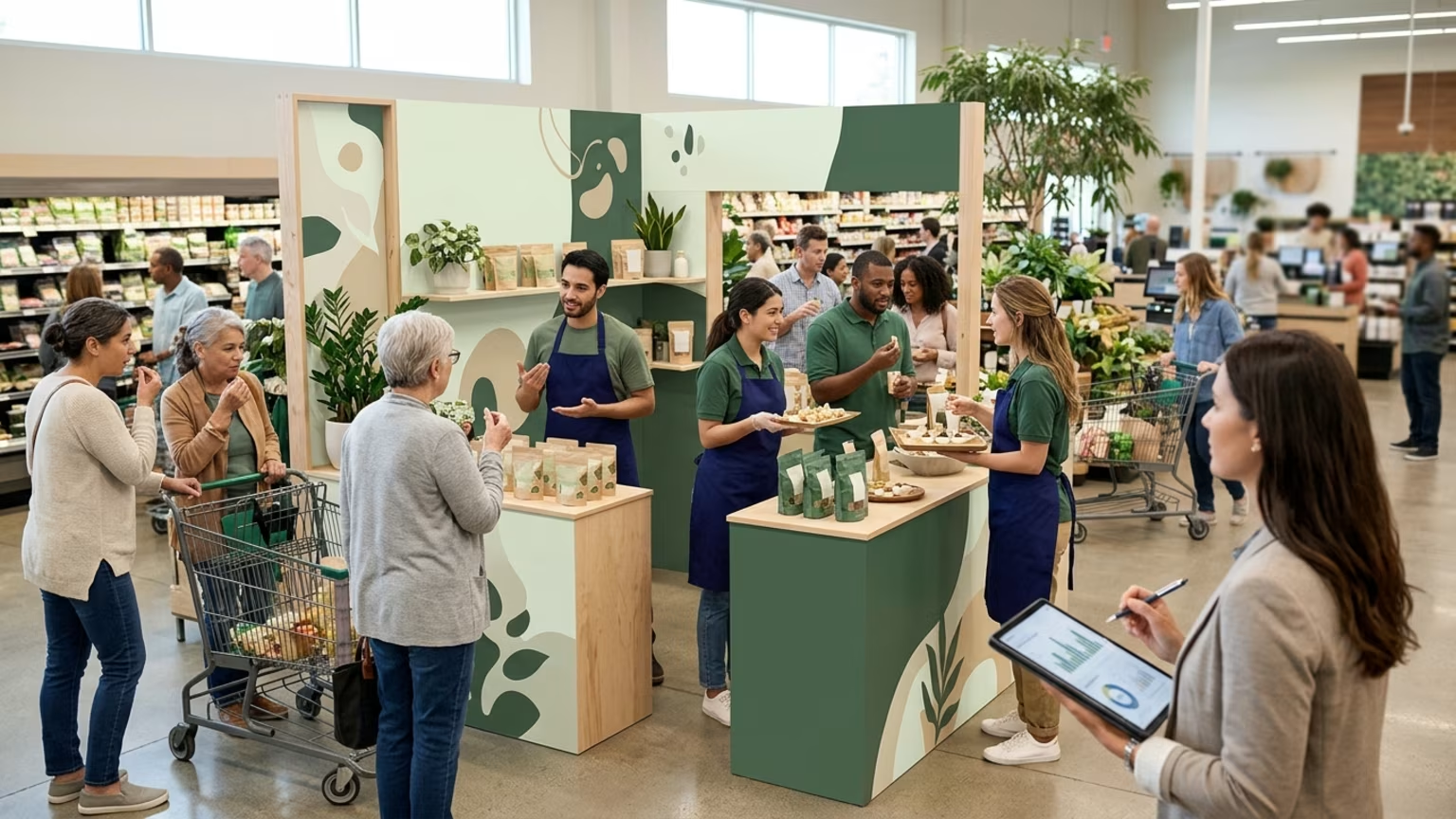
Executing a data centric sampling campaign requires strict operational discipline on the floor. You must integrate the physical product delivery with backend store systems seamlessly. Here is the step by step framework to implement this strategy during a live activation.
Proving the success of a targeted sampling campaign requires looking past superficial engagement numbers. The focus must remain entirely on how the physical activation influenced actual purchasing behavior. Leading indicators help you adjust your strategy mid campaign, and lagging indicators prove the final financial impact.
Your primary leading metrics should measure the immediate adoption of the program. Track the daily unique visitors to the activation footprint. Monitor the immediate loyalty enrollment rate, which tells you if the free reward is compelling enough to overcome the friction of signing up. You must track the daily redemption velocity to confirm your operations team can keep up with consumer demand.
The lagging metrics determine your actual program success. The most critical number is the average basket size of participating members compared to non participating shoppers. You must measure the overall visit frequency growth year over year. When you combine these figures, accurate experiential marketing reporting gives you the exact evidence needed to scale the program nationally.
The regional convenience store chain Coen Markets recently proved how powerful this combined approach can be. Coen partnered with Paytronix to overhaul its entire data infrastructure and connect its first party insights directly to store promotions. The brand wanted to drive incremental traffic during the summer season without relying on deep discounts across the board.
The solution was a highly focused promotional hook launched in the summer of 2024. Coen offered loyalty members one free ice cream sandwich per day from a rotating consumer packaged goods partner. Hershey's Ice Cream served as the featured brand during the reported window. To get the free treat, shoppers had to be enrolled in the program and scan their identifier at the register.
For consumer packaged goods brands, this operational setup offers a massive advantage. Rotating partners effectively tap into the existing loyalty traffic of the retailer. Instead of building an audience from scratch, the consumer brand funds the daily reward and instantly gains access to a highly targeted segment of buyers. The physical store environment becomes a measurable acquisition channel.
The results of this targeted daily ritual were staggering. Coen saw unique visitors increase by 28 percent year over year. Total store visits jumped by 35 percent during the 12 month period ending that April. Most importantly, the average loyalty transaction was about two dollars higher per trip than standard customer transactions.
By using a simple product treat to fuel its data engine, Coen nearly doubled its total program penetration. We see similar results when executing Costco roadshows and in store pop ups that merge high volume traffic with precise tracking. The free ice cream promotion taught consumers a new daily habit. This case study demonstrates that the best live activations focus on engineering specific behaviors rather than just creating isolated memories. If you want to stop guessing and start measuring your live activation impact, book a strategy call with our team today.

30 Years Experiential & Retail Activation Partner for CPG & Beverage Brands | Multi-Market Demos, Roadshows & Costco/Club Programs That Actually Sell