Robbie Thain
Founder, CEO

Agentic AI helps CPG brands replace static calendars with real-time intelligence. Learn how autonomous decision-making drives sales lift and retail ROI.
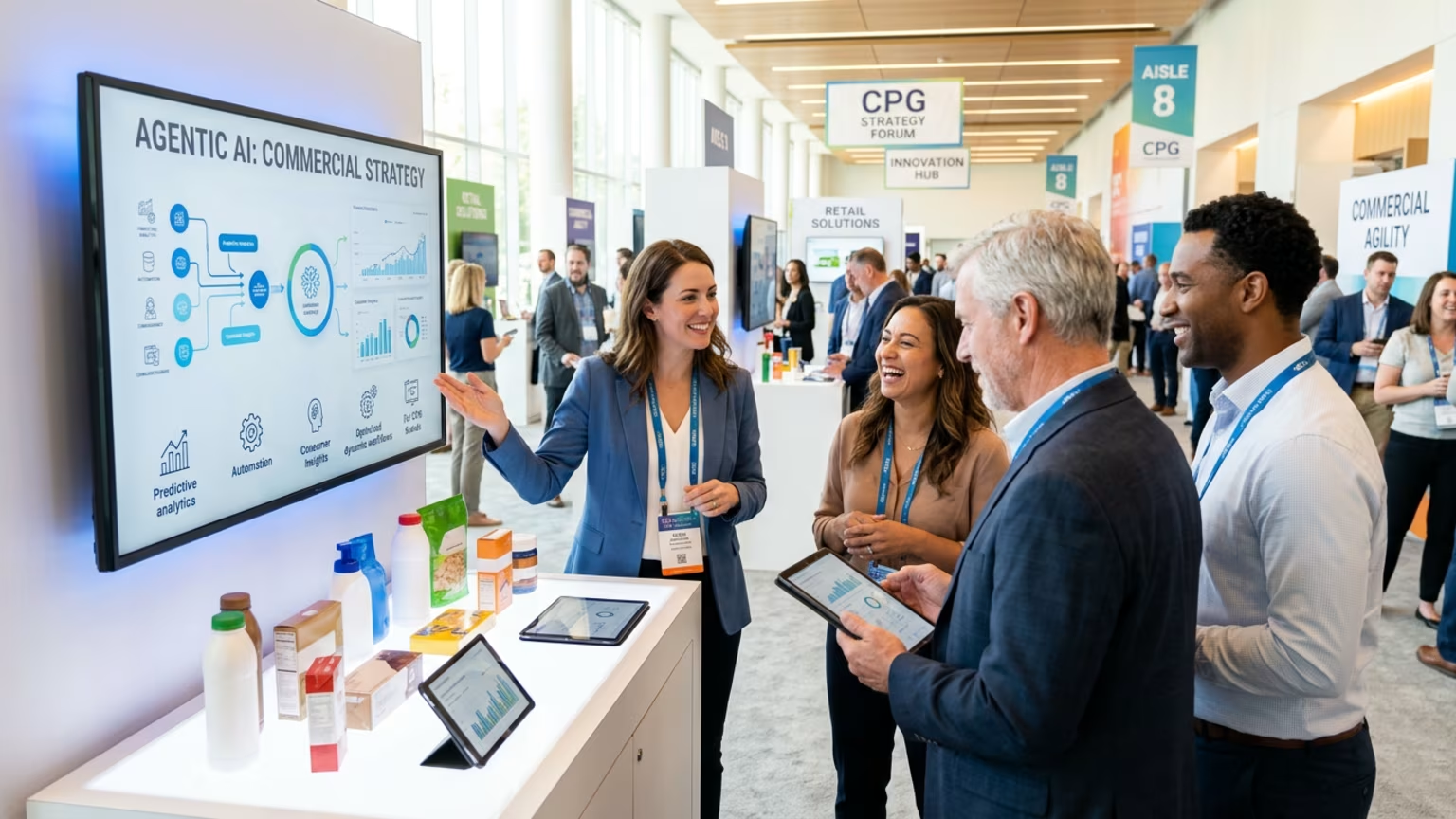
The regional marketing manager stands near a pallet of newly launched energy drinks at a major expo. Competitor pricing dropped twenty cents an hour ago. The printed promotional calendar on the clipboard is suddenly obsolete. Foot traffic moves past the booth as the team scrambles to adjust their talking points.
Agentic artificial intelligence is shifting consumer packaged goods strategies from rigid calendars to autonomous, performance-driven orchestration. Modern brands can now process live market signals to optimize retail engagement and generate measurable sales lift.
Trade show floors and busy retail aisles are notoriously chaotic environments for marketing operators. A field marketing director tries to track competitor moves, inventory levels, and shopper reactions simultaneously. Traditional pricing adjustments take six to eight weeks to implement. By the time a brand reacts to a competitor discounting their product, the sales window is permanently closed.
Many field marketing managers spend their days putting out logistical fires. They worry about inconsistent staffing and managing complex event permits. This leaves them with zero bandwidth to analyze localized consumer data. The lack of attention to immediate market signals hurts retail sell-through severely.
Field execution often devolves into a beautiful dumpster fire without real-time intelligence. Teams rely on quarterly trade reallocations that fail to capture sudden shifts in shopper demand. Relying on outdated data creates a severe loss of retailer confidence. Your activation might look busy, but it produces fog instead of hard evidence.
A brand might launch a premium snack line at a major trade show. They set their promotional depth months in advance based on previous years. A rival brand suddenly announces a massive discount on the opening morning. The static plan offers no flexibility to pivot the promotional strategy.
Agentic AI functions as an autonomous decision partner rather than a static reporting dashboard. Nisha Purswani at WNS notes that these systems persistently monitor conditions, identify opportunities, and execute coordinated actions. They operate safely within defined strategic guardrails. The technology processes interconnected relationships among price, promotion, inventory, and competitive behavior.
The system models impacts and triggers responses within hours instead of waiting for a manual review. Human leaders set the strategic boundaries to align with overall brand goals. The AI handles high-frequency tactics to prevent over-execution. Competitive detection becomes a continuous capability rather than an emergency response.
Agentic systems understand the complex realities of the physical retail environment. They evaluate trade-offs and execute coordinated actions without needing constant human approval. This represents a meaningful change in how commercial intelligence applies to real life. You move from passively reading reports to actively shifting strategy mid-event.
By modeling scenarios for competitive shifts, brands build necessary resilience against unexpected shocks. An activation team can predict how a sudden heatwave might impact beverage sampling rates. They can then adjust their cooler inventory and price promotions accordingly. Market response becomes a core capability rather than an unexpected fire drill.
Human alignment remains a critical component of this new methodology. Agentic systems augment human decision-making rather than fully replacing the field staff. Nuanced business-to-business sales interactions still require a human touch to close the deal. The software provides the real-time data, and the human provides the relationship stability.
Transitioning from manual guesswork to an adaptive model requires a disciplined operational approach. Field teams need clear instructions on applying artificial intelligence recommendations during live activations. Implementing this strategy requires structured coordination between the technology and your human brand ambassadors. Without strict guidelines, the technology operates in a vacuum.
Integrate historical account data into the live platform before deploying your campaign. The technology should analyze account history, past purchasing patterns, and vendor agreements. This gives your team a massive advantage when negotiating with retail buyers at an expo. Past data informs current strategy seamlessly.
Run scenario modeling long before the launch date. Use the system to simulate competitive shifts and demand volatility. Build resilience against unexpected external shocks before the event even starts. This preparation helps you build a retail media strategy that withstands intense pressure.
Empower the human element at every single touchpoint. The software handles the data, but your ambassadors handle the emotional connection. Remind your team that the data simply guides their conversations. Genuine human interactions are what finally convert a curious shopper into a loyal customer.
You need strict tracking to prove that autonomous systems actually improve live event outcomes. Stop relying on vanity metrics like total booth visitors or sheer volume of samples distributed. Focus entirely on revenue intelligence and conversion efficiency. Clear reporting turns fleeting consumer interactions into qualified leads.
Lead metrics provide early signals that your real-time adjustments are working. Time to competitive response is a massive indicator of operational health. Track exactly how many hours it takes to adjust pricing after a competitor changes their strategy. Faster response times directly correlate to protected market share.
Another critical lead metric is the offer acceptance rate. Measure the percentage of consumers who act on real-time assortment bundles recommended by the software. If the acceptance rate is low, the system needs better alignment with shopper intent. High acceptance rates prove the algorithm is accurately predicting what the consumer wants.
Assortment compliance shows if your strategy matches physical reality. Check if the digital recommendations match the actual physical inventory on the floor. Low compliance means your field team is ignoring the real-time data. High compliance shows strong alignment between your digital plan and human execution.
Lag metrics show the final business impact of your campaign. Incremental sales lift is the ultimate proof of success. Calculate the total retail sell-through generated directly from the localized promotional adjustments. This metric shows retail buyers that your brand drives real revenue.
Trade spend efficiency tells you if your budget reallocation was profitable. Analyze the Return on Investment of funds shifted dynamically versus funds locked into static quarterly plans. A strong efficiency score helps justify future investments in autonomous decision-making. These numbers help you stop making the common mistakes brands make after getting into retail.
Retailer confidence score is a powerful qualitative lag metric. Evaluate the feedback from store managers regarding the localized promotional success. A strong score proves that your rapid adjustments respect the retailer relationship. Use these metrics to validate your trade show strategy to senior leadership.
A global beverage company recently faced the immense challenge of managing hundreds of items. Their traditional competitive pricing changes took roughly eight weeks to address. Implementing an agentic AI system allowed them to process competitor actions and weather patterns simultaneously. Pricing adjustments were executed in hours rather than weeks.
The brand successfully replaced their static promotional calendar with an adaptive design. They based this new approach on historical performance and regional elasticity. When planning a massive Costco roadshow, they used these instant signals to adjust their event offers. The sales reps received targeted bundles right on the floor.
This integration of technology and field execution boosted their overall conversion rate significantly. We create experiential marketing programs built to connect emotion with action. Our process blends creativity, strategy, and data to guarantee every brand interaction drives measurable results. When you align that physical engagement with rapid data processing, you create a system that wins shelf space consistently.
The marketing leaders finally proved their return on trade spend with concrete revenue intelligence. They avoided fragmenting their brand message across different retail channels. The grocery, e-commerce, and convenience adaptations maintained strict strategic consistency. This level of execution transforms live events from a logistical headache into a precise pipeline engine.
The field staff felt supported rather than micromanaged by the new software. They used the instant data to build stronger relationships with individual store managers. The brand saw immediate improvements in retail sell-through across multiple regions. Real-time intelligence proved to be a massive competitive advantage.
We craft experiences that engage all five senses. This helps people not just see brands, but feel them. We turn fleeting moments into meaningful business outcomes. By giving brand ambassadors the right data at the right moment, you empower them to create unforgettable shopper interactions.
To start modernizing your experiential marketing, you should begin with small pricing pilots. Scale up to full operational orchestration once you define your strategic guardrails clearly. Do not let outdated planning methods hold your physical activations back. Book a strategy call to start building a data-driven approach for your next live event.
Makai Inc. Turn live brand experiences into measurable pipeline.

30 Years Experiential & Retail Activation Partner for CPG & Beverage Brands | Multi-Market Demos, Roadshows & Costco/Club Programs That Actually Sell