Robbie Thain
Founder, CEO

Learn why declining digital referral traffic and AI search overviews are pushing CPG brands to invest in measurable live events and regional roadshows.

You stand at the edge of the convention center looking at thousands of wandering attendees. Your team spent six months planning this exact booth footprint. At the same time your digital agency reports another sharp drop in site traffic from recent search algorithm updates. The familiar digital playbook is cracking.
Digital referral traffic is plummeting rapidly as search engines shift toward zero-click artificial intelligence overviews. Brands must pivot to physical event activations and regional roadshows to secure predictable engagement and protect their sales pipeline.
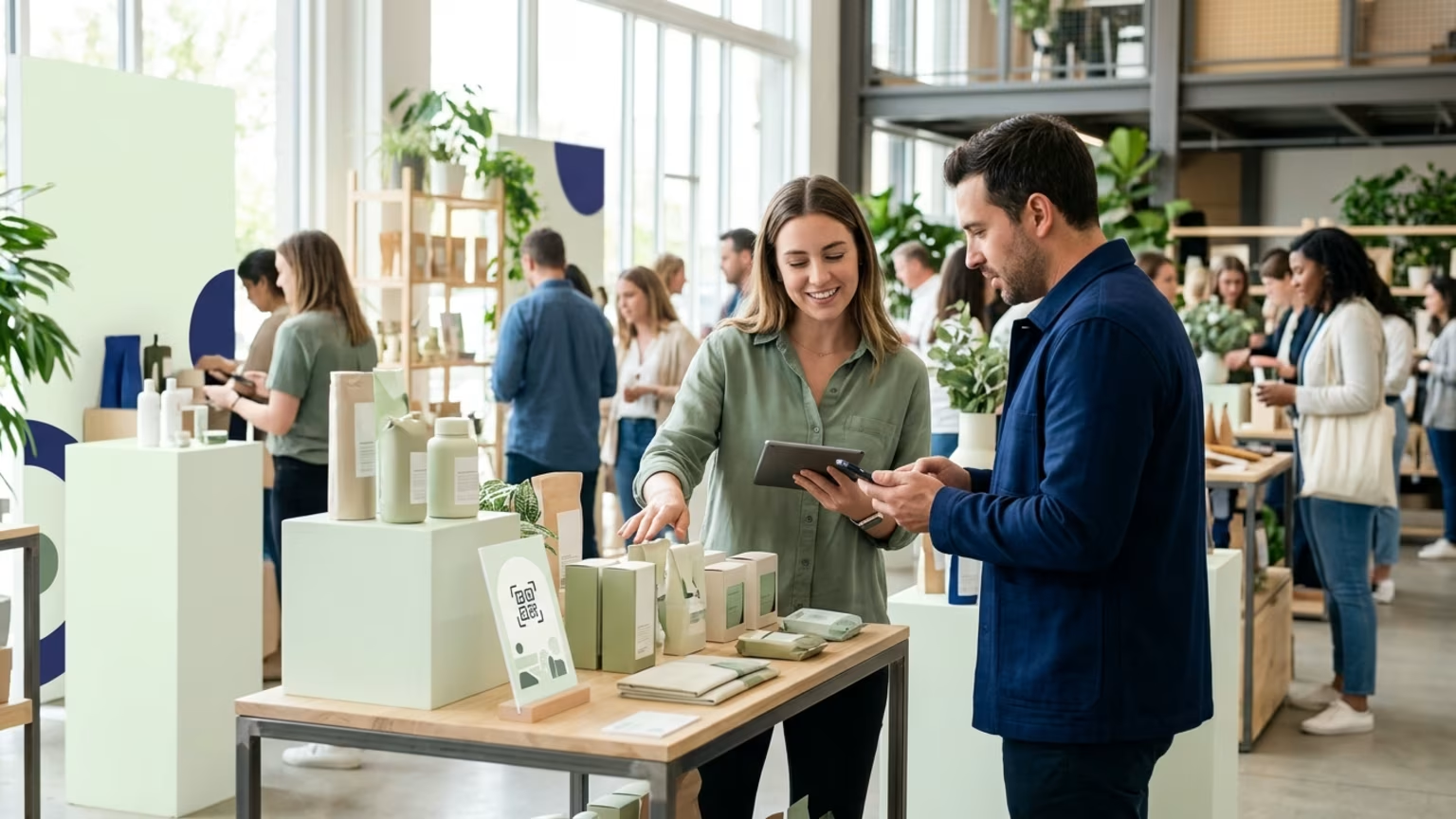
The reality of a live event often looks like a beautiful dumpster fire. You rent premium real estate at a major industry expo expecting clear Return on Investment. Your staff hands out thousands of product samples to people who just want free snacks. Attendees walk past your meticulously designed displays without stopping.
Sales reps scan random badges without qualifying the actual buyer intent. The result is a massive stack of low-quality leads. These are events that look busy but produce fog instead of evidence. There is no clear path to measure retail sell-through.
This chaotic scenario happens at the exact moment marketers need physical events the most. Google search traffic to publishers dropped 33 percent globally in 2025 according to Chartbeat data. Artificial intelligence overviews contribute to a 25 percent decrease in publisher referral traffic per Digital Content Next data. Brands can no longer rely purely on search algorithms to drive consumer trial.
They need direct access to buyers in the physical world. A poor showing on the event floor represents wasted budget and a missed opportunity to build trust. Search visibility is facing extreme volatility right now. Google initiated a Discover update in early 2026 that drastically reshaped publisher traffic.
This unpredictability creates massive headaches for marketing leaders. You cannot build a reliable revenue model when platform updates erase your top-of-funnel traffic overnight. EMARKETER reports that live events offer direct access to audiences without algorithmic intermediation. This reality makes mastering the trade show floor a mandatory survival skill.
Marketers need a systematic approach to replace lost digital traffic with physical engagement. The old method of setting up a generic booth and hoping for the best is financially irresponsible. A modern framework treats experiential marketing as a direct replacement for top-of-funnel digital acquisition. You must design experiences that trade physical product trial for verified first-party data.
The strategic pivot requires moving budgets away from single massive tentpole events. Brands must allocate resources toward highly targeted regional roadshows and field activations. This approach creates a controlled environment for product demonstrations. It allows your field marketing teams to focus on specific retail zones and buyer personas.
You connect the live brand interaction directly to a local retail push. Marketers who understand how experiential leaders connect trade show attention to sales pipeline consistently justify their event budgets to executive leadership. Industry analysts report that 48 percent of B2B marketers see interactive live experiences boosting thought leadership impact more than other formats. Consumers feel the exact same way about trying physical products.
We build festival zones, premieres, and pop-ups that turn viewers into fans and fans into advocates. We design moments people want to share using music tie-ins, screenings, and live stunts to bring stories to life. Our crews manage execution and track reach and response metrics. Your experiential marketing framework must blend this high-energy engagement with operator-grade discipline.
It is about creating measurable trial moments rather than chasing empty attention. There is an interesting counter-trend happening in the retail sector. Artificial intelligence traffic to United States retailers surged 393 percent in the first quarter of 2026. These automated visitors convert 42 percent better than non-automated traffic.
Adobe Analytics experts describe this as a fundamental change in shopping journeys. This tells us that e-commerce optimization remains necessary for bottom-of-funnel conversion. Brands must adopt a hybrid approach. You capture attention physically at live events and optimize your digital properties to catch automated shopping bots.
Turning strategy into a functioning reality requires a strict operational playbook. You need exact steps to follow when planning your next regional roadshow or consumer activation. Field marketing managers must maintain complete control over the engagement process. Leaving execution up to chance destroys your event budget.
You cannot manage an event campaign without exact measurement. Measurement infrastructure is the true differentiator between teams that can prove campaign success and those that cannot. You must track both lead and lag metrics to validate your physical activations. The days of reporting basic booth attendance numbers are completely over.
Lead metrics tell you if your event is functioning properly in real time. Track the total volume of qualified engagements per hour to monitor staff productivity. Measure the data capture conversion rate by comparing total booth visitors to actual scanned contacts. Monitor the average dwell time within your activation footprint.
These indicators let you adjust your staffing or booth layout on the fly to maximize efficiency. If a specific brand ambassador underperforms on data capture you can intervene immediately. Lag metrics prove the financial value of your live marketing investments. Track the direct sales lift in surrounding retail stores for thirty days post-event.
Measure the coupon redemption rate from the specific codes distributed by your field staff. Brands utilizing Costco roadshows track the daily movement of pallets to gauge regional acceptance. You can compare the inventory depleted during the event days against a standard weekend without brand ambassadors. Calculate the cost per qualified lead to compare physical event efficiency against your declining digital channels.
Brands creating event-specific offers and codes can track retail sell-through with incredible accuracy. These concrete numbers give marketing leaders the ammunition they need to defend their budgets.
Theory only matters if it works for actual consumer packaged goods brands in the field. A premium beverage company recently faced severe traffic drops from algorithm updates. Between November 2024 and November 2025 Google Discover referrals fell 29 percent in the United States. The brand needed an immediate channel to replace this lost consumer discovery engine.
Our team deployed a national mobile sampling tour targeting major retail parking lots. We bypassed digital search entirely and brought the product directly to shoppers. Brand ambassadors facilitated targeted trial moments and collected verified contact data. The campaign generated thousands of high-intent leads and produced a measurable sales lift at the partner retailers.
EMARKETER notes that marketers are returning to live events as a channel that automated platforms cannot disrupt. The brand completely stabilized its customer acquisition pipeline by committing to direct physical engagement. They paired this physical push with a smart digital backend. Marketing technology analysts report that artificial intelligence trends favor predictive audiences over precise targeting.
This creates higher reach but lowers actual conversions. The beverage company countered this trend by using the verified first-party data collected at the roadshow to feed their retail predictive models. Adobe Analytics experts highlight that winning retailers will successfully engage both human and automated audiences. This created a closed-loop system where physical trial fueled future e-commerce growth.
Live brand experiences require rigorous planning and expert execution to deliver real results. The digital environment will only become more unpredictable as search engines evolve. We provide the operational excellence needed to turn your next activation into a measurable success.
Book a strategy call to turn your fleeting event interactions into qualified retail pipeline.

30 Years Experiential & Retail Activation Partner for CPG & Beverage Brands | Multi-Market Demos, Roadshows & Costco/Club Programs That Actually Sell