Robbie Thain
Founder, CEO

Planning a San Diego County Fair 2026 activation? Use this guide to build a food or beverage program that stands out, samples fast, and proves real value.
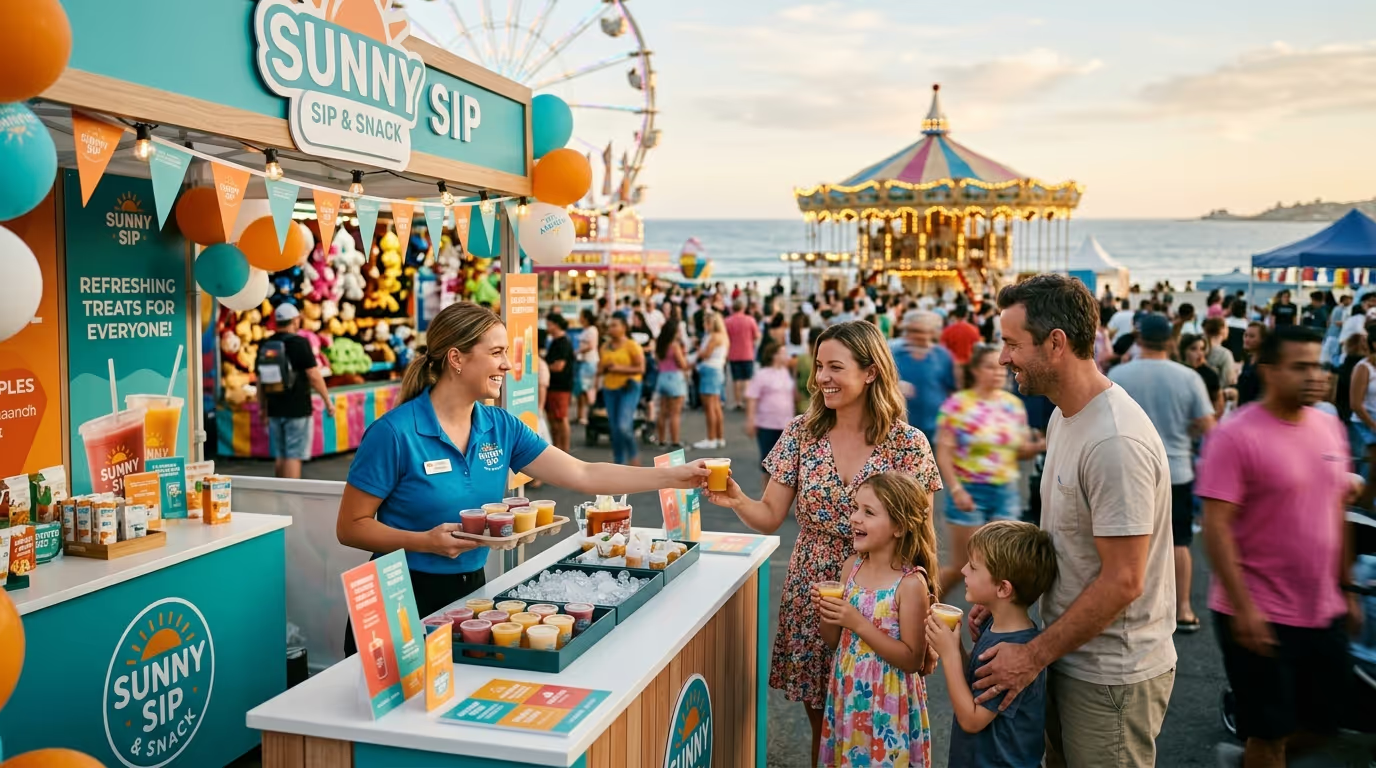
The San Diego County Fair 2026 is not a niche event. It is a long running summer fair with major daily traffic, long dwell times, and a crowd that comes ready to eat, explore, and spend the day together. For food, beverage, and snack brands, that makes it a serious awareness and trial opportunity.
It also makes it a hard place to win by accident.
At Del Mar, you are not competing only with other sponsors. You are competing with rides, concerts, games, nostalgia, novelty foods, and the simple fact that people are there to have fun. If your footprint looks passive, generic, or slow, the crowd will keep moving.
This guide is built for brands that want more than a pretty setup. It is about how to plan a fair activation that earns stops, moves samples at speed, creates content people actually want to share, and gives leadership a clean story on what happened and what to do next.
If you want support with concept, staffing, field logistics, and reporting, this is where Makai’s work in experiential marketing, consumer events, and logistics fits naturally.
The fair runs from June 10 through July 5, 2026, and it is closed on Mondays and Tuesdays.
At the Del Mar Fairgrounds in Del Mar, California.
It is a mass consumer summer fair with strong family traffic, food centrality, and long dwell time. That makes it especially strong for food, beverage, and snack trial.
Because food is already part of the fair mindset. Visitors show up ready to try things, compare things, and talk about what looks fun or different.
Standing out in a very crowded food environment without slowing the line or making the brand feel like just another booth.
Track sample count, dwell time, qualified interactions, coupon or QR scans, shelf or retailer intent, content creation, and repeat engagement by daypart.
Lunch, afternoon snack windows, and the evening crowd all matter, but your staffing and product story should shift by daypart.
Many event guides focus on trade shows or retailer meetings. The San Diego County Fair is a different kind of opportunity. It is a mass consumer environment where the job is not just to meet people. The job is to make the product memorable in the middle of a crowded, sensory, high choice setting.
That is useful for brands in several situations.
What makes the fair especially interesting is the mix. You get family audiences, local and regional visitors, food seekers, concertgoers, and all day visitors in one place. That creates range. You can test a lunch angle, a refreshment angle, a treat angle, and a late evening angle inside the same run.
The fair is built around abundance. The crowd expects to see food everywhere. That is good news and bad news.
The good news is that sampling feels natural here. You do not need to teach people why they should stop for a taste or a sip. The setting already does part of that work for you.
The hard part is clutter. If ten surrounding stands are selling giant sweets, fried snacks, lemonade, frozen drinks, or loaded comfort food, your activation needs one very clear reason to stop. It could be a strong visual build. It could be a product contrast. It could be a fast interactive element. It could be the right family hook tied to the fair theme.
This is why fair activations need more than a branded tent and a handout tray. The audience is too distracted and the environment is too full of alternatives.
Do not try to be everything at a fair. Choose one lane and make it clear fast.
That choice should shape the build, the script, the offer, and the content plan. A booth that tries to be healthy, indulgent, trendy, and family focused all at once usually lands flat.
A fair activation that cannot handle volume is a problem, even if it looks great. People will not wait long unless the experience is truly worth it.
Build the flow around five simple moves.
This sounds obvious, but many fair setups fail because they treat the booth like a display, not a high traffic operating system.
A noon crowd and a 9 p.m. crowd are not thinking about the same thing. Strong fair activations plan for that instead of running one static message all day.
Sometimes the product stays the same and only the story changes. That small adjustment can raise conversion and make the booth feel more alive.
A fair gives you one thing many other events do not. It gives you built in atmosphere. People are already in a summer memory mode. Your booth should use that.
That does not mean a giant stunt. It means one moment worth photographing or filming.
The best version is simple. It helps the product story, it moves fast, and it gives people a natural reason to share.
If the activation ends at the sample, you lose too much value. Every fair program should have one clear next step.
The next step should feel light and useful, not like homework. This is where Makai’s work in engagement marketing becomes important. The handoff after the live moment matters almost as much as the live moment itself.
This is the cleanest option for products that win on taste. Keep the line simple, the portions small, and the signage direct. Add one optional scan step after the try, not before.
If the product works for parents and kids, build for shared participation. A simple voting board or quick game helps families stop together instead of just drifting past.
If the brand already has local retail in Southern California, use the fair as a push into stores. A fair specific code, store finder, or local retailer message can help bridge awareness into purchase.
In a fair packed with indulgent foods, contrast can be your hook. That only works if the product still feels fun. “Healthy” by itself is usually not enough. “Fresh, cold, and actually tasty right now” is stronger.
This is where many fair programs get thin. They report how many samples went out, maybe how many photos looked good, and stop there.
A stronger fair report should cover five layers.
Then add the field notes. What did families ask? Which flavor won fastest? Which time block created the most scans? Which line opener worked best? Those notes are often what make the next event stronger.
If you want a clean structure for this, pair the event plan with experiential marketing reporting.
If you are a brand lead, CMO, or field lead, ask these questions before approving the budget.
If those answers are vague, the activation is still too soft. If those answers are clear, the fair becomes a real growth test, not just a summer appearance.
The San Diego County Fair can work as a stand alone awareness play, but it is usually stronger when it sits inside a larger summer program. One fair can tell you if the offer works, if the build earns attention, and if the follow up path is clean enough to scale.
That makes it useful as a west coast pilot for a bigger seasonal plan. If the message, staffing model, and content flow work in Del Mar, you can adapt that into other high traffic consumer events, retail programs, or mobile samplings later in the season.
This is where a brand can move from one activation to a repeatable field system. See where we work and California if that is the direction.
If the San Diego County Fair 2026 is on your calendar and you want a food or beverage activation that does more than hand out samples, Makai can help build the concept, run the field program, and report what actually moved. Start with Request a proposal and map the right fair strategy before summer gets crowded.

30 Years Experiential & Retail Activation Partner for CPG & Beverage Brands | Multi-Market Demos, Roadshows & Costco/Club Programs That Actually Sell