Robbie Thain
Founder, CEO

See how specialized experiential agencies fix fragmented event logistics to turn chaotic brand activations into measurable retail sales lift.

A marketing director stands on a damp convention center loading dock. Her custom booth panels are lost in transit somewhere between Chicago and Denver. Tomorrow morning, a thousand retail buyers arrive. The beautiful creative concept has just become a real-world nightmare.
CPG marketing teams often reach a breaking point when attempting to manage the highly fragmented logistics of live activations internally. Specialized agencies bridge this critical gap by transforming complex event operations into smooth consumer experiences that generate measurable pipeline.
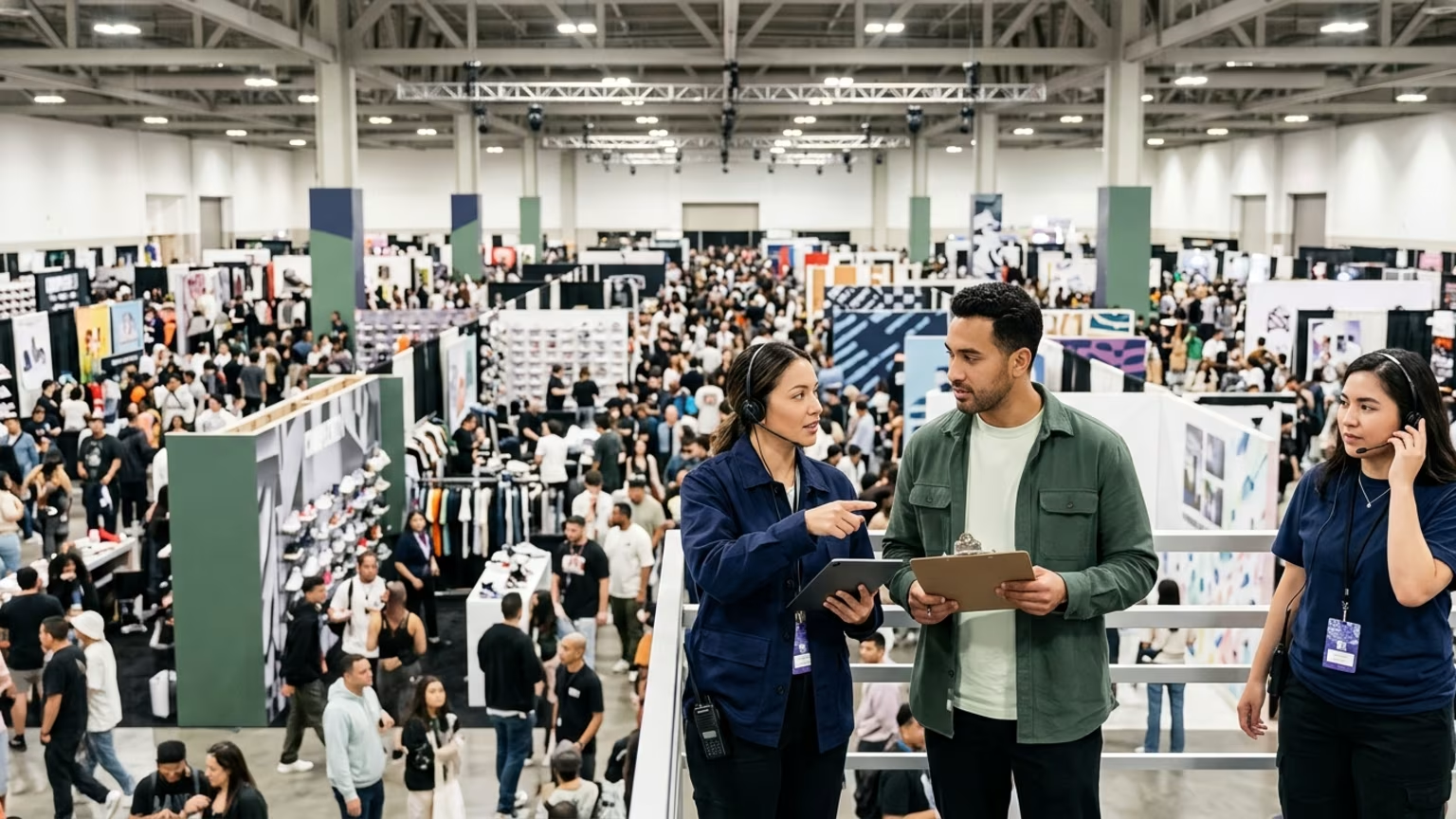
Planning a successful field marketing campaign requires far more than a sharp creative brief. Internal teams routinely face a steep learning curve when they transition from digital campaigns to physical spaces. The reality of a trade show floor or a retail roadshow is unforgiving. A missing city permit or an untrained brand ambassador can ruin months of careful planning.
Internal marketing operators are brilliant at crafting messaging and digital strategy. They understand consumer psychology and high-level brand positioning better than anyone. Problems arise when they are suddenly tasked with the brutal mechanics of physical event production. A digital ad campaign does not require a health department permit or a union labor contract to go live.
Many brand directors assume that their existing digital agency can simply plan a live activation. This assumption often leads to profound disappointment on the show floor. Building a website involves managing pixels, code, and servers. Building a trade show booth involves managing carpenters, freight carriers, and local labor unions.
The margin for error in the physical world is practically zero. If a graphic file has a typo, a digital team can fix it in ten seconds. If a custom fabrication build is structurally unsound, the entire activation must be canceled. These unforgiving variables are exactly why internal teams experience intense burnout during event season.
When a CPG brand decides to launch a massive product sampling tour, the logistical requirements multiply exponentially. Every new city brings a different set of rules for street marketing and temporary retail structures. An internal team usually lacks the specific geographic knowledge to foresee these localized roadblocks. A single overlooked compliance issue can shut down an entire weekend of consumer engagement.
Marketing leaders try to manage a dozen different vendors at once to drive trial and retail sell-through. They hire one company for booth fabrication and another for promotional staffing. A third vendor handles transportation. This fragmented approach requires massive coordination overhead that drains internal resources.
When something goes wrong on the ground, the blame game begins between disconnected vendors. The activation looks busy to the casual observer. The harsh truth is that the event produces fog instead of hard evidence of consumer intent. Brands need a cohesive operational machine to turn physical presence into sales lift.
The solution lies in shifting away from siloed vendors toward comprehensive event management models. Agencies specializing in experiential marketing offer a unified approach to physical brand building. Industry sources point out that a true activation is a designed interaction built to drive product trial and retail conversion. It is not just a vague gathering of people in a branded space.
When marketing teams attempt to run everything internally, they often sacrifice the quality of the consumer interaction. They spend all their time putting out logistical fires instead of training their staff. An agency partner absorbs that operational friction completely. This frees internal brand directors to focus on high-level partnerships and retail buyer relationships.
Pop-up agencies have emerged as strategic partners that fill the gaps left by internal marketing teams. A prime example is Pop Up Mob. This women-owned agency has executed over 250 activations across more than 15 industries since its founding in 2014. They handle everything from concept design and 3D rendering to custom fabrication and venue permitting.
Agencies like Pop Up Mob demonstrate the power of specialized focus. They have built an entire business model around eliminating the gap between a creative idea and its physical execution. Brands no longer need to translate their vision across five different vendors. A single partner takes the rendering and turns it into a fully functional retail environment.
By consolidating these services, brands achieve a smooth transition from creative rendering to actual reality. Trend analysts note that highly sensory and time-limited brand activations create powerful direct-to-consumer channels. This full-service structure removes the friction that typically slows down experiential projects. Brands can run multi-city rollouts without worrying about local zoning laws or union labor disputes.
Agencies possess a massive advantage. They repeat these exact processes every single day. Pop Up Mob has managed activations for more than 175 brands across 10 countries. This repetition builds a vast library of operational knowledge that an internal brand team cannot replicate.
A specialized partner already knows which venues allow open flames and which trade shows have restrictive load-in times. This integrated approach is rapidly becoming the industry standard for physical retail marketing. The demand for highly sensory brand moments is surging as consumers grow tired of endless screen time. A unified vendor approach makes this strategic shift financially predictable and operationally safe.
We have executed over 1000 campaigns across all 50 states, bringing brands to life in every major U.S. market. From retail demos in Seattle to roadshows in Miami and events in Honolulu, our teams activate brands wherever our clients' audiences are located. This national operational depth allows marketing teams to focus on strategy rather than logistics. When brands need to build retail credibility for regional market entry, they need a team that knows the local permitting environment inside and out.
Building an effective live event requires operator-grade discipline at every stage. You cannot rely on hope as a strategy when premium CPG products are on the line. The process must follow a rigorous sequence to guarantee consistency.
A beautiful booth means nothing without hard data to back up the expenditure. Marketing executives face intense pressure to prove that physical activations generate positive Return on Investment. To do this effectively, teams must track a combination of lead and lag indicators.
Lead metrics tell you if the activation is working in the moment. Track the daily volume of qualified product trials and the number of meaningful brand conversations. Measure the volume of user-generated content captured and shared by attendees. These leading indicators show that your sensory experience is successfully capturing consumer attention.
Lag metrics provide the final proof of campaign success after the event concludes. Look at the immediate sales lift during the activation and the subsequent retail sell-through rates in the surrounding area. Analyze the cost per acquisition compared to your digital channels. These lag metrics confirm whether the physical interaction changed long-term buying behavior.
The most sophisticated marketing operations understand that an event without an inventory integration is just a very expensive party. Field marketing leaders must demand real-time dashboard access from their agency partners. This visibility allows decision-makers to pivot their strategy mid-campaign if a specific retail location is underperforming. It transforms an unpredictable physical event into a highly measurable acquisition channel.
You should never accept vanity metrics from an event partner. Tracking mere foot traffic or total impressions provides zero insight into consumer intent. Demand granular reporting on exactly how many people interacted with a product and then purchased it. This level of accountability separates serious experiential operators from basic event planners.
Many teams fail to capture these numbers properly. Fragmented reporting is a massive risk when internal staff attempt to manage data collection manually. Agencies with established operational workflows integrate inventory tracking and point of sale systems directly into the event footprint. This clean data validates your experiential marketing brief requirements to the broader leadership team.
The impact of comprehensive execution is clearest in highly competitive consumer sectors. The beauty industry provides a perfect case study for the power of specialized agency partnerships. Brand leaders in this space rely on agencies to translate complex product narratives into engaging physical trials. Pop Up Mob recently powered an immersive pop-up in New York City for a leading hair care brand.
This activation integrated science education, direct product trial, and entertainment into a cohesive retail footprint. The brand did not have to worry about staffing the event with educators or managing local health permits. The agency acted as a true strategic partner to handle the entire lifecycle of the campaign. Industry experts praise this approach for blending product education with measurable trial outcomes seamlessly.
Recent industry coverage highlights how comprehensive agencies are revamping massive flagship events. Large-scale trade show booths now feature incredibly complex programming that blends entertainment with direct consumer sales. Agencies are the unseen operators keeping these multi-format spaces running safely and profitably. They handle the chaotic backstage reality so the brand can shine on the floor.
The same principles apply to food, beverage, and broader FMCG categories. When a snack brand launches a national mobile tour, they face identical logistical hurdles. They need trained brand ambassadors, compliant sampling stations, and refrigerated transportation logistics. Agencies provide the necessary infrastructure to scale these moments beyond a single successful weekend.
Smaller brands sometimes worry about the cost of a full-service agency approach. Many operators solve this by utilizing an à-la-carte service model for pilot programs. A brand might rely on an agency purely to provide high-performing brand ambassador field teams during a regional Costco push. Once the pilot proves successful, they can confidently expand the scope to a multi-city rollout.
Whether it is a premium cosmetic line or a rapidly growing organic beverage, the core requirement remains identical. Brands need live experiences that function as reliable growth engines. By outsourcing the heavy lifting of logistics and fabrication, internal teams reclaim their time. They get to focus on evaluating the performance data and planning the next big market entry.
Before you sign another vendor contract for your next trade show, audit your internal bandwidth. Identify exactly which logistical steps caused the most stress during your last activation, and write a strict brief to outsource those specific points to a consolidated partner.
Ready to stop managing fragmented vendors and start driving real retail results? Book a strategy call with our experiential team today.

30 Years Experiential & Retail Activation Partner for CPG & Beverage Brands | Multi-Market Demos, Roadshows & Costco/Club Programs That Actually Sell