Robbie Thain
Founder, CEO

Hyundai is hiring a senior experiential marketing manager to drive sales. Learn how brands use operational excellence to boost retail traffic and measure ROI.
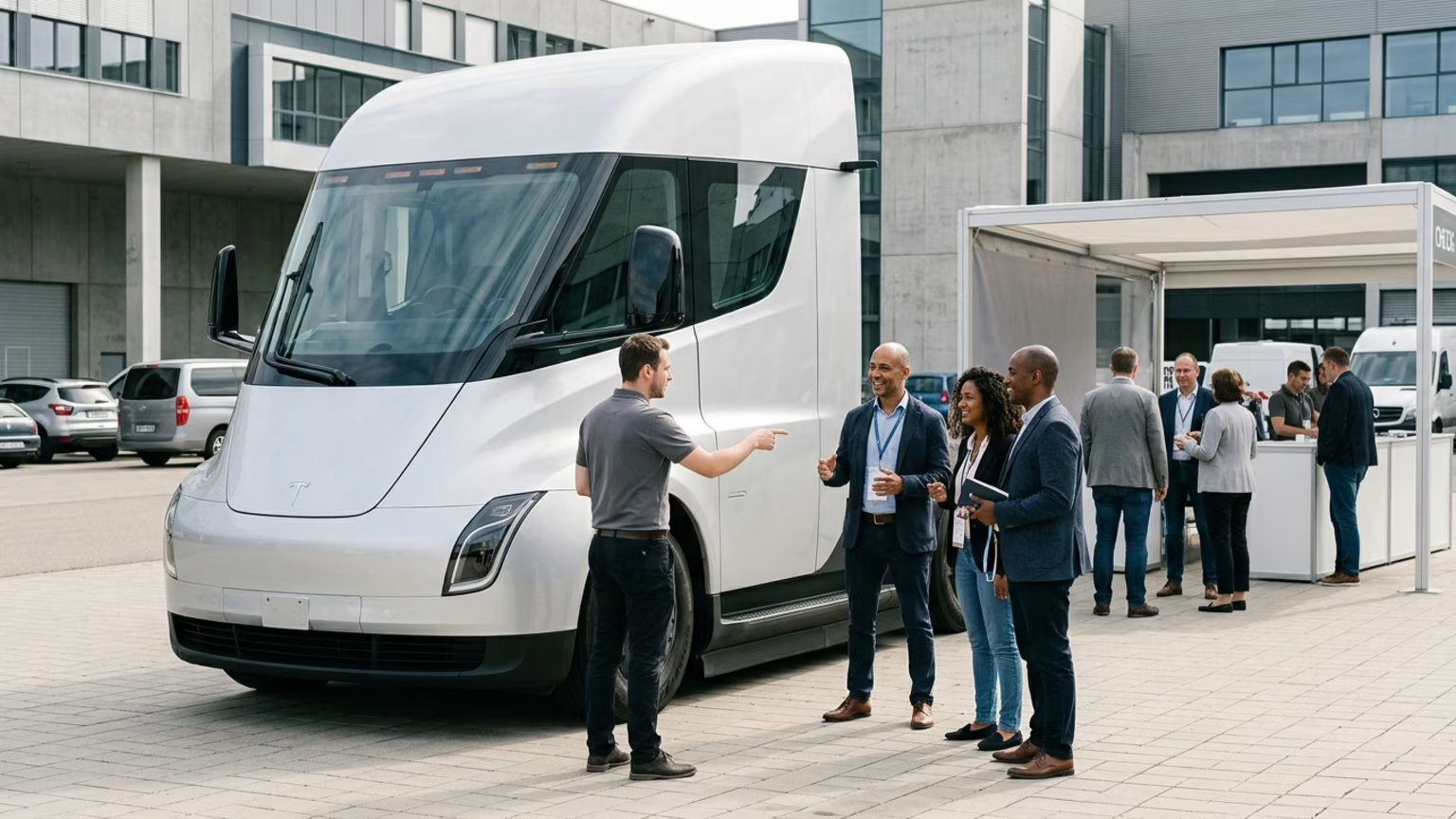
A regional marketing director stands on the trade show floor at seven in the morning. She stares at a fifty thousand dollar activation space that looks beautiful but lacks a clear path to purchase. Her team built a stunning visual display for the event attendees. Nobody knows how to capture the foot traffic and turn it into verifiable sales.
Hyundai recently posted a senior experiential marketing role that demands rigorous operational execution and cross functional alignment over simple creative flair. This move highlights a major industry shift where brands must engineer physical activations to generate measurable pipeline and verifiable retail traffic.
The typical trade show floor is a masterclass in organized confusion. Marketing teams spend months planning the perfect physical brand activation. The reality often involves fragmented vendors, delayed logistics, and brand ambassadors who lack proper training.
Gartner analysts report that fragmented vendors kill sixty percent of activation Return on Investment. Mid market brands often undervalue the sheer operational force required to run successful field execution. You might have a brilliant concept that falls apart the moment a digital capture tool fails to sync with your customer database.
This chaos explains why companies are changing their hiring profiles. Leaders need field generals who can coordinate complex logistics across multiple time zones. They need professionals who understand how to fix problems before the consumer ever notices.
When activations lack this operational rigor, brands waste millions of dollars on simple brand theater. Consumers walk away with free merchandise but no real connection to the product.
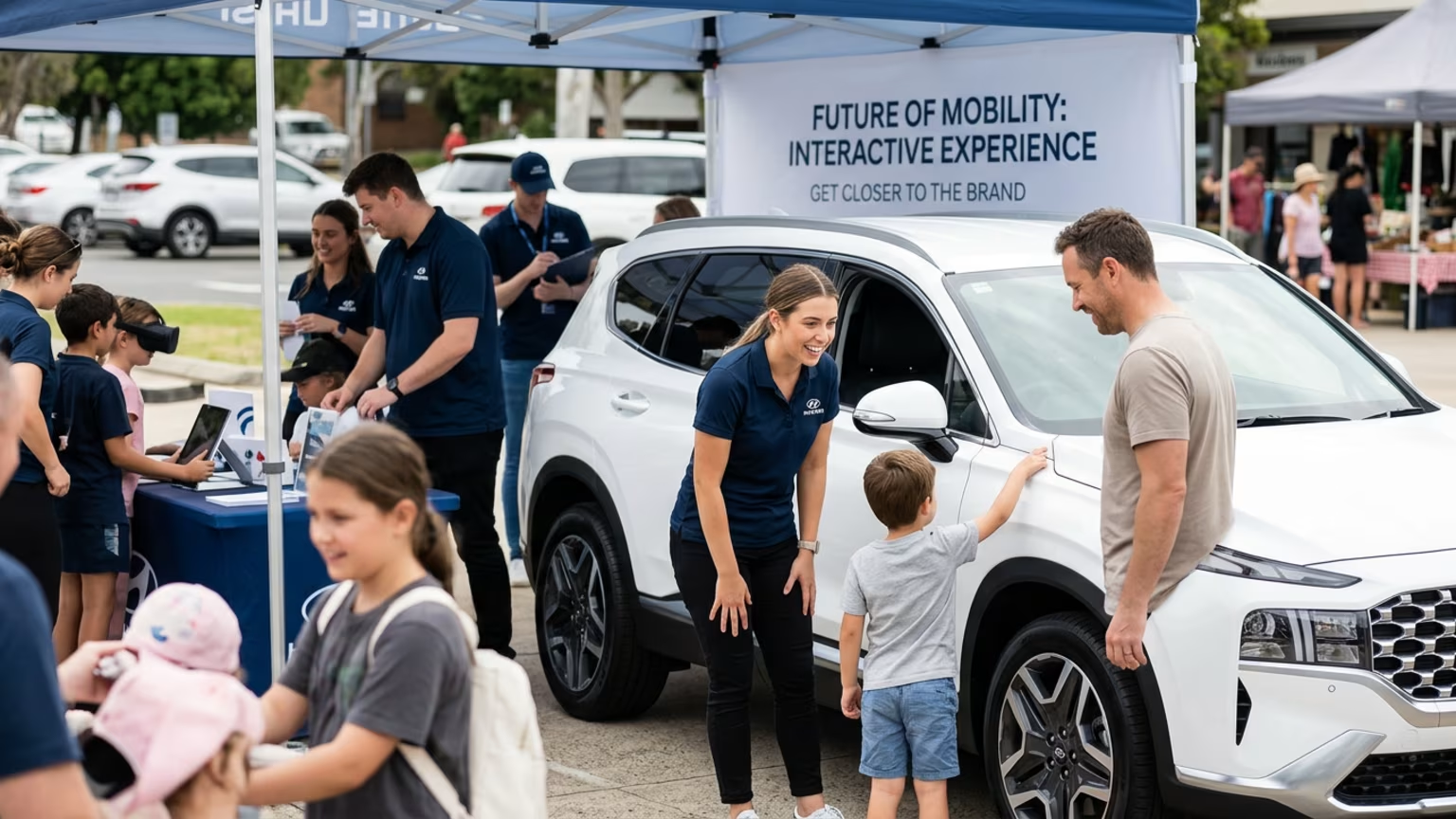
Hyundai Motor America recently posted a job for a Manager of Experiential Marketing in Fountain Valley. The position oversees a multi million dollar budget and requires heavy travel. This posting signals a strategic push into real world consumer touchpoints amid a post digital fatigue era.
The job description focuses heavily on metrics like brand awareness, dealer traffic, and sales lift. Industry leaders prioritize operational rigor over fluffy creativity when planning these massive campaigns. Joe Waters from Event Marketer notes that experiential marketing is about engineered outcomes rather than viral moments.
Brands must tie their activations to clear retail traffic goals. According to the Experiential Marketers Association, live events deliver a five to one Return on Investment compared to digital campaigns. This translates to an average return of four dollars and fifty cents per dollar spent.
Building an operations first strategy requires strict vendor orchestration and cross functional integration. Brands must connect public relations, sales, and digital teams to convert basic awareness into actual product trials. This level of coordination turns a standard trade show booth into a highly profitable lead generation engine.
Global experiential marketing spend hit 72 billion dollars in 2025. Analysts project this number will reach 85 billion dollars by 2028. This growth is driven by the experience economy where seventy four percent of consumers prefer brands that offer interactive events.
Consumers trust brands more after physical trials compared to digital exposure. Nielsen reports that eighty two percent of people feel more trust after an in person trial. Post pandemic research shows that physical experiences influence buying decisions far more than influencer content.
Automotive brands like Hyundai are capitalizing on this behavioral shift. Their experiential budget grew twenty two percent year over year to roughly fifty million dollars. This investment yielded an eighteen percent sales lift in activated markets.
We see this exact pattern across food, beverage, and consumer packaged goods sectors. Shoppers want to taste, touch, and interact with products before making a purchase. Companies that invest in data driven live demos see higher returns.
Success in the field requires a systematic approach to event execution. You need a structured playbook that accounts for every variable on the event floor.
Managing high volume activations requires a specific type of marketing leader. Experiential roles increased by forty one percent in 2025 according to LinkedIn data. The industry faces a significant talent crunch right now.
Marketing Week reports that forty nine percent of experiential professionals experience burnout from heavy travel schedules. Brands must offer strong support structures to retain top tier talent. You cannot run a massive national sampling tour if your field managers are constantly turning over.
When building your team, look for professionals who excel at influence based leadership. They must guide external vendors and internal stakeholders toward a unified goal. This is why many brands look for a specialized experiential marketing agency to handle the heavy lifting.
Partnering with an experienced team allows you to scale your activations without exhausting your internal staff. You get the benefit of national execution experience without the massive overhead costs.
Vague key performance indicators ruin fifty percent of marketing programs. You must establish clear metrics that prove your field operations generate real revenue. Measuring basic attendance is no longer acceptable for modern marketing leaders.
Your lead metrics should track immediate consumer behavior during the activation. Track the total dwell time in your booth, the number of product trials completed, and the volume of leads captured via digital tools. These numbers tell you if your physical space is actually holding consumer attention.
Your lag metrics must tie directly to pipeline and revenue generation. Measure the post event retail sell through, the increase in dealer or store traffic, and the overall brand consideration lift. Hyundai tracks dealer footfall and sees massive traffic spikes from scripted auto show experiences.
Eventbrite Analytics and other modern tools provide real time tracking for these campaigns. Forrester reports that sixty two percent of chief marketing officers now demand clear sales attribution from events. If your current reporting does not show a direct line to revenue, you need to upgrade your measurement and data systems.
Many brands fail to measure the true impact of their activations. They rely on outdated models that only count the number of samples distributed. This approach completely ignores the long term purchase intent generated by a positive brand interaction.
EventMB survey data shows that sixty five percent of attendees report purchase intent after an event. You must track these attendees long after the activation ends. Use targeted follow up emails and retargeting ads to measure their conversion rate over a thirty day period.
You should compare your event acquisition costs against your digital marketing costs. Digital leads might seem cheaper initially. Events convert at a much higher rate for high consideration categories. Adjust your cost per engagement models to account for the superior quality of an in person lead.
Proper financial planning is the backbone of any successful field marketing operation. Experiential marketing often consumes twenty to thirty percent of an overall marketing budget. You must manage these funds carefully to maximize your return.
Small consumer packaged goods brands risk overexposure without massive vendor leverage. You must strategically allocate your budget toward high impact trigger moments like product launches or retail expansions. Activate pop ups or sponsorships during these key periods to drive immediate trial.
If you are planning a massive retail sampling tour, treat the activation like a dedicated sales channel. We often recommend integrating our comprehensive brand activation services to handle the heavy lifting. This allows your internal team to focus on retailer relationships rather than worrying about shipping delays. The goal is to drive a strong trial to purchase conversion rate using targeted lead capture systems.
Always build a contingency fund into your initial planning phase. Weather delays and logistics failures cost brands two billion dollars in 2025 alone. Having reserve capital allows your activation to pivot without completely derailing the marketing plan.
The physical marketing space is undergoing a massive shift toward sustainable execution. Fifty five percent of modern activations are now designed as net zero events. Hyundai incorporated recycled materials into their recent SEMA booth to align with this standard.
This sustainable approach appeals directly to younger demographics. Seventy three percent of Generation Z buyers prefer brands that prioritize environmental responsibility in their live events. Green operations are no longer just a public relations talking point.
Budgets are shifting fifteen percent away from digital channels to fund these sustainable events. You can reduce your carbon footprint by sourcing local brand ambassadors and minimizing cross country freight shipping. These operational changes improve your brand image and often reduce your total logistics costs.
Operational excellence is the foundation for genuine consumer connections. When the logistics run perfectly, your team can focus entirely on delivering a memorable brand experience. We see this reality play out constantly in our own agency work.
One of our clients, a Brand Manager in the alcohol beverage space, shared their experience with our team. They noted that working with Makai completely transformed their approach. The activation blew past all our key performance indicators and created a lasting emotional connection with our customers. Simply outstanding work.
This client saw their activation exceed all expectations. They built deep emotional connections with their audience. They achieved these results after we handled the complex permitting, staffing, and logistics behind the scenes. The brand team was free to simply engage with their target market.
The marketing industry moves quickly and physical brand spaces are becoming more competitive. You cannot afford to wait until your next product launch to fix your field operations. Start auditing your current agency roster and your measurement protocols today.
Look at your last three physical events and review the data. Did you see a measurable lift in retail sales or regional brand awareness? If the answer is no, your operational strategy is likely broken.
You need a framework that treats every live interaction as a distinct sales opportunity. Train your brand ambassadors to qualify leads rather than just passing out merchandise. This small adjustment can dramatically increase your overall return.
Physical brand experiences remain the most powerful tool for driving product trials and building long term consumer trust. Stop treating your event logistics as an afterthought and start engineering them for measurable pipeline growth. Book a strategy call today to discuss how we can upgrade your next retail activation.

30 Years Experiential & Retail Activation Partner for CPG & Beverage Brands | Multi-Market Demos, Roadshows & Costco/Club Programs That Actually Sell