Robbie Thain
Founder, CEO

Learn how open layouts and networking lounges turn trade show booths into high-converting spaces. Master strategies to boost measurable ROI and pipeline.

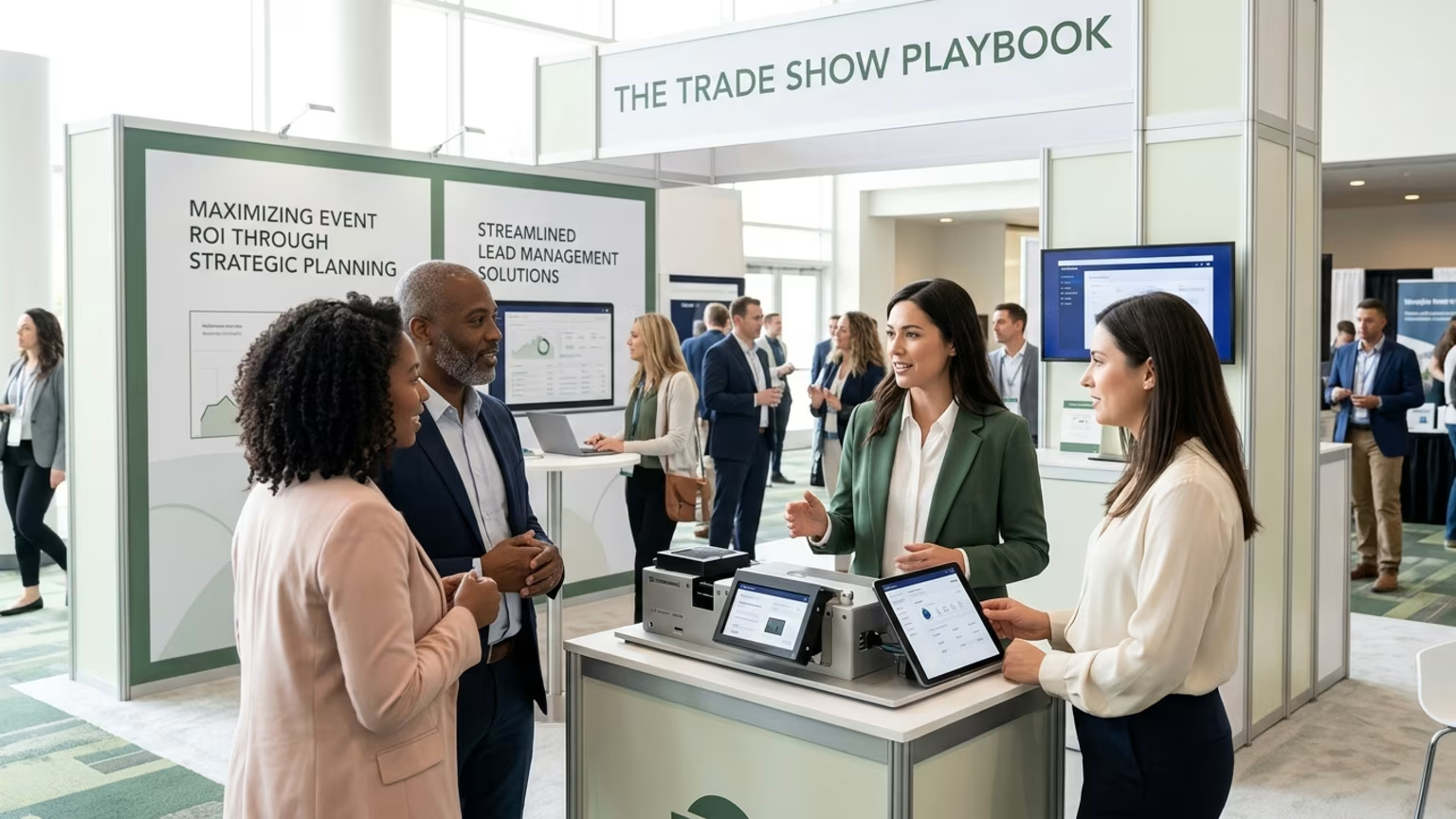
Effective trade show booth design directly impacts networking success by removing physical barriers and allowing staff to greet prospects organically. By replacing counter-centric layouts with open hospitality zones, marketing leaders can turn casual foot traffic into qualified pipeline and measurable Return on Investment (ROI).
Marketing leaders understand that a beautiful space is useless if it fails to convert attention into action. The physical architecture of your event activation dictates how effectively your field team can operate and connect with buyers.
The expo hall lights are blinding. The carpet is thin and unforgiving. Thousands of attendees walk past your expensive activation space. Your brand ambassadors stand stiffly behind a massive wooden counter.
They are waiting for someone to make the first move. The result is a slow trickle of passive badge scans instead of meaningful conversations. Most trade show activations look busy but produce fog instead of concrete evidence. Brands spend heavily on custom fabrications that trap their field teams behind transaction desks.
According to research from UCON, staff positioned behind barriers actively prevent the natural flow of conversation. This setup reduces your team's ability to greet visitors proactively. When your people cannot circulate freely, they cannot identify qualified prospects or guide conversations naturally. The activation becomes an expensive waiting game.
Mid-to-senior marketing operators face immense pressure to prove activation results. You worry about fragmented execution and poor in-store presentation. The trade show floor amplifies these fears. You watch competitors build massive monuments to their own egos while your team struggles to capture a single quality lead.
Your marketing operators end up exhausted. You invest heavily in event logistics, travel, and premium space on the floor. Then you restrict your best communicators to a tiny box behind a table. The physical space works against the human interaction.
A thoughtful approach to planning your team's floor schedule fails when the architecture blocks your team from doing their jobs. Attendees feel the friction and keep walking.
The networking lounge model fundamentally reframes your booth from a passive display to a relationship-building destination. This spatial strategy solves the difference between busy-looking events and those that actually produce results. For complex consumer categories, product trial requires context and trust. Comfortable seating arrangements replace line queues and transaction counters.
Premium hospitality touches like barista-made coffee and branded water bottles signal brand caliber. Soft lighting and a relaxed atmosphere give attendees psychological permission to stay longer. Research from UCON shows that attendees experience severe decision fatigue on the show floor. Offering a premium refuge creates an environment for high-quality conversations instead of rapid-fire pitches.
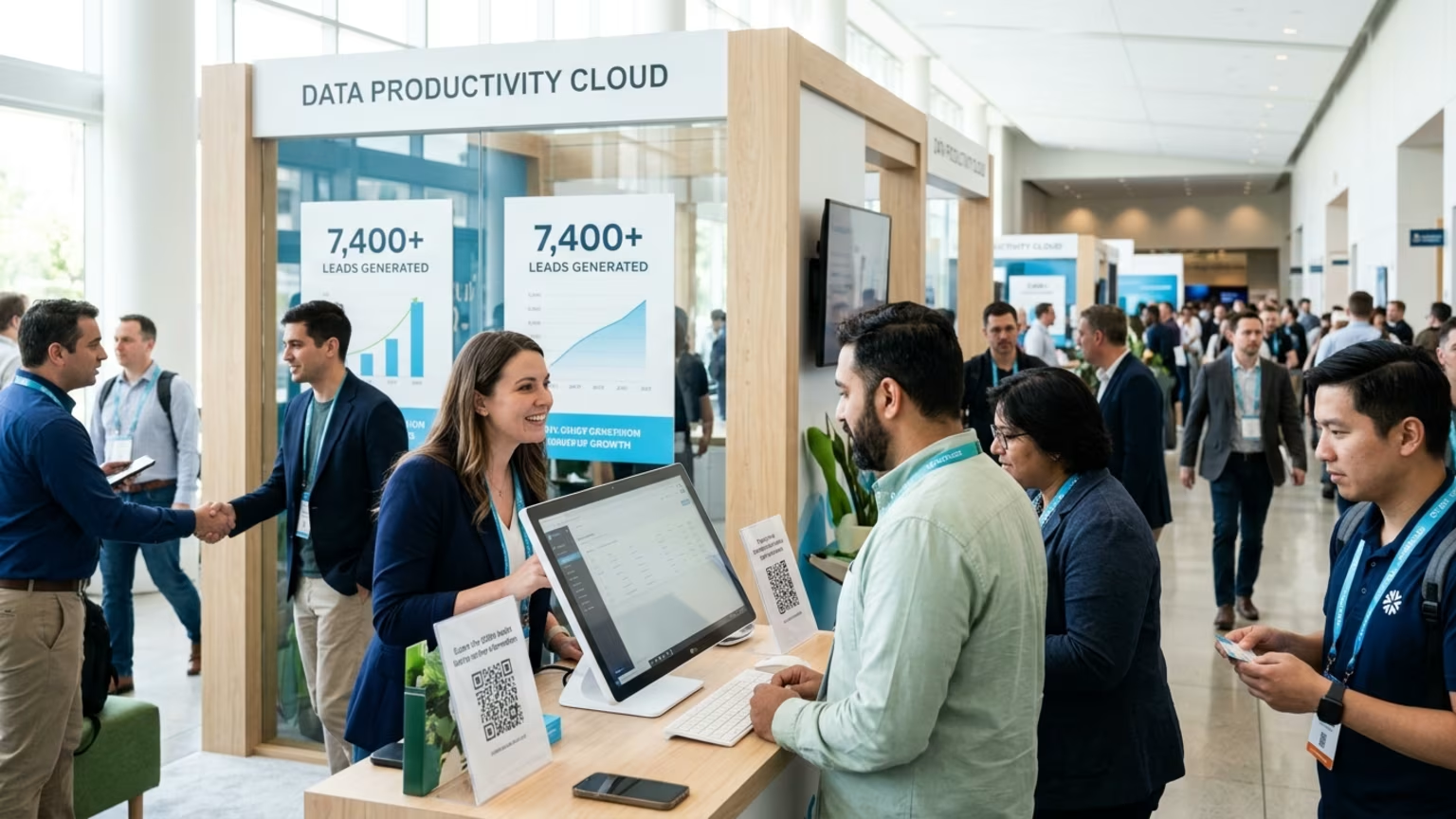
If you are heading to a major food and beverage event, this approach is mandatory. Massive crowds at industry expos like Expo West require a calm oasis to secure real buyer meetings. Event industry analysis from BizBash notes a documented trend toward incorporating natural materials. Incorporating real wood and living plants reinforces your brand promise.
This organic aesthetic aligns powerfully with wellness and food brands. It differentiates your space from the corporate plastic aesthetic of older booths. Natural design reinforces product claims and creates implicit brand messaging. Every design element should communicate exactly what your brand represents.
For brands executing multiple trade shows annually, modular booth systems deliver massive operational efficiency. These systems use interchangeable components that can adapt from a small corner footprint to a massive island exhibit. The operational advantage for your field marketing team is significant. You eliminate costly redesigns between events and reduce deployment friction.
This flexibility guarantees consistent brand presentation across venues. It directly supports the operational excellence your organization demands from field marketing. You can deploy the exact same networking lounge concept in Chicago one week and Anaheim the next. Consistent execution builds trust with regional retail buyers who visit multiple shows.
Not all interactive elements serve the same purpose. Your booth strategy should align specific activations with your primary objective. A layered activation strategy outperforms a single-element booth every time. The strongest booths combine complementary experiences that serve different audience segments.
Data from Snapbar shows that matching activations to business goals increases overall engagement. You must build your space using a three-part model. First, you need a high-visibility draw near the aisle perimeter to pull traffic. Second, you need to deepen the engagement in the interior with elements that build context.
Third, you need a mechanism to extend the digital footprint beyond the physical event. This layered approach directly addresses the operational reality your team faces. Not all attendees have the same engagement appetite or timeline. Some will engage passively with a quick photo moment.
Others will invest time in deep product education. Your booth design should accommodate both pathways naturally.
Interactive technology only drives results when it serves a specific marketing objective. Complicated controls or confusing instructions actively deter visitors. You want your technology to maintain intuitive usability at all times. If an attendee needs a manual to interact with your display, the design has failed.
Consider using tools like artificial intelligence photo transformations or augmented reality product visualizations. You should only deploy these if the technology directly supports your trial or data capture goals. The user experience must be instinctive. Second-generation smartphone users should require zero explanation to participate.
A live photo mosaic that assembles individual images into larger branded visuals rewards participation. People want to see their content on the big screen. This psychological incentive drives repeat sharing and amplifies your brand reach far beyond the convention hall. Every shared post turns an attendee into a distribution channel for your brand.
Translating a networking strategy into a live event setting requires strict operational discipline. You need a detailed operational guide to make the layout work for your team. Here is your step by step playbook for execution on the floor:
Your field team needs clear instructions on where to stand and how to move through these distinct zones. The layout dictates the behavior.
Creating an open layout is only half the battle for a marketing operator. You must define exact lead and lag metrics to track for clear reporting. Without rigorous tracking, you cannot prove that your hospitality-driven design worked. You need hard data to justify the initial investment.
Lead metrics give you a real-time pulse on floor performance. Track the number of pre-booked meetings successfully held in your VIP zones. Monitor average dwell time in the lounge areas to see if the hospitality strategy is working. Count the number of user-generated social posts using your designated hashtag.
These immediate numbers tell you if your physical space is capturing attention. Lag metrics tell the true story of your pipeline generation. Look at the percentage of badge scans that convert into follow-up calls within two weeks. Track retail sell-through velocity in target regions following the show.
Calculate the total influenced pipeline dollars directly tied to booth interactions. A good layout improves the quality of your interactions immediately. You should prioritize smart lead capture methods over sheer volume. Better conversations in a comfortable setting lead to higher conversion rates post-show.
ROI is not a vague concept when you have the right tracking systems in place. You must connect the initial handshake in the lounge to the final contract signature. Marketing operators need to sit in the boardroom and present clear financial wins. Your experiential marketing dashboard must highlight these exact figures.
If you need help building a framework to track these numbers, book a strategy call with our experiential planning team.
Consider the reality of a premium snack brand launching a new product line at a major food expo. The brand needed to secure meetings with big-box retail buyers while driving mass trial with independent grocers. A standard sampling counter would have created a massive bottleneck. The team would have been overwhelmed by casual grazers.
Instead, they deployed a tiered networking lounge layout. The perimeter featured two fast-paced sampling stations to handle general foot traffic and capture quick feedback. The center of the footprint offered comfortable seating where regional sales managers sat alongside independent buyers. The back of the booth housed a private tasting room for high-level meetings.
This segmentation allowed the team to allocate attention proportionally to business impact. Fast-paced interactions happened organically on the edges. The inner lounge remained quiet enough for actual sales discussions. The brand walked away with three times the qualified pipeline compared to their previous counter-heavy design.
The operational footprint required precise execution from the storage and logistics team. Every piece of comfortable lounge furniture had to be shipped and tracked nationwide to maintain the premium feel. The field team arrived at the venue knowing exactly how to operate within the segmented space. This discipline turned a standard consumer event into a high converting sales pipeline.
Great activations do not happen by accident. They are engineered from the floor up to facilitate real human connection and measurable business growth.

30 Years Experiential & Retail Activation Partner for CPG & Beverage Brands | Multi-Market Demos, Roadshows & Costco/Club Programs That Actually Sell