Robbie Thain
Founder, CEO

Learn how Google transformed its digital Try On feature into a tactile, high converting physical activation on the red carpet, driving real world engagement.
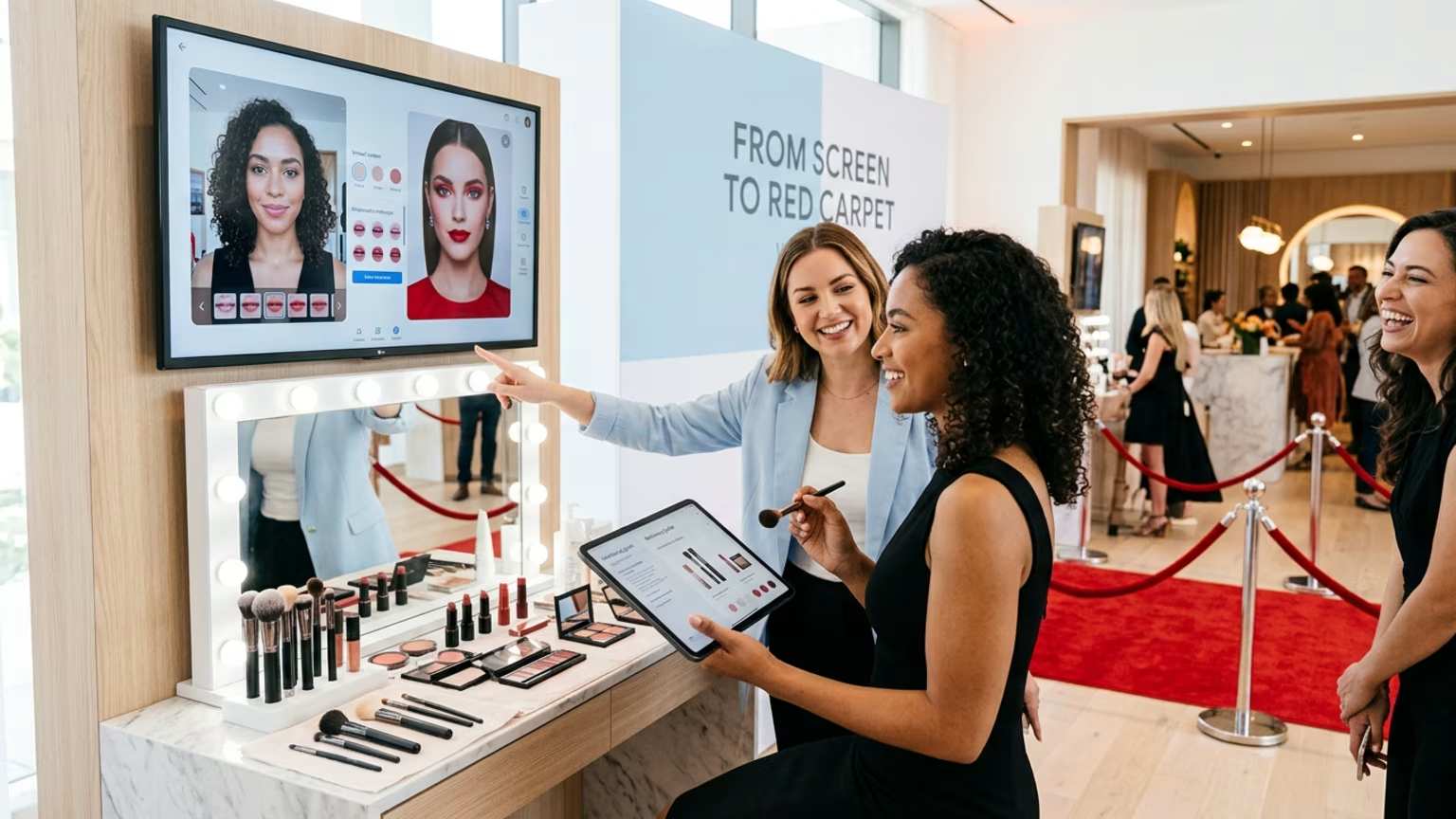
Seventy percent of marketers report that hybrid events drive twice the engagement compared to digital alone, according to recent industry benchmarks. This guide breaks down how digital products become high converting physical interactions on the event floor. Marketing teams will learn to turn abstract features into tactile events that generate measurable pipeline.
The modern trade show floor is a brutal testing ground for marketing operators. Flashing screens and tablet stands blend into a massive wall of noise. Attendees wander past digital product demos with glazed eyes and zero intention of stopping. Experiential marketing frequently devolves into brand theater that looks busy but produces nothing measurable.
CMOs stare at post event reports filled with vague impressions and struggle to prove Return on Investment (ROI) to their executive boards. They see high foot traffic numbers that never translate into actual sales or qualified leads. Teams pour budget into booth designs that look beautiful but fail to facilitate real consumer conversations. The lack of a strategic physical hook leaves digital tools completely ignored by passing crowds.
Field marketing directors deal with fragmented execution across multiple partners at these large events. Consistency drops from city to city when local staffing fails to execute the brand vision. Tech companies try to show off software or artificial intelligence but end up isolating visitors with clunky interfaces. A single tablet on a pedestal does not compel a buyer to stop and engage.
Brands need a physical anchor to make their digital investments tangible and understandable to the market. The gap between an online feature and a physical shopper requires a physical bridge. Companies miss massive opportunities when they rely solely on screen based demos in a physical venue. The physical space must command attention before the digital tool can prove its utility.
The solution requires taking the digital feature out of the screen and building a physical world around it. You must put your product inside familiar environments to make new technology easy to understand. Google demonstrated this exact strategy ahead of the theatrical release of The Devil Wears Prada 2. They built an interactive RUNWAY magazine closet directly onto the red carpet.
They turned their virtual Try On feature into a tactile and highly social event. This bridges the gap between artificial intelligence and human interaction. Guests checked in and physically browsed a rotating wardrobe before interacting with any screens. The physical garments provided a necessary visual anchor for the digital preview process.
We run experiential and engagement programs coast to coast with local crews, smart logistics, and permit expertise that let us launch fast and maintain quality consistency in every region, from major metros to smaller markets. Our nationwide infrastructure allows us to activate brands wherever their audiences are located. This operational control prevents the very fragmentation that ruins complex live experiences.
When multiple partners collaborate on a single footprint, clear central management keeps the core message intact. You build trust when the audience can touch the brand before they try the digital tool. The tactile nature of the activation creates a sense of comfort and familiarity. This physical grounding makes users far more receptive to testing new digital interfaces.
Building an interactive environment requires operator grade discipline and clear guardrails. You need a structured plan to prevent logistical nightmares and disjointed staffing. Follow this sequence to translate abstract tech into live trial.
Live experiences demand rigorous tracking to satisfy skeptical executives. You must track specific lead and lag metrics to validate your spending and effort. Dwell time acts as the primary lead metric for physical engagement. A properly structured flow should hold a visitor for at least five minutes of active product trial.
Share rates serve as another immediate indicator of cultural resonance. The volume of user uploaded photos tells you if the aesthetic connected with the crowd. High share rates indicate that your physical build successfully captured audience attention. Staff engagement rates track how many passing attendees actually entered the guided technical demonstration.
Lag metrics determine the actual business impact of the event. Marketing operators focused on proving event return on investment know that foot traffic must translate to sell through or pipeline velocity. You track this by monitoring QR code scans that lead to direct agentic checkouts. Measuring the link between physical engagement and actual purchases is the only way to validate the budget.
Our clients often review our past execution case studies to see how data mapping proves bottom line impact. Tie the live trial data directly to your customer relationship management software. This integration allows sales teams to follow up with highly qualified leads post event. A clear data trail separates professional field marketing from amateur brand theater.
Executives ignore vanity metrics like total impressions or vague brand sentiment scores. You need concrete evidence that the physical activation moved the needle on product adoption. User accounts created during the event provide a hard metric for digital onboarding. Connecting the physical footprint to your customer database provides a direct line of sight into long term retention.
The Google activation offers a perfect masterclass in this methodology. Google Shopping promoted its Try On in Search feature at the world premiere of the new film on April 20. The feature uses artificial intelligence to generate an image showing a selected garment on the user. Shoppers upload a suitable photo and preview outfits within the search engine itself.
The brand recreated the iconic magazine closet as an interactive red carpet installation. Guests checked in and browsed a rotating wardrobe with the help of trained staff. They previewed outfits on themselves using physical Google Try On stations. This translated a solitary digital product demo into a camera ready and highly social interaction.
Analysts from ALM Corp noted that putting the product inside a familiar world made the technology immediately relevant. The activation pulled in major brand partnerships to deepen the lifestyle integration. Samsung brought their new Galaxy phone to provide red carpet photography for the attendees. L'Oreal and TRESemmé provided beauty tie ins to complete the styling experience.
Diet Coke launched a custom fanny pack to flip a fashion mistake into social buzz. The campaign prioritized high impact visibility over standard digital advertisements. Shoppers could immediately save or share their generated looks right from the event floor. They bypassed the isolation of online shopping by turning the search tool into a party.
The social film accompanying the activation featured actors Simone Ashley and Stanley Tucci using the tool. They selected a devastatingly chic gala outfit right on screen. This cinematic tie in gave the live event a massive cultural tailwind. The physical activation capitalized on the movie hype to drive immediate foot traffic.
Consumer packaged goods brands can replicate this success by partnering with relevant cultural properties. A snack company could launch a physical flavor lab equipped with augmented reality feedback stations. Automotive brands can build physical test drive bays that incorporate virtual reality previews. The core mechanic remains the physical grounding of a digital concept.
Marketers looking for similar impact should always book a strategy call before designing these hybrid environments. You need a seasoned partner to handle the complex permits and spatial planning. Attempting a multi brand activation without an experienced operator leads directly to disorganized execution. Precision planning turns these ambitious creative concepts into flawless field realities.
Hybrid events blending physical spaces with digital tools do far more than double engagement numbers. They force abstract technology to prove its worth in front of a live audience. The noise of a crowded expo fades when a guest steps inside a well executed physical environment. The runway closet proved that people want to touch and feel the magic before they adopt it online.
Real world trial remains the strongest path to lasting consumer trust. The initial statistic holds true when brands treat physical space as a strategic asset. Experiential marketing succeeds when it respects the intelligence and time of the consumer. A tactile entry point gives digital innovation the physical weight it needs to succeed.

30 Years Experiential & Retail Activation Partner for CPG & Beverage Brands | Multi-Market Demos, Roadshows & Costco/Club Programs That Actually Sell


