Robbie Thain
Founder, CEO

Unclear marketing channel performance destroys event ROI. Learn to fix attribution chaos and connect live event data to measurable sales pipeline.

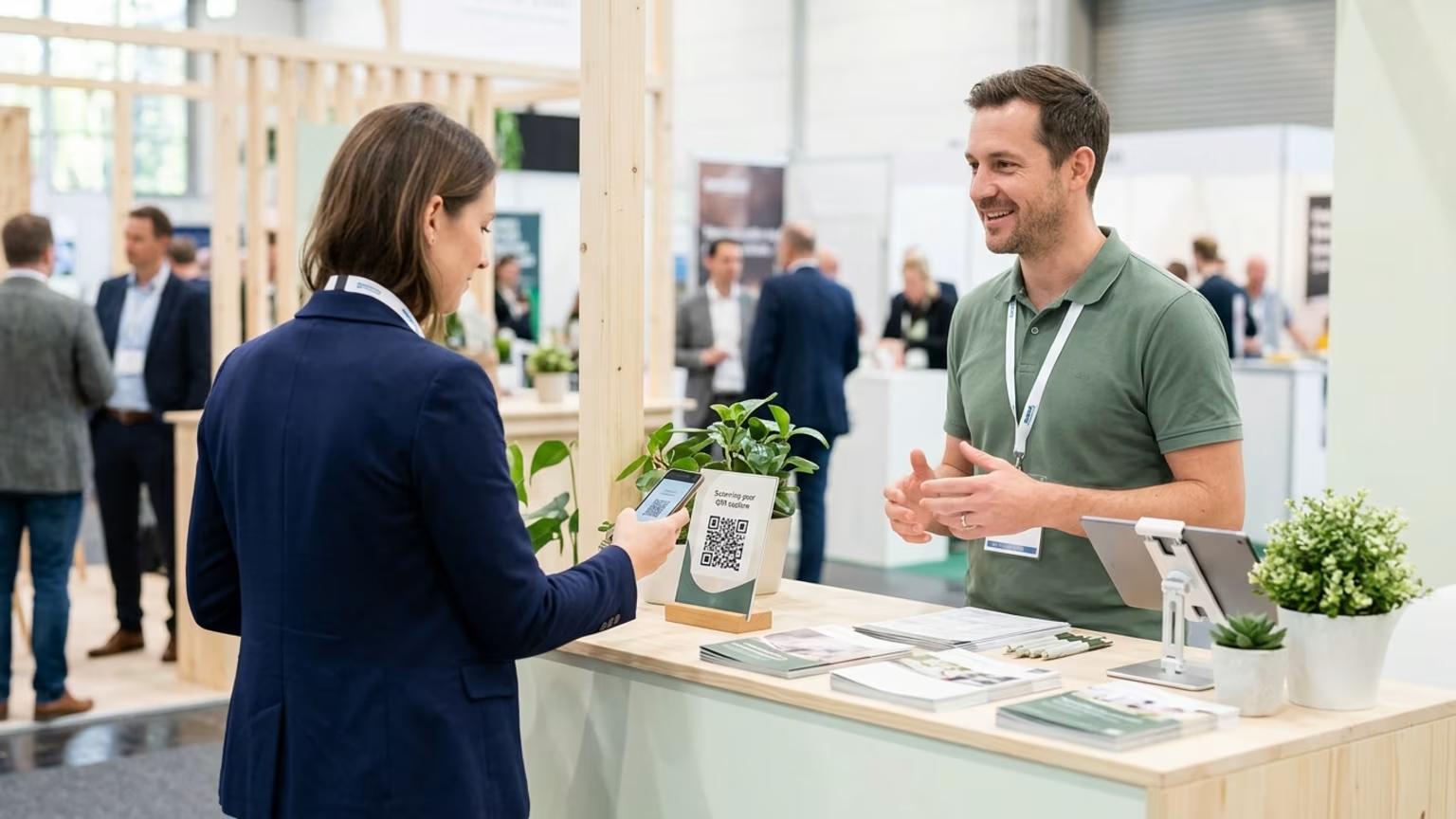
Sarah stood next to her empty trade show booth at 5 PM. Her marketing dashboard showed three hundred digital leads from the proprietary event app. Her regional sales team reported zero actual meetings booked from the entire three-day expo. The financial disconnect between the digital report and reality was deafening.
Unclear marketing channel performance destroys budget visibility and makes it impossible to prove the true value of live brand activations. By implementing unified attribution models and closing the gap between offline events and digital tracking, marketers can turn chaotic data into measurable revenue.
You just wrapped up a massive industry expo. Your field team spent three days scanning badges, handing out product samples, and answering buyer questions. On paper, the activation looks like a massive win for your brand. Your digital ad platforms claim thousands of conversions from the geo-targeted ads you ran around the convention center.
But when you look at your CRM two weeks later, the pipeline is completely flat. Industry analysts report that unclear channel performance is often a visibility problem rather than a data shortage. Your digital channels take credit for top of funnel awareness, but they fail to show how those touchpoints translate into closed deals. The reality is that your experiential activations and digital campaigns operate in complete isolation.
Ad networks report conversions that fail to match your actual sales figures. This leaves you flying blind with a massive marketing budget. Wasting money on the wrong channels is a symptom of incomplete data and fragmented attribution platforms. Without a continuous thread connecting your physical booth presence to your digital follow-up, your entire experiential strategy becomes guesswork.
You end up rewarding channels that look productive and ignoring the offline touchpoints that actually build consumer trust. This data fog makes it incredibly difficult to justify your Return on Investment to leadership. Ninety percent of businesses fail at digital marketing when they lack a clear strategy and fail to understand their audience. When your offline events do not feed into a unified system, you exacerbate this costly attribution chaos.
When event leads finally reach your sales team, they arrive as a chaotic spreadsheet devoid of context. Your representatives waste hours calling unqualified prospects who simply wanted a free piece of branded merchandise. This friction between sales and marketing teams destroys internal trust and wastes valuable resources. The root cause is a failure to map the consumer path from the trade show floor to the final purchase.
Digital ads alone cannot solve weak brand salience. High lead volume means nothing when consumers lack sufficient brand recall and trust to complete a transaction. Without physical trials to anchor the digital messaging, your expensive ad campaigns simply bounce off an apathetic audience. You need a better system to connect physical interest with digital measurement.
Fixing this measurement gap requires a fundamental shift in how you track consumer activity. Most campaigns fail when they treat physical events and digital ads as entirely disconnected activities. You need a strategy that links your CRM directly with your advertising platforms and your live event software. This integrated approach creates a single source of truth for your entire brand operation.
Recent studies show that unified attribution platforms allow marketers to track the full customer lifecycle. You can monitor the exact path from an initial ad click to a physical product trial and final purchase. When you stop relying on platform-specific reporting, you start seeing the actual financial impact of your experiential spending. You must map out every touchpoint a consumer experiences before they decide to buy your product.
If a shopper tries your beverage at a Costco roadshow, that physical interaction needs to register in your performance dashboards. Incorporating offline actions into your digital tracking stops ad platforms from stealing credit for your field team's hard work. This approach helps combat creative fatigue in your digital follow-up campaigns. Experts note that most performance issues stem from tired creative rather than poor audience targeting.
By rotating your post-event messaging frequently, you match the specific intent stages of your prospective buyers. Weak brand salience is emerging as a hidden drag on marketing performance. Connecting experiential marketing reporting strategies to your overall media mix provides absolute operational clarity. This structure ensures every dollar spent on field execution is accurately tracked.
Industry leaders are moving toward multi-channel marketing analytics dashboards to solve this exact problem. These advanced dashboards visualize the hidden interdependencies between your in-store retail demonstrations and your online advertising campaigns. Marketers can now compare different attribution models side by side to see reality. This level of insight allows you to stop funding vanity metrics and start funding actual revenue growth.
Connecting physical brand moments to digital data pipelines bridges the gap between field marketing and digital strategy. Experiential marketing relies on emotion and participation to build strong consumer memories. When you capture that emotional peak in your CRM, your subsequent digital ads carry far more weight and relevance.
Moving from chaotic data to clean measurement requires strict operational discipline. You need a reliable system for turning raw event data into clear scaling decisions. Your team must connect physical field execution to closed-loop digital reporting. Here is the exact playbook to fix your attribution models before your next major activation.
You cannot improve what you refuse to measure accurately. Upgrading your reporting means abandoning foot traffic counts and focusing entirely on pipeline generation. The best experiential marketing dashboards highlight both leading indicators and lagging outcomes clearly. This clarity helps marketing operators make immediate adjustments during live activations.
For lead metrics, track your qualified interaction rate at the live event. Measure the percentage of booth visitors who willingly provide their contact information or participate in a trial. Monitor your post-event digital engagement rate to see if those physical interactions translate into actual online interest. You should track your creative rotation frequency to combat ad fatigue across your channels.
For lagging metrics, you must measure the total revenue generated per marketing channel. Calculate your actual sales lift following a localized activation or a major product launch. Track your repeatability metrics to understand if the event generated one-time buyers or long-term brand loyalists. True revenue tracking proves that your experiential campaigns drive tangible business results.
This structured data allows you to reallocate your budgets based on true revenue contribution. When you present these specific metrics to your leadership team, you shift the conversation from event costs to strategic pipeline generation. This is how experiential marketing builds retail credibility and secures larger budgets for future activations. Clear reporting turns your field marketing department into a recognized revenue engine.
When you measure success by revenue per channel, you completely change the dynamic with your executive team. The CFO stops viewing your experiential events as a costly line item. Instead, they begin to see your field marketing efforts as a highly predictable customer acquisition strategy. This shift from foggy busywork to evidence-based scaling is the true goal of modern marketing operations.
Clear metrics allow you to replicate successful campaigns across new geographic regions with supreme confidence. You can walk into buyer meetings armed with hard data that proves your brand drives retail sell-through.
Applying these frameworks in the real world separates the operators from the theorists. We recently managed a major product launch for a fast-growing beverage brand. They needed to generate massive trial volume and prove that the live interactions actually drove regional sales lift. Our team designed a nationwide sampling tour that integrated directly with their digital marketing infrastructure.
We fed their field sampling data straight into their digital remarketing pipeline. Every consumer who tried the drink and scanned our activation code received highly targeted, frequently rotated follow-up messaging. The regional sales velocity outpaced their digital-only markets by a massive margin. Retailers noticed the surge in foot traffic and immediately expanded the brand's shelf space.
A VP of Marketing in the CPG beverage category told us: 'Robbie, your leadership and vision turned our campaign into something truly special. The Makai team brought our new drink to life with energy, creativity, and flawless execution. Thanks to you, our brand isn't just tasted, it's remembered.' Our team's approach transformed their product launch into a memorable brand experience.
This success was not just about serving cold drinks with a smile. It was about creating an airtight data loop that proved the exact financial value of the field activation. Before implementing this new measurement strategy, the brand struggled to justify the high costs of regional sampling tours. Their executive team viewed field marketing as a necessary evil rather than a primary growth driver.
By establishing a clear link between offline trials and online sales, we shifted that internal narrative completely. The marketing department finally had the exact data needed to secure a permanent experiential budget.
Before you plan your next major trade show, spend one week mapping out exactly how a physical badge scan will connect to your CRM revenue reports. If you want to stop guessing about your campaign performance, book a strategy call with our team today.

30 Years Experiential & Retail Activation Partner for CPG & Beverage Brands | Multi-Market Demos, Roadshows & Costco/Club Programs That Actually Sell