Robbie Thain
Founder, CEO

Learn how Nat's Nuts used sensory field marketing and live roasting demos to scale from local farmers markets to 4,000 retail doors. Book a strategy call today.
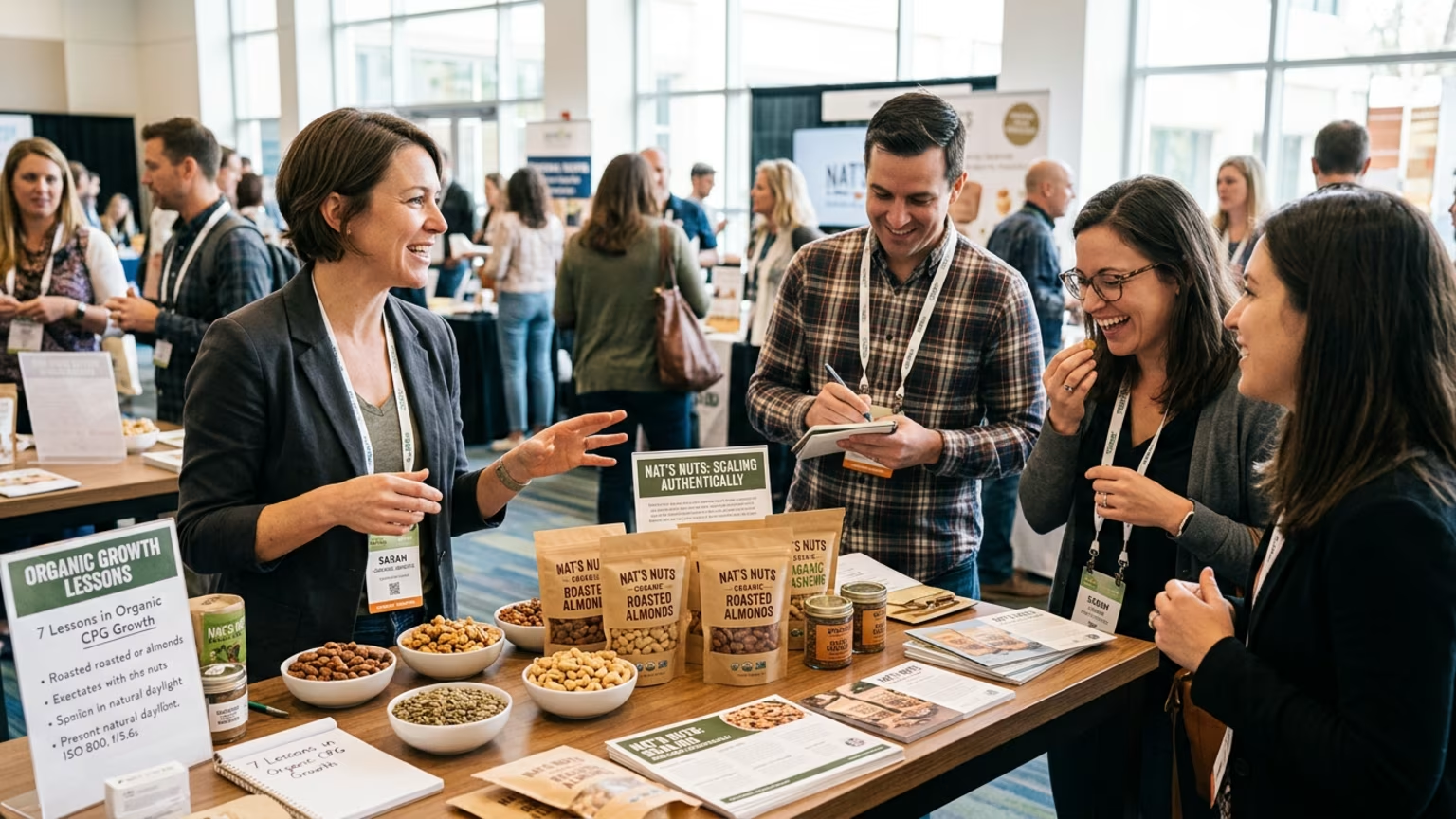
A field marketing manager stands behind a folding table piled high with wrapped snack bars. Attendees stream past without making eye contact. The brand spent fifty thousand dollars on the booth, but the samples remain untouched. A competitor across the aisle is drawing a massive crowd with nothing more than a simple hot plate.
Sensory marketing cuts through trade show fatigue to turn passive foot traffic into measurable sales. Experiential tactics like live roasting or interactive tasting build the retail momentum required for national expansion.
The average trade show floor is an obstacle course of ignored banners and bored staff. Event spaces are notoriously chaotic environments filled with visual noise. Brand ambassadors often hand out cold samples to distracted buyers who immediately throw the packaging away. This fragmented execution creates a massive disconnect between marketing spend and actual pipeline generation.
Marketers track the number of samples given away, but they struggle to prove any Return on Investment (ROI). Many field teams operate without a standardized strategy for capturing buyer attention. Passing out free product does not create an emotional connection with the consumer. Busy events easily turn into disorganized disasters without a clear plan to stand out.
Over sixty percent of consumer packaged goods activations fail to meet basic financial hurdles. This massive failure rate often stems from inconsistent staffing and poor reporting metrics. Brands spend thousands of dollars on booth space only to deliver a completely forgettable experience. They need a compelling reason to stop people in their tracks before offering a product.
Many marketing operators ignore the psychological element of physical retail environments. A bright banner or a clever slogan simply cannot compete with the sheer volume of distractions at a live expo. Competitors are aggressively fighting for the exact same thirty seconds of buyer attention. Without a method to disrupt the standard walking pattern, your booth becomes invisible to high value decision makers.
We have executed over 1000 campaigns across all 50 states, bringing brands to life in every major U.S. market. From retail demos in Seattle to roadshows in Miami and events in Honolulu, our teams activate brands wherever our clients' audiences are located. This deep field experience shows us that sensory triggers outperform static visual displays every time. Brands can attract major attention by prioritizing the scent of fresh ingredients over expensive digital ads.
Aroma pulls up to seventy percent more foot traffic than basic visual demos. This physical pull creates a focused environment where trained ambassadors can have real conversations. Shoppers stop to ask questions about the product instead of just taking a free item. The sensory approach builds an immediate layer of trust and deep curiosity.
Many organic food and beverage brands relying on live sensory events regularly see higher trial rates. This tactile engagement is required for turning live event growth into retail sales. Experiential activations in food categories often yield five to ten times higher conversion rates than digital ads alone. Industry analysts report a thirty two percent yearly increase in live activation budgets for this exact reason.
Field planners are seeing massive post pandemic demand for tactile engagement amid widespread digital fatigue. Today's consumer wants to taste and smell a product before making a serious buying decision. Organic certification serves as a strong trust signal during these live physical demonstrations. Combining a certified organic product with an undeniable sensory experience creates a highly effective sales environment.
Sensory marketing bypasses the rational brain and triggers immediate emotional responses from attendees. The smell of fresh coffee or roasting nuts instantly transports a buyer out of their spreadsheet mindset. This sudden shift in environment creates a highly receptive audience for your brand ambassadors. Experiential marketing succeeds precisely because it forces the consumer to stop and be present in the physical moment.
Executing a high volume sensory campaign requires operator grade discipline and extreme attention to detail. You cannot rely on a pleasant smell alone to close a tough retail buyer. Your field team must follow a strict playbook to turn that initial aroma into a profitable transaction. We recommend standardizing your approach to reduce operational variability across different event locations.
Brands that pilot this approach in five local markets can quickly scale to fifty doors. Successful regional pilots provide the exact operational blueprint needed for massive national expansion. You must lock down your logistics and staffing formulas before expanding to larger trade shows. A documented process prevents your event from looking like a busy fog of meaningless activity.
Running a tight operation means tracking your equipment and supplies with extreme precision. You must store your sampling product and event gear securely between activation dates. Coordinated logistics ensure every single activation stays on schedule and looks completely professional. A missing scent diffuser or a broken hot plate can instantly derail a massive national sampling tour.
Many teams measure success by how busy a booth feels or how many samples leave the table. These vanity metrics fail to show retail buyers that your product will actually perform on store shelves. You must track specific lead and lag data to demonstrate true commercial viability. Retailers demand hard evidence that your marketing efforts translate into massive register rings.
Lead metrics should always include trial to purchase conversion rates right at the point of activation. A strong target for this direct onsite conversion is anything above twenty five percent. This number proves that the consumer likes the product enough to spend their own money immediately. You can track this easily by running hybrid field events linked to digital shopping carts.
Lag metrics tell the long term story of your ongoing retail activation strategy. You need to measure the thirty day repeat purchase rate after the initial live event. Combining post event surveys with accurate point of sale data creates a complete operational picture. This exact method is required for proving actual sales lift to major wholesale buyers.
Recent studies show that brands using live sensory experiences see up to a twenty percent lift in repeat purchases. Tracking this data sets the strong foundation needed for highly successful retail expansion. Modern marketing teams now use intelligent staffing models to reduce event reporting variability by forty percent. Clear data dashboards give your sales team the exact ammunition they need for their next retail pitch.
You should also monitor how these field activations impact your secondary marketing channels. A successful live event naturally generates user generated content and organic social media tags. Measuring this digital spillover proves that physical experiences drive sustained online visibility for your brand. Savvy field marketing directors use this combined data to justify larger budgets for the next fiscal year.
Nat's Nuts provides the perfect blueprint for building retailer confidence through smart field marketing. They started as a small operation at local farmers markets without massive traditional marketing budgets. They used the irresistible smell of roasting cinnamon to draw massive crowds to their small tent. This immediate consumer engagement proved their snack product could sell quickly and consistently.
The aroma driven approach boosted their on site sales by up to three hundred percent compared to standard setups. This overwhelming data gave them the concrete evidence needed to pitch major national retail chains. They used these local community markets as proof of concept labs to refine their entire pitch. The company eventually expanded their distribution footprint into over four thousand retail doors nationwide.
Their tremendous success hinged on providing immediate sensory proof instead of vague brand awareness. A marketing leader at a competing beverage brand noted that replicating this exact model worked flawlessly. Their team drove an eighteen percent sell through lift at independent stores before scaling to massive chains. The tactile reality of a physical product simply converts better than digital pixels on a screen.
Critics note that an aroma strategy works best for low barrier impulse categories like snacks and beverages. High consideration wellness products often require more direct consumer education to close a difficult sale. Yet the underlying principle of tactile engagement remains universally effective across the entire physical retail spectrum. Using targeted sensory tactics builds the consumer trust required to win highly competitive retail shelf space.
Nat's Nuts did not achieve their massive retail expansion overnight. They spent months dialing in their roasting temperatures and staff scripts at smaller regional events. This patient approach allowed them to identify their most profitable consumer demographics without risking a massive national budget. By the time they pitched national chains, they had absolute mathematical certainty that their product would perform.
Economic pressures and rising labor costs make targeted field operations highly important right now. Staffing expenses have risen by fifteen percent recently, forcing brands to be ruthless about their event budgets. Brands that combine sensory activations with digital retargeting can multiply their growth by two and a half times. You must treat every single live event as a structured and highly measurable sales laboratory.
Stop handing out dead samples to passive crowds and start engineering truly memorable consumer moments. Design your next retail demo around one powerful sensory trigger that forces shoppers to stop and interact. Book a strategy call today to build a live experiential campaign that drives real retail velocity.

30 Years Experiential & Retail Activation Partner for CPG & Beverage Brands | Multi-Market Demos, Roadshows & Costco/Club Programs That Actually Sell